
Rick McIntyre
Author of The Rise of Wolf 8: Witnessing the Triumph of Yellowstone's Underdog
About the Author
Rick McIntyre worked with the National Park Service for forty-two years. During one fifteen-year period, he rose before dawn every day to observe the Yellowstone wolves. He lives in Silver Gate, Montana.
Series
Works by Rick McIntyre
The Alpha Female Wolf: The Fierce Legacy of Yellowstone's 06 (The Alpha Wolves of Yellowstone) (2022) 67 copies
Thinking Like a Wolf: Lessons From the Yellowstone Packs (The Alpha Wolves of Yellowstone) (2024) 21 copies, 1 review
Tagged
Common Knowledge
- Birthdate
- 1949-08-18
- Gender
- male
- Short biography
- No one has spent more time observing and documenting wild wolves than retired National Park ranger Rick McIntyre, who has watched wolves in America's national parks for more than 40 years, 25 of those years in Yellowstone, where he has accumulated over 100,000 sightings. McIntyre's other books include The Rise of Wolf 8 and The Reign of Wolf 21, and he is at work on a fourth book about Wolf 06 and other Yellowstone alpha females. He lives in Silver Gate, Montana.
- Nationality
- USA
- Places of residence
- Silver Gate, Montana, USA
- Associated Place (for map)
- Montana, USA
Members
Discussions
REIGN OF WOLF 21: THE SAGA OF YELLOWSTONE'S LEGENDARY DRUID PACK / by Rick McIntyre in Reviews of Early Reviewers Books (April 2021)
Reviews
The Reign of Wolf 21: The Saga of Yellowstone's Legendary Druid Pack (The Alpha Wolves of Yellowstone, 2) by Rick McIntyre
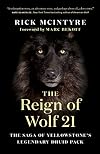
Rick McIntyre’s The Reign of Wolf 21 purports to be a natural history of a particular wolf pack, but it is actually a love story, featuring an out-sized hero and heroine couple, set in a war zone. The war zone is Yellowstone National Park, and the protagonists are four-legged predatory canines.
McIntyre is a park ranger and naturalist who studies wolf behavior. In particular, he has followed the lives of wolves in several packs in eastern Yellowstone since their reintroduction into the show more park in 1995. His observations are especially enlightening to former city kids, like me, who were raised with stories about Big Bad Wolves.
True, wolves are killers. And they are very, very tough, and I daresay, brave. In fact, large males have been known to chase mountain lions up trees and even fight off bears that threaten their young. They specialize in killing prey much larger than themselves, particularly elk and even young or somewhat disabled bison. [They aren’t up to taking healthy bull bison.] They also find it easy to kill domestic animals like cattle or sheep, which contributes to their unpopularity among ranchers. Moreover, they are territorial. Although they often adopt a new wolf that ventures into their territory, they will usually fight (sometimes to the death) groups of interlopers. Indeed, the most frequent cause of death among adult wolves is killing by wolves of other packs.
However, in many ways they exhibit traits that humans consider noble. They are very intelligent, and they love to play, especially with their pups. They are extremely loyal to their immediate families and ferociously protective of their offspring. They are very generous and sharing: adults can consume up to 20 pounds of meat in a single meal, but they then regurgitate most of it for consumption by pack members too young to hunt. Unlike lions, they almost never fight with pack members over access to their kills. They are altruistic: pack leaders risk their own lives to fend off bears or other wolf packs to protect their own pack.
But among wolves, some are braver, stronger, more loyal, more altruistic, and better leaders than the others. And the bravest, strongest, most loyal, most altruistic, and best leader of them all was Wolf 21. [Unfortunately, most wolves are known only by a number given to them when they are anesthetized and given a radio collar—it’s too burdensome to give them more distinguishable names.]
The author first encountered Wolf 21 in the winter of 1999/2000. 21 had recently become the alpha male of the group known as the Druid Pack, which included two adult female sisters, 40 and 42. 40, the elder, was overly aggressive, always bullying her younger sister and other pack members. McIntyre even theorized that 40 had once killed 42’s pups. In April 2000 40 was killed by other wolves, and 42 became the alpha female of the Druids. Thus began a romance between 21 and 42 that lasted the rest of their lives.
The principle narrative of the book is the relationship between 21 and 42, emphasizing their loyalty and affection for one another. They raised many pups and had many grandchildren. They escaped several harrowing encounters with bears, mountain lions, and other wolf packs. They were doting parents who played affectionately with their many offspring. 21 was truly intrepid, sometimes leading the Druids in a charge into rival wolf packs even when they were significantly outnumbered. 21 was so fierce and intimidating that he always prevailed. And yet, he was clement: although he would dominate his opponents by pinning them to the ground, 21 usually let them off with their lives if they would submit to 21’s ascendency. In one encounter, 21 finds a grizzly feeding on a recent kill; being much faster and more agile than the bear, he bites the bear on the rear end in order to prompt the bear to chase him. Meanwhile, other members of the Druid pack are able to feed on the carcass as the bear futilely pursues 21.
Most telling though was his relationship with 42. As the author said in an interview:
"I knew 21 better than any animal ever and my impression was that he was never really impressed with himself or that he was the undefeated heavyweight champion. To him it was something he could do. He had no problem that his mate, 42, was the alpha female and the true leader of the pack."
The book concludes with a bittersweet scene. After a very long (by wolf standards) life together with 21, 42 has been missing from the pack for several months. We learn that she was probably killed by other wolves. 21 howls for her and seems preoccupied. He leaves the pack and travels a great distance to return to the place where he and 42 first met. After searching for her scent, he lies down and peacefully dies in his sleep.
Evaluation: McIntyre clearly loves his subjects. He is greatly impressed by their dauntlessness and endurance, but he recognizes that not all wolves are as virtuous as 21. Unfortunately, the narrative sometimes becomes somewhat repetitive and difficult to follow because so many of the wolves have merely numbers instead of names or distinguishing characteristics. Nonetheless, he is quite effective in eliciting sympathy and affection for Wolves 21 and 42. I think at the conclusion of the book most readers will have achieved a more nuanced understanding of these implacable predators and will value the opportunity to have gotten to know 21 and 42.
(JAB) show less
McIntyre is a park ranger and naturalist who studies wolf behavior. In particular, he has followed the lives of wolves in several packs in eastern Yellowstone since their reintroduction into the show more park in 1995. His observations are especially enlightening to former city kids, like me, who were raised with stories about Big Bad Wolves.
True, wolves are killers. And they are very, very tough, and I daresay, brave. In fact, large males have been known to chase mountain lions up trees and even fight off bears that threaten their young. They specialize in killing prey much larger than themselves, particularly elk and even young or somewhat disabled bison. [They aren’t up to taking healthy bull bison.] They also find it easy to kill domestic animals like cattle or sheep, which contributes to their unpopularity among ranchers. Moreover, they are territorial. Although they often adopt a new wolf that ventures into their territory, they will usually fight (sometimes to the death) groups of interlopers. Indeed, the most frequent cause of death among adult wolves is killing by wolves of other packs.
However, in many ways they exhibit traits that humans consider noble. They are very intelligent, and they love to play, especially with their pups. They are extremely loyal to their immediate families and ferociously protective of their offspring. They are very generous and sharing: adults can consume up to 20 pounds of meat in a single meal, but they then regurgitate most of it for consumption by pack members too young to hunt. Unlike lions, they almost never fight with pack members over access to their kills. They are altruistic: pack leaders risk their own lives to fend off bears or other wolf packs to protect their own pack.
But among wolves, some are braver, stronger, more loyal, more altruistic, and better leaders than the others. And the bravest, strongest, most loyal, most altruistic, and best leader of them all was Wolf 21. [Unfortunately, most wolves are known only by a number given to them when they are anesthetized and given a radio collar—it’s too burdensome to give them more distinguishable names.]
The author first encountered Wolf 21 in the winter of 1999/2000. 21 had recently become the alpha male of the group known as the Druid Pack, which included two adult female sisters, 40 and 42. 40, the elder, was overly aggressive, always bullying her younger sister and other pack members. McIntyre even theorized that 40 had once killed 42’s pups. In April 2000 40 was killed by other wolves, and 42 became the alpha female of the Druids. Thus began a romance between 21 and 42 that lasted the rest of their lives.
The principle narrative of the book is the relationship between 21 and 42, emphasizing their loyalty and affection for one another. They raised many pups and had many grandchildren. They escaped several harrowing encounters with bears, mountain lions, and other wolf packs. They were doting parents who played affectionately with their many offspring. 21 was truly intrepid, sometimes leading the Druids in a charge into rival wolf packs even when they were significantly outnumbered. 21 was so fierce and intimidating that he always prevailed. And yet, he was clement: although he would dominate his opponents by pinning them to the ground, 21 usually let them off with their lives if they would submit to 21’s ascendency. In one encounter, 21 finds a grizzly feeding on a recent kill; being much faster and more agile than the bear, he bites the bear on the rear end in order to prompt the bear to chase him. Meanwhile, other members of the Druid pack are able to feed on the carcass as the bear futilely pursues 21.
Most telling though was his relationship with 42. As the author said in an interview:
"I knew 21 better than any animal ever and my impression was that he was never really impressed with himself or that he was the undefeated heavyweight champion. To him it was something he could do. He had no problem that his mate, 42, was the alpha female and the true leader of the pack."
The book concludes with a bittersweet scene. After a very long (by wolf standards) life together with 21, 42 has been missing from the pack for several months. We learn that she was probably killed by other wolves. 21 howls for her and seems preoccupied. He leaves the pack and travels a great distance to return to the place where he and 42 first met. After searching for her scent, he lies down and peacefully dies in his sleep.
Evaluation: McIntyre clearly loves his subjects. He is greatly impressed by their dauntlessness and endurance, but he recognizes that not all wolves are as virtuous as 21. Unfortunately, the narrative sometimes becomes somewhat repetitive and difficult to follow because so many of the wolves have merely numbers instead of names or distinguishing characteristics. Nonetheless, he is quite effective in eliciting sympathy and affection for Wolves 21 and 42. I think at the conclusion of the book most readers will have achieved a more nuanced understanding of these implacable predators and will value the opportunity to have gotten to know 21 and 42.
(JAB) show less

Wow, there was so much about wolves I didn’t know despite my abiding interest in them. Close observation and reporting reveals a wide range of personalities, behaviors, leadership styles, and (dare I say it?) hobbies. Even wider pack-to-pack dynamics play themselves out during the timeframe of this book.
Sisters, 40 and 42 couldn’t have been more different. 40 was overbearing, domineering, selfish and violent. 42 was cooperative, permissive, tolerant and caring. Even without the human show more characterization, her actions were decidedly different. And I think it went a long way to enlarge and preserve the Druid pack.
But the book is about 21, right? Yes, it is. He was her mate, after ousting 40, for the rest of their lives. Judging by what I read, it was a strong bond. And they led the pack from strength to strength and made me wonder, as the younger members went out in search of their own mates and packs, if that leadership style went with them.
Instead of killing an alpha male from another pack, or even a subordinate from another or his own, 21 would show definite dominance and let him go. Over and over he refrains from killing them and it pays off. His pack is strong and as his daughters leave to form their own packs, the males they have to choose from are a better breed of wolf as a result. I have to wonder if that was part of why he let them live.
Not that I attribute human reasoning and forecasting to 21, 42 or any other wolf, but sometimes you have to wonder. Take the case of 302, a male from another pack who came by to see what 21’s daughters were up to. He was a chick magnet and ended up impregnating a few of them over a couple of years, but none left with him permanently. The reason was his monumental selfishness - he would run to save his own skin rather than stay to defend the females or his pups. Though he would return to observe his pups from the edges of 21’s territory, the fact that he couldn’t get closer de facto meant that he didn’t have to support the females or the pups. 21 did. They were his grandchildren and he had no problem doing it, but I have to wonder how much deliberation went into 302’s choice to mate with basically unattainable females.
21 repeatedly flies into dangerous situations to defend his pack - grizzly bears, bull elk, other packs with greater numbers - none of it mattered more than his family and it was pretty amazing. He was also selfless when it came to feeding all the pregnant females (whether the ones he mated with or his daughters who were pregnant by males from other packs). He worked himself to the bone providing (ugh) regurgitations for them and making sure the puppies were safe and their mothers healthy. 42 and the other females even raised puppies born to mothers who were killed. It was a great work ethic that paid off again and again.
There are a ton of wonderful observations and anecdotes about 21, 42 and the pack they led and sheltered for 5 years. But I wish for more scientific detachment and explanation for what they did and why. This book was lovely, but a bit romantic and while not gushy, had a definite bias toward 21 and 42. A bit too much humanizing.
Recently I took a look at wolf numbers here in Wisconsin and saw that they rose during the last year and in the areas where they are most concentrated, the deer population went down a bit more than the wolf numbers rose. In a state with way too many deer, this is a good thing. And before any hunters get all up in arms (ha!), think about this. Studies have shown that wolves (and other predators) nearly always choose an animal that has an underlying health problem. Something that humans can’t even detect until necropsy. That keeps the prey population healthier and more able to withstand our harsh winters. It also keeps healthier individuals alive for human hunters. Instead of a person getting a sick or infected deer, elk or moose, the wolves get them. And because their digestive systems are shorter and faster than ours, the bacteria or other infectious organisms don’t live long enough to survive and the wolves are fine. So another benefit.
So go ahead and read the fairy story that is the Reign of Wolf 21. It is a bit romantic and written so simply it could be for children, but it’s passionate and important to show that wolves aren’t evil. They aren’t going to destroy the game animals where they are present. They aren’t bloodthirsty, slavering savages. They’re responsible animals bonded to each other with greater understanding, emotion and intelligence than we think. show less
Sisters, 40 and 42 couldn’t have been more different. 40 was overbearing, domineering, selfish and violent. 42 was cooperative, permissive, tolerant and caring. Even without the human show more characterization, her actions were decidedly different. And I think it went a long way to enlarge and preserve the Druid pack.
But the book is about 21, right? Yes, it is. He was her mate, after ousting 40, for the rest of their lives. Judging by what I read, it was a strong bond. And they led the pack from strength to strength and made me wonder, as the younger members went out in search of their own mates and packs, if that leadership style went with them.
Instead of killing an alpha male from another pack, or even a subordinate from another or his own, 21 would show definite dominance and let him go. Over and over he refrains from killing them and it pays off. His pack is strong and as his daughters leave to form their own packs, the males they have to choose from are a better breed of wolf as a result. I have to wonder if that was part of why he let them live.
Not that I attribute human reasoning and forecasting to 21, 42 or any other wolf, but sometimes you have to wonder. Take the case of 302, a male from another pack who came by to see what 21’s daughters were up to. He was a chick magnet and ended up impregnating a few of them over a couple of years, but none left with him permanently. The reason was his monumental selfishness - he would run to save his own skin rather than stay to defend the females or his pups. Though he would return to observe his pups from the edges of 21’s territory, the fact that he couldn’t get closer de facto meant that he didn’t have to support the females or the pups. 21 did. They were his grandchildren and he had no problem doing it, but I have to wonder how much deliberation went into 302’s choice to mate with basically unattainable females.
21 repeatedly flies into dangerous situations to defend his pack - grizzly bears, bull elk, other packs with greater numbers - none of it mattered more than his family and it was pretty amazing. He was also selfless when it came to feeding all the pregnant females (whether the ones he mated with or his daughters who were pregnant by males from other packs). He worked himself to the bone providing (ugh) regurgitations for them and making sure the puppies were safe and their mothers healthy. 42 and the other females even raised puppies born to mothers who were killed. It was a great work ethic that paid off again and again.
There are a ton of wonderful observations and anecdotes about 21, 42 and the pack they led and sheltered for 5 years. But I wish for more scientific detachment and explanation for what they did and why. This book was lovely, but a bit romantic and while not gushy, had a definite bias toward 21 and 42. A bit too much humanizing.
Recently I took a look at wolf numbers here in Wisconsin and saw that they rose during the last year and in the areas where they are most concentrated, the deer population went down a bit more than the wolf numbers rose. In a state with way too many deer, this is a good thing. And before any hunters get all up in arms (ha!), think about this. Studies have shown that wolves (and other predators) nearly always choose an animal that has an underlying health problem. Something that humans can’t even detect until necropsy. That keeps the prey population healthier and more able to withstand our harsh winters. It also keeps healthier individuals alive for human hunters. Instead of a person getting a sick or infected deer, elk or moose, the wolves get them. And because their digestive systems are shorter and faster than ours, the bacteria or other infectious organisms don’t live long enough to survive and the wolves are fine. So another benefit.
So go ahead and read the fairy story that is the Reign of Wolf 21. It is a bit romantic and written so simply it could be for children, but it’s passionate and important to show that wolves aren’t evil. They aren’t going to destroy the game animals where they are present. They aren’t bloodthirsty, slavering savages. They’re responsible animals bonded to each other with greater understanding, emotion and intelligence than we think. show less
 This review was written for LibraryThing Early Reviewers.
The Reign of Wolf 21: The Saga of Yellowstone's Legendary Druid Pack (The Alpha Wolves of Yellowstone (2)) by Rick McIntyre
The Reign of Wolf 21 is the second in a trilogy about the various packs that formed in Yellowstone after wolves were reintroduced to the park. I read this book without having read its predecessor and was able to dive right into the story. McIntyre's prose is spare and rapid fire. It narrates what the wolves do and lets their actions illustrate why they're doing it instead of going into textbook-style explanations of wolf behavior. The focus is also on the wolves: McIntyre gives credit to the show more colleagues and academics he collaborates with in his work, but don't expect any descriptions their appearances, personalities, or habits here. It's a major departure from most other books of this nature, and I found it refreshing that the wolves--and only the wolves--took center stage. It's surprisingly effective, particularly during the book's moving final chapter. McIntyre's awe and respect for his subjects comes through precisely because of his bare-bones style, making The Reign of Wolf 21 well worth the read. show less
This review was written for LibraryThing Early Reviewers.The Unlikely Hero: The Story of Wolf 8 (A Young Readers' Edition) (Chronicles of the Yellowstone Wolves, 1) by Rick McIntyre
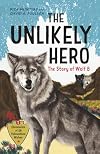
Really great, accessible, interesting story following some of the reintroduced wolves of Yellowstone. There's a lot of harsh reality in here, but I think it's well and factually presented -- kids who are passionate about wildlife need to know the truth of things (pupicide, fights to the death, hunting). McIntyre's love for the wolves shines through, and it's a gift to learn about the reintroduction firsthand.
Lists
Awards


You May Also Like


Associated Authors
Statistics
- Works
- 14
- Members
- 627
- Popularity
- #40,190
- Rating
- 4.2
- Reviews
- 25
- ISBNs
- 35
- Languages
- 1
