
L. David Mech
Author of The Wolf: The Ecology and Behavior of an Endangered Species
About the Author
Image credit: Mech in 2017
Series
Works by L. David Mech
Associated Works
Tagged
Common Knowledge
- Gender
- male
- Occupations
- Wildlife Biologist
- Organizations
- IUCN Wolf Specialist Group
International Wolf Center
Members
Reviews

The Arctic Wolf chronicles a couple of summers in the life of a pack of wild arctic wolves observed by wolf biologist David Mech, who during that time lived with the pack together with wildlife photographer Jim Brandenburg (who later wrote the book White Wolf about the same pack).
To find and be accepted by this pack was the highlight of Mech’s career, and he describes through several chapters in the book how he had dreamt of a chance like this through much of his 30 year long career as a show more wolf researcher and “obsessed student of wolves”.
This is my favourite amongst Mech’s wolf books. Mech’s passion and excitement lifts the book way over and beyond informative and rigourous science (which it is too); it is deeply insightful and touching. Some of the information in it is outdated… after all it is written in 1988, and more is known about wolves today. However, its strong personal “firstness” quality of a life dream coming true makes it the most captivating and memorable of Mech’s books out of the ones I’ve read so far.
(a longer version of this review can be found on my blog, here: The Arctic Wolf: Living with the Pack. A Book Review) show less
To find and be accepted by this pack was the highlight of Mech’s career, and he describes through several chapters in the book how he had dreamt of a chance like this through much of his 30 year long career as a show more wolf researcher and “obsessed student of wolves”.
This is my favourite amongst Mech’s wolf books. Mech’s passion and excitement lifts the book way over and beyond informative and rigourous science (which it is too); it is deeply insightful and touching. Some of the information in it is outdated… after all it is written in 1988, and more is known about wolves today. However, its strong personal “firstness” quality of a life dream coming true makes it the most captivating and memorable of Mech’s books out of the ones I’ve read so far.
(a longer version of this review can be found on my blog, here: The Arctic Wolf: Living with the Pack. A Book Review) show less
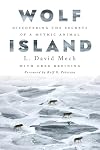
As a young man growing up in Wisconsin in the 1960's, I loved being in the outdoors. Hiking, fishing, hunting, trapping; it was I lived for. And one of my dreams was to go to Isle Royale, and witness the wolf population myself. In fact, it was one of the dreams that led me to pursue my degree in Natural Resources from the University of Wisconsin-Madison. As happens, life intervenes, and I never made it to Isle Royale. But I kept my fascination with it, reading up on it in various show more publications.
Then, as luck would have it, I discovered this absolutely wonderful book by Dr. Mech! Mech was the first person to actually do scientific research on the interactions between wolves and moose on the island. He went there as a young graduate student in 1958. He spent three years in his graduate study, and became one of the foremost wolf scientists in the world. Thankfully, he has continued his research for 60 years, and is still going!
This is the story of his first three years on the island. Of his trekking across the island for days at a time, with very primitive gear. Of the aerial surveys undertaken in the winter, to locate and observe wolf packs and moose. Of the hunting of the moose by the wolves. Their behaviors, successes, and failures. All told in easy to read language, flowing along so well as to make you feel that you are there with him!
I really liked the perspective he gave towards the end of the book. Of the current debate on whether or not wolves should be taken off the protected status they currently have. I won't spoil it for you, but he provides an opinion that should be given a great deal of weight.
Finally, I would like to quote from the end of his book,....."to me it doesn't really seem that long ago when it all began, and I took my first steps as a budding wolf biologist. That was June 30, 1958, my first day on Isle Royale. I hiked 7 miles from Rock Harbor to the Daisy Farm campground, and along the trail, my field notes recorded, I found a fresh wolf track and 2 old droppings. Now, six decades and untold miles, wolf tracks, and droppings later, I am a mature wolf biologist. Instead of hiking 7 miles to catch a glimpse of wolf sign, I can look at a smartphone and check a GPS trail of a wolf online. I have changed a bit, research technology has changed quite a bit, and even the climate has changed".
And absolutely wonderful book! One that I have been waiting to read for decades.
Highly recommend!!!! show less
Then, as luck would have it, I discovered this absolutely wonderful book by Dr. Mech! Mech was the first person to actually do scientific research on the interactions between wolves and moose on the island. He went there as a young graduate student in 1958. He spent three years in his graduate study, and became one of the foremost wolf scientists in the world. Thankfully, he has continued his research for 60 years, and is still going!
This is the story of his first three years on the island. Of his trekking across the island for days at a time, with very primitive gear. Of the aerial surveys undertaken in the winter, to locate and observe wolf packs and moose. Of the hunting of the moose by the wolves. Their behaviors, successes, and failures. All told in easy to read language, flowing along so well as to make you feel that you are there with him!
I really liked the perspective he gave towards the end of the book. Of the current debate on whether or not wolves should be taken off the protected status they currently have. I won't spoil it for you, but he provides an opinion that should be given a great deal of weight.
Finally, I would like to quote from the end of his book,....."to me it doesn't really seem that long ago when it all began, and I took my first steps as a budding wolf biologist. That was June 30, 1958, my first day on Isle Royale. I hiked 7 miles from Rock Harbor to the Daisy Farm campground, and along the trail, my field notes recorded, I found a fresh wolf track and 2 old droppings. Now, six decades and untold miles, wolf tracks, and droppings later, I am a mature wolf biologist. Instead of hiking 7 miles to catch a glimpse of wolf sign, I can look at a smartphone and check a GPS trail of a wolf online. I have changed a bit, research technology has changed quite a bit, and even the climate has changed".
And absolutely wonderful book! One that I have been waiting to read for decades.
Highly recommend!!!! show less
The Arctic Wolf chronicles a couple of summers in the life of a pack of wild arctic wolves observed by wolf biologist David Mech, who during that time lived with the pack together with wildlife photographer Jim Brandenburg (who later wrote the book White Wolf about the same pack).
To find and be accepted by this pack was the highlight of Mech’s career, and he describes through several chapters in the book how he had dreamt of a chance like this through much of his 30 year long career as a show more wolf researcher and “obsessed student of wolves”. Wolves are rare and extremely wary creatures, so studies of wolves in the wild are typically undertaken indirectly or via observations from small aircraft; and most (especially older) studies of wolf packs’ social behaviour and group dynamics draw conclusions from studies of captive wolf packs composed of brought-together unrelated individuals. Such captive packs differ in fundamental ways from natural wolf packs, which are essentially nuclear families comprising a pair of parents (naturally in charge), and some of their offspring from previous years.
Mech’s dream was to study a litter of wild wolf pups being raised by a wolf pack in the wild. The book documents his dream coming true as he finds the wolf pack on Ellesmere island in the high arctic where humans are so rare and hunting to sporadic that wolves don’t have the same extreme fear and avoidance of humans that wolves do almost everywhere else.
Mech and Jim succeed in befriending the wolves, and then Mech finds their den (which he later finds out has been in use for 700 years). Since dens are extremely scarce and far between in the barren landscape and new dens can’t easily be dug due to the permafrost, the wolf pack can’t easily move their pups somewhere else. He gets to observe their rearing of their litter of pups close up, along with many other aspects of wolf pack life, hunts and social relations. Every day provides new unique and intimate insights into a wild wolf family’s everyday life, and many of these are shared with the reader through Mech’s captivating writing and Brandenburg’s stunningly raw photographs of the scruffy, bloody, calm and affectionate real life of wild wolves.
This is my favourite amongst Mech’s wolf books. Mech’s passion and excitement lifts the book way over and beyond informative and rigourous science (which it is too); it is deeply insightful and touching. Some of the information in it is outdated… after all it is written in 1988, and more is known about wolves today. However, its strong personal “firstness” quality of a life dream coming true makes it the most captivating and memorable of Mech’s books out of the ones I’ve read so far. show less
To find and be accepted by this pack was the highlight of Mech’s career, and he describes through several chapters in the book how he had dreamt of a chance like this through much of his 30 year long career as a show more wolf researcher and “obsessed student of wolves”. Wolves are rare and extremely wary creatures, so studies of wolves in the wild are typically undertaken indirectly or via observations from small aircraft; and most (especially older) studies of wolf packs’ social behaviour and group dynamics draw conclusions from studies of captive wolf packs composed of brought-together unrelated individuals. Such captive packs differ in fundamental ways from natural wolf packs, which are essentially nuclear families comprising a pair of parents (naturally in charge), and some of their offspring from previous years.
Mech’s dream was to study a litter of wild wolf pups being raised by a wolf pack in the wild. The book documents his dream coming true as he finds the wolf pack on Ellesmere island in the high arctic where humans are so rare and hunting to sporadic that wolves don’t have the same extreme fear and avoidance of humans that wolves do almost everywhere else.
Mech and Jim succeed in befriending the wolves, and then Mech finds their den (which he later finds out has been in use for 700 years). Since dens are extremely scarce and far between in the barren landscape and new dens can’t easily be dug due to the permafrost, the wolf pack can’t easily move their pups somewhere else. He gets to observe their rearing of their litter of pups close up, along with many other aspects of wolf pack life, hunts and social relations. Every day provides new unique and intimate insights into a wild wolf family’s everyday life, and many of these are shared with the reader through Mech’s captivating writing and Brandenburg’s stunningly raw photographs of the scruffy, bloody, calm and affectionate real life of wild wolves.
This is my favourite amongst Mech’s wolf books. Mech’s passion and excitement lifts the book way over and beyond informative and rigourous science (which it is too); it is deeply insightful and touching. Some of the information in it is outdated… after all it is written in 1988, and more is known about wolves today. However, its strong personal “firstness” quality of a life dream coming true makes it the most captivating and memorable of Mech’s books out of the ones I’ve read so far. show less
Dr. Mech (b. 1937) has been studying wolves since 1958. He was the first person to scientifically study the predator-prey relationship of any animals, not just wolves. Prior to this most people saw wolves as viscous predators that could kill whatever they wanted, whenever, and thus something to feared, controlled or exterminated. Isle Royale was chosen as a study location because it is a closed habitat being 15 miles from shore. What Mech discovered is not surprising today, but it was new show more then: wolves mostly only killed the old, weak and young; their numbers rise and fall in relation to prey (moose in this case); most wolf attacks do not result in a kill; wolves are a keystone species keeping grazing animals in check from destroying the habitat. Mech has written 11 books. This is about his earliest experiences on Isle Royale, in the late 1950s. It reminds me of Jane Goodall's In the Shadow of Man, being around the same time, Goodall and Mech are about the same age, and both were the first to research their given species leading to long and celebrated careers. Both books also have parallel stories of personal growth as young people finding their way in life, while they discover the way of life. show less
Awards


You May Also Like


Associated Authors
Statistics
- Works
- 21
- Also by
- 2
- Members
- 651
- Popularity
- #38,782
- Rating
- 4.2
- Reviews
- 12
- ISBNs
- 45
- Languages
- 2
- Favorited
- 2