
Eric Williams (1) (1911–1983)
Author of The Wooden Horse
For other authors named Eric Williams, see the disambiguation page.
Eric Williams (1) has been aliased into Eric Ernest Williams.
About the Author
Image credit: L-R Michael Codner; Eric Williams; Oliver Philpot
Works by Eric Williams
Works have been aliased into Eric Ernest Williams.
Associated Works
Works have been aliased into Eric Ernest Williams.
Tagged
Common Knowledge
- Canonical name
- Williams, Eric
- Other names
- Howard, Peter
- Birthdate
- 1911-07-13
- Date of death
- 1983-12-24
- Gender
- male
- Occupations
- pilot
author - Organizations
- Royal Air Force
- Nationality
- UK
- Places of residence
- Stalag-Luft III
Oflag XXIV
Dulag-Luft
Members
Reviews
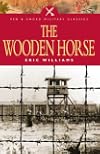
The Wooden Horse is a work of fiction, based on a factual event. I read the 30th anniversary edition which the author edited to be closer to the truth as he regretted some of the fictional excitement he added to the tale, particularly involving the murder of a guard. But how much of the story is 'real' I now have no clue.
It is an interesting story, though the structure is rather odd. This is explained somewhat by the author in the prologue because he couldn't clearly remember certain parts show more of his escape (the final part) and that really comes across in this story. We start in the prison camp, watching the excruciating progress of a very unpleasant escape tunnel. Then we follow two of the three escapers as they travel by train away from the camp to the port, where their plan falls to pieces because it is all very well to say 'escape to the port and jump on a boat for Sweden' but it turns out in practice HOW are you supposed to do that? Half the book is following these two English guys wandering aimlessly around a German port for a week, somehow not getting caught despite the fact that they keep conversing in English. It's actually an enlightening part of the story that is often skipped in escape tales. It's one thing to get outside of a prison but THEN WHAT. Once they do actually get on a boat and lose most of their agency, the story skips about in an oddly disjointed fashion and I found it difficult to follow. A few blanks have been filled in from the memories of other people involved, but these sections are so brief I'm not sure they add anything. Overall it is a fascinating read.
My only real issue with the book, and it is unfortunately a big one, is that I could not tell the characters apart. Partly because within the camp there are a lot of names mentioned and partly because most of the names are common dull British names, but perhaps at the end of the day the characters themselves just aren't that different from each other. Our main characters are Peter and John. One of them is from the army, one from the RAF, one of them speaks French and German, the other does not, one is in his twenties, the other is ten years older. But remembering which one is that and which one is not in any given scene was lost on me. I'd probably follow it all better if I reread it. show less
It is an interesting story, though the structure is rather odd. This is explained somewhat by the author in the prologue because he couldn't clearly remember certain parts show more of his escape (the final part) and that really comes across in this story. We start in the prison camp, watching the excruciating progress of a very unpleasant escape tunnel. Then we follow two of the three escapers as they travel by train away from the camp to the port, where their plan falls to pieces because it is all very well to say 'escape to the port and jump on a boat for Sweden' but it turns out in practice HOW are you supposed to do that? Half the book is following these two English guys wandering aimlessly around a German port for a week, somehow not getting caught despite the fact that they keep conversing in English. It's actually an enlightening part of the story that is often skipped in escape tales. It's one thing to get outside of a prison but THEN WHAT. Once they do actually get on a boat and lose most of their agency, the story skips about in an oddly disjointed fashion and I found it difficult to follow. A few blanks have been filled in from the memories of other people involved, but these sections are so brief I'm not sure they add anything. Overall it is a fascinating read.
My only real issue with the book, and it is unfortunately a big one, is that I could not tell the characters apart. Partly because within the camp there are a lot of names mentioned and partly because most of the names are common dull British names, but perhaps at the end of the day the characters themselves just aren't that different from each other. Our main characters are Peter and John. One of them is from the army, one from the RAF, one of them speaks French and German, the other does not, one is in his twenties, the other is ten years older. But remembering which one is that and which one is not in any given scene was lost on me. I'd probably follow it all better if I reread it. show less
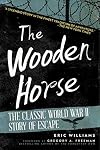
True story written as a novel
I decided to read The Wooden Horse because it was mentioned in The Great Escape. The Wooden Horse was more interesting when the tunnel was being built, when the POWs escaped and during the trek across Germany. The story slowed a bit when John and Peter were trying to get to Sweden. It was a good story, although the last quarter of the book dragged until the end - which came rather suddenly.
I decided to read The Wooden Horse because it was mentioned in The Great Escape. The Wooden Horse was more interesting when the tunnel was being built, when the POWs escaped and during the trek across Germany. The story slowed a bit when John and Peter were trying to get to Sweden. It was a good story, although the last quarter of the book dragged until the end - which came rather suddenly.
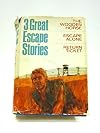
This three-in-one collection contains three good WWII escape stories, each of them a book in their own right: "The Wooden Horse" by Eric Williams, "Escape Alone" by David Howarth, and "Return Ticket" by Anthony Deane-Drummond.
"The Wooden Horse" is one of the most famous such stories, though mildly fictionalized, describing that renown escape in which a tunnel entrance was hidden by a jumping-horse. It is an engaging account, and quite enjoyable.
"Escape Alone" is a very different story, set show more now in northernmost Norway. Recreated from the memories of many of those involved, it follows the tale of a single survivor of a failed mission trying to return to allied territory. An incredible story, in which the place is as implacable a foe as the enemy soldiers.
"Return Ticket", the third story, is more of a return to the classic account of a single soldier's war experiences; the author speaks of two missions he was sent on, and his capture and escape in each. While weakened somewhat by the author's contempt shown for the enemy troops, it remains an entertaining read. show less
"The Wooden Horse" is one of the most famous such stories, though mildly fictionalized, describing that renown escape in which a tunnel entrance was hidden by a jumping-horse. It is an engaging account, and quite enjoyable.
"Escape Alone" is a very different story, set show more now in northernmost Norway. Recreated from the memories of many of those involved, it follows the tale of a single survivor of a failed mission trying to return to allied territory. An incredible story, in which the place is as implacable a foe as the enemy soldiers.
"Return Ticket", the third story, is more of a return to the classic account of a single soldier's war experiences; the author speaks of two missions he was sent on, and his capture and escape in each. While weakened somewhat by the author's contempt shown for the enemy troops, it remains an entertaining read. show less
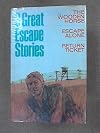
The Wooden Horse by Eric Williams, Escape Alone by David Howarth, Return Ticket by Anthony Deane-Drummond,
Eric Williams MC (13 July 1911 – 24 December 1983) was an English writer and former Second World War RAF pilot and prisoner of war (POW) who wrote several books dealing with his escapes from prisoner-of-war camps, most famously in his 1949 novel The Wooden Horse, made into a 1950 movie of the same name.
Compellation of short escape stories from WWII: Downed aviators, resistance fighters show more etc. devising resourceful ways to escape captivity and then make it to freedom. Their plans, tools and escapes are smart, ingenious and fascinating. They travel trough occupied Europe by foot, trains, boats and even bicycles. Their adventures include jailbreaks, organized escape networks, help form brave citizens and sometimes just plain luck!
The stories in the book are true and absolutely riveting. show less
Eric Williams MC (13 July 1911 – 24 December 1983) was an English writer and former Second World War RAF pilot and prisoner of war (POW) who wrote several books dealing with his escapes from prisoner-of-war camps, most famously in his 1949 novel The Wooden Horse, made into a 1950 movie of the same name.
Compellation of short escape stories from WWII: Downed aviators, resistance fighters show more etc. devising resourceful ways to escape captivity and then make it to freedom. Their plans, tools and escapes are smart, ingenious and fascinating. They travel trough occupied Europe by foot, trains, boats and even bicycles. Their adventures include jailbreaks, organized escape networks, help form brave citizens and sometimes just plain luck!
The stories in the book are true and absolutely riveting. show less
Lists
THE WAR ROOM (1)
You May Also Like
Associated Authors
Statistics
- Works
- 16
- Also by
- 4
- Members
- 837
- Popularity
- #30,526
- Rating
- 3.8
- Reviews
- 12
- ISBNs
- 166
- Languages
- 10
- Favorited
- 1
