
Lezlie Evans
Author of Snow Dance
Works by Lezlie Evans
Can You Greet the Whole Wide World?: 12 Common Phrases in 12 Different Languages (2006) 50 copies, 6 reviews
Tagged
Common Knowledge
- Gender
- female
- Education
- Brigham Young University (1983)
- Organizations
- The Church of Jesus Christ of Latter-day Saints
Members
Reviews

As a would-be polyglot who has variously studied or dabbled in languages from three continents (none, alas, native to the continent that I call home... as yet) - someone who regularly bemoans the (poor) state of foreign-language education in my country - nothing would please me more, in theory, than the introduction of multiple languages to young readers. A picture-book that takes twelve phrases, and produces them in twelve languages? What could be better...? Unfortunately, while the concept show more here is top notch, the execution leaves a lot to be desired. I don't speak all (or even most) of the languages here, but even so, I was able to pick out some inconsistencies and conflations (I won't call them errors) that will serve to mislead young readers, when it comes to the languages in question, rather than enlighten them.
For instance: the page on which the children greet their teacher, when first arriving at school, contains the informal form of the greeting (Wie geht's?, Comment ça va?, etc.) for a number of languages (German, French, etc.) that distinguish between formal and informal. It's not that it's wrong, technically speaking, to say that Wie geht's means "How are you?" (well, literally, "How does it go?" but you get the idea), it's more that, culturally speaking, a child would be unlikely to use this phrase with a teacher, or other authority figure. Oddly enough, while the informal greetings are used on the page where the children greet their teacher, a highly formal German form of the question, "What is your name?" is used (Wie heißen Sie?), when the children are speaking amongst themselves. Which, again, seems culturally inappropriate.
Another example: a page is devoted to the word "yes" in all twelve languages, ignoring the fact that, in at least one of them (possibly more, although I can't speak for Zulu, Hebrew, Arabic, or a number of the others), there is no such word. I'm referring here to Chinese, where the word given for "yes" - shi (a transliteration of 是) - is no such thing, even though it can, upon occasion, function in a similar way. In actuality, 是 is the verb "to be," and can be used to transform statements into questions, by tacking on the phrase shi bu shi / 是不是 ("it is, or it is not"). Thus the statement, "You are an American" (ni shi mei guo ren / 你是英国人), can be made into a question, "Are you an American?" (ni shi bu shi mei guo ren? / 你是不是英国人?). One answers in the affirmative or negative by either repeating the entire question, but turning it back into a statement - "I am an American" (wo shi mei guo ren/我是英国人) or "I am not an American" (wo bu shi mei guo ren/我不是英国人), or by simply using shi/是 or bu shi/不是. These do not correspond directly to a "yes" or "no," however, but mean something like "I am," or "I am not."
These misstatements, and confusing variations, mean that Can You Greet the Whole Wide World is not a book that I can recommend, from a linguistic standpoint. I like the idea behind the book, but I think young readers deserve better. They deserve a book that will expose them to the rich diversity of the languages of the world, not one that tries to fit every language into the same cookie-cutter formula. show less
For instance: the page on which the children greet their teacher, when first arriving at school, contains the informal form of the greeting (Wie geht's?, Comment ça va?, etc.) for a number of languages (German, French, etc.) that distinguish between formal and informal. It's not that it's wrong, technically speaking, to say that Wie geht's means "How are you?" (well, literally, "How does it go?" but you get the idea), it's more that, culturally speaking, a child would be unlikely to use this phrase with a teacher, or other authority figure. Oddly enough, while the informal greetings are used on the page where the children greet their teacher, a highly formal German form of the question, "What is your name?" is used (Wie heißen Sie?), when the children are speaking amongst themselves. Which, again, seems culturally inappropriate.
Another example: a page is devoted to the word "yes" in all twelve languages, ignoring the fact that, in at least one of them (possibly more, although I can't speak for Zulu, Hebrew, Arabic, or a number of the others), there is no such word. I'm referring here to Chinese, where the word given for "yes" - shi (a transliteration of 是) - is no such thing, even though it can, upon occasion, function in a similar way. In actuality, 是 is the verb "to be," and can be used to transform statements into questions, by tacking on the phrase shi bu shi / 是不是 ("it is, or it is not"). Thus the statement, "You are an American" (ni shi mei guo ren / 你是英国人), can be made into a question, "Are you an American?" (ni shi bu shi mei guo ren? / 你是不是英国人?). One answers in the affirmative or negative by either repeating the entire question, but turning it back into a statement - "I am an American" (wo shi mei guo ren/我是英国人) or "I am not an American" (wo bu shi mei guo ren/我不是英国人), or by simply using shi/是 or bu shi/不是. These do not correspond directly to a "yes" or "no," however, but mean something like "I am," or "I am not."
These misstatements, and confusing variations, mean that Can You Greet the Whole Wide World is not a book that I can recommend, from a linguistic standpoint. I like the idea behind the book, but I think young readers deserve better. They deserve a book that will expose them to the rich diversity of the languages of the world, not one that tries to fit every language into the same cookie-cutter formula. show less
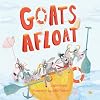
Whimsical and amusing retelling of The Three Billy Goats Gruff with a HEA for everyone!
Goats Afloat by Lezlie Evans is the whimsically amusing tale of a family of goats in a story with elements similar to the familiar, old fairytale of The Three Billy Goats Gruff. In this updated version, the goat family has expanded to five, and there is a wonderful happy-ever-after in store for all involved.
Told with rhyme and rhythm, rather than the possibly frightening and confrontational meetings set on show more the bridge pitting cunning goats against an evil troll, this is a fun story with goats on a mission to celebrate Granny Goat’s birthday at her home some ways away. Worried about the troll who lives under the bridge, which is on the only footpath to granny’s house, the goats hatch a plan to bypass it entirely and travel downriver by canoe, carrying with them a tall and delicious-looking but very unstable and wobbly birthday cake. The suspense around whether that cake is going to make it is very much a part of the fun. The young troll is very interested in what the goats are up to, but in a curiously longing fashion, as if he’s sad at being left out of the coming celebration. With a girl goat and boy goats, some less athletic and others more physically coordinated in the group, this little story has five goats of varying characteristics and abilities for children to consider and relate to, and all the characters are adorable.
What would a children’s picture be without gloriously colorful images to help tell the tale? This one is filled with cute and engaging illustrations by Julia Patton, and it has lots of fun details to examine with each and every reading. Children and the adult guiding them through the story will delight in trying to locate the shy troll hiding on every page as he follows the goats’ progress down the river in their canoe.
The book would be perfect for bedtime reading or reading aloud and sharing in larger group settings. With its variety of characters, detailed illustrations, and sweet story with its surprise ending, this book could attract interest and provide entertainment over multiple readings. I recommend GOATS AFLOAT for children of all ages and for sharing at home, in the classroom, or after-school program settings.
I voluntarily reviewed this after receiving an Advanced Review Copy via Netgalley. show less
Goats Afloat by Lezlie Evans is the whimsically amusing tale of a family of goats in a story with elements similar to the familiar, old fairytale of The Three Billy Goats Gruff. In this updated version, the goat family has expanded to five, and there is a wonderful happy-ever-after in store for all involved.
Told with rhyme and rhythm, rather than the possibly frightening and confrontational meetings set on show more the bridge pitting cunning goats against an evil troll, this is a fun story with goats on a mission to celebrate Granny Goat’s birthday at her home some ways away. Worried about the troll who lives under the bridge, which is on the only footpath to granny’s house, the goats hatch a plan to bypass it entirely and travel downriver by canoe, carrying with them a tall and delicious-looking but very unstable and wobbly birthday cake. The suspense around whether that cake is going to make it is very much a part of the fun. The young troll is very interested in what the goats are up to, but in a curiously longing fashion, as if he’s sad at being left out of the coming celebration. With a girl goat and boy goats, some less athletic and others more physically coordinated in the group, this little story has five goats of varying characteristics and abilities for children to consider and relate to, and all the characters are adorable.
What would a children’s picture be without gloriously colorful images to help tell the tale? This one is filled with cute and engaging illustrations by Julia Patton, and it has lots of fun details to examine with each and every reading. Children and the adult guiding them through the story will delight in trying to locate the shy troll hiding on every page as he follows the goats’ progress down the river in their canoe.
The book would be perfect for bedtime reading or reading aloud and sharing in larger group settings. With its variety of characters, detailed illustrations, and sweet story with its surprise ending, this book could attract interest and provide entertainment over multiple readings. I recommend GOATS AFLOAT for children of all ages and for sharing at home, in the classroom, or after-school program settings.
I voluntarily reviewed this after receiving an Advanced Review Copy via Netgalley. show less
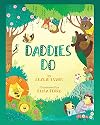
Daddies get center stage in this cute, sweet and warming picture book with one, wonderful intention. . .to celebrate Dads!
With whimsical rhymes, each page hits upon the amazing, fun and important things dads do with and for their kids. After each two-page spread, the phrase 'Daddies Do. That's Who!' appears—something young readers will easily catch onto and start yelling along. And dads do a lot. From wrestling for fun, to clapping the loudest at school plays, to swooping in to save bad show more days, this book is chucked full.
Bright, humorous and touching illustrations radiate on every page. The dads and their kids are depicted with various animals from lions, to penguins to octopuses and everything in between. The settings are lively and the characters induce smiles. There are also many little details sprinkled in to make each flip through the pages interesting.
Warmth and love fill these pages as the dads aren't only fun and exciting, but patient, kind and supporting. It's a great book for Father's Day and simply for those moments to think of dads.
I received a complimentary copy and enjoyed it enough to want to leave my honest thoughts. show less
With whimsical rhymes, each page hits upon the amazing, fun and important things dads do with and for their kids. After each two-page spread, the phrase 'Daddies Do. That's Who!' appears—something young readers will easily catch onto and start yelling along. And dads do a lot. From wrestling for fun, to clapping the loudest at school plays, to swooping in to save bad show more days, this book is chucked full.
Bright, humorous and touching illustrations radiate on every page. The dads and their kids are depicted with various animals from lions, to penguins to octopuses and everything in between. The settings are lively and the characters induce smiles. There are also many little details sprinkled in to make each flip through the pages interesting.
Warmth and love fill these pages as the dads aren't only fun and exciting, but patient, kind and supporting. It's a great book for Father's Day and simply for those moments to think of dads.
I received a complimentary copy and enjoyed it enough to want to leave my honest thoughts. show less
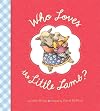
I, personally, consider more than one "mommy loves her baby" book one too many. However, my guru of all things baby and "normal", our adult services librarian, informs me you cannot have too many "mommy loves her baby" books. Annoyingly, she appears to be correct. Of course, this particular one, Who loves the little lamb by Lezlie Evans is also illustrated by the versatile but unmistakable David McPhail, so we will make an exception. Just this once. One by one, we see fussy, messy, clumsy, show more naughty animal children - and one by one we see a loving mama for each animal.
Verdict: Charming McPhail illustrations and a theme that never fails to attract parents of babies and toddlers make this a definite must for your library collection. show less
Verdict: Charming McPhail illustrations and a theme that never fails to attract parents of babies and toddlers make this a definite must for your library collection. show less
Awards

You May Also Like


Associated Authors
Statistics
- Works
- 13
- Members
- 1,907
- Popularity
- #13,498
- Rating
- 3.7
- Reviews
- 31
- ISBNs
- 40