
Michael Russ (2)
Author of Aikido Toho Iai
For other authors named Michael Russ, see the disambiguation page.
Works by Michael Russ
Tagged
Common Knowledge
There is no Common Knowledge data for this author yet. You can help.
Members
Reviews
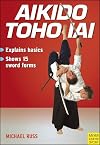
O Sensei Morihei Ueshiba, the founder of aikido, often said to his students that training for aikido without using the sword is not enough. For the first tme, this book introduces a system founded by Shoji Nishio Sensei called Aikido Toho Iai, which is the connection between the art of sword drawing and aikido techniques. The sword is the origin of the aikido techniques, and this book shows you how to use it in the right way. Using examples of 15 sword forms and the corresponding aikido show more techniqes, the book enables you to create our own sword form for different aikido techniqes by understanding the principles of the sword. This will bring you more success in martial art and much more fun while training for it.
Dr. Michael Russ, Bamberg, Germany, started training karate at at the age of 10. Always looking for something new, he joined many dojos and experimented with different styles.
But when he had the possibilitiy to learn from the well konwn Japanese teacher Shojji Nishio Sensei, Dr. Russ started learning swordsmanship and aikido as the basis of his martial art. Now he runs his own dojo, in which people learn the art of aikido, aikido toho iai and jiu jitsu.
Dr. Russ holds a 3rd degree black belt in aikido and aikido toho iai, a 6th degree black belt in karate and a 2nd degree balck belt in jiu jitsu.
Contents
Preface
Part I Background
Chapter 1 History of swordsmanship in ancient Japan
Chapter 2 The Japanese sword
Chapter 3 The dojo and etiquette
Chapter 4 The training lesson
Part II Basics
Chapter 1 Before the fight
Consciously and actively expecting an attack
How to release the safety clip of the sword
Chapter 2 In sword combat with the opponent
How to deal with the attack
The entrance from the outside
The entrance from the inside
Drawing the sword
The counterattack
Fundamentals of cutting
Shomen uchi: The straight downward cut
Kaesagiri oroshi: The diagonal cut
Yokomen uchi: The cut to the neck
Kiriage: The upward cut
Do uchi: The horizontal cut
Tsuki: The straight thrust
Chapter 3 The fight is over
Controlling the opponent
Seigan: The on guard position
Jodan no kame: The upper level position
Gedan no kamae: Thelower level position
Shira seigan: The horizontal sword position
Shin no kamae: The positon to threaten the heart of theoponent
Waki gedan no kamae: The secondlower level position
Zenkutsu tachi: The forward stance
Kake tachi: The crossed feet position
Shaking the blood from the blade
The first form of chiburi
The second form of chiburi
The third form of chiburi
The fourth form of chiburi
Chapter 4 Finishing the form
Resheathing the sword
The first form of the noto
The second form of the noto
The third form of the noto
The fourth form of the noto
After combat with the sword
Part III The sword forms
Shohatto maegiri
Ukenagashi
Ushirogiri
Zengogiri
Sayugiri
Tsuka osae
Tekubi osae
Kawashi tsuke
Tsukekome
Tsume
Sanpo
Shiho
Nukiawase
Todome
Suemonogiri
Part IV Transferring the principles of sword fighting into aikido.
Chapter 1 Waiting for an attack
There is no particular fighting stance
Awase, the attack and the defense reaction are made simultaneously
The movement for reacting to an attack is always the same
Irimi-Half a step is enough to defeat an attacker
Chapter 2 Fighting an opponent
The particularities of the one-edged sword
There are no levers in aikido
Why aikido is never wrong
Chapter 3 Symmetry in aikido
Part V The aikido techniques
Chapter 1 Ai hanmi katate dori no ikkyo
Chapter 2 Shomen uchi ikkyo
Chapter 3 Gyaku hanmi katate dori no kaiten nage
Chapter 4 Ai hanmi katate dori no shiho nage
Chapter 5 Gyaku hanmi katate dori no shiho nage
Chpater 6 Gyakku hanmi nikyo
Chapter 7 Ai hanmi nikyo
Chpater 8 Jodan tsuki no sankyo
Chapter 9 Jodan tsuki no kote kaeshi
Chapter 10 Shomen uchi no irimi nage
Chapter 11 Shomen uchi uchi kaiten sankyo
Chapter 12 Yokomen uchi no shiho hage
Chapter 13 Yokomen uchi gokyo
Part VI Appendix
List of the 15 described sword forms and the aikido techniques
Terminology
Photo & illustration credits show less
Dr. Michael Russ, Bamberg, Germany, started training karate at at the age of 10. Always looking for something new, he joined many dojos and experimented with different styles.
But when he had the possibilitiy to learn from the well konwn Japanese teacher Shojji Nishio Sensei, Dr. Russ started learning swordsmanship and aikido as the basis of his martial art. Now he runs his own dojo, in which people learn the art of aikido, aikido toho iai and jiu jitsu.
Dr. Russ holds a 3rd degree black belt in aikido and aikido toho iai, a 6th degree black belt in karate and a 2nd degree balck belt in jiu jitsu.
Contents
Preface
Part I Background
Chapter 1 History of swordsmanship in ancient Japan
Chapter 2 The Japanese sword
Chapter 3 The dojo and etiquette
Chapter 4 The training lesson
Part II Basics
Chapter 1 Before the fight
Consciously and actively expecting an attack
How to release the safety clip of the sword
Chapter 2 In sword combat with the opponent
How to deal with the attack
The entrance from the outside
The entrance from the inside
Drawing the sword
The counterattack
Fundamentals of cutting
Shomen uchi: The straight downward cut
Kaesagiri oroshi: The diagonal cut
Yokomen uchi: The cut to the neck
Kiriage: The upward cut
Do uchi: The horizontal cut
Tsuki: The straight thrust
Chapter 3 The fight is over
Controlling the opponent
Seigan: The on guard position
Jodan no kame: The upper level position
Gedan no kamae: Thelower level position
Shira seigan: The horizontal sword position
Shin no kamae: The positon to threaten the heart of theoponent
Waki gedan no kamae: The secondlower level position
Zenkutsu tachi: The forward stance
Kake tachi: The crossed feet position
Shaking the blood from the blade
The first form of chiburi
The second form of chiburi
The third form of chiburi
The fourth form of chiburi
Chapter 4 Finishing the form
Resheathing the sword
The first form of the noto
The second form of the noto
The third form of the noto
The fourth form of the noto
After combat with the sword
Part III The sword forms
Shohatto maegiri
Ukenagashi
Ushirogiri
Zengogiri
Sayugiri
Tsuka osae
Tekubi osae
Kawashi tsuke
Tsukekome
Tsume
Sanpo
Shiho
Nukiawase
Todome
Suemonogiri
Part IV Transferring the principles of sword fighting into aikido.
Chapter 1 Waiting for an attack
There is no particular fighting stance
Awase, the attack and the defense reaction are made simultaneously
The movement for reacting to an attack is always the same
Irimi-Half a step is enough to defeat an attacker
Chapter 2 Fighting an opponent
The particularities of the one-edged sword
There are no levers in aikido
Why aikido is never wrong
Chapter 3 Symmetry in aikido
Part V The aikido techniques
Chapter 1 Ai hanmi katate dori no ikkyo
Chapter 2 Shomen uchi ikkyo
Chapter 3 Gyaku hanmi katate dori no kaiten nage
Chapter 4 Ai hanmi katate dori no shiho nage
Chapter 5 Gyaku hanmi katate dori no shiho nage
Chpater 6 Gyakku hanmi nikyo
Chapter 7 Ai hanmi nikyo
Chpater 8 Jodan tsuki no sankyo
Chapter 9 Jodan tsuki no kote kaeshi
Chapter 10 Shomen uchi no irimi nage
Chapter 11 Shomen uchi uchi kaiten sankyo
Chapter 12 Yokomen uchi no shiho hage
Chapter 13 Yokomen uchi gokyo
Part VI Appendix
List of the 15 described sword forms and the aikido techniques
Terminology
Photo & illustration credits show less
Statistics
- Works
- 1
- Members
- 12
- Popularity
- #813,247
- Reviews
- 1
- ISBNs
- 9
- Languages
- 1