
David Grimaldi
Author of Evolution of the Insects
About the Author
Works by David Grimaldi
Associated Works
Tagged
Common Knowledge
- Gender
- male
Members
Reviews
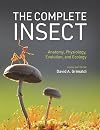
I was blown away by this book. The quality of the pictures...the scope of the book....the clever way they have covered off the whole of entomology in one book by focussing on main fuctions like reproduction and nervous and sensory systems. I was raving about it to my family and still I think it is a fantastic book but with a reservation. That is, Chapter 4. I’ll cover Chapter 4 a bit later.
But overall, it's a great book. Loved the photos, loved the diagrams (well mostly), and the text is show more generally clear, well written and matches the illustrations. The authors and the overall editor are to be congratulated for putting together such a volume. It is so far ahead of the text book that I had when I was studying entomology that there is just no comparison. Though I do remember going out with Ted (who later became a professional entomologist) and he rolled some corrugated carboard around the trunk of a small sapling. And we came by the following day and collected the cardboard plus a collection of caterpillars who had hidden there. He collected some leaves and raised the caterpillars on them until they pupated and turned into butterflies....no chasing around with butterfly nets for our Ted. I mention this because there was no mention of the practical aspects of entomology, collecting and observations in the wild etc. Perhaps this was deliberate and the focus was intentionally just on insects themselves ....not on how they are collected and preserved.
Given the massive range of species (3.5 million species?) and huge differences between them. It’s really hard to look for features that they have in common ; that you can write about in a collective way. And I think the authors have been absolutely outstanding in this respect.
But, I have one big reservation. Chapter 4 is just very hard to read and to follow. It’s partly that the subject matter (such as the genetics of sexual differentiation in insects) is complex but it’s more that it is poorly written and edited. For example, the term JH is used on page 211 without explanation and is not actually defined until page 217.
The term “titre” is used without explanation multiple times …especially on p 215 but not until page 217 are we told that she is using it as “levels”. (I assume it actually derives from some form of titration to ascertain the level of the hormones) and when I researched it, it seems to be a fairly common term though I found no mention of “titre” in the index of three major chemistry textbooks, nor in textbooks on biochemistry or organic chemistry. So a simple explanation is warranted when it is first introduced.
Then there is the confusing use of ambiguous sentences such as this: “This is why some bacteria living inside insects have the capacity to change their sex”. (p1790. Well what is changing sex? The bacteria? The insect? ….. you need to read on to discover that she means the insect....... This is just bad editing!
I found many of the diagrams frustratingly hard to follow. Just to take one example (although all the sex determination diagrams suffer in the same way)….. the diagram on p 178 illustrating Haplodiploidy in Hymenoptera. In the first row we have a fly with nn chromosomes. So I assume from the text that it is female but it has an M alongside it (indicating male). If one ignores this confusion and proceed along the row I can see that a diploid female can produce a single n chromosome which can combine with a male single n chromosome and produce the diploid female with the red nn. But what about the fly image at the end of the row? I assume that it is female but it doesn’t have the F marker against it so I’m not sure. Please give us consistency. And with the lower row we start with a fly that has one n so presumably is male. Well please mark it as male. And as we proceed along the bottom row we end up with another fly with an n chromosome ….. but what gender is it? Apparently male. Well please mark it as male in a diagram that is supposed to be clarifying things. And whilst we are at it….. how does the red n in the first row convert into a blue n in the second row?
It’s confusing and certainly not clear. (And I’ve done courses in both genetics and entomology so I wonder how the “young people who should have access to the book early in their lives”….. according to the preface….. are going to struggle with these diagrams?) Even with the text alongside it’s difficult to follow and I think diagrams should be self explanatory. They really need to be completely re-worked.
While I’m complaining about the diagrams of chapter 4…… in the diagram on p217, on the Y axis we are told that we are measuring the concentration of two hormones. And, sure enough there is a black trace and a light brown or orange trace. But which is which? There is no key. Plus we are told that one of the hormones is 20E (Y axis) but we are not introduced to 20E until p218.
And on p 186. We are told that insect sperm is generally composed of an acrosome etc., but what is an acrosome? It doesn’t appear in the diagram; it doesn’t appear in the glossary; it doesn’t appear in the index? Is it the word “axoneme” misspelled. Very confusing when one is working carefully through the text. I didn’t find this difficulty with the other chapters of the book.
And the diagram on p188…. What is “Kruppel”? It never seems to be defined.
And page 190, under viviparity, we are told that” females give birth to juveniles and feed them an equivalent of milk”. Well what is this “equivalent”? Seems to be poor editing.
Yes, Chapter 4 needs considerable re-editing. It’s a really weak part of the book.
But it’s certainly not all bad. I found the firefly light patterns fascinating and quite new to me. Likewise the diagrams on p199 showing developments inside a chrysalis. Fascinating stuff. And the information about 20E and Juvenile Hormone III on pages 218-219 is starting to answer a lot of the questions I’ve always had about metamorphosis.
But even with my reservations about Chapter 4, it’s not enough to put me off the book. I’m glad I’ve had the chance to read it and, will probably re-read parts of it from time to time. Thanks to Grimaldi and the other authors. It’s a treasure. Five stars from me. show less
But overall, it's a great book. Loved the photos, loved the diagrams (well mostly), and the text is show more generally clear, well written and matches the illustrations. The authors and the overall editor are to be congratulated for putting together such a volume. It is so far ahead of the text book that I had when I was studying entomology that there is just no comparison. Though I do remember going out with Ted (who later became a professional entomologist) and he rolled some corrugated carboard around the trunk of a small sapling. And we came by the following day and collected the cardboard plus a collection of caterpillars who had hidden there. He collected some leaves and raised the caterpillars on them until they pupated and turned into butterflies....no chasing around with butterfly nets for our Ted. I mention this because there was no mention of the practical aspects of entomology, collecting and observations in the wild etc. Perhaps this was deliberate and the focus was intentionally just on insects themselves ....not on how they are collected and preserved.
Given the massive range of species (3.5 million species?) and huge differences between them. It’s really hard to look for features that they have in common ; that you can write about in a collective way. And I think the authors have been absolutely outstanding in this respect.
But, I have one big reservation. Chapter 4 is just very hard to read and to follow. It’s partly that the subject matter (such as the genetics of sexual differentiation in insects) is complex but it’s more that it is poorly written and edited. For example, the term JH is used on page 211 without explanation and is not actually defined until page 217.
The term “titre” is used without explanation multiple times …especially on p 215 but not until page 217 are we told that she is using it as “levels”. (I assume it actually derives from some form of titration to ascertain the level of the hormones) and when I researched it, it seems to be a fairly common term though I found no mention of “titre” in the index of three major chemistry textbooks, nor in textbooks on biochemistry or organic chemistry. So a simple explanation is warranted when it is first introduced.
Then there is the confusing use of ambiguous sentences such as this: “This is why some bacteria living inside insects have the capacity to change their sex”. (p1790. Well what is changing sex? The bacteria? The insect? ….. you need to read on to discover that she means the insect....... This is just bad editing!
I found many of the diagrams frustratingly hard to follow. Just to take one example (although all the sex determination diagrams suffer in the same way)….. the diagram on p 178 illustrating Haplodiploidy in Hymenoptera. In the first row we have a fly with nn chromosomes. So I assume from the text that it is female but it has an M alongside it (indicating male). If one ignores this confusion and proceed along the row I can see that a diploid female can produce a single n chromosome which can combine with a male single n chromosome and produce the diploid female with the red nn. But what about the fly image at the end of the row? I assume that it is female but it doesn’t have the F marker against it so I’m not sure. Please give us consistency. And with the lower row we start with a fly that has one n so presumably is male. Well please mark it as male. And as we proceed along the bottom row we end up with another fly with an n chromosome ….. but what gender is it? Apparently male. Well please mark it as male in a diagram that is supposed to be clarifying things. And whilst we are at it….. how does the red n in the first row convert into a blue n in the second row?
It’s confusing and certainly not clear. (And I’ve done courses in both genetics and entomology so I wonder how the “young people who should have access to the book early in their lives”….. according to the preface….. are going to struggle with these diagrams?) Even with the text alongside it’s difficult to follow and I think diagrams should be self explanatory. They really need to be completely re-worked.
While I’m complaining about the diagrams of chapter 4…… in the diagram on p217, on the Y axis we are told that we are measuring the concentration of two hormones. And, sure enough there is a black trace and a light brown or orange trace. But which is which? There is no key. Plus we are told that one of the hormones is 20E (Y axis) but we are not introduced to 20E until p218.
And on p 186. We are told that insect sperm is generally composed of an acrosome etc., but what is an acrosome? It doesn’t appear in the diagram; it doesn’t appear in the glossary; it doesn’t appear in the index? Is it the word “axoneme” misspelled. Very confusing when one is working carefully through the text. I didn’t find this difficulty with the other chapters of the book.
And the diagram on p188…. What is “Kruppel”? It never seems to be defined.
And page 190, under viviparity, we are told that” females give birth to juveniles and feed them an equivalent of milk”. Well what is this “equivalent”? Seems to be poor editing.
Yes, Chapter 4 needs considerable re-editing. It’s a really weak part of the book.
But it’s certainly not all bad. I found the firefly light patterns fascinating and quite new to me. Likewise the diagrams on p199 showing developments inside a chrysalis. Fascinating stuff. And the information about 20E and Juvenile Hormone III on pages 218-219 is starting to answer a lot of the questions I’ve always had about metamorphosis.
But even with my reservations about Chapter 4, it’s not enough to put me off the book. I’m glad I’ve had the chance to read it and, will probably re-read parts of it from time to time. Thanks to Grimaldi and the other authors. It’s a treasure. Five stars from me. show less

This is a small booklet. Nice identification guide to some of the common insects found in Dominican amber.
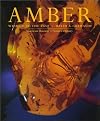
The title of this book is well-worded: "Amber:Window to the Past". That is how I like to think of amber, as little windows into a rainforest or jungle of long ago.
A wide-ranging but accessible guide to a surprisingly interesting subject.
Awards


You May Also Like


Associated Authors
Statistics
- Works
- 4
- Also by
- 1
- Members
- 207
- Popularity
- #106,919
- Rating
- 4.3
- Reviews
- 4
- ISBNs
- 8