

Michael Bennett (12)
Author of F*ck Feelings: One Shrink's Practical Advice for Managing All Life's Impossible Problems
For other authors named Michael Bennett, see the disambiguation page.
Michael Bennett (12) has been aliased into Michael I. Bennett.
Works by Michael Bennett
Works have been aliased into Michael I. Bennett.
F*ck Feelings: One Shrink's Practical Advice for Managing All Life's Impossible Problems (2015) 475 copies, 8 reviews
Tagged
Common Knowledge
- Gender
- male
Members
Reviews
F*ck Feelings: One Shrink's Practical Advice for Managing All Life's Impossible Problems by Michael Bennett MD
Six-word review: Worth keeping an open mind for.
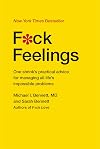
I'm not much of a reader in the self-help genre, but I had to buy this book because its brightly expressive cover just rang my chimes, given the mood I was in when browsing in a bookstore. I flipped it open and saw a page with these lead-ins to bulleted lists:
Here's what you wish for and can't have:
Here's what you can aim for and actually achieve:
Here's how you can do it:
This formulation struck me as eminently--indeed, blindingly--simple and show more straightforward and essentially sold me.
What I didn't realize at first glance was that this was the template for the whole book. Chapter by chapter, topic by topic, the author sets up each so-called impossible problem with general remarks and anecdotal examples, and then come those bulleted lists. Not much in the way of denial or delusion is apt to stand up against them; they are exceptionally BS-resistant and seemingly reality-tested. In forty years of clinical practice, the principal author, a Harvard-educated psychiatrist, has probably heard just about everything and dealt out treatments to hundreds of patients. Now here we have his diagnoses and prescriptions, voiced with wisdom and humor, in hardcover, for the cost of approximately ten minutes with a mental health professional in private practice.
I've spent a lot of time thinking about the classic Serenity Prayer (which, although used by twelve-step programs, was not original with them), and so I took note of this remark in the chapter called "Fuck Serenity":
Remember that the actual Serenity Prayer, which is central to twelve-step methodology, isn't a prayer to end stress and anger, but for the clarity and humility to deal with whatever life inevitably throws at you. (page 143)
In reflecting on this, I realized that without saying it in so many words, Dr. Bennett has written a book that essentially spells out the application of the Serenity Prayer to life situations of all kinds. Exposing our wishful thinking and magical beliefs for what they are, his template makes a firm distinction between what we can change and what we cannot, and then points to the all-important how.
There's probably no one so unfortunate and miserable as to need all the guidance in this book, but I, for one, found none of it useless or boring. I was too busy noticing the many ways it does apply to me, appreciating the reminders to be proud of the good efforts I do make instead of flogging myself for the failures, and wondering how to hold Dr. Bennett's good counsel in mind as I venture on into the fray.
I wouldn't recommend this book to everybody, only to those who have impossible problems.
Inexplicable breakup, incompetent boss, impairing illness, realizing you're being a jerk, knowing you need help and not wanting to go, knowing he needs helps and refuses to go, worrying about a loved one's addiction . . . things like this are snakes that creep into even the jolliest gardens. Dr. Bennett calls a snake a snake, tells you frankly that you can't banish it with a magic wand, and then explains in plain language how to wrangle it or just get it to leave quietly.
And yes, the author's language is a little bit startling, but he has a reason for it. If you're attracted to this book for its content, don't let the cover get in your way.
P.S. Note that the title says managing, not solving. That's the key: learning how to live with things we can't fix, while fixing the things we can. show less
I'm not much of a reader in the self-help genre, but I had to buy this book because its brightly expressive cover just rang my chimes, given the mood I was in when browsing in a bookstore. I flipped it open and saw a page with these lead-ins to bulleted lists:
Here's what you wish for and can't have:
Here's what you can aim for and actually achieve:
Here's how you can do it:
This formulation struck me as eminently--indeed, blindingly--simple and show more straightforward and essentially sold me.
What I didn't realize at first glance was that this was the template for the whole book. Chapter by chapter, topic by topic, the author sets up each so-called impossible problem with general remarks and anecdotal examples, and then come those bulleted lists. Not much in the way of denial or delusion is apt to stand up against them; they are exceptionally BS-resistant and seemingly reality-tested. In forty years of clinical practice, the principal author, a Harvard-educated psychiatrist, has probably heard just about everything and dealt out treatments to hundreds of patients. Now here we have his diagnoses and prescriptions, voiced with wisdom and humor, in hardcover, for the cost of approximately ten minutes with a mental health professional in private practice.
I've spent a lot of time thinking about the classic Serenity Prayer (which, although used by twelve-step programs, was not original with them), and so I took note of this remark in the chapter called "Fuck Serenity":
Remember that the actual Serenity Prayer, which is central to twelve-step methodology, isn't a prayer to end stress and anger, but for the clarity and humility to deal with whatever life inevitably throws at you. (page 143)
In reflecting on this, I realized that without saying it in so many words, Dr. Bennett has written a book that essentially spells out the application of the Serenity Prayer to life situations of all kinds. Exposing our wishful thinking and magical beliefs for what they are, his template makes a firm distinction between what we can change and what we cannot, and then points to the all-important how.
There's probably no one so unfortunate and miserable as to need all the guidance in this book, but I, for one, found none of it useless or boring. I was too busy noticing the many ways it does apply to me, appreciating the reminders to be proud of the good efforts I do make instead of flogging myself for the failures, and wondering how to hold Dr. Bennett's good counsel in mind as I venture on into the fray.
I wouldn't recommend this book to everybody, only to those who have impossible problems.
Inexplicable breakup, incompetent boss, impairing illness, realizing you're being a jerk, knowing you need help and not wanting to go, knowing he needs helps and refuses to go, worrying about a loved one's addiction . . . things like this are snakes that creep into even the jolliest gardens. Dr. Bennett calls a snake a snake, tells you frankly that you can't banish it with a magic wand, and then explains in plain language how to wrangle it or just get it to leave quietly.
And yes, the author's language is a little bit startling, but he has a reason for it. If you're attracted to this book for its content, don't let the cover get in your way.
P.S. Note that the title says managing, not solving. That's the key: learning how to live with things we can't fix, while fixing the things we can. show less
F*ck Feelings: One Shrink's Practical Advice for Managing All Life's Impossible Problems by Michael Bennett MD
Picked up this book because of the irreverent title and iconic cover, and it's a keeper.
The book is ultimately a self-help book, although it's idea of helping is more about getting you to accept that life will never be the perfect thing that you wished for, and more importantly how to _cope_ with life's imperfections and the stuff you'll never really get away from while also giving you practical advice on how to deal with the stuff you could get away from.
I wish this book had been out while show more I was still a young 20-something, wondering if I was cynical because I couldn't find the right practice to believe in or be devoted enough to to turn my entire life around into something 100% awesome. This book confirms a lot of my feelings about things (which lead to me nodding "yeah, yeah, obviously" while reading it but I'm sure I'll need to pick it off my shelf over and over for reality checks.
I really enjoyed the chapters on depression/anxiety because they were incredibly relevant to me. AFAICT the way they described depression/anxiety seemed reasonable, and the way they handled it as something that will _never really go away_ was incredibly useful as a framework to rotate my life around ... it's something I'll have to deal with and manage, never cure.
The therapy section is incredibly surface-level but it does lay out a great mapping of possibilities, as well as a important reminder of how would should approach looking for therapy that's grounded and will limit the temptation of throwing money after money into an unmeasurable success metric.
I was slightly less impressed with the chapters on love and communication, not because they weren't equally practical but because they tended to mirror the status quo when it came to typical cis heterosexual norms. I think it did a good job being clear that the "men are from mars, women are from venus" is bullshit, but the same pragmatic cynicism that permeates the rest of the book also means that the book accepts language that implies that women and men deal with relationships in a heavily gendered way. It kind of sucks for example that women tend to be pigeonholed into the manic pixie dream girl or "crazy bitch" role, and that men tend to be notoriously bad at dealing with intimacy and emotion, but while I don't think the book demands this is something inherent to gender, it views itself as helping people within that framework instead of challenging it (which was never part of the authors' scope, but it's unfortunate given how much the crappiness of relationships is as much social expectations as it is people's failings.)
Each chapter has a very clear structure, text followed by suggested self-written letters followed by a joke matrix of utopian but completely impractical outcomes and solutions. It got boring after a while and seemed repetitive, but for my favourite chapters I chose to read them and identified with the imagined letter-writers so I will admit that for the areas I'm still working out in my own life, they were poignant even while having a sort of silly humourist column feel about them.
If you don't feel your life is perfect and you don't already know the exact fix, I'd highly recommend reading this book and keeping it around if you're the kind to stress yourself out about life's problems. Even if you feel everything can be solved by the simple use of X, I recommend having a copy anyway since since it's a great reality check. I wish everyone I knew still in their teens and 20s would read it, but I suspect they're not yet old and crotchety and they might as well appreciate reading the book when they're ready to appreciate it and have lost the energy for devoting one's whole life towards that all-encompassing solution which will solve everything :D
I assume must people don't need to read every chapter in this book, but I assume most people will really benefit from at least one chapter. show less
The book is ultimately a self-help book, although it's idea of helping is more about getting you to accept that life will never be the perfect thing that you wished for, and more importantly how to _cope_ with life's imperfections and the stuff you'll never really get away from while also giving you practical advice on how to deal with the stuff you could get away from.
I wish this book had been out while show more I was still a young 20-something, wondering if I was cynical because I couldn't find the right practice to believe in or be devoted enough to to turn my entire life around into something 100% awesome. This book confirms a lot of my feelings about things (which lead to me nodding "yeah, yeah, obviously" while reading it but I'm sure I'll need to pick it off my shelf over and over for reality checks.
I really enjoyed the chapters on depression/anxiety because they were incredibly relevant to me. AFAICT the way they described depression/anxiety seemed reasonable, and the way they handled it as something that will _never really go away_ was incredibly useful as a framework to rotate my life around ... it's something I'll have to deal with and manage, never cure.
The therapy section is incredibly surface-level but it does lay out a great mapping of possibilities, as well as a important reminder of how would should approach looking for therapy that's grounded and will limit the temptation of throwing money after money into an unmeasurable success metric.
I was slightly less impressed with the chapters on love and communication, not because they weren't equally practical but because they tended to mirror the status quo when it came to typical cis heterosexual norms. I think it did a good job being clear that the "men are from mars, women are from venus" is bullshit, but the same pragmatic cynicism that permeates the rest of the book also means that the book accepts language that implies that women and men deal with relationships in a heavily gendered way. It kind of sucks for example that women tend to be pigeonholed into the manic pixie dream girl or "crazy bitch" role, and that men tend to be notoriously bad at dealing with intimacy and emotion, but while I don't think the book demands this is something inherent to gender, it views itself as helping people within that framework instead of challenging it (which was never part of the authors' scope, but it's unfortunate given how much the crappiness of relationships is as much social expectations as it is people's failings.)
Each chapter has a very clear structure, text followed by suggested self-written letters followed by a joke matrix of utopian but completely impractical outcomes and solutions. It got boring after a while and seemed repetitive, but for my favourite chapters I chose to read them and identified with the imagined letter-writers so I will admit that for the areas I'm still working out in my own life, they were poignant even while having a sort of silly humourist column feel about them.
If you don't feel your life is perfect and you don't already know the exact fix, I'd highly recommend reading this book and keeping it around if you're the kind to stress yourself out about life's problems. Even if you feel everything can be solved by the simple use of X, I recommend having a copy anyway since since it's a great reality check. I wish everyone I knew still in their teens and 20s would read it, but I suspect they're not yet old and crotchety and they might as well appreciate reading the book when they're ready to appreciate it and have lost the energy for devoting one's whole life towards that all-encompassing solution which will solve everything :D
I assume must people don't need to read every chapter in this book, but I assume most people will really benefit from at least one chapter. show less
F*ck feelings : one shrink's practical advice for managing all life's impossible problems by Michael Bennett MD
I'm generally not a self-help reader, but the title of this one sucked me in. I don't think there's a soul that knows me that would call me a mushy, emotional personality (unless it's covered in fur); it's not that I don't care, but I tend to be crap at expressing it and find I'm most comfortable with things I can fix. So I found myself interested, of course, in a book that sort of spoke to me - shouted, really - right from it's bold yellow cover.
My overall impressions of the book: show more well-written, bluntly stated, common sense advice that might be hard to hear for many but couched in dry, humorous, often irreverent narrative. Each section follows a very precise format of introduction, list of what people would like in a dream-world, list of achievable goals, 3 real-life examples (which are amalgamations of patient stories, and therefore anonymous), further discussion relevant to those three examples, and finally, a form letter you can send/read to yourself or whomever it is that's driving you bonkers. Sometimes there are charts of appropriate and inappropriate responses to certain situations and boxed out areas of additional information.
This makes for an extraordinarily organised layout, and the writing is hilarious, but it also makes for a repetition that I often found tedious, making the book easy to put down which meant it stayed on my currently reading list for approximately 300 times longer than it should have. Still there was a lot of good, solid information and truth to be found and a section or two (or three) will definitely be referred back to in the future. show less
My overall impressions of the book: show more well-written, bluntly stated, common sense advice that might be hard to hear for many but couched in dry, humorous, often irreverent narrative. Each section follows a very precise format of introduction, list of what people would like in a dream-world, list of achievable goals, 3 real-life examples (which are amalgamations of patient stories, and therefore anonymous), further discussion relevant to those three examples, and finally, a form letter you can send/read to yourself or whomever it is that's driving you bonkers. Sometimes there are charts of appropriate and inappropriate responses to certain situations and boxed out areas of additional information.
This makes for an extraordinarily organised layout, and the writing is hilarious, but it also makes for a repetition that I often found tedious, making the book easy to put down which meant it stayed on my currently reading list for approximately 300 times longer than it should have. Still there was a lot of good, solid information and truth to be found and a section or two (or three) will definitely be referred back to in the future. show less
F*ck Feelings: One Shrink's Practical Advice for Managing All Life's Impossible Problems by Michael Bennett MD
Good, practical, logical approach to trying to keep your poop in a group and thankfully not an all touchy-feely-let's-all-just-self-actualize-ourselves-to-mental-health book. That said, I agree with another reviewer who stated that this is not a sit and read it book. Although it is interesting and very funny, it is more of a dip your ladle in when you need some practical advice book.
Awards

Statistics
- Works
- 3
- Members
- 551
- Popularity
- #45,289
- Rating
- 3.5
- Reviews
- 9
- ISBNs
- 154
- Languages
- 7