
Katherine Roberts (1) (1962–)
Author of Song Quest
For other authors named Katherine Roberts, see the disambiguation page.
Series
Works by Katherine Roberts
Tamora Pierce: Enter the Circle 2 copies
Associated Works
Visionary Tongue: A Selection of Stories and Poems from the Magazine (2017) — Contributor — 3 copies
Tagged
Common Knowledge
- Canonical name
- Roberts, Katherine
- Legal name
- Roberts, Katherine
- Birthdate
- 1962-02-12
- Gender
- female
- Education
- University of Bath (BS, Mathematics)
- Occupations
- novelist
- Nationality
- England
- Birthplace
- Torquay, Devon, England, UK
- Places of residence
- Stroud, Gloucestershire, England, UK
- Associated Place (for map)
- England, UK
Members
Discussions
Fantasy book teen in Name that Book (February 2018)
Reviews

When a shipwreck washes up on the shore of the Isles of Echoes, the Final Years of the Echorium are tasked with finding the remnants. But for three of the students they find more than remnants. One will discover a talent to communicate with the merlee (half human, half animal creatures), one will prove to be unsuitable to be a Singer and one will uncover a plot against the Echorium and take a chance to escape the Isles of Echoes.
This is such a weird book. This is my second read. I initially show more read the whole trilogy as a tween. I adored the bright colours and striking artwork of the Chicken House editions and I remember liking the story even if it was a somewhat bizarre book I didn't quite understand. As an adult rereading, I'd agree that it was bizarre and stand by my lack of understanding.
Considered young adult, the simplicity of the plot, the naivety of the characters and the overall tone definitely are aimed at the younger side. But although a tween read there's a few questionable scenes (the butchering of the merlee - which basically sound like mermaids but maybe not quite as intelligent?, the cannibalism of eating what is clearly stated as being half human and a bizarre somewhat explicit comment that felt rather threatening upon rereading
The rider passed his pony’s rein and one of the leashes into nearby hands. He dragged the blue quetzal closer to the Khizpriest. It fought weakly against its leash, looking back over its shoulder at its mate. “This is the female,” the rider said, with a sly look at Azri. “If you care to look closely, you’ll see where she lays her eggs.”
Roberts, Katherine. Song Quest (Echorium Sequence Book 1) . Katherine Roberts. Kindle Edition. ) that I would argue aren't quite appropriate for the age. That said, I don't even remember those scenes when I read it the first time, so it'd depend on the tween.
As for the plot, there's mermaid type creatures, a musical magic system and good fighting against evil. A quest to restore peace to the Mainland and put a stop to any violence against half creatures. Fantasy fans will find it familiar, many of the usual tropes are present.
Although there is a lot of worldbuilding and fantasy-esque names, none of it is well explained. It's hinted at and touched upon but never coherently addressed. For instance, the Songs of Power. Towards the end it states that they are used to control emotions and memories. But it's repeatedly mentioned that the Songs can heal. Frenn is physically healed. There were lots of little instances like that that made it hard to follow the plot.
The inclusion of the different viewpoints helped but didn't really alleviate the issue. I liked Rialle but she irritated me with her naivety. Kherron was marginally better with adapting but he certainly wasn't in control of his situation, he just seemed to continue to try making the best out of each problem he caused. I felt rather sorry for him.
I didn't really understand why it was necessary to take away the singing skill if the men couldn't handle the entire range of songs. Or why they practically lobotomized their own people. If nothing else it certainly made Kherron's actions more reasonable. I really didn't understand why Rialle was sent on the quest without providing her any information about what she would face. She would never have lasted without Kherron there to plan a way out.
Frenn was okay. I didn't really understand why he and Rialle were dating? I felt like Rialle and Kherron had a much stronger relationship but it was a minor part of the plot - even if the romance felt unnecessary to be included.
All that aside, there is something unique about this story that keeps readers coming back and makes it memorable for years after reading. Unfortunately the coherency of the plot and worldbuilding lets it down. 3 stars. show less
This is such a weird book. This is my second read. I initially show more read the whole trilogy as a tween. I adored the bright colours and striking artwork of the Chicken House editions and I remember liking the story even if it was a somewhat bizarre book I didn't quite understand. As an adult rereading, I'd agree that it was bizarre and stand by my lack of understanding.
Considered young adult, the simplicity of the plot, the naivety of the characters and the overall tone definitely are aimed at the younger side. But although a tween read there's a few questionable scenes (the butchering of the merlee - which basically sound like mermaids but maybe not quite as intelligent?, the cannibalism of eating what is clearly stated as being half human and a bizarre somewhat explicit comment that felt rather threatening upon rereading
The rider passed his pony’s rein and one of the leashes into nearby hands. He dragged the blue quetzal closer to the Khizpriest. It fought weakly against its leash, looking back over its shoulder at its mate. “This is the female,” the rider said, with a sly look at Azri. “If you care to look closely, you’ll see where she lays her eggs.”
Roberts, Katherine. Song Quest (Echorium Sequence Book 1) . Katherine Roberts. Kindle Edition.
As for the plot, there's mermaid type creatures, a musical magic system and good fighting against evil. A quest to restore peace to the Mainland and put a stop to any violence against half creatures. Fantasy fans will find it familiar, many of the usual tropes are present.
Although there is a lot of worldbuilding and fantasy-esque names, none of it is well explained. It's hinted at and touched upon but never coherently addressed. For instance, the Songs of Power. Towards the end it states that they are used to control emotions and memories. But it's repeatedly mentioned that the Songs can heal. Frenn is physically healed. There were lots of little instances like that that made it hard to follow the plot.
The inclusion of the different viewpoints helped but didn't really alleviate the issue. I liked Rialle but she irritated me with her naivety. Kherron was marginally better with adapting but he certainly wasn't in control of his situation, he just seemed to continue to try making the best out of each problem he caused. I felt rather sorry for him.
I didn't really understand why it was necessary to take away the singing skill if the men couldn't handle the entire range of songs. Or why they practically lobotomized their own people. If nothing else it certainly made Kherron's actions more reasonable. I really didn't understand why Rialle was sent on the quest without providing her any information about what she would face. She would never have lasted without Kherron there to plan a way out.
Frenn was okay. I didn't really understand why he and Rialle were dating? I felt like Rialle and Kherron had a much stronger relationship but it was a minor part of the plot - even if the romance felt unnecessary to be included.
All that aside, there is something unique about this story that keeps readers coming back and makes it memorable for years after reading. Unfortunately the coherency of the plot and worldbuilding lets it down. 3 stars. show less
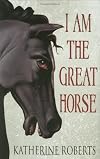
A fine book thanks to its wonderful main character, Bucephalas, the proud, ornery and honorable leader of King Alexander's "herd." His horseiness is effective and fun--"I gave him flat ears"--and effectively applied to the human behavior he sees, like Alexander and his many enemies forever engaging in "squealing contests," people giving each other the human equivalent of flat ears, etc. His perspective is altogether horsey, as when he gives the statistics after each battle of however many show more thousands of enemy dead, X-number of Macedonians, X-number of horses (many by name--"sad, sad, sad, sad, sad!!!"). When he names the guard that led into battle, it's the horses he names (starting with "Me, Bucephalas") followed by which soldier each was carrying. His own and other horses' extraordinarily brave behavior in battle is given attention seldom considered, as he--being kind of a nasty tempered stallion anyway--is biting and rearing and inspiring fear in the enemy just as he does with grooms and other horses--and dodging spears the way a cutting horse works a cow and giving his all to keep his rider safe. It's a point of desperate shame for a war horse to allow his rider to be wounded, let alone to return from battle riderless. He has his best friends, favorite mares, and lesser-character types among the horses, but interestingly, as the narrative is conceived here, the animals don't "converse" among themselves, though they communicate beautifully with their neighs and nickers and squeals. They don't need a bunch of "boring" talk about honor and glory--the kind of stuff that pumps up the troops and sends B back to his hay. Alexander and B are a perfect pair as lead stallions--B literally and A figuratively "dominating dung" (the horsey equivalent of territorial pissing, of course) everywhere they go. One of B's greatest lines is the prideful exclamation at the end of a successful battle or squealing contest: "Ha! dominated."
A very effective trope in the book is B's sixth sense--he sees ghosts, and it is the terror of this at times that causes him to act up--freeze or run in fear, as horses will. He always sees a killed horse's or soldier's ghost rise into the air, and he knows, even from a distance, if someone has died. This becomes an extraordinarily eerie and powerful thing as the book progresses and the numbers of dead rise and Bucephalas himself ages. One friend, Borealis, dies a terrible death on a snowy mountain pass; when the army takes that route again, B starts in horror at the sight of the skeleton--and of the ghost of Borealis waiting there. Borealis pricks his ears and joins his friends and is never far away again, grazing nearby or even entering an empty stall next to B at a stable--an omen if ever there was one, and Alexander sees him, too. As they retrace other battle sites, the ghosts of other dead horses shimmer into view and rejoin the guard--Zoroaster the Persians' kindly sacred gelding, Psylla the brave little mare lost early on, etc. B always neighs after a battle to check in on his personal herd and ticks off their return neighs to be certain they're okay--and among the neighs he recognizes is that of Borealis. A shock--the first time he's ever heard a ghost neigh. When B is gravely injured in battle, the ghosts become more solid. His death is handled with extraordinary delicacy. His great heart stops beating...then begins again. He rises, feeling strong and pain-free, his ghostly friends whinny joyfully to him... There's no mention of realization that he's a ghost himself as he hurries with the guard to the site where word is the king is dying. (He's a great and powerful ghost, by the way, splashing his favorite mare in a water crossing till she gets annoyed with him, giving flat ears to guards who feel intimidated as ever by SOMEthing...) He's at Alexander's bedside when the king's ghost rises. He takes his king on his back once more and they ride into eternity together, conquering death--"Ha!"
Unfortunately, the weak links in this otherwise powerfully imagined magical history are the humans. Alexander comes off pretty much as a megalomaniacal, psychotic knucklehead (not exactly a nuanced portrayal to vie with Mary Renault's), and the fictitious add-ons are blatantly just that: the evil horsemaster, hated by B and dismissed by A, who's around every corner plotting and figuratively twirling his mustache; and Charm, the girl groom first disguised as a boy, who's the only OTHER (uh-huh) person who can ride B, who runs around having psychic dreams and blubbering a lot, and is clearly invented to reel in teenaged girl readers. These are the elements (primarily) that make this a young adult novel. "The great horse" doesn't need their "help" to tell his brave story. show less
A very effective trope in the book is B's sixth sense--he sees ghosts, and it is the terror of this at times that causes him to act up--freeze or run in fear, as horses will. He always sees a killed horse's or soldier's ghost rise into the air, and he knows, even from a distance, if someone has died. This becomes an extraordinarily eerie and powerful thing as the book progresses and the numbers of dead rise and Bucephalas himself ages. One friend, Borealis, dies a terrible death on a snowy mountain pass; when the army takes that route again, B starts in horror at the sight of the skeleton--and of the ghost of Borealis waiting there. Borealis pricks his ears and joins his friends and is never far away again, grazing nearby or even entering an empty stall next to B at a stable--an omen if ever there was one, and Alexander sees him, too. As they retrace other battle sites, the ghosts of other dead horses shimmer into view and rejoin the guard--Zoroaster the Persians' kindly sacred gelding, Psylla the brave little mare lost early on, etc. B always neighs after a battle to check in on his personal herd and ticks off their return neighs to be certain they're okay--and among the neighs he recognizes is that of Borealis. A shock--the first time he's ever heard a ghost neigh. When B is gravely injured in battle, the ghosts become more solid. His death is handled with extraordinary delicacy. His great heart stops beating...then begins again. He rises, feeling strong and pain-free, his ghostly friends whinny joyfully to him... There's no mention of realization that he's a ghost himself as he hurries with the guard to the site where word is the king is dying. (He's a great and powerful ghost, by the way, splashing his favorite mare in a water crossing till she gets annoyed with him, giving flat ears to guards who feel intimidated as ever by SOMEthing...) He's at Alexander's bedside when the king's ghost rises. He takes his king on his back once more and they ride into eternity together, conquering death--"Ha!"
Unfortunately, the weak links in this otherwise powerfully imagined magical history are the humans. Alexander comes off pretty much as a megalomaniacal, psychotic knucklehead (not exactly a nuanced portrayal to vie with Mary Renault's), and the fictitious add-ons are blatantly just that: the evil horsemaster, hated by B and dismissed by A, who's around every corner plotting and figuratively twirling his mustache; and Charm, the girl groom first disguised as a boy, who's the only OTHER (uh-huh) person who can ride B, who runs around having psychic dreams and blubbering a lot, and is clearly invented to reel in teenaged girl readers. These are the elements (primarily) that make this a young adult novel. "The great horse" doesn't need their "help" to tell his brave story. show less

The story of Alexander the Great as told by his horse, Bucephalus.
It sounds very twee, and is obviously meant for a younger readership, but turned out to pack quite an emotional punch.
It sounds very twee, and is obviously meant for a younger readership, but turned out to pack quite an emotional punch.
Based on real-life events, this book describe the relationship between Alexander the Great and his horse. We follow the ambitious young king on his long campaign to conquer the Persian empire along with India and form the largest empire in ancient history, the twist being that the story is literally told from the horse's mouth. The description of their initial encounter in the novel is very similar to that stated in wikipedia:
In this fictional account, Roberts invents a young groom, Charmedes who is attached to Bucephalas by a strong spiritual connection, and since the horse is dangerous to handle by anyone else, Alexander appoints young Charmedes as his official horse groom. When it turns out that Charmedes is actually Charmeia, even though it is unheard of that a girl should do a man's work, Alexander still keeps her on as she is the only one who can give the special care required by Bucephalas to heal all the wounds he receives in battle, and he also relies on what appears to be her prophetic dreams.
I really wanted to like this book a lot. I'm usually immediately taken in by stories about animals and this one was recommended by Kerry, who's suggestions usually hit the spot for me, but it just didn't click. One of the problems is that I don't enjoy stories of battles to begin with and this book described Alexander's conquests step by step. I might have enjoyed it more if it had not been written for young adults, because the tone and approach sometimes grated on me. For example, most of the chapters ended with a tally by the horse of the results following each battle with numbers of enemies dead, numbers taken as slaves, numbers of Macedonians dead and how many horses have perished. The last statistic was usually accompanied by a comment from Bucephalas such as: "Horses dead: 100, including Zoroaster and Aura's foal (VERY sad!)" One interesting aspect was that we got Bucephalas' unbiased view of the great conqueror, who believed himself to be the son of Zeus and was obsessed with reaching the end of the world where it was prophesized that he would attain immortality. Not surprisingly, Alexander comes across as an insecure brute who is intent on forcing the world to regard him as a great king. An interesting book, but unfortunately not quite my cup of tea. show less
When Alexander was ten years old, a horse trader from Thessalyshow more
brought Philip a horse, which he offered to sell for thirteen talents. The horse refused to be mounted by anyone, and Philip ordered it to be taken away. Alexander, however, detected the horse's fear of his own shadow and asked for a turn to tame the horse, which he eventually managed. According to Plutarch, Philip, overjoyed at this display of courage and ambition, kissed him tearfully, declaring: "My boy, you must find a kingdom big enough for your ambitions. Macedon is too small for you", and bought the horse for him. Alexander would name the horse Bucephalas, meaning "ox-head". Bucephalas would be Alexander's companion throughout his journeys as far as India. When Bucephalas died (due to old age, according to Plutarch, for he was already thirty), Alexander named a city after him, Bucephala.
In this fictional account, Roberts invents a young groom, Charmedes who is attached to Bucephalas by a strong spiritual connection, and since the horse is dangerous to handle by anyone else, Alexander appoints young Charmedes as his official horse groom. When it turns out that Charmedes is actually Charmeia, even though it is unheard of that a girl should do a man's work, Alexander still keeps her on as she is the only one who can give the special care required by Bucephalas to heal all the wounds he receives in battle, and he also relies on what appears to be her prophetic dreams.
I really wanted to like this book a lot. I'm usually immediately taken in by stories about animals and this one was recommended by Kerry, who's suggestions usually hit the spot for me, but it just didn't click. One of the problems is that I don't enjoy stories of battles to begin with and this book described Alexander's conquests step by step. I might have enjoyed it more if it had not been written for young adults, because the tone and approach sometimes grated on me. For example, most of the chapters ended with a tally by the horse of the results following each battle with numbers of enemies dead, numbers taken as slaves, numbers of Macedonians dead and how many horses have perished. The last statistic was usually accompanied by a comment from Bucephalas such as: "Horses dead: 100, including Zoroaster and Aura's foal (VERY sad!)" One interesting aspect was that we got Bucephalas' unbiased view of the great conqueror, who believed himself to be the son of Zeus and was obsessed with reaching the end of the world where it was prophesized that he would attain immortality. Not surprisingly, Alexander comes across as an insecure brute who is intent on forcing the world to regard him as a great king. An interesting book, but unfortunately not quite my cup of tea. show less
Lists
Awards


You May Also Like


Associated Authors
Statistics
- Works
- 24
- Also by
- 1
- Members
- 1,481
- Popularity
- #17,342
- Rating
- 3.6
- Reviews
- 21
- ISBNs
- 103
- Languages
- 4
- Favorited
- 1