
Emily M. Danforth
Author of The Miseducation of Cameron Post
About the Author
Works by Emily M. Danforth
Tagged
Common Knowledge
- Canonical name
- Danforth, Emily M.
- Birthdate
- 1980-01-17
- Gender
- female
- Nationality
- USA
- Birthplace
- Miles City, Montana, USA
- Associated Place (for map)
- Montana, USA
Members
Reviews
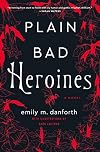
This Alex Award winner is not immediately easy to summarize. It's in some ways a fictional history of a curse that surrounds a Rhode Island boarding school for girls, starting with the strange deaths of two students in the early 1900s. It's also an intertwining of several different narratives which move back and forth through time; one involving the two women who founded the school and the strange events that led to the school's beginnings and the tragedies that happened there, another set show more in the present day and following three young women as they play their parts in a movie being made - based on a book one of them wrote - about those tragedies, with a few smaller but related stories woven in as well. All these women feel the pull of the place and of the curse in various ways, and by the end all the pieces fall into their places in an intricate and satisfying pattern. Nearly all the women in the story are either gay or bi, and the theme of lesbianism-as-curse is threaded through the story beautifully. It's not heavy-handed and it doesn't feel as if sexuality makes the rest of the plot take a back seat, but instead it is both an important part of the story and also seamlessly included. Overall, a very cool story - very creepy in parts but never outright scary - very well told. show less

Un-put-downable!
Cameron Post was twelve years old when she first kissed a girl. Her best friend Irene Klauson, in the Klausons' hayloft, one hot, sweltering June afternoon before the start of seventh grade.
The very next day, Cam's parents died. En route to the annual camping trip, their car jumped a guardrail at Quake Lake - where Joanie Wynton (now Joanie Post) and her family had escaped death by earthquake and flood decades earlier.
So begins The Miseducation of Cameron Post: The afternoon show more my parents died, I was out shoplifting with Irene Klauson.
The year is 1989, long before most Americans had heard of gay marriage, at a time when voters were repealing gay rights legislation not just in middle America, but on the West Coast as well. Growing up in the conservative, church-going small town of Miles City, Montana, Cameron doesn't know what to make of her budding feelings for her best friend - and for the girls who will follow: Lindsey, Cam's main competition during the summer swim meets; Coley, her impossibly gorgeous high school classmate and fellow church member; and Mona, an experienced college-aged lifeguard/Coley rebound.
Cam's upbringing falls to two extended family members: Grandma Post, a regular visitor at the Post house; and Joanie's sister Ruth, a born-again Christian who's practically a stranger to the newly orphaned girl. While the Posts were semi-practicing Christians (church on holidays, mostly), Ruth makes attendance at an evangelical mega-church mandatory, with participation in the youth group Firepower close behind. Here Cam is treated to weekly lectures on the sin of sexual perversion, homosexuality chief among them.
When Cam is finally outed, Ruth sends her to Pastor Rick's new school for troubled teens, God's Promise Christian Discipleship Program. Spoiler alert: it's not too far from Quake Lake, providing ample opportunity for the story to come full circle. (Cam initially blames her own "deviant" behavior for her parents' deaths: the accident was God's way of punishing her. In time - and, ironically, with a little help from God's Promise cold-as-ice psychologist Lydia - Cam chooses to believe otherwise.)
The Miseducation of Cameron Post is a stunning debut from emily m. danforth. Cameron, Irene, Coley, Jamie, Lindsey, Mona - these are some of the most authentic fictional teenagers I've ever had the pleasure of meeting. One part repudiation of ex-gay "therapy," three parts coming of age story, Cameron's tale is painfully relatable. While The Miseducation of Cameron Post is most likely to strike a chord with gay and lesbian teens grappling with their sexuality and society's reaction to it, it's not just for LGBTQ teens. Or teens, period. From Cam's mechanical attempts to make it work with best bud Jamie, to her kleptomaniacal shoplifting habit and penchant for breaking into creepy abandoned buildings, there's a little bit of Cam in all of us: awkward, unsure, hostile, sarcastic, rebellious, easily embarrassed, occasionally betrayed by our own adolescent bodies.
While Cam's journey is mostly removed from politics - she's less concerned with labels than being true to who she is - we do get a more radical element in the form of Lindsey, a Seattle native who serves as Cam's lesbian mentor and lifeline to lesbian culture outside of Montana. There's also Mona the lifeguard, who reminds Cam that the world is bigger than Miles City, and fellow God's Promise disciples/potheads Jane Fonda and Adam Red Eagle. Adam further blurs the boundaries between "gay" and "straight"; a Winkte, he describes himself as a pre or third gender that's both male and female. Not gay, not transgender, just different. While at God's Promise, Adam and Cam engage in makeout sessions which Cam compares to those shared with Lindsey - fun but not emotionally serious - thus further illustrating the complex nature of human sexuality.
The era (late '80s/early '90s) and setting (small town Montana) loom large in The Miseducation of Cameron Post; so much so that both are major characters unto themselves. As a native New Yorker, I didn't connect so much with the latter; but having been born just a year after Cam, the constant stream of '90s references (Rented VHS tapes! Snail mail! Mix tapes!) stirred up a whole well of buried memories - not all of them bad. Cam's mundane, day-to-day experiences serve as a reminder of what life was like pre-Internet: before Netflix, before instant messaging, before email. Back when care packages took weeks to arrive at their destination, renting movies meant checking them out in person, and research entailed asking a living, breathing librarian for assistance. (Now imagine doing that as a closeted kid in a small town, where everyone knows your name and gossip spreads like wildfire.)
There's so, so much more to love about this story, but I'll leave you to discover it on your own.
The Miseducation of Cameron Post is rather hefty at 480 pages - not that that's a bad thing! I savored every word, and felt that the story ended exactly when it needed to (although I can't deny that I almost want to know what comes next for Cameron Post). It's a lengthy read, but one that's never boring or slow-going. This one's going in my reread pile, for sure.
http://www.easyvegan.info/2014/07/28/the-miseducation-of-cameron-post-by-emily-m... show less
Cameron Post was twelve years old when she first kissed a girl. Her best friend Irene Klauson, in the Klausons' hayloft, one hot, sweltering June afternoon before the start of seventh grade.
The very next day, Cam's parents died. En route to the annual camping trip, their car jumped a guardrail at Quake Lake - where Joanie Wynton (now Joanie Post) and her family had escaped death by earthquake and flood decades earlier.
So begins The Miseducation of Cameron Post: The afternoon show more my parents died, I was out shoplifting with Irene Klauson.
The year is 1989, long before most Americans had heard of gay marriage, at a time when voters were repealing gay rights legislation not just in middle America, but on the West Coast as well. Growing up in the conservative, church-going small town of Miles City, Montana, Cameron doesn't know what to make of her budding feelings for her best friend - and for the girls who will follow: Lindsey, Cam's main competition during the summer swim meets; Coley, her impossibly gorgeous high school classmate and fellow church member; and Mona, an experienced college-aged lifeguard/Coley rebound.
Cam's upbringing falls to two extended family members: Grandma Post, a regular visitor at the Post house; and Joanie's sister Ruth, a born-again Christian who's practically a stranger to the newly orphaned girl. While the Posts were semi-practicing Christians (church on holidays, mostly), Ruth makes attendance at an evangelical mega-church mandatory, with participation in the youth group Firepower close behind. Here Cam is treated to weekly lectures on the sin of sexual perversion, homosexuality chief among them.
When Cam is finally outed, Ruth sends her to Pastor Rick's new school for troubled teens, God's Promise Christian Discipleship Program. Spoiler alert: it's not too far from Quake Lake, providing ample opportunity for the story to come full circle. (Cam initially blames her own "deviant" behavior for her parents' deaths: the accident was God's way of punishing her. In time - and, ironically, with a little help from God's Promise cold-as-ice psychologist Lydia - Cam chooses to believe otherwise.)
The Miseducation of Cameron Post is a stunning debut from emily m. danforth. Cameron, Irene, Coley, Jamie, Lindsey, Mona - these are some of the most authentic fictional teenagers I've ever had the pleasure of meeting. One part repudiation of ex-gay "therapy," three parts coming of age story, Cameron's tale is painfully relatable. While The Miseducation of Cameron Post is most likely to strike a chord with gay and lesbian teens grappling with their sexuality and society's reaction to it, it's not just for LGBTQ teens. Or teens, period. From Cam's mechanical attempts to make it work with best bud Jamie, to her kleptomaniacal shoplifting habit and penchant for breaking into creepy abandoned buildings, there's a little bit of Cam in all of us: awkward, unsure, hostile, sarcastic, rebellious, easily embarrassed, occasionally betrayed by our own adolescent bodies.
While Cam's journey is mostly removed from politics - she's less concerned with labels than being true to who she is - we do get a more radical element in the form of Lindsey, a Seattle native who serves as Cam's lesbian mentor and lifeline to lesbian culture outside of Montana. There's also Mona the lifeguard, who reminds Cam that the world is bigger than Miles City, and fellow God's Promise disciples/potheads Jane Fonda and Adam Red Eagle. Adam further blurs the boundaries between "gay" and "straight"; a Winkte, he describes himself as a pre or third gender that's both male and female. Not gay, not transgender, just different. While at God's Promise, Adam and Cam engage in makeout sessions which Cam compares to those shared with Lindsey - fun but not emotionally serious - thus further illustrating the complex nature of human sexuality.
The era (late '80s/early '90s) and setting (small town Montana) loom large in The Miseducation of Cameron Post; so much so that both are major characters unto themselves. As a native New Yorker, I didn't connect so much with the latter; but having been born just a year after Cam, the constant stream of '90s references (Rented VHS tapes! Snail mail! Mix tapes!) stirred up a whole well of buried memories - not all of them bad. Cam's mundane, day-to-day experiences serve as a reminder of what life was like pre-Internet: before Netflix, before instant messaging, before email. Back when care packages took weeks to arrive at their destination, renting movies meant checking them out in person, and research entailed asking a living, breathing librarian for assistance. (Now imagine doing that as a closeted kid in a small town, where everyone knows your name and gossip spreads like wildfire.)
There's so, so much more to love about this story, but I'll leave you to discover it on your own.
The Miseducation of Cameron Post is rather hefty at 480 pages - not that that's a bad thing! I savored every word, and felt that the story ended exactly when it needed to (although I can't deny that I almost want to know what comes next for Cameron Post). It's a lengthy read, but one that's never boring or slow-going. This one's going in my reread pile, for sure.
http://www.easyvegan.info/2014/07/28/the-miseducation-of-cameron-post-by-emily-m... show less
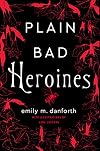
"Plain Bad Heroines" ended up being a bit of a rollercoaster read for me - there were moments where I was deeply intrigued by what was happening, specifically in the past timeline at Brookhants, and then there would be stretches of plot that felt like a chore to get through. It's been awhile since I've read a book that is so interesting but so boring all at the same time.
The main strength of PBH lies in its come-hither promise of a darkly delicious story about a cursed school, queer actors, show more and a little red book that prompted young women to diverge from the beaten path. Especially in the first 200 pages of the novel Danforth weaves the past and the present so wonderfully, and each timeline hints at all these mysterious going-on's in a very tantalizing way that made me want to keep turning pages.
The characters were ones I never really connected to, but I did root for some of them more than others. Audrey and Alex I heavily empathized with and wanted them to succeed in any way they could. On the other hand, Merritt is one of the most obnoxiously irritating characters to exist and I couldn't stand her. I'm fairly certain she was meant to be unlikable for a portion of the novel, and in that sense she was very well-written, but even to the last page I was annoyed by her. Harper felt very flat and everything she did became repetitive, which in turn made her dull to read. I thought her plot was going to be a bit more flashy yet remained predictable.
Which leads to the weaknesses of the book, namely, failure to deliver on the promise of a terrifying tale. The book sets itself up like chaos and darkness are going to descend in the present plot but instead it all just gets dragged out to the extreme. It's over halfway through the book before the present story finally makes its way to Brookhants, and when we're finally there so little really happens! It's more yellow jackets and angst and malfunctioning film equipment, none of which is actually scary. The past plotline also becomes more difficult to enjoy because it feels very low-stakes, and again, becomes repetitive. We see the same kind of horror (yellow jackets, slimy water, physical injury) over and over and over again and it's simply ineffective.
Finally, the ending: when a book is over 600 pages and keeps making big promises, but delivers a weak, uninspired, and too-many-questions-left-unanswered ending, it's bound to be a little bit of a disappointment. It's not a terrible ending, just a boring one.
TL;DR: Parts of this book are enjoyable, even funny, and the writing is strong, but the plot drags too much and doesn't deliver on the promise of terror - also yellow jackets can only be scary once or twice before it feels like a forced motif being slammed over the readers head. show less
The main strength of PBH lies in its come-hither promise of a darkly delicious story about a cursed school, queer actors, show more and a little red book that prompted young women to diverge from the beaten path. Especially in the first 200 pages of the novel Danforth weaves the past and the present so wonderfully, and each timeline hints at all these mysterious going-on's in a very tantalizing way that made me want to keep turning pages.
The characters were ones I never really connected to, but I did root for some of them more than others. Audrey and Alex I heavily empathized with and wanted them to succeed in any way they could. On the other hand, Merritt is one of the most obnoxiously irritating characters to exist and I couldn't stand her. I'm fairly certain she was meant to be unlikable for a portion of the novel, and in that sense she was very well-written, but even to the last page I was annoyed by her. Harper felt very flat and everything she did became repetitive, which in turn made her dull to read. I thought her plot was going to be a bit more flashy yet remained predictable.
Which leads to the weaknesses of the book, namely, failure to deliver on the promise of a terrifying tale. The book sets itself up like chaos and darkness are going to descend in the present plot but instead it all just gets dragged out to the extreme. It's over halfway through the book before the present story finally makes its way to Brookhants, and when we're finally there so little really happens! It's more yellow jackets and angst and malfunctioning film equipment, none of which is actually scary. The past plotline also becomes more difficult to enjoy because it feels very low-stakes, and again, becomes repetitive. We see the same kind of horror (yellow jackets, slimy water, physical injury) over and over and over again and it's simply ineffective.
Finally, the ending: when a book is over 600 pages and keeps making big promises, but delivers a weak, uninspired, and too-many-questions-left-unanswered ending, it's bound to be a little bit of a disappointment. It's not a terrible ending, just a boring one.
TL;DR: Parts of this book are enjoyable, even funny, and the writing is strong, but the plot drags too much and doesn't deliver on the promise of terror - also yellow jackets can only be scary once or twice before it feels like a forced motif being slammed over the readers head. show less
When I am considering throwing a book across the room, I sometimes refer to the one- and two-star reviews of that book, to see if anyone out there felt the same upon finishing the book as I did upon reaching the 15% mark. This is how I decide whether I should press on, or DNF.
Note that I very rarely DNF as early as 15%. But a 619-page book is too long to hate-read.
What I Hated About Plain Bad Heroines
The narrator. What I love about a Kindle is that it will coldly and impersonally tell me show more that the word "Readers" appeared in this book 183 times. "...those names should ring a bell for you, Readers, if you've been paying attention." "Put simply, Readers: they text each other first with the news." After about the 3rd instance I could hardly stand it. 180 more? NO.
The footnotes. There are SO MANY and they are STUPID and have NO RELEVANCE TO THE BOOK WHATSOEVER.
The long, long, longggggg flashbacks full of entirely unnecessary information. For example, one flashback starts on page 74 and is meant to show the first contact, three months prior, between Merritt and Harper. In this flashback we follow Merritt through: a trip to the library, some texts at the library, Merritt rushing home and making herself lemon-honey tea, Merritt then sitting on the porch swing, memories of her father having made the porch swing, several pages about therapy Merritt and her mother went through after the father's death, an extremely excruciatingly long phone conversation (finally) between Merritt and Harper, Merritt's mother arriving home with a guy she used to date, Merritt's mother explaining she just stopped at home to get her phone, Merritt being rude to the guy, and then, not quite lastly, Merritt's mom suggesting kebabs for dinner. After all that, the flashback still goes on for another page or so. At page 88 we finally wrap the thing up. At which point I start searching for one- and two-star reviews.
The boring and pointless sentences. Like - there's a buzzing sound, and then - "It was Audrey's phone; Noel had kept it for her in the side pocket of his shorts during their run, and it was still there, and he was half sitting on it." I mean - WHY?
To sum up: life is short. DNF at will. show less
Note that I very rarely DNF as early as 15%. But a 619-page book is too long to hate-read.
What I Hated About Plain Bad Heroines
The narrator. What I love about a Kindle is that it will coldly and impersonally tell me show more that the word "Readers" appeared in this book 183 times. "...those names should ring a bell for you, Readers, if you've been paying attention." "Put simply, Readers: they text each other first with the news." After about the 3rd instance I could hardly stand it. 180 more? NO.
The footnotes. There are SO MANY and they are STUPID and have NO RELEVANCE TO THE BOOK WHATSOEVER.
The long, long, longggggg flashbacks full of entirely unnecessary information. For example, one flashback starts on page 74 and is meant to show the first contact, three months prior, between Merritt and Harper. In this flashback we follow Merritt through: a trip to the library, some texts at the library, Merritt rushing home and making herself lemon-honey tea, Merritt then sitting on the porch swing, memories of her father having made the porch swing, several pages about therapy Merritt and her mother went through after the father's death, an extremely excruciatingly long phone conversation (finally) between Merritt and Harper, Merritt's mother arriving home with a guy she used to date, Merritt's mother explaining she just stopped at home to get her phone, Merritt being rude to the guy, and then, not quite lastly, Merritt's mom suggesting kebabs for dinner. After all that, the flashback still goes on for another page or so. At page 88 we finally wrap the thing up. At which point I start searching for one- and two-star reviews.
The boring and pointless sentences. Like - there's a buzzing sound, and then - "It was Audrey's phone; Noel had kept it for her in the side pocket of his shorts during their run, and it was still there, and he was half sitting on it." I mean - WHY?
To sum up: life is short. DNF at will. show less
Lists
Rhode Island (1)
Awards


You May Also Like


Associated Authors
Statistics
- Works
- 3
- Members
- 3,440
- Popularity
- #7,390
- Rating
- 3.9
- Reviews
- 145
- ISBNs
- 37
- Languages
- 3
