
Lin Conklin
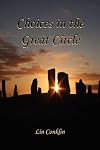
Author of Choices in the Great Circle
Works by Lin Conklin
Tagged
Common Knowledge
- Canonical name
- Conklin, Lin
- Legal name
- Conklin, Lin
- Gender
- female
- Nationality
- USA
- Associated Place (for map)
- USA
Members
Reviews
This review was written for LibraryThing Early Reviewers.
I have always enjoyed reading fictions that explore the conflicts between disparate cultures. This book, set in the High Middle Ages during the Crusades, attracted my attention as it purports to show the conflict between followers of the "Old Ways" of pre-Christian Britons and the "New Ways" of Catholicism.
Sadly, one of the biggest problems with this book is its unfamiliarity with actual history. By the time of the Crusades, show more Catholicism was NOT a "new" religion; it was the firmly established religion of the majority of Europe (any holdouts went to extreme pains to blend in with the mainstream and remain unnoticed, especially by anyone with strong connections to the Church). Other reviewers have gone into more specific proofs of the strength of Catholicism at this time, but for those seeing this review first: everything from famous British saints to an explosion of cathedrals that had been begun (and in several cases, completed) throughout Britain well before the Crusades began.
The book's claim for the reasoning behind the Crusades is also based on faulty history. While conversion was certainly to be desired, the primary reason for Christian European leaders was to regain Middle Eastern territory for Christianity, thereby gaining forgiveness for sins (not by randomly killing non-Christians but by establishing Christian rule in the so-called Holy Lands). Yes, many of the Crusaders were horribly cruel to the people they met on their journeys, but that cruelty was not confined to non-Christians and can easily be seen as symptomatic of the feudal system rather than religion. (Granted, Catholicism encouraged this system as it helped the Church's goals, but still it was more sociopolitical than religious cause.)
Additionally, the Stone Circle mentioned in the book would most certainly not have been quite as intact as it appears. Based on the description, the author appears to be describing Avebury with its beautiful and enormous stones, which by the Middle Ages had plowed fields right in the middle of the circle and houses built up against several of the stones themselves.
Once I realized the faulty history and resigned myself to imagining the timeline as off by six or so centuries, the story has a few problems as well. While switching between various characters' points of view can be an interesting way to tell a story without relying on "Omniscient Narrator" syndrome, the author attempted this multiple times within the same scene, sometimes without clarifying whose point of view we were seeing. Adding the Omniscent Narrator in the middle of a scene that is clearly meant to be from a particular POV is confusing and awkward at best and often leads to the dreaded complaint of editors and readers everywhere: "SHOW me, don't TELL me!"
Finally, while I really wanted to like this book and several of the main characters showed great promise, the book fails to deliver on any of those promises. I would have to recommend steering clear of this one and re-reading Marion Zimmer Bradley. show less
I have always enjoyed reading fictions that explore the conflicts between disparate cultures. This book, set in the High Middle Ages during the Crusades, attracted my attention as it purports to show the conflict between followers of the "Old Ways" of pre-Christian Britons and the "New Ways" of Catholicism.
Sadly, one of the biggest problems with this book is its unfamiliarity with actual history. By the time of the Crusades, show more Catholicism was NOT a "new" religion; it was the firmly established religion of the majority of Europe (any holdouts went to extreme pains to blend in with the mainstream and remain unnoticed, especially by anyone with strong connections to the Church). Other reviewers have gone into more specific proofs of the strength of Catholicism at this time, but for those seeing this review first: everything from famous British saints to an explosion of cathedrals that had been begun (and in several cases, completed) throughout Britain well before the Crusades began.
The book's claim for the reasoning behind the Crusades is also based on faulty history. While conversion was certainly to be desired, the primary reason for Christian European leaders was to regain Middle Eastern territory for Christianity, thereby gaining forgiveness for sins (not by randomly killing non-Christians but by establishing Christian rule in the so-called Holy Lands). Yes, many of the Crusaders were horribly cruel to the people they met on their journeys, but that cruelty was not confined to non-Christians and can easily be seen as symptomatic of the feudal system rather than religion. (Granted, Catholicism encouraged this system as it helped the Church's goals, but still it was more sociopolitical than religious cause.)
Additionally, the Stone Circle mentioned in the book would most certainly not have been quite as intact as it appears. Based on the description, the author appears to be describing Avebury with its beautiful and enormous stones, which by the Middle Ages had plowed fields right in the middle of the circle and houses built up against several of the stones themselves.
Once I realized the faulty history and resigned myself to imagining the timeline as off by six or so centuries, the story has a few problems as well. While switching between various characters' points of view can be an interesting way to tell a story without relying on "Omniscient Narrator" syndrome, the author attempted this multiple times within the same scene, sometimes without clarifying whose point of view we were seeing. Adding the Omniscent Narrator in the middle of a scene that is clearly meant to be from a particular POV is confusing and awkward at best and often leads to the dreaded complaint of editors and readers everywhere: "SHOW me, don't TELL me!"
Finally, while I really wanted to like this book and several of the main characters showed great promise, the book fails to deliver on any of those promises. I would have to recommend steering clear of this one and re-reading Marion Zimmer Bradley. show less
 This review was written for LibraryThing Early Reviewers.
Received as an early reviewer copy for LibraryThing: I found myself frustrated by the repetitive mistakes of the main character, Amay, and her apparent ignorance despite her reputed skill in the pagan arts. I enjoyed the story, but it seemed somewhat stilted at times with only the thoughts of characters or dialogue to glean the storyline. I liked the mysterious nature of some of the characters, but would have loved to see more explanation of the "old Ways" and the two factions that involved show more Ixion and Amay (and her mother). Overall, I was glad I read it and there are some universal truths about human nature and happiness only to be found following your own dreams or "path" that are glaring throughout. I'd recommend to a friend for a lazy summer read. show less
This review was written for LibraryThing Early Reviewers.
This was a truly dreadful book and I haven't read every page. I started the book with every intention of reading it properly but however hard I concentrated I could barely remember how it started or any details of any of the characters.
I like historical novels, which is why I asked for this book, but this one has no sense of history at all. It could have been anywhere at any time. Although it is stated to be north-west England in the High Middle Ages there is nothing that is recognisably show more English in the description of the landscape or nothing to set the date - no mention of a king or other ruler or any other political set-up.
The plot is tortuous with every little detail described and explained but somehow without making it clear what is actually happening. The dialogue is clunky and full of psycho-babble. While I don't think that using archaic language is necessary for a historical language, using modern American style language destroys any possiblity of historical effect.
The ebook version has 530 pages. The story (if there was one) could have been told in half that and could only have been better for it. show less
I like historical novels, which is why I asked for this book, but this one has no sense of history at all. It could have been anywhere at any time. Although it is stated to be north-west England in the High Middle Ages there is nothing that is recognisably show more English in the description of the landscape or nothing to set the date - no mention of a king or other ruler or any other political set-up.
The plot is tortuous with every little detail described and explained but somehow without making it clear what is actually happening. The dialogue is clunky and full of psycho-babble. While I don't think that using archaic language is necessary for a historical language, using modern American style language destroys any possiblity of historical effect.
The ebook version has 530 pages. The story (if there was one) could have been told in half that and could only have been better for it. show less
This review was written for LibraryThing Early Reviewers.I will start off stating that I really wanted to like this book. A fan of historical non-fiction that delves into ancient Britain or Celts in general, I was hoping for something akin to the Sister Fidelma series; however that's not what I found in Choices in the Great Circle. The good point, I actually liked some of the characterization. Whatever else will be said, I genuinely enjoyed some of the characters.
As for the not so good, well, there was a fair amount. First of all, if a story is show more placed in an historical setting, I find that interweaving actual history into the story helps. The problem here was an actual poor understanding of history. **Disclaimer: I am a Roman Catholic, and what I say here is with that perspective. The Crusades were not about killing Muslims. The Holy See wanted to reclaim the Holy Land for Christians; it was primarily a land dispute. The knights that went, went to wrestle the land from Muslims & Jews, and protect pilgrims who went to worship there. The continued idea that knights would only be guaranteed a place in heaven for killing is incorrect; yet stated several times. Also, the "Old Ways" , especially in the north of England, had been dealt with, again not by killing of pagans by the church, but had been converted in the days of Bede years before. In fact, the Synod of Whitby had taken place in upper Britain before the 8th century, in which British Christians were brought into Roman line by (mostly) affirming the date of Easter to the Roman calendar. In other words, in the "High Middle Ages", Christianity (thereby Catholicism) had more than a stronghold in Northern England. The church was also not making merchants rich with "certain trade" and the silk road was not yet open. The only way to state this is, the history was bad, making the story bad.
It came to me late in the book what the underlying problem was: this book is not so much a story as it is an agenda. Too often, the same thing was retold; a mix of all religions are one and we have lost touch with nature (because of the church). It is a shame, because there is real potential in the characters. I simply cannot recommend this book to anyone of any circle. show less
As for the not so good, well, there was a fair amount. First of all, if a story is show more placed in an historical setting, I find that interweaving actual history into the story helps. The problem here was an actual poor understanding of history. **Disclaimer: I am a Roman Catholic, and what I say here is with that perspective. The Crusades were not about killing Muslims. The Holy See wanted to reclaim the Holy Land for Christians; it was primarily a land dispute. The knights that went, went to wrestle the land from Muslims & Jews, and protect pilgrims who went to worship there. The continued idea that knights would only be guaranteed a place in heaven for killing is incorrect; yet stated several times. Also, the "Old Ways" , especially in the north of England, had been dealt with, again not by killing of pagans by the church, but had been converted in the days of Bede years before. In fact, the Synod of Whitby had taken place in upper Britain before the 8th century, in which British Christians were brought into Roman line by (mostly) affirming the date of Easter to the Roman calendar. In other words, in the "High Middle Ages", Christianity (thereby Catholicism) had more than a stronghold in Northern England. The church was also not making merchants rich with "certain trade" and the silk road was not yet open. The only way to state this is, the history was bad, making the story bad.
It came to me late in the book what the underlying problem was: this book is not so much a story as it is an agenda. Too often, the same thing was retold; a mix of all religions are one and we have lost touch with nature (because of the church). It is a shame, because there is real potential in the characters. I simply cannot recommend this book to anyone of any circle. show less
This review was written for LibraryThing Early Reviewers.Statistics
- Works
- 1
- Members
- 29
- Popularity
- #460,289
- Rating
- 2.1
- Reviews
- 19
- ISBNs
- 6
