
Jo S. Kittinger
Author of George Washington Carver (Scholastic News Nonfiction Readers: Biographies)
About the Author
Works by Jo S. Kittinger
George Washington Carver (Scholastic News Nonfiction Readers: Biographies) (2005) 304 copies, 3 reviews
George Washington Carver 1 copy
Tagged
Common Knowledge
There is no Common Knowledge data for this author yet. You can help.
Members
Reviews
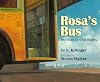
Dark and heavy oils illustrate this story of Rosa Parks and her historic act of advocacy. I liked the level of detail in this: enough to provide context without overwhelming or oversimplifying. I also like the repetition of the line, "That's just the way things were" which anticipates students' questions about why Jim Crow laws existed in the first place.
My one quibble: I wish they had chosen a different font.
My one quibble: I wish they had chosen a different font.
The Civil Rights movement is something I am passionate about. I feel lucky that I am too young to have lived during Jim Crow era, or at least I thought. However, there are still some areas in this country where things really haven't changed. Black and white people are still separated. In schools in Mississippi this is happening, and several other places in the south.
I find it so horrendous that we have treated other human beings as anything less. I was lucky enough to tour the Civil Rights show more museum in the Lorraine Hotel (where MLK was killed) and have been studying the topic ever since. When the chance to read this book came up in this class I couldn't wait.
This book is easy to read and understand from a child's perspective. It explains what happened in detail and explains that it's just what happened. I also like the Author's Note at the end and how it explains that Rosa Parks wasn't just an old woman unwilling to move. She was actually an active member of the NAACP and her protest had been planned. I think it's important for older children to know the true story and how important these figures are in our American history. show less
I find it so horrendous that we have treated other human beings as anything less. I was lucky enough to tour the Civil Rights show more museum in the Lorraine Hotel (where MLK was killed) and have been studying the topic ever since. When the chance to read this book came up in this class I couldn't wait.
This book is easy to read and understand from a child's perspective. It explains what happened in detail and explains that it's just what happened. I also like the Author's Note at the end and how it explains that Rosa Parks wasn't just an old woman unwilling to move. She was actually an active member of the NAACP and her protest had been planned. I think it's important for older children to know the true story and how important these figures are in our American history. show less
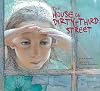
When circumstances necessitate starting over, a mother and daughter purchase a falling-down house, which the mother believes is perfect because they can afford it. But soon they find themselves feeling isolated and defeated. Longing for their old neighborhood and friends, and overwhelmed by the repairs their new house needs, they finally realize they can't do everything alone—the only way to make things better is to ask for help. They both learn that when you reach out to the community, show more people answer with kindness. As the house gets rebuilt, so does their sense of hope and belonging.
A single mother and daughter need to move from their old neighborhood to a new house that cost less. They move to Thirty-Third Street. The daughter renames this Dirty-Third Street because all the houses look old and run down. Mom tells her the house is perfect, because we can afford it. To the daughter, the house just gets worse when she must empty it of trash before she can actually move her things in. They work hard on the house, until even mom gets discouraged and can no longer see through eyes of faith.
The daughter noticed a church, not far from the house, when they drove in. The next day, Sunday, they attend services at this neighborhood church. A call for prayer requests goes out and the daughter answers. She gives a short version of their current situation and asks for prayers that everything work out. Will the daughter’s prayer request receive prayers? Will those prayers be answered?
This is an interesting story. What I mean is, The House on Dirty-Third Street is told without ever giving an actual name to mom or her daughter. Any child, or adult, can read this, picturing themselves as the characters and claim the story as their own. That is absolutely what a story should do; transform us into the story and let us absorb every word as our own. That, in itself, makes this the perfect book for any child experiencing an unwanted move. The House on Dirty-Third Street is the right book for any family downsizing their home, especially for economic reasons. So many people find themselves in this situation in today’s economy, making this book an ideal gift.
The House on Dirty-Third Street is not a religious story. It is a story of people helping people, neighbors helping neighbors. In a mere 32 pages, the author has shown what asking for help, or answering the call for that help, can do for an individual, family, and community. By the weekend, so many differently skilled people help fix this house simply because someone asked for help.
The perfect house mom saw, and the daughter could not, is now a reality for both. The group of people who gathered to help, transformed not only the house; they transformed the lives of the two characters who had felt a great loss leaving their home, neighborhood, and friends. They now have a new home, a new neighborhood, and new friends. This is such an inspiring story. The fear of “the new” is not as fearful as once thought.
I think kids will like this book. If they are going through a similar situation, they will be able to identify with the daughter. On each page, the illustrations beautifully depict the story. Each character’s inner feelings are visible to the reader because of these beautiful pictures. Mrs. Huddle’s look, when greeted by mom with a wave of her hand, shows her distrust and uneasiness with the new people right across from her home. The daughter’s distress huddles in a mass of anguish in those first few pages.
The illustrations change as the story unfolds. At first, we see grayish, washed-out pictures that slowly change into brighter, yet still muted colors and definition. The last third of the story, as everyone is working away and the house transforms, the illustrations POP! with bright primary colors. I really liked The House on Dirty-Third Street despite not normally being drawn to such bleak themes. This one works. The text and the illustrations work in harmony to tell the story of an unwanted move to The House on Dirty-Third Street.
Note: received the book from the publisher, Peachtree Publishers
Originally posted on Kid Lit Reviews:
http://kid-lit-reviews.com/2012/03/25/the-house-on-dirty-third-street-by-jo-s-ki... show less
A single mother and daughter need to move from their old neighborhood to a new house that cost less. They move to Thirty-Third Street. The daughter renames this Dirty-Third Street because all the houses look old and run down. Mom tells her the house is perfect, because we can afford it. To the daughter, the house just gets worse when she must empty it of trash before she can actually move her things in. They work hard on the house, until even mom gets discouraged and can no longer see through eyes of faith.
The daughter noticed a church, not far from the house, when they drove in. The next day, Sunday, they attend services at this neighborhood church. A call for prayer requests goes out and the daughter answers. She gives a short version of their current situation and asks for prayers that everything work out. Will the daughter’s prayer request receive prayers? Will those prayers be answered?
This is an interesting story. What I mean is, The House on Dirty-Third Street is told without ever giving an actual name to mom or her daughter. Any child, or adult, can read this, picturing themselves as the characters and claim the story as their own. That is absolutely what a story should do; transform us into the story and let us absorb every word as our own. That, in itself, makes this the perfect book for any child experiencing an unwanted move. The House on Dirty-Third Street is the right book for any family downsizing their home, especially for economic reasons. So many people find themselves in this situation in today’s economy, making this book an ideal gift.
The House on Dirty-Third Street is not a religious story. It is a story of people helping people, neighbors helping neighbors. In a mere 32 pages, the author has shown what asking for help, or answering the call for that help, can do for an individual, family, and community. By the weekend, so many differently skilled people help fix this house simply because someone asked for help.
The perfect house mom saw, and the daughter could not, is now a reality for both. The group of people who gathered to help, transformed not only the house; they transformed the lives of the two characters who had felt a great loss leaving their home, neighborhood, and friends. They now have a new home, a new neighborhood, and new friends. This is such an inspiring story. The fear of “the new” is not as fearful as once thought.
I think kids will like this book. If they are going through a similar situation, they will be able to identify with the daughter. On each page, the illustrations beautifully depict the story. Each character’s inner feelings are visible to the reader because of these beautiful pictures. Mrs. Huddle’s look, when greeted by mom with a wave of her hand, shows her distrust and uneasiness with the new people right across from her home. The daughter’s distress huddles in a mass of anguish in those first few pages.
The illustrations change as the story unfolds. At first, we see grayish, washed-out pictures that slowly change into brighter, yet still muted colors and definition. The last third of the story, as everyone is working away and the house transforms, the illustrations POP! with bright primary colors. I really liked The House on Dirty-Third Street despite not normally being drawn to such bleak themes. This one works. The text and the illustrations work in harmony to tell the story of an unwanted move to The House on Dirty-Third Street.
Note: received the book from the publisher, Peachtree Publishers
Originally posted on Kid Lit Reviews:
http://kid-lit-reviews.com/2012/03/25/the-house-on-dirty-third-street-by-jo-s-ki... show less
A girl and her mother, starting over, take ownership of a dilapidated house in a distressed neighborhood. As they clean up, their neighbors and church friends join in. Muted illustrations become more vivid and vibrant as the momentum builds. While this book fills an important gap in the literature (the field is dramatically lacking in picture books for children dealing with unemployment and the recession) and the illustrations are compelling, the book moves steadily toward a more optimistic show more future with no further stumbling blocks. This results in a more episodic plot that lacks dramatic tension. Recommended to fill collection gaps. (20) show less
Awards


You May Also Like


Statistics
- Works
- 19
- Members
- 1,106
- Popularity
- #23,234
- Rating
- 3.8
- Reviews
- 21
- ISBNs
- 63
- Languages
- 3
