
Seré Prince Halverson
Author of The Underside of Joy
About the Author
Works by Seré Prince Halverson
Associated Works
Tagged
Common Knowledge
- Canonical name
- Halverson, Seré Prince
- Birthdate
- 1961-07-31
- Gender
- female
- Education
- California State University Fresno (BA|Journalism)
- Occupations
- novelist
copywriter
creative director - Short biography
- Author of THE UNDERSIDE OF JOY (2012) and ALL THE WINTERS AFTER (2016), novels that explore grief, forgiveness, nature, and the intimate layers of family.
- Nationality
- USA
- Birthplace
- Seattle, Washington, USA
- Places of residence
- Currently: Occidental, California (Sonoma County)
San Diego, California, USA
Fresno, California, USA
Novato, California
Hamden, Connecticut, USA
Seattle, Washington, USA - Associated Place (for map)
- California
Members
Reviews

The Underside of Joy is a touching story of happiness and sorrow, motherhood and family. After fleeing her broken marriage, Ella stumbles upon her soul mate in the tiny town of Elbow, California. Dazzled by Joe's good looks and the gorgeous children in his arms, Ella can hardly believe her luck and after a whirlwind courtship she is happily ensconced in family life. Then one morning, just three years later, Joe doesn't come home and Ella's perfect world comes crashing down. At his funeral show more Joe's ex wife appears demanding access to the children she abandoned and Ella begins to unravel the secrets her husband had kept from her. Terrified of losing everything, Ella has to make some hard decisions and can only hope they are the right ones for the children she calls her own.
I was drawn to The Underside of Joy by the intriguing premise and the promise of an interesting conflict between two women who both consider themselves mothers of the same children. Halverson touches upon some important issues in this novel including postnatal depression, infertility, child custody and the role of step mothers. In a broader sense the themes ask the reader to consider if honesty is always best, what are the limits of love and asks how we define a family. These are highly emotive issues and The Underside of Joy treats them sensitively. I connected with this book and it's characters, on an emotional level, I was caught up in the drama and was prompted to wonder what I would consider to be best for the children.
I do have a few small complaints, though they didn't really occur to me until after I had finished the novel. The children are just a little too precocious for their age, the characters are weighted towards stereotypes (the Italian mama, the reclusive artist, the trailer park crazy and the gay foodie) and the plot is a tad predictable. Still, it is to Halverson's credit that it made absolutely no difference to me while I was reading because I was so emotionally invested in the story.
Unexpectedly there is also a subplot in the Underside of Joy that speaks to the little known internment of Italian Americans along with Japanese Americans during WW2 which is fascinating and fits surprisingly well into the themes of the plot.
The story of The Underside of Joy contrasts two women who both want the same thing, three year old Zach and six year old Annie. Ella has nurtured them for three years and considers them her children. Paige gave birth to them and though once she thought it best to remove herself from their lives, she wants them back.
Ella's pain at the loss of her husband is raw with the sadness, anger and confusion you would expect from a grieving wife, which is magnified when she discovers her husbands secrets. I liked Ella a lot, even when I was tempted to judge her for what can be construed as willful ignorance, as she never really wanted details about the children's mother or Joe's business. I feel Halverson created a well developed protagonist in Ella, she is flawed and contradictory but that is what makes her real. She makes mistakes but ultimately tries to do what's right, and takes steps to recover her fragile sense of self - seeing a lawyer, re-imagining the business. Naturally Ella is immediately sympathetic as she loves Zach and Annie so deeply.
I was ready to feel outraged at Paige's demands for her children after she had left them, just a tiny baby and a three year old, with barely a backward glance but as Halverson slowly reveals the circumstances of her desertion I became more sympathetic. Paige isn't as substantial in character as Ella but because this is really Ella's story it doesn't matter too much. It's enough that we get her truth so that we are able to consider an alternative side of the story.
Both Ella and Paige are very much affected by their respective pasts, both touched by tragedy they are swayed by childhood patterns of thinking and behaviour. For both women, Joe's death is the catalyst for them to make peace with their legacy.
The supporting characters also have their own stories, including David, Joe's brother, who was overlooked to inherit the family store, and Liz who snubs Ella in allegiance to her past friendship with Paige. I also loved the setting, being a sucker for small towns with a real sense of community, which Halverson captures with evocative imagery.
The Underside of Joy is an emotionally compelling story and an impressive debut by Sere Prince Halverson. Poignant and thought provoking it captures the trials of motherhood, the intimate bonds of family and the indeed, the underside of joy. show less
I was drawn to The Underside of Joy by the intriguing premise and the promise of an interesting conflict between two women who both consider themselves mothers of the same children. Halverson touches upon some important issues in this novel including postnatal depression, infertility, child custody and the role of step mothers. In a broader sense the themes ask the reader to consider if honesty is always best, what are the limits of love and asks how we define a family. These are highly emotive issues and The Underside of Joy treats them sensitively. I connected with this book and it's characters, on an emotional level, I was caught up in the drama and was prompted to wonder what I would consider to be best for the children.
I do have a few small complaints, though they didn't really occur to me until after I had finished the novel. The children are just a little too precocious for their age, the characters are weighted towards stereotypes (the Italian mama, the reclusive artist, the trailer park crazy and the gay foodie) and the plot is a tad predictable. Still, it is to Halverson's credit that it made absolutely no difference to me while I was reading because I was so emotionally invested in the story.
Unexpectedly there is also a subplot in the Underside of Joy that speaks to the little known internment of Italian Americans along with Japanese Americans during WW2 which is fascinating and fits surprisingly well into the themes of the plot.
The story of The Underside of Joy contrasts two women who both want the same thing, three year old Zach and six year old Annie. Ella has nurtured them for three years and considers them her children. Paige gave birth to them and though once she thought it best to remove herself from their lives, she wants them back.
Ella's pain at the loss of her husband is raw with the sadness, anger and confusion you would expect from a grieving wife, which is magnified when she discovers her husbands secrets. I liked Ella a lot, even when I was tempted to judge her for what can be construed as willful ignorance, as she never really wanted details about the children's mother or Joe's business. I feel Halverson created a well developed protagonist in Ella, she is flawed and contradictory but that is what makes her real. She makes mistakes but ultimately tries to do what's right, and takes steps to recover her fragile sense of self - seeing a lawyer, re-imagining the business. Naturally Ella is immediately sympathetic as she loves Zach and Annie so deeply.
I was ready to feel outraged at Paige's demands for her children after she had left them, just a tiny baby and a three year old, with barely a backward glance but as Halverson slowly reveals the circumstances of her desertion I became more sympathetic. Paige isn't as substantial in character as Ella but because this is really Ella's story it doesn't matter too much. It's enough that we get her truth so that we are able to consider an alternative side of the story.
Both Ella and Paige are very much affected by their respective pasts, both touched by tragedy they are swayed by childhood patterns of thinking and behaviour. For both women, Joe's death is the catalyst for them to make peace with their legacy.
The supporting characters also have their own stories, including David, Joe's brother, who was overlooked to inherit the family store, and Liz who snubs Ella in allegiance to her past friendship with Paige. I also loved the setting, being a sucker for small towns with a real sense of community, which Halverson captures with evocative imagery.
The Underside of Joy is an emotionally compelling story and an impressive debut by Sere Prince Halverson. Poignant and thought provoking it captures the trials of motherhood, the intimate bonds of family and the indeed, the underside of joy. show less

All the Winters After is not a flashy novel. It is a quiet novel about love and loss, the kind of loss that thoroughly shatters and irrevocably changes you. It is about picking up the pieces of yourself, surviving, and yes, even thriving, after such loss. It is about friendship and forgiveness, finding yourself, and finding peace. And it all is set against one of the most unforgiving and yet most breathtaking backdrops in the world.
The emotion throughout All the Winters After is visceral and show more raw. Kache may be ten years older but in so many ways, he is every bit the child he was when his family died. His method for dealing with such emotion is equally childish at first as well. His return to Alaska means emotional punches that he must face, while Ms. Halverson’s masterful writing makes sure the readers experience the same emotional punches themselves. The same holds true for all of the characters seeking to move forward and make peace with the past. As they stumble their way forward, readers meet each of their successes and setbacks with the same gut responses as each of the characters. It is a symbiosis that strengthens as the story progresses and one that makes the story truly special.
There is a theme that runs through so many novels set in Alaska, and that is one of self-discovery. All the Winters After is no different, as both Kache and Nadia must discover who they are after having hid themselves away from the world, literally and figuratively, for years. There is something about the harshness of the landscape, the need for primal survival skills, and the very thin line between civilization and nature that lends itself well to whittling away a person’s outer layers to discover the raw human underneath, something that does not occur in other environments. In every novel set in Alaska, the setting becomes another character, an important one for a character’s development.
I mentioned in a previous post how All the Winters After makes me want to move to Alaska and to be a better person and find where I am supposed to be in life. I stand by this statement. Ms. Halverson’s descriptions of Alaska are breathtaking. While she does not shy away from showing the state’s harshness, she writes about all of it in such a way that creates a longing to experience it for yourself. Then there is Nadia. After everything she faces in her life, she still manages to see the world with childlike wonder and enjoyment even though she is anything but naive. She holds no grudges; she does not try to change that which she cannot change. It is an attitude towards life that is stunning in its simplicity and yet has the power to change the world.
As for wanting to find where I am supposed to be in life, Ms. Halverson describes Kache’s and Nadia’s sense of belonging with such clarity that it makes you wish you could be just as certain that you have found your home. In home it means that place where all of your gifts shine brightest, where you are content and where the thought of leaving and trying someplace new never crosses your mind. It is a knowledge that comes to you through the marrow of your bones and is every bit a gift as life itself. That is the longing Kache’s and Nadia’s journey created in me and will create in other readers.
None of these strong emotions would be possible without skillful writing. Ms. Halverson’s evocative sentences connect a reader to her characters and evoke the same emotional responses. Her descriptive passages are equally haunting, and the entire experience is one big gut punch of self-realization and longing.
All the Winters After is not a flashy novel and therefore will not generate the type of buzz it should. Then again, it is the type of novel that will be felt long after other flashier, more suspenseful novels will fade from memory. A gorgeous backdrop for a stunning story, All the Winters After is a gorgeous novel with a stunning backdrop that will make you view the world and yourself differently. You cannot get any better reading experience than that. show less
The emotion throughout All the Winters After is visceral and show more raw. Kache may be ten years older but in so many ways, he is every bit the child he was when his family died. His method for dealing with such emotion is equally childish at first as well. His return to Alaska means emotional punches that he must face, while Ms. Halverson’s masterful writing makes sure the readers experience the same emotional punches themselves. The same holds true for all of the characters seeking to move forward and make peace with the past. As they stumble their way forward, readers meet each of their successes and setbacks with the same gut responses as each of the characters. It is a symbiosis that strengthens as the story progresses and one that makes the story truly special.
There is a theme that runs through so many novels set in Alaska, and that is one of self-discovery. All the Winters After is no different, as both Kache and Nadia must discover who they are after having hid themselves away from the world, literally and figuratively, for years. There is something about the harshness of the landscape, the need for primal survival skills, and the very thin line between civilization and nature that lends itself well to whittling away a person’s outer layers to discover the raw human underneath, something that does not occur in other environments. In every novel set in Alaska, the setting becomes another character, an important one for a character’s development.
I mentioned in a previous post how All the Winters After makes me want to move to Alaska and to be a better person and find where I am supposed to be in life. I stand by this statement. Ms. Halverson’s descriptions of Alaska are breathtaking. While she does not shy away from showing the state’s harshness, she writes about all of it in such a way that creates a longing to experience it for yourself. Then there is Nadia. After everything she faces in her life, she still manages to see the world with childlike wonder and enjoyment even though she is anything but naive. She holds no grudges; she does not try to change that which she cannot change. It is an attitude towards life that is stunning in its simplicity and yet has the power to change the world.
As for wanting to find where I am supposed to be in life, Ms. Halverson describes Kache’s and Nadia’s sense of belonging with such clarity that it makes you wish you could be just as certain that you have found your home. In home it means that place where all of your gifts shine brightest, where you are content and where the thought of leaving and trying someplace new never crosses your mind. It is a knowledge that comes to you through the marrow of your bones and is every bit a gift as life itself. That is the longing Kache’s and Nadia’s journey created in me and will create in other readers.
None of these strong emotions would be possible without skillful writing. Ms. Halverson’s evocative sentences connect a reader to her characters and evoke the same emotional responses. Her descriptive passages are equally haunting, and the entire experience is one big gut punch of self-realization and longing.
All the Winters After is not a flashy novel and therefore will not generate the type of buzz it should. Then again, it is the type of novel that will be felt long after other flashier, more suspenseful novels will fade from memory. A gorgeous backdrop for a stunning story, All the Winters After is a gorgeous novel with a stunning backdrop that will make you view the world and yourself differently. You cannot get any better reading experience than that. show less
This is an absorbing story full of emotional complexity about loss, loneliness, and love, which takes place over four seasons in Alaska. The seasons are reflected in the evolution of the characters, from the frozen winter to the awakening of spring.
Kache Winkel, named for the place he was conceived (Kachemak Bay in Alaska), is 38, but his life has been on hold for the last 20 years, ever since the rest of his immediate family died in a plane crash and he blamed himself. He has been living show more in a self-imposed exile in Austin, Texas, but his grandmother Lettie can no longer travel, and he wants to see her.
Back in Alaska, 28-year-old Nadia Oleska has been living in the Winkels' abandoned family homestead for the last ten years, also in a petrified [double entendre] state - never leaving, and carefully preserving the look of the house and memories of the Winkel family.
When Kache returns, he finds out from his late father’s sister Aunt Snag, that she has not in fact been maintaining the old homestead all this time as she had averred. Rather, she too has been avoiding it from her own sense of guilt. Upon driving out to the house, Kache discovers Nadia there, and takes to this odd, brave woman. In an awkward reverse that puts Kache in the position of visitor, he begins to go to the house daily to help with repairs, and soon an intimacy develops between them. Kache, of course, thinks he is rescuing Nadia, but they each need rescuing, as does Snag.
After a year, with the renewing strength of the seasons, as well as the wise insights of Kache’s grandmother Lettie, they all come to grips with their pasts as well as their futures. The ending is a good one, but unconventional and unexpected.
Discussion: This is not just a story of love and redemption; nothing is that easy. And it's not just love for a person that is transformative in this book; the characters come to find that the emotion of love alone - the feeling of it, itself, can help you get over a bridge in your life. Moreover, there is a note of sinister menace that rumbles through the plot and keeps you turning the pages far faster than you might for a book only focused on journeys of the heart.
Finally, you never are meant to forget the magnificent surroundings of Alaska, whether the characters are looking at the window, or looking at each other:
"...there was another type of smile that Kache was learning to appreciate: the shy, rare smile that presented itself as a gift. It wasn't given freely; it had to be earned. Nadia's face had been fearful, watchful. But now and then, her smile came through like determined sunlight working its way down through spruce and aspen branches, and he wanted to close his eyes and tilt back, expose his face to the unexpected warmth of it."
Evaluation: This is a surprising and engaging story with an unusual Alaskan setting fully as integral to it as each character. With its unconventional plot lines and ending, it would make a very good choice for book clubs. show less
Kache Winkel, named for the place he was conceived (Kachemak Bay in Alaska), is 38, but his life has been on hold for the last 20 years, ever since the rest of his immediate family died in a plane crash and he blamed himself. He has been living show more in a self-imposed exile in Austin, Texas, but his grandmother Lettie can no longer travel, and he wants to see her.
Back in Alaska, 28-year-old Nadia Oleska has been living in the Winkels' abandoned family homestead for the last ten years, also in a petrified [double entendre] state - never leaving, and carefully preserving the look of the house and memories of the Winkel family.
When Kache returns, he finds out from his late father’s sister Aunt Snag, that she has not in fact been maintaining the old homestead all this time as she had averred. Rather, she too has been avoiding it from her own sense of guilt. Upon driving out to the house, Kache discovers Nadia there, and takes to this odd, brave woman. In an awkward reverse that puts Kache in the position of visitor, he begins to go to the house daily to help with repairs, and soon an intimacy develops between them. Kache, of course, thinks he is rescuing Nadia, but they each need rescuing, as does Snag.
After a year, with the renewing strength of the seasons, as well as the wise insights of Kache’s grandmother Lettie, they all come to grips with their pasts as well as their futures. The ending is a good one, but unconventional and unexpected.
Discussion: This is not just a story of love and redemption; nothing is that easy. And it's not just love for a person that is transformative in this book; the characters come to find that the emotion of love alone - the feeling of it, itself, can help you get over a bridge in your life. Moreover, there is a note of sinister menace that rumbles through the plot and keeps you turning the pages far faster than you might for a book only focused on journeys of the heart.
Finally, you never are meant to forget the magnificent surroundings of Alaska, whether the characters are looking at the window, or looking at each other:
"...there was another type of smile that Kache was learning to appreciate: the shy, rare smile that presented itself as a gift. It wasn't given freely; it had to be earned. Nadia's face had been fearful, watchful. But now and then, her smile came through like determined sunlight working its way down through spruce and aspen branches, and he wanted to close his eyes and tilt back, expose his face to the unexpected warmth of it."
Evaluation: This is a surprising and engaging story with an unusual Alaskan setting fully as integral to it as each character. With its unconventional plot lines and ending, it would make a very good choice for book clubs. show less
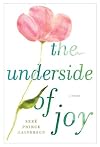
What is one’s definition of a mother? Does the title automatically fall to a woman who gives birth, only to give the baby up for adoption immediately? Is it a title that is earned through the tender nurturing and loving of a child? Can one forfeit the title under certain circumstances? Can one earn back the right to be a mother? All these questions and more face Ella Beene in Sere Prince Halverson’s The Underside of Joy.
As much as I wanted to embrace The Underside of Joy wholeheartedly show more and shout from the rooftops about what a wonderful novel it is, I just cannot do so. My problems with the novel revolve around Paige. I do not believe that birth mothers should be given more rights than adoptive mothers, and it never ceases to infuriate me when judges continually forget the child’s best interest in custody disputes. Like Ella, I wanted to forgive Paige and give her the benefit of the doubt, but then she goes and continues to put her own needs in front of those of her children’s. Her actions in court, on the phone, in front of the kids, and in general upset me so much that I wanted to throw the book across the room. While one could argue that this emotional response is a sign of an extremely well-written book, and it is, my overall enjoyment of the novel will forever be tainted by my abhorrence of Paige’s actions in the name of motherhood.
No matter one’s opinion of Paige or of Joe for keeping secrets, any reader will marvel at Halverson’s beautiful writing. The scents and scenery of Northern California come alive with her words. Ella’s pain is so perfectly rendered that readers will find themselves sobbing uncontrollably at random moments or, as in my case, forced to stop reading because of an inability to handle the intensity of Ella’s, and subsequently their own, roiling feelings. It is an emotional juggernaut of a novel that will make even the most hard-hearted of readers wilt until the feelings of pain, loss and confusion while at the same time make readers start planning trips to Sonoma to find their own Elbow, California.
The Underside of Joy is a magnificent ode to motherhood – the endless sacrifice, the unconditional love that makes even the worst day better, the doubts, the fears, the pain, the joy. Ella is a formidable heroine, refusing to buckle under three of the most difficult situations one will ever face. Ms. Halverson’s writing is so amazing that Ella’s pain becomes the reader’s pain, her celebrations become the reader’s joys. Except for my personal issues with Paige, her actions, and the court system in general, The Underside of Joy truly does live up to the hype as one of the best books of the year.
Acknowledgements: Thank you to the Great Lakes Independent Booksellers Association trade show for my review copy! show less
As much as I wanted to embrace The Underside of Joy wholeheartedly show more and shout from the rooftops about what a wonderful novel it is, I just cannot do so. My problems with the novel revolve around Paige. I do not believe that birth mothers should be given more rights than adoptive mothers, and it never ceases to infuriate me when judges continually forget the child’s best interest in custody disputes. Like Ella, I wanted to forgive Paige and give her the benefit of the doubt, but then she goes and continues to put her own needs in front of those of her children’s. Her actions in court, on the phone, in front of the kids, and in general upset me so much that I wanted to throw the book across the room. While one could argue that this emotional response is a sign of an extremely well-written book, and it is, my overall enjoyment of the novel will forever be tainted by my abhorrence of Paige’s actions in the name of motherhood.
No matter one’s opinion of Paige or of Joe for keeping secrets, any reader will marvel at Halverson’s beautiful writing. The scents and scenery of Northern California come alive with her words. Ella’s pain is so perfectly rendered that readers will find themselves sobbing uncontrollably at random moments or, as in my case, forced to stop reading because of an inability to handle the intensity of Ella’s, and subsequently their own, roiling feelings. It is an emotional juggernaut of a novel that will make even the most hard-hearted of readers wilt until the feelings of pain, loss and confusion while at the same time make readers start planning trips to Sonoma to find their own Elbow, California.
The Underside of Joy is a magnificent ode to motherhood – the endless sacrifice, the unconditional love that makes even the worst day better, the doubts, the fears, the pain, the joy. Ella is a formidable heroine, refusing to buckle under three of the most difficult situations one will ever face. Ms. Halverson’s writing is so amazing that Ella’s pain becomes the reader’s pain, her celebrations become the reader’s joys. Except for my personal issues with Paige, her actions, and the court system in general, The Underside of Joy truly does live up to the hype as one of the best books of the year.
Acknowledgements: Thank you to the Great Lakes Independent Booksellers Association trade show for my review copy! show less
You May Also Like


Associated Authors
Statistics
- Works
- 8
- Also by
- 3
- Members
- 405
- Popularity
- #60,013
- Rating
- 3.9
- Reviews
- 44
- ISBNs
- 38
- Languages
- 5
- Favorited
- 1


