
Cynthia Grady
Author of I Lay My Stitches Down: Poems of American Slavery
About the Author
Image credit: via Charlesbridge
Works by Cynthia Grady
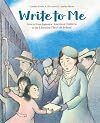
Write to Me: Letters from Japanese American Children to the Librarian They Left Behind (2018) 144 copies, 19 reviews
Tagged
Common Knowledge
- Gender
- female
Members
Reviews
Write to Me: Letters from Japanese American Children to the Librarian They Left Behind by Cynthia Grady
Throughout American history, some citizens have had more rights and privileges than others.
When the Japanese bombed Pearl Harbor on December 7, 1941, fear and prejudice towards the Japanese reached a fever pitch. These attitudes extended to both citizens and non-citizens of Japanese descent living in the United States.
In 1942 Roosevelt signed Executive Order 9066. Under the terms of the Order, approximately 120,000 people of Japanese descent living in the US (of whom 70,000 were American show more citizens) were removed from their homes and placed in internment camps. The US justified its action by claiming that there was a danger of those of Japanese descent spying for the Japanese. However more than two thirds of those interned were American citizens and half of them were children. None had ever shown evidence of disloyalty.
The internees were transported to one of ten relocation centers in California, Utah, Arkansas, Arizona, Idaho, Colorado, and Wyoming for up to 4 years, without due process of law or any factual basis, in bleak, remote camps surrounded by barbed wire and armed guards. Families were crammed into 20- by 25-foot rooms and forced to use communal bathrooms. No razors, scissors, or radios were allowed. Children attended War Relocation Authority schools.
This book tells the story of Clara Estelle Breed, the children’s librarian at the East Branch of the San Diego County Library, which served many Japanese American families. Miss Breed got to know many of these children, and went to the train station to see them off when they were being relocated. She took a bagful of books to give them, as well as stamped, addressed postcards. “‘Write to us,’ Miss Breed said. ‘We’ll want to know where you are.’”
Over the next three years until the war ended, Miss Breed received many postcards from approximately thirty children. At first, they were postmarked from Arcadia, California. She wrote the kids back every week, and sent them boxes of books and more stamped postcards. She also wrote articles for magazines and letters to authorities about the mistreatment of Japanese Americans.
The author used excerpts from the postcards received by Miss Breed, incorporating them into the book. For example, One said:
"Dear Miss Breed,
I was overwhelmed with joy to see the books when the postman opened the package for inspection. Thank you, Miss Breed, Thank you!
Very sincerely yours,
Louise Ogawa"
Miss Breed even took a train to Arcadia and visited the children. But then they were transferred to a prison camp in Poston, Arizona. Miss Breed did not stop trying to lift their spirits however. As the author reports:
“Miss Breed sent them seeds for planting, thread for sewing, and soap for washing. She sent pipe cleaners, crepe paper, pencils, and glue for making crafts.”
The children wrote her back about the crafts they made, the books they were reading, and also about how they were doing and feeling.
In the Author’s Note, we learn that when Miss Breed packed to move to a retirement home, she found the box she had kept of more than 250 letters and postcards she had received during the war. She gave them to Elizabeth Kikuchi Yamada, one of the former children who had corresponded with her. The author reports:
“In 1991 Clara Breed was the honored guest at a reunion for Japanese Americans who had been imprisoned in Poston, Arizona. More than seven hundred people gave her a standing ovation for her kindness, friendship, love, and courage during the war.”
After the Author’s Note, there is a list of notable dates in Clara Breed’s life, a selected history of Japanese people in the United States, source notes, a selected bibliography, photo credits, and suggestions for further reading.
The muted colored-pencil illustrations by Amiko Hirao are lovely, and there are a number of actual photographs included on the end papers.
Evaluation: This book presents an important historical moment from a unique perspective, providing emotion and heart. The connection to a children’s librarian may resonate with young readers, and the reproduction of words from actual postcards add a touching realistic element to the story. There is also a wonderful message, about how one person can provide compassion and relief even when otherwise powerless against larger forces. And with any luck at all, it may help readers understand the injustice and cruelty of locking up children, a practice which is not restricted to the past. show less
When the Japanese bombed Pearl Harbor on December 7, 1941, fear and prejudice towards the Japanese reached a fever pitch. These attitudes extended to both citizens and non-citizens of Japanese descent living in the United States.
In 1942 Roosevelt signed Executive Order 9066. Under the terms of the Order, approximately 120,000 people of Japanese descent living in the US (of whom 70,000 were American show more citizens) were removed from their homes and placed in internment camps. The US justified its action by claiming that there was a danger of those of Japanese descent spying for the Japanese. However more than two thirds of those interned were American citizens and half of them were children. None had ever shown evidence of disloyalty.
The internees were transported to one of ten relocation centers in California, Utah, Arkansas, Arizona, Idaho, Colorado, and Wyoming for up to 4 years, without due process of law or any factual basis, in bleak, remote camps surrounded by barbed wire and armed guards. Families were crammed into 20- by 25-foot rooms and forced to use communal bathrooms. No razors, scissors, or radios were allowed. Children attended War Relocation Authority schools.
This book tells the story of Clara Estelle Breed, the children’s librarian at the East Branch of the San Diego County Library, which served many Japanese American families. Miss Breed got to know many of these children, and went to the train station to see them off when they were being relocated. She took a bagful of books to give them, as well as stamped, addressed postcards. “‘Write to us,’ Miss Breed said. ‘We’ll want to know where you are.’”
Over the next three years until the war ended, Miss Breed received many postcards from approximately thirty children. At first, they were postmarked from Arcadia, California. She wrote the kids back every week, and sent them boxes of books and more stamped postcards. She also wrote articles for magazines and letters to authorities about the mistreatment of Japanese Americans.
The author used excerpts from the postcards received by Miss Breed, incorporating them into the book. For example, One said:
"Dear Miss Breed,
I was overwhelmed with joy to see the books when the postman opened the package for inspection. Thank you, Miss Breed, Thank you!
Very sincerely yours,
Louise Ogawa"
Miss Breed even took a train to Arcadia and visited the children. But then they were transferred to a prison camp in Poston, Arizona. Miss Breed did not stop trying to lift their spirits however. As the author reports:
“Miss Breed sent them seeds for planting, thread for sewing, and soap for washing. She sent pipe cleaners, crepe paper, pencils, and glue for making crafts.”
The children wrote her back about the crafts they made, the books they were reading, and also about how they were doing and feeling.
In the Author’s Note, we learn that when Miss Breed packed to move to a retirement home, she found the box she had kept of more than 250 letters and postcards she had received during the war. She gave them to Elizabeth Kikuchi Yamada, one of the former children who had corresponded with her. The author reports:
“In 1991 Clara Breed was the honored guest at a reunion for Japanese Americans who had been imprisoned in Poston, Arizona. More than seven hundred people gave her a standing ovation for her kindness, friendship, love, and courage during the war.”
After the Author’s Note, there is a list of notable dates in Clara Breed’s life, a selected history of Japanese people in the United States, source notes, a selected bibliography, photo credits, and suggestions for further reading.
The muted colored-pencil illustrations by Amiko Hirao are lovely, and there are a number of actual photographs included on the end papers.
Evaluation: This book presents an important historical moment from a unique perspective, providing emotion and heart. The connection to a children’s librarian may resonate with young readers, and the reproduction of words from actual postcards add a touching realistic element to the story. There is also a wonderful message, about how one person can provide compassion and relief even when otherwise powerless against larger forces. And with any luck at all, it may help readers understand the injustice and cruelty of locking up children, a practice which is not restricted to the past. show less
Write to Me: Letters from Japanese American Children to the Librarian They Left Behind by Cynthia Grady

Using the letters of real children, author Cynthia Grady tells the story of Clara Breed, a Euro-American librarian working in the San Diego Public Library in 1942, when her Japanese-American patrons were interned by the United States government. Determined to keep in touch, Breed gave many of the children she served penny postcards, telling them to write to her. She saw them off at the train station, visited them in Arcadia, California - where they had been taken temporarily - and wrote back show more and forth, once they were sent to a camp in Poston, Arizona. She sent books, and other necessaries - but most of all she sent (and received) words. Long afterward, at a reunion of Poston survivors, her kindness was remembered and applauded by the children who had been imprisoned by the own country, but not forgotten by their local librarian...
Although I have read other books about the internment of Japanese-Americans during World War II - my introduction to the subject came in Jeanne Wakatsuki Houston's memoir, Farewell to Manzanar, which I read as an adolescent - I had never heard of Clara Breed, before picking up this poignant work of picture-book history. I'm glad to have that gap in my knowledge filled, as I found her story, and the stories (however abbreviated) of the children who wrote to her, immensely moving. Grady's book is a timely reminder that even when governments do unjust things,even when we feel we have little impact on the larger events transpiring around us, we as individual citizens still have a choice to do what is right, and remain true to our humanity. Clara Breed's actions weren't limited to acts of kindness toward the children of a persecuted minority, in a time of war, they also included public, written criticism of government policies to which she objected. That this criticism could be found in the pages of The Horn Book Magazine, one of America's longest established periodicals for the review and discussion of children's books, makes me particularly happy, as I am a strong believer in the potential that children's literature holds, as a means of encouraging tolerance, and positive social change.
Informative, and emotionally resonant, Write to Me is an important addition to the body of children's books addressing the internment of Japanese-American citizens during World War II. The text is powerful, including as it does the snippets of actual letters, and the artwork by Amiko Hirao is lovely, in an impressionistic way that ably captures the emotional impact of each scene. Recommended to anyone looking for stories related to this subject. It can be paired with picture-books about the actual experiences of interned children, such as Baseball Saved Us, by Ken Mochizuki, or Home of the Brave by Allen Say. Also recommended in this line is the lovely picture-book, Naomi's Tree, by Joy Kogawa, which illustrated that (sadly) the internment of people of Japanese ancestry also occurred in Canada. show less
Although I have read other books about the internment of Japanese-Americans during World War II - my introduction to the subject came in Jeanne Wakatsuki Houston's memoir, Farewell to Manzanar, which I read as an adolescent - I had never heard of Clara Breed, before picking up this poignant work of picture-book history. I'm glad to have that gap in my knowledge filled, as I found her story, and the stories (however abbreviated) of the children who wrote to her, immensely moving. Grady's book is a timely reminder that even when governments do unjust things,even when we feel we have little impact on the larger events transpiring around us, we as individual citizens still have a choice to do what is right, and remain true to our humanity. Clara Breed's actions weren't limited to acts of kindness toward the children of a persecuted minority, in a time of war, they also included public, written criticism of government policies to which she objected. That this criticism could be found in the pages of The Horn Book Magazine, one of America's longest established periodicals for the review and discussion of children's books, makes me particularly happy, as I am a strong believer in the potential that children's literature holds, as a means of encouraging tolerance, and positive social change.
Informative, and emotionally resonant, Write to Me is an important addition to the body of children's books addressing the internment of Japanese-American citizens during World War II. The text is powerful, including as it does the snippets of actual letters, and the artwork by Amiko Hirao is lovely, in an impressionistic way that ably captures the emotional impact of each scene. Recommended to anyone looking for stories related to this subject. It can be paired with picture-books about the actual experiences of interned children, such as Baseball Saved Us, by Ken Mochizuki, or Home of the Brave by Allen Say. Also recommended in this line is the lovely picture-book, Naomi's Tree, by Joy Kogawa, which illustrated that (sadly) the internment of people of Japanese ancestry also occurred in Canada. show less
Write to Me: Letters from Japanese American Children to the Librarian They Left Behind by Cynthia Grady
Well I knew I was in Patricia Polacco style trouble when I almost teared up reading the inside front cover, and I was near to emotional tears all the way through this book.
I’ve read a lot about the internment of people of Japanese ancestry during WWII, but this was a new part of the story for me. So heartwarming and good to know a person like Clara Breed existed and was there as much as she could be for the children who had used her library prior to their imprisonment.
The illustrations are show more lovely and I appreciated the included photos. It sounded as though the letters and postcards are in existence so I wish images of even a few of them had made it into the book. The slight story was well told and is a good introduction to what happened to people of Japanese ancestry during the war. I did thoroughly enjoy the book proper and I loved the extras at the end: an author’s note, a list of notable dates in Clara Breed’s life, a selected history of the Japanese people in the United States, Source Notes, Selected Bibliography, Further Reading, and Photo credits.
This is an excellent book for young people and adults too. It grabbed and held my attention and I really liked it. 4-1/2 stars show less
I’ve read a lot about the internment of people of Japanese ancestry during WWII, but this was a new part of the story for me. So heartwarming and good to know a person like Clara Breed existed and was there as much as she could be for the children who had used her library prior to their imprisonment.
The illustrations are show more lovely and I appreciated the included photos. It sounded as though the letters and postcards are in existence so I wish images of even a few of them had made it into the book. The slight story was well told and is a good introduction to what happened to people of Japanese ancestry during the war. I did thoroughly enjoy the book proper and I loved the extras at the end: an author’s note, a list of notable dates in Clara Breed’s life, a selected history of the Japanese people in the United States, Source Notes, Selected Bibliography, Further Reading, and Photo credits.
This is an excellent book for young people and adults too. It grabbed and held my attention and I really liked it. 4-1/2 stars show less
Write to Me: Letters from Japanese American Children to the Librarian They Left Behind by Cynthia Grady
"Write to Me" was an extremely moving book about the movement of Japanese Americans to works camps within the US during World War II. The children kept in touch with their local librarian by sending her penny postcards chronicling their journey, and she continuously sent letters, books, crafting materials and other tangible items to help keep them occupied. The book contains a narrative as well as the postcards that were sent to her by the children. This story demonstrates the kindness of show more humanity while facing challenging times. It also did a great job showing the appreciation of the young Japanese children and how they were courageous and preserved. show less
Awards


You May Also Like


Associated Authors
Statistics
- Works
- 3
- Members
- 420
- Popularity
- #58,059
- Rating
- 4.2
- Reviews
- 47
- ISBNs
- 18
