
About the Author
Works by David Alan Powell
The Maps of Chickamauga: An Atlas of the Chickamauga Campaign, Including the Tullahoma Operations, June 22 - September 23, 1863 (2009) 104 copies, 2 reviews
The Chickamauga Campaign - A Mad Irregular Battle: From the Crossing of Tennessee River Through the Second Day, August 22 - September 19, 1863 (2014) 98 copies, 1 review
The Chickamauga Campaign―Barren Victory: The Retreat into Chattanooga, the Confederate Pursuit, and the Aftermath of the Battle, September 21 to October 20, 1863 (2016) 82 copies, 1 review
The Chickamauga Campaign―Glory or the Grave: The Breakthrough, the Union Collapse, and the Defense of Horseshoe Ridge, September 20, 1863 (2015) 80 copies, 2 reviews
Failure in the Saddle: Nathan Bedford Forrest, Joe Wheeler, and the Confederate Cavalry in the Chickamauga Campaign (2010) 79 copies, 1 review
Tullahoma: The Forgotten Campaign that Changed the Course of the Civil War, June 23 - July 4, 1863 (2020) 58 copies, 1 review
Battle above the Clouds: Lifting the Siege of Chattanooga and the Battle of Lookout Mountain, October 16 - November 24, 1863 (Emerging Civil War Series) (2017) 40 copies, 2 reviews
Union Command Failure in the Shenandoah: Major General Franz Sigel and the War in the Valley of Virginia, May 1864 (2019) 37 copies, 1 review
All Hell Can’t Stop Them: The Battles for Chattanooga―Missionary Ridge and Ringgold, November 24-27, 1863 (Emerging Civil War Series) (2018) 36 copies
The Atlanta Campaign: Volume 2: From the Etowah River to Kennesaw Mountain, May 20 to June 27, 1864 (2025) 19 copies
The Impulse of Victory: Ulysses S. Grant at Chattanooga (World of Ulysses S. Grant) (2020) 18 copies
The Atlanta Campaign, 1864: Sherman's Campaign to the Outskirts of Atlanta (Casemate Illustrated) (2024) 11 copies
The Atlanta Campaign, 1864: Peachtree Creek to the Fall of the City (Casemate Illustrated) (2024) 10 copies
Tagged
Common Knowledge
Members
Reviews
Tullahoma: The Forgotten Campaign that Changed the Course of the Civil War, June 23 - July 4, 1863 by David A. Powell
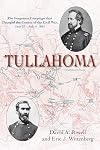
I consider Dave Powell one of the leading current Civil War history writers. And I'm a Rosecrans fan and recognize the Tullahoma campaign as a great strategic achievement. The problem is, it just doesn't carry enough weight for 356 pages of text. You can only describe so many marches and rain and mud, with repetitive personal accounts. The cavalry actions - the triumphs of Wilder and Minty and the failures of Wheeler, Morgan and Forrest - are the most compelling parts. One problem seemed to show more be too much narrative and not enough analysis (until the final chapter).
It's interesting to compare similar maneuvering prior to Chickamauga as depicted in volume 1 of Powell's magisterial trilogy. There, the narrative is much more compelling, perhaps because the stakes seem higher, the possible destruction of Negley at McLemore's Cove plus we know it is leading to the big battle. With Tullahoma, it seems as if Bragg is hopelessly outclassed from the start and never has a chance. There's never even really much of a danger that he is going to be cut off and forced to fight. Just more retreat through the mud.
It's deeply ironic to give a review like this, since Rosecrans heard very similar complaints from Lincoln and Stanton in the light of the simultaneous victories at Vicksburg and Gettysburg. Rosecrans retorted that he had captured all of Middle Tennessee, just without all the blood and glory. It's true...but 356 pages is just too much to tell the story. show less
It's interesting to compare similar maneuvering prior to Chickamauga as depicted in volume 1 of Powell's magisterial trilogy. There, the narrative is much more compelling, perhaps because the stakes seem higher, the possible destruction of Negley at McLemore's Cove plus we know it is leading to the big battle. With Tullahoma, it seems as if Bragg is hopelessly outclassed from the start and never has a chance. There's never even really much of a danger that he is going to be cut off and forced to fight. Just more retreat through the mud.
It's deeply ironic to give a review like this, since Rosecrans heard very similar complaints from Lincoln and Stanton in the light of the simultaneous victories at Vicksburg and Gettysburg. Rosecrans retorted that he had captured all of Middle Tennessee, just without all the blood and glory. It's true...but 356 pages is just too much to tell the story. show less
THE MAPS OF CHICKAMAUGA: An Atlas of the Chickamauga Campaign, Including the Tullahoma Operations, June 22 - September 23, 1863 by David Powell
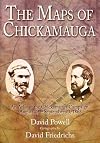
The third selection in the excellent Savas Beattie Military Atlas series.
By the fall of 1863, the news for the Confederacy on all fronts was grim. In the East, Lee failed at Gettysburg, while in the West, the news was even worse: Vicksburg had fallen and the Confederacy’s Army of Tennessee, under the inept command of Braxton Brag, suffered a series of defeats and withdrawals. The Tennessee situation was serious; The Union Army of the Cumberland under William Rosecrans had advanced to show more Chattenoooga, which meant that the heart of the Confederacy was now vulnerable to attack. Rosecrans, eager to finish off Bragg’s army, continued to chase the Confederates into Georgia, over wild and difficult terrain.
The result was the Battle of Chickamauga, one of the bloodiest and certainly one of the most confusing of the war. Added to the difficulties presented by hilly terrain much of which was covered with brush and woods was the fact that both commanders spent the better part of the two days of the battle constantly shifting troops around. Include the smoke of cannon and musket fire, and “the fog of war” becomes peculiarly applicable. Division and sector commanders could not see from one end of their respective lines to the other and coordination between divisions, particularly on the Confederate side, was a nightmare.
Using the format pioneered by Bradley Gottfried in The Maps of Gettysburg, Powell and Friedrichs have done a masterful job in breaking down the battle into more readily understandable segments. The format of text on the left page and map on the right works brilliantly, especially in understanding the various troop shifts.
In addition, Powell brings additional insight into the battle itself. Brigadier General Thomas Wood, who commanded the First Division in Crittendon’s XXI Corps, has long had the onus of losing the battle for the Union side. On the afternoon of the 2nd day, Wood received an order to pull out to support Thomas’ desperate fight on the Union left flank. It has been the received wisdom that Wood, who had been reprimanded earlier in the march to Chickamauga by Rosecrans for not following orders, knew that the pullout would open up a gap in the Union right flank but did it anyway out of spite. Powell gives evidence that Wood did indeed realize what would be the result--and asked for clarification from Crittendon who told him to obey the order. It may be nearly 150 years later, but Powell has done much to restore Wood’s reputation.
Powell also emphasizes a point that is often overlooked concerning Longstreet: while Longstreet has always been admired for his defensive capabilities, he was a powerful offensive fighter as well. The massive blow he delivered at Second Manassas was the turning point of that battle. Longstreet later said that no one could have withstood the assault he made with his corps on the Union right flank, and he may have been right. What is not in any doubt was that Wood’s pullout left a gap of 300 yards in the Union line, making Longsteet’s assault certain of success, although not without casualties.
Another contribution of Powell’s is to emphasize the contributions of certain commanders who often go overlooked. For example, who remembers Colonel John Wilder? Yet his innovative use of mounted infantry saved the Union lines time and time again, particularly on the first day.
There are flaws in the atlas. Sometimes unit designations do not correspond between text and map--describing in the text the action of the 65th Ohio when the map shows it as the 64th Ohio, for example. More problematical is the lack of names on the various roads. LaFayette Road, crucial to the 2-day battle is relatively easy to figure out, but some of the more minor roads mentioned in the text are not shown on the map, leading to ambiguity at times. But these are the type of errors that are usually corrected in a second edition and should not deter anyone from studying this book.
While the major interest will be in Chickamauga, the atlas does include as well maps and description of the battle of Tullahoma which preceded Chickamauga.
Not to be missed for those with more than a casual interest in the US Civil War. show less
By the fall of 1863, the news for the Confederacy on all fronts was grim. In the East, Lee failed at Gettysburg, while in the West, the news was even worse: Vicksburg had fallen and the Confederacy’s Army of Tennessee, under the inept command of Braxton Brag, suffered a series of defeats and withdrawals. The Tennessee situation was serious; The Union Army of the Cumberland under William Rosecrans had advanced to show more Chattenoooga, which meant that the heart of the Confederacy was now vulnerable to attack. Rosecrans, eager to finish off Bragg’s army, continued to chase the Confederates into Georgia, over wild and difficult terrain.
The result was the Battle of Chickamauga, one of the bloodiest and certainly one of the most confusing of the war. Added to the difficulties presented by hilly terrain much of which was covered with brush and woods was the fact that both commanders spent the better part of the two days of the battle constantly shifting troops around. Include the smoke of cannon and musket fire, and “the fog of war” becomes peculiarly applicable. Division and sector commanders could not see from one end of their respective lines to the other and coordination between divisions, particularly on the Confederate side, was a nightmare.
Using the format pioneered by Bradley Gottfried in The Maps of Gettysburg, Powell and Friedrichs have done a masterful job in breaking down the battle into more readily understandable segments. The format of text on the left page and map on the right works brilliantly, especially in understanding the various troop shifts.
In addition, Powell brings additional insight into the battle itself. Brigadier General Thomas Wood, who commanded the First Division in Crittendon’s XXI Corps, has long had the onus of losing the battle for the Union side. On the afternoon of the 2nd day, Wood received an order to pull out to support Thomas’ desperate fight on the Union left flank. It has been the received wisdom that Wood, who had been reprimanded earlier in the march to Chickamauga by Rosecrans for not following orders, knew that the pullout would open up a gap in the Union right flank but did it anyway out of spite. Powell gives evidence that Wood did indeed realize what would be the result--and asked for clarification from Crittendon who told him to obey the order. It may be nearly 150 years later, but Powell has done much to restore Wood’s reputation.
Powell also emphasizes a point that is often overlooked concerning Longstreet: while Longstreet has always been admired for his defensive capabilities, he was a powerful offensive fighter as well. The massive blow he delivered at Second Manassas was the turning point of that battle. Longstreet later said that no one could have withstood the assault he made with his corps on the Union right flank, and he may have been right. What is not in any doubt was that Wood’s pullout left a gap of 300 yards in the Union line, making Longsteet’s assault certain of success, although not without casualties.
Another contribution of Powell’s is to emphasize the contributions of certain commanders who often go overlooked. For example, who remembers Colonel John Wilder? Yet his innovative use of mounted infantry saved the Union lines time and time again, particularly on the first day.
There are flaws in the atlas. Sometimes unit designations do not correspond between text and map--describing in the text the action of the 65th Ohio when the map shows it as the 64th Ohio, for example. More problematical is the lack of names on the various roads. LaFayette Road, crucial to the 2-day battle is relatively easy to figure out, but some of the more minor roads mentioned in the text are not shown on the map, leading to ambiguity at times. But these are the type of errors that are usually corrected in a second edition and should not deter anyone from studying this book.
While the major interest will be in Chickamauga, the atlas does include as well maps and description of the battle of Tullahoma which preceded Chickamauga.
Not to be missed for those with more than a casual interest in the US Civil War. show less
Union Command Failure in the Shenandoah: Major General Franz Sigel and the War in the Valley of Virginia, May 1864 by David A. Powell
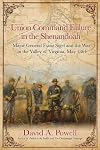
Powell does his usual masterful job of laying out both the strategic overview and the tactical details in an engaging manner. The title reflects his perspective that while Sigel made mistakes, there is a lot more blame than just him to go around, from Grant on down to Sigel’s subordinates. The focus is on the command decisions of the Union side, as earlier books have primarily focused on the VMI cadets and other aspects of the Confederate side. (Ironic as Powell is a VMI graduate!). But show more Breckinridge, Imboden and others are featured with insight.
One star off because the editing is simply awful. Typos, incorrect capitalizations and even sentence fragments are found throughout the text. If you can overlook that, this slim volume (212 pages of text) is well worth your time. show less
One star off because the editing is simply awful. Typos, incorrect capitalizations and even sentence fragments are found throughout the text. If you can overlook that, this slim volume (212 pages of text) is well worth your time. show less
The maps of Chickamauga : an atlas of the Chickamauga Campaign, including the Tullahoma Operations, June 22 - September 23, 1863 by David Powell
This is a book in Savas Beattie’s Military History Series. I downgraded by half a star because of numerous small errors. One example: In Map Set 1, there is a certain small Tennessee town identified as “Bradleyville” on the map and “Bradyville” in the text. I am not all that familiar with Tennessee geography, so I turned to a modern road atlas, and found that the town is actually called “Bradyville”, so the error is mapmaker Friedrichs’, not author Powell’s.
On the other show more hand, there has to be a certain art to making the text fit onto one page, no more, no less, so that it fits exactly on the page opposite the map it is describing. In addition, I thought that Friedrichs’ did a slightly better aesthetic job with the maps than did Bradley M. Gottfried, who authored the other books in the series. show less
On the other show more hand, there has to be a certain art to making the text fit onto one page, no more, no less, so that it fits exactly on the page opposite the map it is describing. In addition, I thought that Friedrichs’ did a slightly better aesthetic job with the maps than did Bradley M. Gottfried, who authored the other books in the series. show less
Awards


You May Also Like


Statistics
- Works
- 19
- Members
- 710
- Popularity
- #35,708
- Rating
- 4.4
- Reviews
- 11
- ISBNs
- 33