
Karrie Fransman
Author of Gender Swapped Fairy Tales
Series
Works by Karrie Fransman
Associated Works
Femme Magnifique: 50 Magnificent Women who Changed the World (2018) — Contributor — 60 copies, 2 reviews
The Graphic Canon of Crime & Mystery, Vol. 1: From Sherlock Holmes to A Clockwork Orange to Jo Nesbø (2017) — Illustrator — 38 copies, 2 reviews
Tagged
Common Knowledge
- Birthdate
- 20th Century
- Gender
- female
- Nationality
- United Kingdom
- Associated Place (for map)
- United Kingdom
Members
Reviews
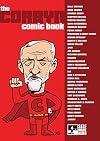
There's some funny stuff in here, some decent satirical pokes at the Tories, especially Theresa May and Boris Johnson, some well-drafted cartoons and illustrations, too. But...
Overall, it comes off as a little too ernest, a little too preachy, and often a little too holier-than-thou to redeem the parts that hit the mark. It's a shame, because I really wanted to love this comic.
Overall, it comes off as a little too ernest, a little too preachy, and often a little too holier-than-thou to redeem the parts that hit the mark. It's a shame, because I really wanted to love this comic.
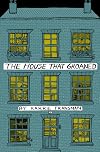
I haven't read many graphic novels because I'm really not a fan, so I wasn't sure about weighing in on this. But then I read one that really moved me (see next review). I see now why it is such an exacting genre.
There are words and there are pictures. Ideally, the words and the pictures work together to tell a story that just words, or just pictures won't tell. When I was young, I saw this lovely synergy come about in numerous beautifully inked superhero comics where characters came to life show more through the draughtsman's command of composition, shadow and body language. And the dialogue was there too as part of the whole design. I had no interest in stupid super heroes but they made me be interested. I enjoyed the drawing and lettering of love comics too. I get what Roy Lichtenstein saw in them. I also loved the visual plainsong of classic comics, so neatly drawn, the colours slightly browned, their stand-offish lettering filling enormous speech balloons. And don't get me started on Edward Gorey. Swoon!
Unfortunately, 'The House That Groaned' has none of this magic. The artwork is too clunky for me to enjoy. It's all done in a series of monochrome blue-greens where the darks and lights fight each other rather than coalesce. It's like a book full of drawings of people by someone who hates to draw people. Most of the frames suffer from poor composition which makes them confusing and hard to 'read'. This is a form of storytelling that needs a cinematographer's editing eye to get to the kernel of every frame. Think of Vittorio Storaro's highly populated scenes in 'The Last Emperor' and how the eye is never confused because he composes the frame for clarity first, letting the beauty, tragedy, or ugliness follow.
There's a scene in this book where schoolgirls tear off their clothes and dance around naked at boarding school. It's one of the better moments where the frames come together enough to sing a bit. And yet, I recently came across a similar sequence in 'Skippy Dies' by Paul Murray. No pictures, just a white page of words that make me feel the heat of the gym while my eyes water from the smell of hormones and Axe. In this book neither the pictures nor the words quite do this, jointly or severally. show less
There are words and there are pictures. Ideally, the words and the pictures work together to tell a story that just words, or just pictures won't tell. When I was young, I saw this lovely synergy come about in numerous beautifully inked superhero comics where characters came to life show more through the draughtsman's command of composition, shadow and body language. And the dialogue was there too as part of the whole design. I had no interest in stupid super heroes but they made me be interested. I enjoyed the drawing and lettering of love comics too. I get what Roy Lichtenstein saw in them. I also loved the visual plainsong of classic comics, so neatly drawn, the colours slightly browned, their stand-offish lettering filling enormous speech balloons. And don't get me started on Edward Gorey. Swoon!
Unfortunately, 'The House That Groaned' has none of this magic. The artwork is too clunky for me to enjoy. It's all done in a series of monochrome blue-greens where the darks and lights fight each other rather than coalesce. It's like a book full of drawings of people by someone who hates to draw people. Most of the frames suffer from poor composition which makes them confusing and hard to 'read'. This is a form of storytelling that needs a cinematographer's editing eye to get to the kernel of every frame. Think of Vittorio Storaro's highly populated scenes in 'The Last Emperor' and how the eye is never confused because he composes the frame for clarity first, letting the beauty, tragedy, or ugliness follow.
There's a scene in this book where schoolgirls tear off their clothes and dance around naked at boarding school. It's one of the better moments where the frames come together enough to sing a bit. And yet, I recently came across a similar sequence in 'Skippy Dies' by Paul Murray. No pictures, just a white page of words that make me feel the heat of the gym while my eyes water from the smell of hormones and Axe. In this book neither the pictures nor the words quite do this, jointly or severally. show less
For a book that covers body image & loneliness this is a darkly amusing and beautiful book. It’s deceptively simple in one way with, using stereotypes and simple character backgrounds to set off a whole heap of chaos. Its juxtaposition here, the exaggeration and interaction, the lovely washed out blue artwork at odds with the text that make it a delightfully exciting read. The glutton hoax calls the dieter during midnight feasts, the Barbie doll starts a doomed relationship with her show more neighbour who only ensures perfection retouching photographs, the ignored old lady literally fades into the background (have fun spotting her whilst feeling guilt at her awful situation).
It not really for the faint of heart (one of the characters sexualises the diseased & dying) but it’s interesting and err.. fun and comes very recommended. It's got great reviews from those new to comics.. if you want to dip your toe in.
It has a website over at
http://www.thehousethatgroaned.com/ show less
It not really for the faint of heart (one of the characters sexualises the diseased & dying) but it’s interesting and err.. fun and comes very recommended. It's got great reviews from those new to comics.. if you want to dip your toe in.
It has a website over at
http://www.thehousethatgroaned.com/ show less
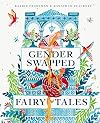
Considering because of the review in *The Guardian* but honestly, choosing to swap she for he & vice versa in a selection of tales from Andrew Lang is like winning a fight with a straw man.
https://www.theguardian.com/books/2020/oct/28/gender-swapped-fairy-tales-review-...
Anyone who is paying attention has seen rewritten, fractured, reversed, and original tales that use other gender(s) (including non-binary) and ethnicities and complex villains and etc. and so on. Listopia is full of 'em. For show more all ages. Or see the threads in the Children's Books group here on GR.
I'll read it, if I find it readily, because I am insatiable & curious.
I (pre)recommend it if the article or the following excerpts intrigue you:
"While in life I have no problem with a female chief executive, for some reason I can’t get my head around a lady miller. ..."
"The obvious and persistent bias – and I wonder whether, also, the most life-defining – is the beauty standard. ... It’s revealed in a fact as simple as “beauty” functioning as a noun where “handsome” does not. How could a handsome man contract into “a handsome”? How would we know how daring he also was? “The Sleeping Handsome in the Wood”, “Handsome and the Beast”, all ram home, with a light, rueful humour, the timeless message to a woman in fiction: be beautiful, or be evil, or go home." show less
https://www.theguardian.com/books/2020/oct/28/gender-swapped-fairy-tales-review-...
Anyone who is paying attention has seen rewritten, fractured, reversed, and original tales that use other gender(s) (including non-binary) and ethnicities and complex villains and etc. and so on. Listopia is full of 'em. For show more all ages. Or see the threads in the Children's Books group here on GR.
I'll read it, if I find it readily, because I am insatiable & curious.
I (pre)recommend it if the article or the following excerpts intrigue you:
"While in life I have no problem with a female chief executive, for some reason I can’t get my head around a lady miller. ..."
"The obvious and persistent bias – and I wonder whether, also, the most life-defining – is the beauty standard. ... It’s revealed in a fact as simple as “beauty” functioning as a noun where “handsome” does not. How could a handsome man contract into “a handsome”? How would we know how daring he also was? “The Sleeping Handsome in the Wood”, “Handsome and the Beast”, all ram home, with a light, rueful humour, the timeless message to a woman in fiction: be beautiful, or be evil, or go home." show less
Lists
Awards

You May Also Like


Associated Authors
Statistics
- Works
- 6
- Also by
- 2
- Members
- 271
- Popularity
- #85,375
- Rating
- 3.2
- Reviews
- 7
- ISBNs
- 14
- Languages
- 1