
Jack Hamm
Author of Drawing the Head and Figure
About the Author
Image credit: From the blog Uglyographer:
http://sketchblog.uglyographer.com/2009/04/18/jack-hamm/
Works by Jack Hamm
Tagged
Common Knowledge
- Canonical name
- Hamm, Jack
- Gender
- male
- Nationality
- USA
- Associated Place (for map)
- USA
Members
Reviews

I'll talk mainly about how this book differs from similar "how to draw landscape" books. Hamm starts off with musings on the role of the artist as a creator (rather than as a wishy-washy xerox machine). It's tough love. He also says he's an advocate of the small sketch, because students often quickly get lost on larger canvases/sketchpads. He then discusses the path of the eye (how one assesses an illustration), and stresses the importance of the entering point (where the eye first starts show more assessing/dissecting the illustration) and also talks about "delayed comprehension" (pg. 17), the "take-up" line (pg. 27), and so forth. Later, the book turns into a fairly standard instructional tome. One of the best exercises is "Twenty drawings of the same tree" (pg. 52-53), and a discussion of how to draw cloud puffs in corners of main cloud blobs rather than on the edges of the main blobs (pg. 75). So yeah, there's a lot going on in this slim black & white book. Advanced artists will benefit from the philosophical aspects, while younger ones will benefit from the array of how-to exercises covering mountains, waterfalls, trees, houses, clouds, reflections, etc. As the cover points out: "More than 900 diagrams, pictorial explanations and pictures" are packed into these 199 pages. I will definitely look for a book by this author that only focuses on the "creator's responsibility" aspects that he espouses so much. show less

Even at a young age, I knew I wanted to be a cartoonist. It was one of the few things I was both good at and enjoyed. (For the record, I'm not a cartoonist in my adult life, which is unfortunate for many reasons, but more importantly it's still TBD whether or not this will always be true.)
I received Cartooning the Head and Figure by Jack Hamm as a gift from my endlessly encouraging parents—this would've been decades ago so, yeah, I'm old—and I remember wearing out the pages over the show more course of years intending to learn its secrets. The book itself isn't just instructional, it's also a work of art. Read it, enjoy it, learn from it. Keep drawing and keep it fun. show less
I received Cartooning the Head and Figure by Jack Hamm as a gift from my endlessly encouraging parents—this would've been decades ago so, yeah, I'm old—and I remember wearing out the pages over the show more course of years intending to learn its secrets. The book itself isn't just instructional, it's also a work of art. Read it, enjoy it, learn from it. Keep drawing and keep it fun. show less
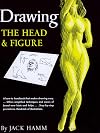
here is no book I have recommended more on this site. I really believe this is the ultimate book to learn to draw the human figure, completely unsurpassed in clarity and quality of information, not to mention a price that makes it affordable by all. I used several how-to-draw-anatomy books when I was beginning, but it's when I chanced upon this one that the quality of my drawing suddenly leaped and anatomy became relatively easy for me.
The secret is in not telling readers what to do, but show more explaining how and why body parts fit together the way they do. Hamm doesn't just show, he explains every detail of the human anatomy, empowering the reader to later on draw without aid. The abundant text is merely a support for the even more abundant illustrations, which suggest different ways of thinking of, and constructing, each part of the body. Beginning with the head and the proportions of facial features, we are given detailed pointers to draw the eyes, mouth, ear and nose (male and female), men and women's hair. Foreshortening the head from the side is covered, as are profiles – also male and female. Actually all the material considers both genders and points out the differences between them. Children's heads and elderly faces are brought up briefly (perhaps too briefly, but one is quite able to make do with this plus personal observation). We then move on to the figure, with many different approaches. Arms and legs are examined separately, as well as how they join the torso, but there are also sections on the pelvic region, the back, the neck, shoulders, how bones and muscles show on the surface, how hips and shoulders cooperate... The hands and feet are detailed and there are even a few pages on women's and men's shoes, and clothing folds.
Hamm's style is very "americana" – after all the book was first published in 1963. In no way is this a problem, however. The approach used is quite independent from style – in 10 years of referring to this book my style has never tended to Hamm's. It's one thing that sets the book apart from many drawing books oriented towards, for instance, manga or Marvel-style characters. Anybody can use it and clothe the theory in the style(s) of his/her choice.
There is of course room for nitpicking. The abundance of material makes its organisation less than linear, so Hamm's pearls of wisdom are scattered all over, making it useful to read the book cover to cover a few times to grasp it all (there's a table of contents but no index). The muscles could have taken some elaboration, especially in a figure in action; he does favour static poses or light action, nothing dramatic. Finally the figures and faces are exclusively those of fit, generic Caucasian men and women, something for which Hamm can't really be blamed since that was all commercial illustrators were asked to draw at the time. The material here is still a necessary basis, but artists will need to look elsewhere for multicultural references once they are familiar with generic anatomy.
To reiterate, however: this is an indispensable book for illustrators of all levels.
[Considering a purchase? Please use this URL: http://www.amazon.com/exec/obidos/ISBN=0399507914/thequillandthebrA/ ] show less
The secret is in not telling readers what to do, but show more explaining how and why body parts fit together the way they do. Hamm doesn't just show, he explains every detail of the human anatomy, empowering the reader to later on draw without aid. The abundant text is merely a support for the even more abundant illustrations, which suggest different ways of thinking of, and constructing, each part of the body. Beginning with the head and the proportions of facial features, we are given detailed pointers to draw the eyes, mouth, ear and nose (male and female), men and women's hair. Foreshortening the head from the side is covered, as are profiles – also male and female. Actually all the material considers both genders and points out the differences between them. Children's heads and elderly faces are brought up briefly (perhaps too briefly, but one is quite able to make do with this plus personal observation). We then move on to the figure, with many different approaches. Arms and legs are examined separately, as well as how they join the torso, but there are also sections on the pelvic region, the back, the neck, shoulders, how bones and muscles show on the surface, how hips and shoulders cooperate... The hands and feet are detailed and there are even a few pages on women's and men's shoes, and clothing folds.
Hamm's style is very "americana" – after all the book was first published in 1963. In no way is this a problem, however. The approach used is quite independent from style – in 10 years of referring to this book my style has never tended to Hamm's. It's one thing that sets the book apart from many drawing books oriented towards, for instance, manga or Marvel-style characters. Anybody can use it and clothe the theory in the style(s) of his/her choice.
There is of course room for nitpicking. The abundance of material makes its organisation less than linear, so Hamm's pearls of wisdom are scattered all over, making it useful to read the book cover to cover a few times to grasp it all (there's a table of contents but no index). The muscles could have taken some elaboration, especially in a figure in action; he does favour static poses or light action, nothing dramatic. Finally the figures and faces are exclusively those of fit, generic Caucasian men and women, something for which Hamm can't really be blamed since that was all commercial illustrators were asked to draw at the time. The material here is still a necessary basis, but artists will need to look elsewhere for multicultural references once they are familiar with generic anatomy.
To reiterate, however: this is an indispensable book for illustrators of all levels.
[Considering a purchase? Please use this URL: http://www.amazon.com/exec/obidos/ISBN=0399507914/thequillandthebrA/ ] show less
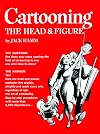
This book should be titled "The Encyclopedia of Cartooning the Head & Figure" since it not only demonstrates a variety of techniques, but it also thoroughly catalogs eyes, noses, mouths, expressions, and positions to name a few. Whether you use this book to learn to draw or to get ideas, you will use this book.
You May Also Like


Statistics
- Works
- 19
- Members
- 1,949
- Popularity
- #13,205
- Rating
- 3.9
- Reviews
- 16
- ISBNs
- 38
- Languages
- 5