
Megan Mayhew Bergman
Author of Birds of a Lesser Paradise: Stories
About the Author
Image credit: via Simon & Schuster
Works by Megan Mayhew Bergman
How strange a season : fiction 2 copies
Associated Works
Tagged
Common Knowledge
- Legal name
- Bergman, Megan Mayhew
- Birthdate
- 1979-12-23
- Gender
- female
- Education
- Wake Forest University
Duke University
Bennington College, Vermont - Agent
- Julie Barer
- Nationality
- USA
- Places of residence
- Rocky Mount, North Carolina, USA
Shaftsbury, Vermont, USA - Associated Place (for map)
- USA
Members
Reviews
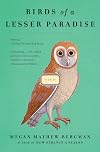
“I am the shepherd of a strange flock.”
“I pictured the mother whale, exhausted from labor, pushing her calf up to the skin of the water. The miracle of breath in the face of predation, life in the wake of whaling ships.”
I am still trying to get my mind around the fact that this is a debut collection. Bergman has such a strong and assured voice, out maneuvering more seasoned writers. Yes, animals play a part in each of these stories, sometimes in a minor role and other times front and show more center and always garnered with reverence and adoration.
The opening story, features a single mother and her young son making a long journey to track down an African Gray Parrot that can imitate her deceased mother’s voice. Another story is about a lovely veterinarian, disfigured by a hybrid wolf, after a botched surgery.
A group of lonely souls search a swamp for the elusive Ivory-billed Woodpecker and discover more about their own isolated lives. This is just a sample but rest easy, each of these wonderful, sometimes bittersweet tales, are perfectly written and perfectly realized. I can not praise it high enough. Seek this collection out now! show less
“I pictured the mother whale, exhausted from labor, pushing her calf up to the skin of the water. The miracle of breath in the face of predation, life in the wake of whaling ships.”
I am still trying to get my mind around the fact that this is a debut collection. Bergman has such a strong and assured voice, out maneuvering more seasoned writers. Yes, animals play a part in each of these stories, sometimes in a minor role and other times front and show more center and always garnered with reverence and adoration.
The opening story, features a single mother and her young son making a long journey to track down an African Gray Parrot that can imitate her deceased mother’s voice. Another story is about a lovely veterinarian, disfigured by a hybrid wolf, after a botched surgery.
A group of lonely souls search a swamp for the elusive Ivory-billed Woodpecker and discover more about their own isolated lives. This is just a sample but rest easy, each of these wonderful, sometimes bittersweet tales, are perfectly written and perfectly realized. I can not praise it high enough. Seek this collection out now! show less
I like to think I bring at least a somewhat cool head to the reviews I write. Which is not to say I’m not subjective—I can love something or hate it or, more often, find faults and virtues scattered throughout. But I don’t tend to get emotional over it. It’s a book, crafted by a human hand with varying degrees of artfulness, and my job here is to figure out what works for me and what doesn’t, and what may or may not work for the next reader on any given day.
But once in a while a show more book comes along that just throws me for a loop, and I’m delighted to say that Megan Mayhew Bergman’s Birds of a Lesser Paradise is one of them. Not because it makes writing the review any easier—it doesn’t—but because I’m just so glad I got to read it.
While this isn’t a collection of linked short stories, there are themes that repeat just enough to make them cohere and echo off each other. It’s a cumulative reading experience, where each discrete piece reveals itself to riff off the others. And while my response to this is, obviously, deeply personal, I also imagine I’m not the only one who feels shot right through the heart by Mayhew Bergman’s subjects: Being a mother. Having a mother. Slowly losing a parent to dementia. Loving animals a bit unreasonably. The tug of wanting to rescue all the hurt ones. And the awful guilt of feeling like you’ve failed a good dog. (Nearly seven years—OK, six years and 355 days—after losing a really good dog of my own, to this day unsure whether I could have saved him if I’d done something differently, I still have to cry every time I think of him.) And this, this is is the big one: That love can be, and is, often irrational. And we all have to live with that.
In the lead tale, “Housewifely Arts,” which first entranced me in One Story, that irrationality is the narrator’s nine-hour road trip with her small son to find Carnie, an African gray parrot whom she despises but who can speak in her dead mother’s voice. That irrationality is the title story’s heroine, who plunges into the woods with her elderly, deceptively fragile father and a handsome paying tourist in search of the quite likely extinct ivory-billed woodpecker. In “Another Story She Won’t Believe” it is the woman “sober going on forty-six days,” making her way through a blizzard to the Lemur Center where she volunteers, to warm a rescued aye-aye named, god help us all, Faye Done Away. Or the narrator in “Every Vein a Tooth,” finding herself caught between her live-in boyfriend and a menagerie of rescued animals:
"Three golden retrievers in various states of decline—Salli with her missing ear and lumps of scar tissue, paralyzed Prince dragging his cart down the hallway, toothless and epileptic Sam dreaming wild on the kitchen floor. Or, it might have been the declawed raccoon marauding in the living room. The one-eyed chinchilla nesting in cedar chips in what could have been the nursery. I didn’t count the feral cats—they lived underneath the sofa, largely out of sight."
What could have been the nursery—but Mayhew Bergman’s protagonists aren’t lost and desperate childless women clinging to animals in order to fill the spaces in empty wombs and empty beds. They just realize that love, in whatever form it presents itself, is not something to be turned away. They aren’t caricatures; they’re a little raw around the edges, but who can blame them? The men here mostly feel a bit temporary, with short, elemental names: Smith, Gray, Wood, Mac. But the animals, the parents, the children throb faithfully with love given and returned; it’s not so much about whose side I’m supposed to be on here, but whose side I’m allowed to be on when all is said and done. The narrator of “The Urban Coop” runs her easygoing husband’s city farm plot, cares for the homeless who volunteer there, wishes for a baby of her own, and reverberates with guilt over her dog, “loyal to the point of self-destruction,” who desperately swims a mile out to sea when they leave him unattended on their boat one evening. He is picked up by a fishing boat and returned, but afterward she can’t quite let him out of her sight: “Stay with me, I said to him, and I will make it up to you. Again and again.”
If I were to say: There but for whatever gods of compatibility go I, with our mismatched gallery of adopted stray cats and a dog who sleeps in the bed, I know plenty of people who would nod their heads. And they should all read Birds of a Lesser Paradise. Being a mother. Having a mother. “Yesterday’s Whales” finds its main character pregnant, conflicted, running home to her own mother, and this, ultimately, is the one that made me weep in public:
"Mothers, I believe, intoxicate us. We idolize them and take them for granted. We hate them and blame them and exalt them more thoroughly than anyone else in our lives. We sift through the evidence of their love, reassure ourselves of their affection and its biological genesis. We can steal and lie and leave and they will love us."
These are wonderful, well-written, heartfelt stories; Megan Mayhew Bergman has put together a beautifully coherent and sweet book. I myself had to double check the dedication page to make sure they weren’t written just for me. But don’t let that stop you—they’re for all of us stray creatures who need a little love and rescuing. show less
But once in a while a show more book comes along that just throws me for a loop, and I’m delighted to say that Megan Mayhew Bergman’s Birds of a Lesser Paradise is one of them. Not because it makes writing the review any easier—it doesn’t—but because I’m just so glad I got to read it.
While this isn’t a collection of linked short stories, there are themes that repeat just enough to make them cohere and echo off each other. It’s a cumulative reading experience, where each discrete piece reveals itself to riff off the others. And while my response to this is, obviously, deeply personal, I also imagine I’m not the only one who feels shot right through the heart by Mayhew Bergman’s subjects: Being a mother. Having a mother. Slowly losing a parent to dementia. Loving animals a bit unreasonably. The tug of wanting to rescue all the hurt ones. And the awful guilt of feeling like you’ve failed a good dog. (Nearly seven years—OK, six years and 355 days—after losing a really good dog of my own, to this day unsure whether I could have saved him if I’d done something differently, I still have to cry every time I think of him.) And this, this is is the big one: That love can be, and is, often irrational. And we all have to live with that.
In the lead tale, “Housewifely Arts,” which first entranced me in One Story, that irrationality is the narrator’s nine-hour road trip with her small son to find Carnie, an African gray parrot whom she despises but who can speak in her dead mother’s voice. That irrationality is the title story’s heroine, who plunges into the woods with her elderly, deceptively fragile father and a handsome paying tourist in search of the quite likely extinct ivory-billed woodpecker. In “Another Story She Won’t Believe” it is the woman “sober going on forty-six days,” making her way through a blizzard to the Lemur Center where she volunteers, to warm a rescued aye-aye named, god help us all, Faye Done Away. Or the narrator in “Every Vein a Tooth,” finding herself caught between her live-in boyfriend and a menagerie of rescued animals:
"Three golden retrievers in various states of decline—Salli with her missing ear and lumps of scar tissue, paralyzed Prince dragging his cart down the hallway, toothless and epileptic Sam dreaming wild on the kitchen floor. Or, it might have been the declawed raccoon marauding in the living room. The one-eyed chinchilla nesting in cedar chips in what could have been the nursery. I didn’t count the feral cats—they lived underneath the sofa, largely out of sight."
What could have been the nursery—but Mayhew Bergman’s protagonists aren’t lost and desperate childless women clinging to animals in order to fill the spaces in empty wombs and empty beds. They just realize that love, in whatever form it presents itself, is not something to be turned away. They aren’t caricatures; they’re a little raw around the edges, but who can blame them? The men here mostly feel a bit temporary, with short, elemental names: Smith, Gray, Wood, Mac. But the animals, the parents, the children throb faithfully with love given and returned; it’s not so much about whose side I’m supposed to be on here, but whose side I’m allowed to be on when all is said and done. The narrator of “The Urban Coop” runs her easygoing husband’s city farm plot, cares for the homeless who volunteer there, wishes for a baby of her own, and reverberates with guilt over her dog, “loyal to the point of self-destruction,” who desperately swims a mile out to sea when they leave him unattended on their boat one evening. He is picked up by a fishing boat and returned, but afterward she can’t quite let him out of her sight: “Stay with me, I said to him, and I will make it up to you. Again and again.”
If I were to say: There but for whatever gods of compatibility go I, with our mismatched gallery of adopted stray cats and a dog who sleeps in the bed, I know plenty of people who would nod their heads. And they should all read Birds of a Lesser Paradise. Being a mother. Having a mother. “Yesterday’s Whales” finds its main character pregnant, conflicted, running home to her own mother, and this, ultimately, is the one that made me weep in public:
"Mothers, I believe, intoxicate us. We idolize them and take them for granted. We hate them and blame them and exalt them more thoroughly than anyone else in our lives. We sift through the evidence of their love, reassure ourselves of their affection and its biological genesis. We can steal and lie and leave and they will love us."
These are wonderful, well-written, heartfelt stories; Megan Mayhew Bergman has put together a beautifully coherent and sweet book. I myself had to double check the dedication page to make sure they weren’t written just for me. But don’t let that stop you—they’re for all of us stray creatures who need a little love and rescuing. show less
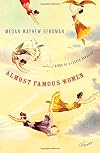
I love this book so hard. So hard I'm probably going to purchase it, which is big for me. It's a set of short stories about women who were on the fringes of fame. Stories about the girls in the background, who were forgotten, neglected, part of the scenery of other, more spectacular lives. The author has given voices to women whose whispers were too soft to resonate through the years. And it's feminist as hell. So there's that, too.
A big 'thank you' to Scribner for the ARC via NetGalley.
Deciding to write fiction inspired by real people is always a brave step, and it takes a special blend of creativity and delicacy in handling the source material to produce something literary that at the same time rings true. This particular collection accomplishes that mission brilliantly. Straight from the footnotes of history, stunning women who lived extraordinary lives and loved passionate loves come to life, surrounded by show more tastefully inserted fictional characters who lend them additional humanity and feeling.
The sheer variety of narrative angle and viewpoint is fantastic, and at no point do the stories feel overburdened with fact - there is just enough to pique one's interest and inspire further inquiries. As to its literariness, the most relevant standard it lives up to is that the stories can stand on their own outside of their historical context. However, it is imperative to know that these women were as real as you and I are now, and most importantly, they finally have a voice of their own.
Thoroughly researched and teeming with freshness, Bergman's tender, but unapologetic prose is a huge step towards righting a great historical wrong. Of special interest is the list of resources the author used, which make for a fantastic 'further reading' list. show less
Deciding to write fiction inspired by real people is always a brave step, and it takes a special blend of creativity and delicacy in handling the source material to produce something literary that at the same time rings true. This particular collection accomplishes that mission brilliantly. Straight from the footnotes of history, stunning women who lived extraordinary lives and loved passionate loves come to life, surrounded by show more tastefully inserted fictional characters who lend them additional humanity and feeling.
The sheer variety of narrative angle and viewpoint is fantastic, and at no point do the stories feel overburdened with fact - there is just enough to pique one's interest and inspire further inquiries. As to its literariness, the most relevant standard it lives up to is that the stories can stand on their own outside of their historical context. However, it is imperative to know that these women were as real as you and I are now, and most importantly, they finally have a voice of their own.
Thoroughly researched and teeming with freshness, Bergman's tender, but unapologetic prose is a huge step towards righting a great historical wrong. Of special interest is the list of resources the author used, which make for a fantastic 'further reading' list. show less
Lists
Awards


You May Also Like


Associated Authors
Statistics
- Works
- 5
- Also by
- 6
- Members
- 743
- Popularity
- #34,184
- Rating
- 3.8
- Reviews
- 35
- ISBNs
- 23
- Languages
- 2