
Andrew Roe
Author of The Miracle Girl
Works by Andrew Roe
Tagged
Common Knowledge
There is no Common Knowledge data for this author yet. You can help.
Members
Reviews
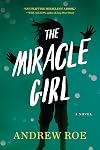
One of the most intoxicating natural gifts we possess as humans is our ability to choose hope to lift us out of despair. “The Miracle Girl”—a fascinating and powerful debut literary novel by Andrew Roe—explores this theme. I was eager to read the book precisely because it deals with this intellectually tantalizing issue. I personally know how easy it is to succumb to the siren’s call of hope. I’ve come to terms with it. It’s only natural. It’s part of being human. The daily show more struggle to view the world with objective realism is not easy. In fact, I often question whether it even always necessary or right?
This book centers on a seven-year-old child suffering from akinetic mutism. The girl, Anabelle Vincent, remains motionless and mute in a coma-like state. She’s being cared for in her parents’ home in a drab, lower-middle-class neighborhood of inland Los Angeles. The child needs a ventilator to breathe and other medical paraphernalia to help with digestion and elimination. She needs to be turned frequently to avoid bedsores and to have routine physical therapy to prevent muscle wasting. Although her eyes remain open (yet blinking), she appears unresponsive to stimuli.
The book opens six months after the accident that caused the condition. Her mother and a small cadre of volunteers care for Anabelle at home around the clock. The mother, Karen, is a physical and mental wreck. John, the child’s father, has psychologically broken down under the emotional strain of constant care giving and walked out on his family. He’s wandering the country, getting odd jobs wherever he can and sending virtually all his earnings home in anonymous envelopes. He is a broken man in utter despair.
Then little miracles start happening, first one thing, and then another. Eventually, word gets out that Anabelle is a child who can work miracles. Visitors start claiming that the child can cure their ills, mend their hearts, or answer their prayers. Soon, her story has mushroomed into a media sensation. There are interviews on the evening news, talk show appearances, CNN, and other special reports. And in L.A., of course, someone starts writing a TV script for a prime-time docudrama. What was once a small trickle of visitors, turns into a flood. A poor, cheerless Los Angeles neighborhood turns into a long line of respectful visitors, each waiting his or her turn to be with the child, if only for a brief few moments.
How hungry humanity is for hope! The child becomes a conduit for hope. For many, that is enough.
What is remarkable about this book is its characters. The father is particularly memorable and well-drawn. He’s definitely the book’s main character. But there are many strong and fascinating true-to-life secondary characters. Anabelle’s miracle of hope affects each differently. All of their stories are the kindling that feeds the theme. These stories are also the fodder satisfying the reader’s interest. This is a book of many intersecting stories with a single theme.
Andrew Roe’s writing has strong emotional depth. The book kept my attention easily and I finished it in two days. The author’s characters are remarkably authentic. In fact, it’s hard not to believe that each exists in real life. When you reach the end of the book, the author reveals that the plot was based, in very small part, upon a similar real-life event that occurred in Worcester, Massachusetts in the mid-1990s. That was the case of the fraudulent miracle child Audrey Santo. To Roe’s credit, he neither supports nor denies Anabelle’s miracles. Readers can view her miracles anyway they choose.
I thoroughly enjoyed this book. In particular, I found it intellectually satisfying. I recommend it highly to anyone who is particularly interested in this theme. show less
This book centers on a seven-year-old child suffering from akinetic mutism. The girl, Anabelle Vincent, remains motionless and mute in a coma-like state. She’s being cared for in her parents’ home in a drab, lower-middle-class neighborhood of inland Los Angeles. The child needs a ventilator to breathe and other medical paraphernalia to help with digestion and elimination. She needs to be turned frequently to avoid bedsores and to have routine physical therapy to prevent muscle wasting. Although her eyes remain open (yet blinking), she appears unresponsive to stimuli.
The book opens six months after the accident that caused the condition. Her mother and a small cadre of volunteers care for Anabelle at home around the clock. The mother, Karen, is a physical and mental wreck. John, the child’s father, has psychologically broken down under the emotional strain of constant care giving and walked out on his family. He’s wandering the country, getting odd jobs wherever he can and sending virtually all his earnings home in anonymous envelopes. He is a broken man in utter despair.
Then little miracles start happening, first one thing, and then another. Eventually, word gets out that Anabelle is a child who can work miracles. Visitors start claiming that the child can cure their ills, mend their hearts, or answer their prayers. Soon, her story has mushroomed into a media sensation. There are interviews on the evening news, talk show appearances, CNN, and other special reports. And in L.A., of course, someone starts writing a TV script for a prime-time docudrama. What was once a small trickle of visitors, turns into a flood. A poor, cheerless Los Angeles neighborhood turns into a long line of respectful visitors, each waiting his or her turn to be with the child, if only for a brief few moments.
How hungry humanity is for hope! The child becomes a conduit for hope. For many, that is enough.
What is remarkable about this book is its characters. The father is particularly memorable and well-drawn. He’s definitely the book’s main character. But there are many strong and fascinating true-to-life secondary characters. Anabelle’s miracle of hope affects each differently. All of their stories are the kindling that feeds the theme. These stories are also the fodder satisfying the reader’s interest. This is a book of many intersecting stories with a single theme.
Andrew Roe’s writing has strong emotional depth. The book kept my attention easily and I finished it in two days. The author’s characters are remarkably authentic. In fact, it’s hard not to believe that each exists in real life. When you reach the end of the book, the author reveals that the plot was based, in very small part, upon a similar real-life event that occurred in Worcester, Massachusetts in the mid-1990s. That was the case of the fraudulent miracle child Audrey Santo. To Roe’s credit, he neither supports nor denies Anabelle’s miracles. Readers can view her miracles anyway they choose.
I thoroughly enjoyed this book. In particular, I found it intellectually satisfying. I recommend it highly to anyone who is particularly interested in this theme. show less
As a baby, Anabelle Vincent cried continuously. Even as a young child it became obvious she was different from her peers in a number of ways. By the time she was eight years old, as the result of an accident, she was in a "coma-like state". Against medical advice, her mother brought her home from the hospital instead of sending her to a facility. Word spread quickly that Anabelle is a healer- a bringer of miracles. "Perhaps the first miracle was that she did not die, and here it was, show more approaching a year after the accident." Andrew Roe's novel, The Miracle Girl, is the engrossing story about the Vincent family and of some of the people who turn to Anabelle. Every day people were outside the modest Vincent home waiting their turn to have a few minutes with her. Some aren't sure why they have come. There are those who know exactly why they have come. They are looking for help and or hope.
The story is told mainly in the voice of Anabelle's mother as she struggles to cope with what is now their life. Additional narrative comes Anabelle, her father and from some of the people who are drawn to her. The author deftly takes on serious issues. What do we believe in and why? Do miracles happen? If Anabelle is truly a miracle girl then what is the explanation for this? The realistic characters are complex and their relationships are intriguing. Their futures are uncertain.
I found this to be a thought provoking novel and I recommend reading it.
I received this book for free through LibraryThing Member Giveaways and I give this review of my own free will. show less
The story is told mainly in the voice of Anabelle's mother as she struggles to cope with what is now their life. Additional narrative comes Anabelle, her father and from some of the people who are drawn to her. The author deftly takes on serious issues. What do we believe in and why? Do miracles happen? If Anabelle is truly a miracle girl then what is the explanation for this? The realistic characters are complex and their relationships are intriguing. Their futures are uncertain.
I found this to be a thought provoking novel and I recommend reading it.
I received this book for free through LibraryThing Member Giveaways and I give this review of my own free will. show less
This review was written for LibraryThing Member Giveaways.
I received this book in exchange for my review. I am not real fond of novels that bounce back and forth in time and between characters. I had a hard time getting into this story. However, it did get better the farther in I read. It was a captivating topic and I enjoyed looking at the way each character looked at belief in God. I think the little girl's character could have been developed more. I never really felt any empathy for her. I also didn't think the liberal use of the f**word was show more necessary or added any value to the story. show less
This review was written for LibraryThing Member Giveaways.
I received this book as part of the Member Giveaway program. I really liked the idea of this story however, for me, the story wasn't developed enough for me to love it. I would have loved more story regarding the accident and how that changed the relationships between the characters. I loved the different stories Roe shared with those looking for miracles. I think I expected more from this story than what was delivered.
This review was written for LibraryThing Member Giveaways.
Lists
Awards

Statistics
- Works
- 3
- Members
- 62
- Popularity
- #271,093
- Rating
- 3.2
- Reviews
- 9
- ISBNs
- 8