
Bill Wise
Author of Whodunit Math Puzzles
Works by Bill Wise
Het taartprobleem 1 copy
Associated Works
Tagged
Common Knowledge
Members
Reviews
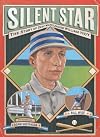
No one today would call a deaf person "dummy," but from 1888-1902, Major League Baseball player, William Ellsworth Hoy, wore that nickname with pride.
Deaf from the age of three, his chances of becoming a major league baseball star were slim to none. At the turn of the century, deafness itself was a great hurdle to overcome. Attitudes were different, and his early years were difficult until his parents sent him to the Ohio School for the Deaf, where,
"Nobody stared or pointed him. Nobody felt show more sorry for him."
Presumably, this is where he learned the confidence and persistence (he already had a love for baseball), that helped propel him to the top of his game as a major league outfielder. Bill Wise chronicles his early life, his rise to stardom, and the unique challenges he faced in the game of baseball. His baseball challenges were not necessarily due to his disability, but rather, just the way the game is played. If the opposing team has a weakness, exploit it.
"Because he could not hear the home plate umpire shouting balls and strikes when he was at bat, Hoy had to turn around to look at the ump after each pitch. The umpire would repeat the call, and as Hoy read the ump's lips, opposing pitchers often quick pitched Hoy, throwing the next ball before he was ready to bat."
This didn't stop Hoy for long, though. There's a "workaround" for nearly everything. Some historians argue that Hoy's deafness may have been the impetus for the umpire's use of hand signals. In any case, the fans loved him - knowing that he could not hear their cheers, fans waved their arms and hats and threw confetti to show their approval.
Gustavson's mostly double-spread illustrations depict Hoy as a determined and confident young man.
Much of the text is presented in text boxes which appear as aged scrapbook or autograph pages outlined in faded fountain pen. The subdued tones of the illustrations, along with the many undefined faces, help give Silent Star the appropriate "old time" feel.
The Afterword offers additional information and photos of Hoy's baseball card and a Hoy-autographed baseball. Biographical sources are included on the dedication page. As for baseball sources, they're unnecessary, for that is one of the many beauties of baseball. There are official statistics for everything!
This is a particularly worthwhile addition to the growing collection of nonfiction, baseball-themed picture books because of the inspiring nature of Hoy's story.
More @ http://www.shelf-employed.blogspot.com/2012/04/silent-star-story-of-deaf-major-l... show less
Deaf from the age of three, his chances of becoming a major league baseball star were slim to none. At the turn of the century, deafness itself was a great hurdle to overcome. Attitudes were different, and his early years were difficult until his parents sent him to the Ohio School for the Deaf, where,
"Nobody stared or pointed him. Nobody felt show more sorry for him."
Presumably, this is where he learned the confidence and persistence (he already had a love for baseball), that helped propel him to the top of his game as a major league outfielder. Bill Wise chronicles his early life, his rise to stardom, and the unique challenges he faced in the game of baseball. His baseball challenges were not necessarily due to his disability, but rather, just the way the game is played. If the opposing team has a weakness, exploit it.
"Because he could not hear the home plate umpire shouting balls and strikes when he was at bat, Hoy had to turn around to look at the ump after each pitch. The umpire would repeat the call, and as Hoy read the ump's lips, opposing pitchers often quick pitched Hoy, throwing the next ball before he was ready to bat."
This didn't stop Hoy for long, though. There's a "workaround" for nearly everything. Some historians argue that Hoy's deafness may have been the impetus for the umpire's use of hand signals. In any case, the fans loved him - knowing that he could not hear their cheers, fans waved their arms and hats and threw confetti to show their approval.
Gustavson's mostly double-spread illustrations depict Hoy as a determined and confident young man.
Much of the text is presented in text boxes which appear as aged scrapbook or autograph pages outlined in faded fountain pen. The subdued tones of the illustrations, along with the many undefined faces, help give Silent Star the appropriate "old time" feel.
The Afterword offers additional information and photos of Hoy's baseball card and a Hoy-autographed baseball. Biographical sources are included on the dedication page. As for baseball sources, they're unnecessary, for that is one of the many beauties of baseball. There are official statistics for everything!
This is a particularly worthwhile addition to the growing collection of nonfiction, baseball-themed picture books because of the inspiring nature of Hoy's story.
More @ http://www.shelf-employed.blogspot.com/2012/04/silent-star-story-of-deaf-major-l... show less
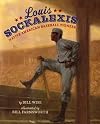
This book goes through the life of Louis Sockalexis and his baseball career. I absolutely love the illustrations; the paint strokes definitely express movement. I would include it in my classroom because it accurately tells the story in that time (it doesn't water down the discrimination Louis endured). In addition to this, I would read it to grades 1st-5th and include it in a history lesson on Native Americans passed the 1800s.
This book tells the amazing story of William Hoy (1862-1961), nicknamed “Dummy,” who lost his hearing at age three after a bout of meningitis. Nevertheless, Hoy went on not only to become a major league baseball star, but still ranks today in the top twenty-five in a number of all-time career statistics.
One (of many) touching moments in the story occurs in 1902, when Hoy, batting for the Cincinnati Reds, went up against the deaf pitcher of the New York Giants, Luther Taylor. As the show more author writes:
"For the first - and only - time ever, a deaf batter would face a deaf pitcher in a big league game.”
When Hoy approached home plate to bat, he greeted Taylor with American Sign Language, saying “I’m glad to see you.”
The Giants won that day, but Hoy felt proud.
A year later, Hoy retired from professional baseball. He and his wife Anna, also deaf, bought a farm near Cincinnati where they raised their three children. In addition, he coached and umpired in deaf baseball leagues. He was awarded a lifetime pass to major league baseball events, and attended games right up to his death at age ninety-nine.
The author concludes:
"William ‘Dummy’ Hoy was an inspiration to all who met him. Never giving up on his dream, he overcame numerous obstacles to become the first deaf player to have a long and distinguished career in the major leagues. He was a courageous, determined hero.”
In an Afterword, the author reports that some baseball historians credit Hoy with influencing the use of hand signals by umpires. Hoy did use hand signals to communicate with his teammates. But other historians attribute the development of hand signals to Ed Dundon, a deaf pitcher in the American Association from 1883-84, and later an umpire. Still others observe that it was not until 1907 that the hand signal became standard for umpires. But there is no doubt that hand signals helped Hoy, and that he spread their use over the course of his career. His batting average increased dramatically after he arranged for his team’s third base coach to communicate with him by arm signals.
Illustrator Adam Gustavson does a fine job. He spent months researching baseball uniforms, rules, and stadiums for this assignment, and it shows in the many period elements in the backgrounds of his pictures. I also was impressed by the way he skillfully employs perspective in his lush oils. On the front and back flyleaves, you can see some of his pencil drawings for his initial sketches.
Discussion: When I heard this book been published and I tried to get a copy at my local big box book store, I was unsuccessful. They told me they didn’t stock it because “there isn’t any market for these kinds of books.” I took “these kinds” to mean books featuring stories of disabled people, because I knew “these kinds” didn’t mean picture books about sport stars. (They offered to order it for me, but I declined, opting to take my business elsewhere.)
Evaluation: This is an excellent book. It is interesting, informative, and inspirational. show less
One (of many) touching moments in the story occurs in 1902, when Hoy, batting for the Cincinnati Reds, went up against the deaf pitcher of the New York Giants, Luther Taylor. As the show more author writes:
"For the first - and only - time ever, a deaf batter would face a deaf pitcher in a big league game.”
When Hoy approached home plate to bat, he greeted Taylor with American Sign Language, saying “I’m glad to see you.”
The Giants won that day, but Hoy felt proud.
A year later, Hoy retired from professional baseball. He and his wife Anna, also deaf, bought a farm near Cincinnati where they raised their three children. In addition, he coached and umpired in deaf baseball leagues. He was awarded a lifetime pass to major league baseball events, and attended games right up to his death at age ninety-nine.
The author concludes:
"William ‘Dummy’ Hoy was an inspiration to all who met him. Never giving up on his dream, he overcame numerous obstacles to become the first deaf player to have a long and distinguished career in the major leagues. He was a courageous, determined hero.”
In an Afterword, the author reports that some baseball historians credit Hoy with influencing the use of hand signals by umpires. Hoy did use hand signals to communicate with his teammates. But other historians attribute the development of hand signals to Ed Dundon, a deaf pitcher in the American Association from 1883-84, and later an umpire. Still others observe that it was not until 1907 that the hand signal became standard for umpires. But there is no doubt that hand signals helped Hoy, and that he spread their use over the course of his career. His batting average increased dramatically after he arranged for his team’s third base coach to communicate with him by arm signals.
Illustrator Adam Gustavson does a fine job. He spent months researching baseball uniforms, rules, and stadiums for this assignment, and it shows in the many period elements in the backgrounds of his pictures. I also was impressed by the way he skillfully employs perspective in his lush oils. On the front and back flyleaves, you can see some of his pencil drawings for his initial sketches.
Discussion: When I heard this book been published and I tried to get a copy at my local big box book store, I was unsuccessful. They told me they didn’t stock it because “there isn’t any market for these kinds of books.” I took “these kinds” to mean books featuring stories of disabled people, because I knew “these kinds” didn’t mean picture books about sport stars. (They offered to order it for me, but I declined, opting to take my business elsewhere.)
Evaluation: This is an excellent book. It is interesting, informative, and inspirational. show less
I really enjoyed this book about the first Native American major league baseball player. I had not realized that Native Americans faced discrimination in sports before reading this book. In that sense, I believe this book pushes readers to think of another culture that faced hardships in America, besides African-Americans. The plot was also very insightful because not only did Sockalexis deal with hatred from spectators, but also his Native American tribe and father were not supportive of show more his career. At the end of the book, Louis sees his father and tribe at the baseball stadium, where he was up against a mean pitcher, and their support helps him hit a homerun. The book focuses a lot on the importance of heritage and is a great tool for teaching students to respect other cultures. show less
Awards


You May Also Like


Associated Authors
Statistics
- Works
- 15
- Also by
- 1
- Members
- 370
- Popularity
- #65,127
- Rating
- 3.7
- Reviews
- 10
- ISBNs
- 23
- Languages
- 2