
Peter Golenbock
Author of Teammates
About the Author
Peter Golenbock is a prolific sports journalist and author. He was born in New York City on July 19, 1946 and raised in Stamford, Connecticut. He graduated from Dartmouth College in 1967 and the New York University School of Law in 1970. While at Dartmouth, he began writing about sports for The show more Daily Dartmouth, which led to stints with the New York Times and the Boston Globe. It was also at Dartmouth where he became friends with Robert Ariel "Red" Rolfe, the former New York Yankees third baseman and the school's athletic director. Rolfe entertained him for hours with stories of the famous Yankees teams of the 1930's, which had a profound impact on Golenbock's unintended career path. After graduating law school, he eventually landed a job in the legal department of Prentice-Hall Publishing. Surprisingly, he was able to convince the head of the trade book division to allow him to write about the Yankees. The resulting book, Dynasty: The New York Yankees 1949-64, became an instant bestseller, the first of many for Golenbock. Among his best-known works to follow include; The Bronx Zoo, Bums: An Oral History of the Brooklyn Dodgers, Balls, with Graig Nettles, Bats, with Davey Johnson, Personal Fouls, a look at corruption in college basketball, and Teammates, a children's book about the relationship between Jackie Robinson and Pee Wee Reese. His latest work is entitled Rage: The Legend of "Baseball Bill" Denehy. (Bowker Author Biography) show less
Image credit: Reality Check Radio
Works by Peter Golenbock
The Forever Boys: The Bittersweet World of Major League Baseball As Seen Through the Eyes of the Men Who Played One More Time (1991) 53 copies
Amazin': The Miraculous History of New York's Most Beloved Baseball Team (2002) 47 copies, 3 reviews
Personal Fouls: The Broken Promises and Shattered Dreams of Big Money Basketball at Jim Valvano's North Carolina State (1989) 41 copies
Whispers of the Gods: Tales from Baseball’s Golden Age, Told by the Men Who Played It (2022) 27 copies, 1 review
Associated Works
Tagged
Common Knowledge
- Birthdate
- 1946-07-19
- Gender
- male
- Education
- St. Luke's School, New Canaan, Connecticut, USA ( [1963])
Dartmouth College ( [1967])
New York University ( [1970]) - Occupations
- lawyer
author
writer - Organizations
- Prentice Hall
The Record (Bergen County) - Nationality
- USA
- Places of residence
- New York, New York, USA (birth)
Stamford, Connecticut, USA
St. Petersburg, Florida, USA - Associated Place (for map)
- USA
Members
Reviews

As baseball fans will know that 1) Graig Nettles was a star third baseman for the New York Yankees from 1973 through 1983, and 2) these years coincide with the period that George Steinbrenner owned the team. Steinbrenner was an egotistical blowhard who made his fortune via his shipbuilding company and knew a lot less about building and running a baseball team than he thought he did. Balls is Nettles’ memoir of the 1983 season, which turned out to be his final year as a Yankee. Nettles and show more co-writer Peter Golenbock intersperse chapters which follow the ’83 season chronologically with chapters that provide an overview of Nettles’ career up to that point.
This is not a standard baseball memoir, though. For one thing, such books normally chronicle seasons of players on teams that at least make the post-season, but in 1983, the Yankees finished third, though they did win a respectable 91 games and were in the pennant race until late in the season. For another, Nettles’ book is more about what it is like to be a player on the Yankees during the Steinbrenner era than it is a real narrative of the ups and downs of a pennant race. There’s relatively little discussion of individual games. The famous Yankees comeback of the 1978 season, where they overcame a 12-game deficit to beat the Red Sox for the pennant in a winner-take-all playoff game is handled in about two paragraphs. There are, however, some good descriptions of Nettles' teammates, including what it was like to be teammates with Reggie Jackson.
Nettles depicts Steinbrenner as an self-centered jerk who wanted to make the story all about himself rather than about his players. He regularly criticized the ballplayers in the press and took credit when things went well. Although he had a general manager, he insisted on decided upon trades himself. Nettles praises Steinbrenner for being willing to pay to bring in high-priced stars, but criticizes what he saw as the haphazard way this was done. In 1977, reliever Sparky Lyle won the Cy Young Award, a rarity for a relief pitcher. Nevertheless, the next season Steinbrenner brought in high-priced closer Goose Gossage. Irritated at having to share the closer role, Lyle fumed all season, was ineffective on the mound, and was traded the next year, an event causing Nettles to offer his famous quip to Lyle, “You went from Cy Young to sayonara.”
Another Steinbrenner would sign too many stars. The Yankees during a given year would have, say, five all-star caliber outfielders when only three of them could play regularly. This would lead to the team never having a set lineup, which Nettles claimed damaged the team’s cohesiveness and spirit. Steinbrenner’s ongoing feuds with manager Billy Martin are also chronicled here.
The bottom line for Nettles, though, and that factor that bothered him the most, was that although the Yankees were usually good, Steinbrenner’s methods and personality took the fun out of baseball for the players. “Baseball should be a game, not a business,” he says in the book. “Nobody ever says that the Yankees and Red Sox held a business meeting on Friday night. They say that the Yankees and Red Sox played a game.”
As the book ends, Nettles, at age 39, had just signed a new 2-year contract with the Yankees. But the book’s appearance during the 1984 spring training led immediately to Nettles getting traded to the San Diego Padres, which at least was Nettles’ hometown team. Balls is breezy and a relatively quick read, and it will be fun for baseball fans, and particularly for folks who remember those days. Yankee fans will enjoy reading about those players again. Yankee haters will enjoy the disfunction. show less
This is not a standard baseball memoir, though. For one thing, such books normally chronicle seasons of players on teams that at least make the post-season, but in 1983, the Yankees finished third, though they did win a respectable 91 games and were in the pennant race until late in the season. For another, Nettles’ book is more about what it is like to be a player on the Yankees during the Steinbrenner era than it is a real narrative of the ups and downs of a pennant race. There’s relatively little discussion of individual games. The famous Yankees comeback of the 1978 season, where they overcame a 12-game deficit to beat the Red Sox for the pennant in a winner-take-all playoff game is handled in about two paragraphs. There are, however, some good descriptions of Nettles' teammates, including what it was like to be teammates with Reggie Jackson.
Nettles depicts Steinbrenner as an self-centered jerk who wanted to make the story all about himself rather than about his players. He regularly criticized the ballplayers in the press and took credit when things went well. Although he had a general manager, he insisted on decided upon trades himself. Nettles praises Steinbrenner for being willing to pay to bring in high-priced stars, but criticizes what he saw as the haphazard way this was done. In 1977, reliever Sparky Lyle won the Cy Young Award, a rarity for a relief pitcher. Nevertheless, the next season Steinbrenner brought in high-priced closer Goose Gossage. Irritated at having to share the closer role, Lyle fumed all season, was ineffective on the mound, and was traded the next year, an event causing Nettles to offer his famous quip to Lyle, “You went from Cy Young to sayonara.”
Another Steinbrenner would sign too many stars. The Yankees during a given year would have, say, five all-star caliber outfielders when only three of them could play regularly. This would lead to the team never having a set lineup, which Nettles claimed damaged the team’s cohesiveness and spirit. Steinbrenner’s ongoing feuds with manager Billy Martin are also chronicled here.
The bottom line for Nettles, though, and that factor that bothered him the most, was that although the Yankees were usually good, Steinbrenner’s methods and personality took the fun out of baseball for the players. “Baseball should be a game, not a business,” he says in the book. “Nobody ever says that the Yankees and Red Sox held a business meeting on Friday night. They say that the Yankees and Red Sox played a game.”
As the book ends, Nettles, at age 39, had just signed a new 2-year contract with the Yankees. But the book’s appearance during the 1984 spring training led immediately to Nettles getting traded to the San Diego Padres, which at least was Nettles’ hometown team. Balls is breezy and a relatively quick read, and it will be fun for baseball fans, and particularly for folks who remember those days. Yankee fans will enjoy reading about those players again. Yankee haters will enjoy the disfunction. show less
"The Puritans, similar to the Taliban today, were a joyless lot. ...If a child was a bed wetter, they made him eat a rat sandwich."
Right. And if you are thinking it may be unfair to judge the entire book based on this sentence (which is representative, actually, of other such sweeping statements without sources to back them up), then I can only say that I suggest it is unfair to compare all Puritans to the Taliban based on some single Puritan somewhere that fed his child a rat sandwich as a show more punishment for bedwetting, if it even happened. With no source, we also have no context- perhaps it didn't happen. Perhaps it wasn't a joyless punishment but a strange 17th century folk remedy equally practiced by 17th century Catholics.
It's a good example of how difficult it is to take any other stories by this author, however interesting, as accurate. show less
Right. And if you are thinking it may be unfair to judge the entire book based on this sentence (which is representative, actually, of other such sweeping statements without sources to back them up), then I can only say that I suggest it is unfair to compare all Puritans to the Taliban based on some single Puritan somewhere that fed his child a rat sandwich as a show more punishment for bedwetting, if it even happened. With no source, we also have no context- perhaps it didn't happen. Perhaps it wasn't a joyless punishment but a strange 17th century folk remedy equally practiced by 17th century Catholics.
It's a good example of how difficult it is to take any other stories by this author, however interesting, as accurate. show less
 This review was written for LibraryThing Early Reviewers.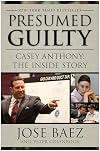
An excellent account of the defense case and the logic behind how a "not guilty" verdict could be reached by the jury. The role and bias of the media is also well covered and explains in part why many including myself thought Casey Anthony was responsible for her daughter's death. I am not convinced having now read this well written and convincing account.

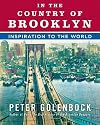
This huge (704 pages) book at first glance appears to be yet another nostalgic memoir or compendium of reminiscences of famous people who were born in Brooklyn. But Golenbock is after something much more ambitious and the result is a fascinating though flawed book that will interest those with little or no connection to Brooklyn.
Virtually every examination of Brooklyn takes as its starting point the diversity evidenced in the fact that one in seven Americans can trace his or her family back show more to this densely populated 70-square-mile borough that was once a rural suburb of New York City. Golenbock zooms in further, taking as his theme the fight for equality and social justice waged by the myriad ethnic groups, political activists and other victims of discrimination and oppression that have called Brooklyn home.
Through dozens of interviews with ordinary – and often extraordinary – people, the book delves into just about every important social movement and upheaval of the 20th century – labor, civil rights, urban decay, white flight, rock and roll, baseball, gentrification and more. The Brooklyn Dodgers figure prominently as a unifying passion for Brooklynites of every stripe and Jackie Robinson appears often as the personification of the fight for human dignity.
The book comes alive in the narratives of the people who were there, who tell the stories of teachers who lost their jobs to political witch-hunts, of a baseball idol who responds to a sick child and remembers him many years later, of youngsters who resisted the lure of drugs and gangs and rose to positions in which they could help their communities, of a musically talented kid who made it big, a fireman on 9/11, a real estate developer with a vision, an artist with a lifelong commitment to political activism and many more.
I’m one who was there. My neighborhood, my block, my schools, even my summer camp for the children of left-wing parents…they’re all here. I lived a few blocks from Ebbets Field, idolized Jackie Robinson (and still hate the Yankees), was taught not to divulge my family’s political leanings during the McCarthy years, saw the neighborhoods crumble, eventually left and watched in wonder 25 years later as my daughter moved to the very neighborhood we had fled. How could I not love this book?
Those who don’t have that emotional connection and who don’t share Golenbock’s biases may see it differently. The connective narrative he supplies is often fascinating, ranging widely over topics like the history of Coney Island, the roots of the Ku Klux Klan, the Lincoln Brigade in the Spanish Civil War, the experiences of African-Americans in the military, the Communist scare of the 1940s and 1950s, and the struggle for community control of schools. But along with the historical record is a good deal of editorializing, most of it entirely unsupported and some of it couched in grand, sweeping statements that have little basis in fact. The author’s point of view is demonstrated also in the choice of interview subjects. There is no attempt to represent the views of those who, say, believed that teachers who harbored left-wing sentiments should be kept out of the classroom.
Further, the book is a case study for the lost art of editing. There are factual errors, lots of repetition and general bloat. (My ARC was accompanied by the usual note from the publisher asking for feedback. I did provide some, pointing out errors and expressing the desperate need for tightening -- it actually occurred to me that they might have sent a pre-editing galley. The final, published book was word-for-word identical to my copy.)
Golenbock didn’t set out to produce a “fair and balanced” history or a collection of nostalgia. He has made Brooklyn the lens through which we can examine many of the most important social movements of our times and he has shown my home town to have been a hotbed of activism in pursuit of the American ideal. This is a limited albeit interesting perspective on this teeming borough. And you thought Brooklyn was all about a bridge, stickball, egg creams and Dem Bums? Fugheddaboudit! show less
Virtually every examination of Brooklyn takes as its starting point the diversity evidenced in the fact that one in seven Americans can trace his or her family back show more to this densely populated 70-square-mile borough that was once a rural suburb of New York City. Golenbock zooms in further, taking as his theme the fight for equality and social justice waged by the myriad ethnic groups, political activists and other victims of discrimination and oppression that have called Brooklyn home.
Through dozens of interviews with ordinary – and often extraordinary – people, the book delves into just about every important social movement and upheaval of the 20th century – labor, civil rights, urban decay, white flight, rock and roll, baseball, gentrification and more. The Brooklyn Dodgers figure prominently as a unifying passion for Brooklynites of every stripe and Jackie Robinson appears often as the personification of the fight for human dignity.
The book comes alive in the narratives of the people who were there, who tell the stories of teachers who lost their jobs to political witch-hunts, of a baseball idol who responds to a sick child and remembers him many years later, of youngsters who resisted the lure of drugs and gangs and rose to positions in which they could help their communities, of a musically talented kid who made it big, a fireman on 9/11, a real estate developer with a vision, an artist with a lifelong commitment to political activism and many more.
I’m one who was there. My neighborhood, my block, my schools, even my summer camp for the children of left-wing parents…they’re all here. I lived a few blocks from Ebbets Field, idolized Jackie Robinson (and still hate the Yankees), was taught not to divulge my family’s political leanings during the McCarthy years, saw the neighborhoods crumble, eventually left and watched in wonder 25 years later as my daughter moved to the very neighborhood we had fled. How could I not love this book?
Those who don’t have that emotional connection and who don’t share Golenbock’s biases may see it differently. The connective narrative he supplies is often fascinating, ranging widely over topics like the history of Coney Island, the roots of the Ku Klux Klan, the Lincoln Brigade in the Spanish Civil War, the experiences of African-Americans in the military, the Communist scare of the 1940s and 1950s, and the struggle for community control of schools. But along with the historical record is a good deal of editorializing, most of it entirely unsupported and some of it couched in grand, sweeping statements that have little basis in fact. The author’s point of view is demonstrated also in the choice of interview subjects. There is no attempt to represent the views of those who, say, believed that teachers who harbored left-wing sentiments should be kept out of the classroom.
Further, the book is a case study for the lost art of editing. There are factual errors, lots of repetition and general bloat. (My ARC was accompanied by the usual note from the publisher asking for feedback. I did provide some, pointing out errors and expressing the desperate need for tightening -- it actually occurred to me that they might have sent a pre-editing galley. The final, published book was word-for-word identical to my copy.)
Golenbock didn’t set out to produce a “fair and balanced” history or a collection of nostalgia. He has made Brooklyn the lens through which we can examine many of the most important social movements of our times and he has shown my home town to have been a hotbed of activism in pursuit of the American ideal. This is a limited albeit interesting perspective on this teeming borough. And you thought Brooklyn was all about a bridge, stickball, egg creams and Dem Bums? Fugheddaboudit! show less
This review was written for LibraryThing Early Reviewers.Lists
Awards


You May Also Like


Associated Authors
Statistics
- Works
- 40
- Also by
- 6
- Members
- 3,071
- Popularity
- #8,311
- Rating
- 3.7
- Reviews
- 118
- ISBNs
- 129
- Languages
- 1
- Favorited
- 2
