
Adam Hart-Davis
Author of History: The Definitive Visual Guide From The Dawn of Civilization To The Present Day
About the Author
Image credit: Source: DHD Multimedia Gallery
Works by Adam Hart-Davis
History: The Definitive Visual Guide From The Dawn of Civilization To The Present Day (2007) — Editor — 678 copies, 3 reviews
Schrödinger's Cat: Fifty Experiments That Revolutionized Physics (Great Experiments in Science) (2023) 21 copies
Fibonacci's Rabbits: Fifty Breakthroughs That Revolutionized Mathematics (Great Experiments in Science) (2023) 14 copies
Stringlopedia: Unravel the Secrets of Knots and Reel in Lashings of Twine-Related Trivia (2009) 11 copies
Schrödinger's Cat: And 49 Other Experiments That Revolutionised Physics (Great Experiments Book 2) (2019) 3 copies
Wetenschap de grote ontdekkingen : De geboorte van de wetenschap, Prehistorie tot 1500 (2012) — Composer — 3 copies
Wetenschap in woord en beeld de meest intrigerende vragen uit de wereld van de wetenschap (2006) 2 copies
Scientific Eye 1 copy
Schrodingers Cat 1 copy
INVENTIONS de Suzy Borello (Adapté par), Adam Hart-Davis (18 septembre 2013) Album (1600) — Editor — 1 copy
Fibonnacci’s Rabbits 1 copy
Dějiny : velký obrazový průvodce historií lidstva : od úsvitu lidské civilizace po současnost (2009) 1 copy
HISTÓRIA * Unikátny obrazový sprievodca * Od úsvitu civilizácie po súčasnosť (2007) 1 copy, 1 review
Associated Works
Engineers From the Great Pyramids to the Pioneers of Space Travel (2012) — some editions — 109 copies, 1 review
The Arthur Ransome Society : transcripts from the literary weekends (1993) — Contributor, some editions — 1 copy
Tagged
Common Knowledge
- Birthdate
- 1943-07-04
- Gender
- male
- Education
- University of Oxford (Merton College)
University of York
Eton College - Occupations
- scientist
photographer
historian
broadcaster
presenter - Organizations
- University of Alberta
Oxford University Press
Tomorrow's World (presenter)
Stardate (presenter)
What the Ancients Did for Us (presenter) - Awards and honors
- Royal Society of Arts (Fellow)
- Relationships
- Hart-Davis, Rupert (father)
Hart-Davis, Duff (brother)
Hart-Davis, Adrienne (wife)
Blackmore, Susan (second wife|2010)
Cooper, Duff (great-uncle) - Nationality
- England
UK - Birthplace
- Henley-on-Thames, Oxfordshire, England, UK
- Places of residence
- Plymouth, Devon, England
Henley-on-Thames, Oxfordshire, England, UK - Associated Place (for map)
- Henley-on-Thames, Oxfordshire, England, UK
Members
Reviews

I just have to say first that I love the graph paper cover; it made me want to get out my pencil and ruler and plot some charts! I also love the funky images that you can see at the top of the cover, they are replicated throughout the book and reminded me of Monty Python's Flying Circus. The cover actually says a lot about the style of the book: it's science made fun by Adam Hart-Davis.
I've always had a keen interest in psychology and I think there's nothing more interesting than finding out show more how the human mind works. I hadn't heard of Pavlov's Dog before reading the book but that is only one of the many amazing experiments that Adam Hart-Davis describes in bite-sized pieces. The book is written in chronological order with experiments grouped into six parts so you can see how psychology has evolved throughout the ages.
I not only found myself intrigued by the experiments, but I saw myself in so many of them. Anyone who knows me will have heard me mentioning space invaders at one time or another. No, not the video game but those people who stand TOO CLOSE! Felipe and Sommer studied invasions into personal space in their 1966 experiment so I'm glad to see that I'm not alone in 'moving along the bench' when my space is invaded.
Another experiment that intrigued me was the peer pressure test conducted by Asch in 1956. I remember going on a management course not long after I had read a psychology book (for fun, as you do). The trainer conducted an experiment whereby he stated three facts about himself and asked the group which one was a lie. The group's answers were split between two of the facts, whereas I was the only person who chose the fact that was actually the lie. The psychology book I read had told me how to identify a lie but the point is that mine was the only answer that differed to the whole group. Perhaps some of my colleagues agreed with my choice, but succumbed to peer pressure and went with the majority as Asch's study concluded.
So if you've ever wondered why you can't tickle yourself or wanted to know how you can hear with your eyes, this is the book for you. It's a fascinating introduction to psychology for those new to the science, but also a fantastic reference guide to the main experiments that have shaped psychology into the science we know today.
I chose to read an ARC and this is my honest and unbiased opinion. show less
I've always had a keen interest in psychology and I think there's nothing more interesting than finding out show more how the human mind works. I hadn't heard of Pavlov's Dog before reading the book but that is only one of the many amazing experiments that Adam Hart-Davis describes in bite-sized pieces. The book is written in chronological order with experiments grouped into six parts so you can see how psychology has evolved throughout the ages.
I not only found myself intrigued by the experiments, but I saw myself in so many of them. Anyone who knows me will have heard me mentioning space invaders at one time or another. No, not the video game but those people who stand TOO CLOSE! Felipe and Sommer studied invasions into personal space in their 1966 experiment so I'm glad to see that I'm not alone in 'moving along the bench' when my space is invaded.
Another experiment that intrigued me was the peer pressure test conducted by Asch in 1956. I remember going on a management course not long after I had read a psychology book (for fun, as you do). The trainer conducted an experiment whereby he stated three facts about himself and asked the group which one was a lie. The group's answers were split between two of the facts, whereas I was the only person who chose the fact that was actually the lie. The psychology book I read had told me how to identify a lie but the point is that mine was the only answer that differed to the whole group. Perhaps some of my colleagues agreed with my choice, but succumbed to peer pressure and went with the majority as Asch's study concluded.
So if you've ever wondered why you can't tickle yourself or wanted to know how you can hear with your eyes, this is the book for you. It's a fascinating introduction to psychology for those new to the science, but also a fantastic reference guide to the main experiments that have shaped psychology into the science we know today.
I chose to read an ARC and this is my honest and unbiased opinion. show less

I've long been a bit of a sucker for DK books. The pictures are just so good ...and so many of them. And, In this case the illustrations.....especially the maps are great too. Of course, any book which purports to be a history of the world is going to skimp on some things...well probably most things really. And when I wanted some serious detail on Assyrian history, this DK book gave me a summary outline in a few pages but the detail was not there. Still, it did have a section on Assyrian show more history. Likewise, when I was looking for something on the Scythians, I found a few paragraphs but no real detail. On the other hand, what this book manages to accomplish rather well is the integration of history. They seem to present the history....not just as the history of one tribe or country but as a region with the various forces interacting across wide swathes of territory. And they have some nice illustrated time lines showing what was going on in different parts of the world at particular times in history.
OK , I haven't read this book from cover to cover and i'm not likely to but I find it fascinating to dig into from time to time and probably will continue to use it in this way.I guess it does really well with what it set out to do but I guess I would have liked some more detail......and that might have required something 10 times the size....and it's a big book (Large format 612 pages) already. Four stars from me. show less
OK , I haven't read this book from cover to cover and i'm not likely to but I find it fascinating to dig into from time to time and probably will continue to use it in this way.I guess it does really well with what it set out to do but I guess I would have liked some more detail......and that might have required something 10 times the size....and it's a big book (Large format 612 pages) already. Four stars from me. show less

Literally, human history... condensed. This gorgeous production by the Smithsonian Institution could be a college textbook if the history of civilization wasn't too broad a subject. Whatever moment of history might pique one's interest, the seeds of that topic are likely be found within these pages. I recommend casually flipping to any page in this volume because I can almost guarantee you'll discover something new once there.
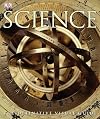
Brilliantly illustrated, very comprehensive encyclopedic book on science, structured chronologically from early history onwards. Some of the entries aren't as clear as they could be, and a couple of pages for sometimes complex topics is not enough, but they did about as well as they could to generate a visually sumptuous exploration of science.
Lists
Awards


You May Also Like


Associated Authors
Statistics
- Works
- 73
- Also by
- 6
- Members
- 2,956
- Popularity
- #8,634
- Rating
- 3.9
- Reviews
- 21
- ISBNs
- 169
- Languages
- 11