
Andrea Portes
Author of Anatomy of a Misfit
Works by Andrea Portes
Tagged
Common Knowledge
- Birthdate
- c. 1970
- Gender
- female
- Education
- Bryn Mawr College (1993|English Literature)
University of California, San Diego (MA|Fine Arts) - Occupations
- writer
- Agent
- Rosemary Stimola (Stimola Literary)
Jordan Bayer (Original Artists) - Nationality
- USA
- Birthplace
- Nebraska, USA
- Places of residence
- Nebraska, USA
Los Angeles, California, USA - Associated Place (for map)
- USA
Members
Reviews
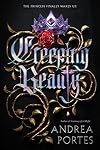
Great take on the Sleeping Beauty story. Bitsy (Elizabeth) is a plain Princess, a 17 year old who lives in a castle in the land of Rioux with her perfect mother. She is destined to be be wed before her 18th birthday and while wandering in the castle comes across a spindle, pricks her finger and falls into a deep sleep. What happens then is she falls from a great height into a trap in a swamp land, gets rescued from the swamp cannibals by the warrior Cliff people. Is told she is the Legend show more who will save the world and must train as a warrior, escapes and wanders across a salt lake where she is met by a dashing man in a white carriage who takes her to a place where everyone is perfect because they drink Sapphire - a drug mined at the cost of many enslaved lives. Meanwhile in Bitsy's other world, her father and mother are told by an old crone that only the kiss of a handsome Prince will wake her. In Bitsy's dreamworld....she is betrayed and decides to stand up and fight against all that is evil.
Fascinating look at what is real and what isn't and the ending will leave you with a smile as Bitsy decides to choose the world that is less like a fairytale...
Female students at my school will love this book. show less
Fascinating look at what is real and what isn't and the ending will leave you with a smile as Bitsy decides to choose the world that is less like a fairytale...
Female students at my school will love this book. show less
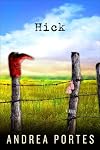
Bittersweet coming-of-age story about a 14-year-old who sets out to find herself a sugar daddy after her alcoholic parents abandon her, with predictable results.
The character of Luli is a heartbreaking blend of naivete and sass, responsible for herself for most of her life as her disillusioned and dissatisfied parents drink and feud their way through life. When her mother takes off with what Luli assumes to be a new boyfriend and her father hits the road in disgust, she makes the logical show more (for a 14-year-old who is just becoming aware of her own sexuality) decision to hit the road for Las Vegas, where she is sure she will find a sugar daddy to meet her worldly needs forever after.
Predictably, the world she leaps into with such eagerness is much less forgiving and welcoming than she had assumed it would be.
The novel is saved from unrelenting gloom by Luli's narrative voice, which is absolutely unique and spot-on. She has seen too much, yet understands too little when she sets out on her Quixotic journey, unaware that there can really be only one end.
Much is made on the cover of this novel becoming "a major motion picture", but one can hardly imagine the transition being successful. Skip the movie. Read the book. show less
The character of Luli is a heartbreaking blend of naivete and sass, responsible for herself for most of her life as her disillusioned and dissatisfied parents drink and feud their way through life. When her mother takes off with what Luli assumes to be a new boyfriend and her father hits the road in disgust, she makes the logical show more (for a 14-year-old who is just becoming aware of her own sexuality) decision to hit the road for Las Vegas, where she is sure she will find a sugar daddy to meet her worldly needs forever after.
Predictably, the world she leaps into with such eagerness is much less forgiving and welcoming than she had assumed it would be.
The novel is saved from unrelenting gloom by Luli's narrative voice, which is absolutely unique and spot-on. She has seen too much, yet understands too little when she sets out on her Quixotic journey, unaware that there can really be only one end.
Much is made on the cover of this novel becoming "a major motion picture", but one can hardly imagine the transition being successful. Skip the movie. Read the book. show less
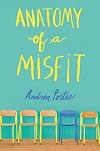
I know that this is about a romance and a boy and a tragic ending, but I cannot move past the slurs.
I believe people with influence have the responsibility to encourage a community of respect. If this was a book about how racist a place can be, how homophobic a place can be, how sexist a place could be... it would be different. There would be a lesson buried. But it isn't.
How does having a character who calls a character "negro", having that POC character steal, and justifying it through show more having that same racist character say "some stereotypes exist for a reason" add to the story?
How does having one character refer to a mean girl as the c-word add to the story?
How does the slut shaming add to the story? Stealing Vicodin and drugging her boss?
I can keep going. I mean, the main character has a Romanian background, and she disrespects her own culture by calling her father "Count Chocula". Her best friend's mother is moderately religious and is constantly referred to as "totally insane". Every page has something.
Is the author trying to portray that small towns are terrible, inhuman places to live? Okay, well let me tell you about my small town.
My town has 23,000 residents. Lincoln, Nebraska (where Anatomy of a Misfit takes place) has a population of 280,000 residents. So I think I have a better picture of a small town.
Growing up in the 90s, I remember one African-American in my school. We had three Wiccans and two lesbians and one gay that I knew of. Two or three kids of Asian decent. One Indian family, two Greek families. The rest of us? Caucasian as f***. Never ONCE did I witness an incident of racism, sexism, or homophobia among my peers. We loved the variety of religion in our school, having whole days where we'd bring in Tibetan monks (for example) and learn about them.
Does racism, sexism, homophobia, and religious intolerance exist in my community? I'm sure it does! Last year, one of our residents was in the news as a white supremacist. And the community, as a whole, as ashamed. Outraged. Twice as many people showed up to the protests and rallies. He was ostracized.
My point in sharing this is that there is no way this whole town can be a cesspool of intolerance, the way it is described. The author has said that it is a reflection of her childhood. Did she really experience this level of hatred? Or is it a reflection of her own beliefs? I don't even know. But listening to this, at points, made me feel physically ill.
Oh my gosh, let's think of other things that are seriously wrong? Anika doesn't understand the difference between a respectful person and a violent one. Logan is a "bad boy" stereotype. Shelly is a bimbo stereotype. Every character is actually a stereotype. The scene where the family tries to hand out to the POC because they feel bad for her because she's a POC. How the mom marries an "ogre" because she doesn't know better and needs to care for her children.
How the narrator speaks in the worst accents for all the non-white characters.
How the story adds guilt to people in unhealthy relationships. Emotionally abusive relationships are never okay.
I can't get past all this. It could have been a sad, tragic story about a boy in an abusive home, and a devastating ending. That would have been enough. In fact, a kind and loving town doing such a thing would have been a more powerful story. But, instead, Anatomy of a Misfit just teaches its readers that Nebraska is filled with white supremacists and should be burned.
Oh, and apparently it's appropriate to use a memorial service to out a bully and get revenge.
Oh stop. Please stop.
Do stories like this need to be told? Yes! Yes, it needs to be out there so people understand and know the signs and do something before the real world has an ending like this.
But not like this. show less
I believe people with influence have the responsibility to encourage a community of respect. If this was a book about how racist a place can be, how homophobic a place can be, how sexist a place could be... it would be different. There would be a lesson buried. But it isn't.
How does having a character who calls a character "negro", having that POC character steal, and justifying it through show more having that same racist character say "some stereotypes exist for a reason" add to the story?
How does having one character refer to a mean girl as the c-word add to the story?
How does the slut shaming add to the story? Stealing Vicodin and drugging her boss?
I can keep going. I mean, the main character has a Romanian background, and she disrespects her own culture by calling her father "Count Chocula". Her best friend's mother is moderately religious and is constantly referred to as "totally insane". Every page has something.
Is the author trying to portray that small towns are terrible, inhuman places to live? Okay, well let me tell you about my small town.
My town has 23,000 residents. Lincoln, Nebraska (where Anatomy of a Misfit takes place) has a population of 280,000 residents. So I think I have a better picture of a small town.
Growing up in the 90s, I remember one African-American in my school. We had three Wiccans and two lesbians and one gay that I knew of. Two or three kids of Asian decent. One Indian family, two Greek families. The rest of us? Caucasian as f***. Never ONCE did I witness an incident of racism, sexism, or homophobia among my peers. We loved the variety of religion in our school, having whole days where we'd bring in Tibetan monks (for example) and learn about them.
Does racism, sexism, homophobia, and religious intolerance exist in my community? I'm sure it does! Last year, one of our residents was in the news as a white supremacist. And the community, as a whole, as ashamed. Outraged. Twice as many people showed up to the protests and rallies. He was ostracized.
My point in sharing this is that there is no way this whole town can be a cesspool of intolerance, the way it is described. The author has said that it is a reflection of her childhood. Did she really experience this level of hatred? Or is it a reflection of her own beliefs? I don't even know. But listening to this, at points, made me feel physically ill.
Oh my gosh, let's think of other things that are seriously wrong? Anika doesn't understand the difference between a respectful person and a violent one. Logan is a "bad boy" stereotype. Shelly is a bimbo stereotype. Every character is actually a stereotype. The scene where the family tries to hand out to the POC because they feel bad for her because she's a POC. How the mom marries an "ogre" because she doesn't know better and needs to care for her children.
How the narrator speaks in the worst accents for all the non-white characters.
How the story adds guilt to people in unhealthy relationships. Emotionally abusive relationships are never okay.
I can't get past all this. It could have been a sad, tragic story about a boy in an abusive home, and a devastating ending. That would have been enough. In fact, a kind and loving town doing such a thing would have been a more powerful story. But, instead, Anatomy of a Misfit just teaches its readers that Nebraska is filled with white supremacists and should be burned.
Oh, and apparently it's appropriate to use a memorial service to out a bully and get revenge.
Oh stop. Please stop.
Do stories like this need to be told? Yes! Yes, it needs to be out there so people understand and know the signs and do something before the real world has an ending like this.
But not like this. show less
Anika is the third most popular girl in high school, a position she doesn't hold lightly being the strangely-named daughter of a Romanian professor. When two boys compete for her affections, she has to decide how much she cares about the opinions of everyone else, particularly her "friend" Becky, the girl whom everyone hates but whose opinion matters when it comes to who's popular and who's a reject.
This book was the e-book and audiobook chosen for the "Big Library Read," a two-week period show more in which Overdrive copies are available for any library user to check out simultaneously. It bills itself as a cross between "Mean Girls" and The Perks of Being the Wallflower, and that seems to me a fairly apt description. Anika realistically struggles with her fears of what would happen if she chooses Logan, the former social pariah who now has a moped and creatively reaches out to Anika; and Jared, the popular guy whose reputation is as a player, but Anika isn't so sure. In addition, she has a complicated family life and an after-school job with a nutty boss. She also doesn't have a great opinion of herself, saying everyone thinks she's nice but inside she's "spider soup." I could see this appealing to the same crowd that likes Perks, though it's not particularly my cup of tea. show less
This book was the e-book and audiobook chosen for the "Big Library Read," a two-week period show more in which Overdrive copies are available for any library user to check out simultaneously. It bills itself as a cross between "Mean Girls" and The Perks of Being the Wallflower, and that seems to me a fairly apt description. Anika realistically struggles with her fears of what would happen if she chooses Logan, the former social pariah who now has a moped and creatively reaches out to Anika; and Jared, the popular guy whose reputation is as a player, but Anika isn't so sure. In addition, she has a complicated family life and an after-school job with a nutty boss. She also doesn't have a great opinion of herself, saying everyone thinks she's nice but inside she's "spider soup." I could see this appealing to the same crowd that likes Perks, though it's not particularly my cup of tea. show less
Lists
You May Also Like


Associated Authors
Statistics
- Works
- 14
- Members
- 809
- Popularity
- #31,537
- Rating
- 3.4
- Reviews
- 45
- ISBNs
- 71
- Languages
- 7