
Christian Rätsch
Author of Plants of the Gods: Their Sacred, Healing, and Hallucinogenic Powers
About the Author
Image credit: Jörg Auf dem Hövel
Series
Works by Christian Rätsch
The Encyclopedia of Psychoactive Plants: Ethnopharmacology and Its Applications (1998) 210 copies, 1 review
Witchcraft Medicine: Healing Arts, Shamanic Practices, and Forbidden Plants (1998) 175 copies, 2 reviews
Pagan Christmas: The Plants, Spirits, and Rituals at the Origins of Yuletide (2006) 140 copies, 1 review
The Encyclopedia of Aphrodisiacs: Psychoactive Substances for Use in Sexual Practices (2013) 29 copies, 1 review
Marijuana Medicine: A World Tour of the Healing and Visionary Powers of Cannabis (2001) 24 copies, 1 review
Räucherstoffe - Der Atem des Drachens: 72 Pflanzenporträts - Ethnobotanik, Rituale und praktische Anwendungen (1999) 13 copies
Heilkrauter der Antike in Agypten, Griechenland und Rom: Mythologie und Anwendung einst und heute (Antike) (1995) 4 copies
Las plantas del amor. Los afrodisiacos en los mitos, la historia y el presente (Ciencia Y Tecnologia / Science and Technology) (Spanish Edition) (2011) 4 copies
Rituale des Heilens. Ethnomedizin, Naturerkenntnis und Heilkraft (2000) — Editor and Contributor; Editor and Contributor — 3 copies
The Encyclopedia of Psychoactive Plants: Ethnopharmacology and Its Applications 3th (third) edition (2005) 2 copies
Curare Sonderband 14/1998 - Ethnotherapien. Therapeutische Konzepte im Kulturvergleich (1998) 1 copy
Vykuřovadla. Dech draka. 1 copy
Das Erlernen von Zaubersprüchen : ein Beitrag zur Ethnomedizin der Lakandonen von Naha' (1985) 1 copy
Heilpflanzen der Seychellen: Ein Beitrag zur kreolischen Volksheilkunde (Ethnomedizin und Bewusstseinsforschung) (1989) 1 copy
Enzyklopädie der psychoaktiven Pflanzen : Band 2 ; Neue Pflanzen, Pilze, Bakterien ; Anwendung, Kulturgeschichte (2022) 1 copy
Bilder aus der unsichtbaren Welt. Zaubersprüche und Naturbeschreibung bei dem Maya und Lakandonen (1991) 1 copy
Hexenmedizin: Die Wiederentdeckung einer verbotenen Heilkunst - schamanische Tradition in Europa (German Edition) (2013) 1 copy
Botanica indiana indianische Pflanzenwelten — Contributor — 1 copy
Lexikon der Zauberpflanzen 1 copy
Tagged
Common Knowledge
- Canonical name
- Rätsch, Christian
- Other names
- RÄTSCH, Christian
RAETSCH, Christian
RATSCH, Christian - Birthdate
- 1957
- Gender
- male
- Occupations
- Altamerikanist
Ethnopharmakologe
Anthropologe - Relationships
- Müller-Ebeling, Claudia (Ehepartner)
- Nationality
- Germany
- Places of residence
- Hamburg, Hamburg, Deutschland
- Associated Place (for map)
- Germany
Members
Reviews
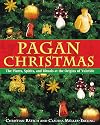
Great illustrations, diverse material, bad fact checks. This book is a visual feast, and the information on all things botanical seems trustworthy; it certainly covers all the well-known plants of Christmas as well as seeds and other items (like those for incense) for an interesting read. Where it stumbles badly is in presenting unsupported assumptions and flimsy connections as credible theories.
There is a circular logic at play in some areas, particularly those that attempt to denote a tie show more between shamanistic practice and current Christmas traditions. Citing a poorly researched source does not give credence to a theory, no matter how fun and/or convenient that theory may be. No credible scholastic source is given for the idea that Siberian or Sami shamanic practices gave rise to Santa Claus. This hokey theory has been disproved many times and it’s very annoying to people of actual Siberian or Sami background, or those who specialize in the history of shamanistic practices in those specific areas. Elements of mythology are confused, riddled with errors, etc. Zero historical, archaeological or contemporary oral history gives weight to any of these ‘theories’ or suppositions. The short answer is that correlation is not causation.
There are also various statements that are odd: example, p95 states that Bacchus cults considered holly the female counterpart to the male ivy. While there’s plenty of material stating Celtic and other cultures considered exactly the reverse of this, I’m not aware of any documentation saying ivy was considered male and holly as female for Bacchanalian rites.
Enjoy the visuals, read about the plants and skip the rest. show less
There is a circular logic at play in some areas, particularly those that attempt to denote a tie show more between shamanistic practice and current Christmas traditions. Citing a poorly researched source does not give credence to a theory, no matter how fun and/or convenient that theory may be. No credible scholastic source is given for the idea that Siberian or Sami shamanic practices gave rise to Santa Claus. This hokey theory has been disproved many times and it’s very annoying to people of actual Siberian or Sami background, or those who specialize in the history of shamanistic practices in those specific areas. Elements of mythology are confused, riddled with errors, etc. Zero historical, archaeological or contemporary oral history gives weight to any of these ‘theories’ or suppositions. The short answer is that correlation is not causation.
There are also various statements that are odd: example, p95 states that Bacchus cults considered holly the female counterpart to the male ivy. While there’s plenty of material stating Celtic and other cultures considered exactly the reverse of this, I’m not aware of any documentation saying ivy was considered male and holly as female for Bacchanalian rites.
Enjoy the visuals, read about the plants and skip the rest. show less
Witchcraft Medicine: Healing Arts, Shamanic Practices, and Forbidden Plants by Claudia Müller-Ebeling
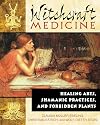
I love this book, but I think of it as 'folkloric' factual, rather than 'historic' factual, if that makes any sense. This is not only one of my favourite books about plants, but one of my favourite books in general. Witchcraft Medicine is engagingly written; academic references are given, but they don't interrupt the flowing prose. The topics vary, although the main theme of the intertwined relationship of plants and witches is always present. I loved the information on ancient Greek show more religion, Germanic folklore, the witch vs the virgin in art, flying ointments, the Devil, goddesses, and the demonization of Nature. The book is filled with beautiful glossy photographs and intriguing woodcuts.
My one complaint is that the section on the "war on drugs" is a bit too personal; while I agree with the author's viewpoint, the change in tone from academically 'neutral' to overtly and politically biased is a bit jarring. Other than that, I love this book. While it's not specifically aimed at pagans, it's certainly a much better written and more informative reference on plant folklore than any of the 'magical herbal' type books on the market today. show less
My one complaint is that the section on the "war on drugs" is a bit too personal; while I agree with the author's viewpoint, the change in tone from academically 'neutral' to overtly and politically biased is a bit jarring. Other than that, I love this book. While it's not specifically aimed at pagans, it's certainly a much better written and more informative reference on plant folklore than any of the 'magical herbal' type books on the market today. show less
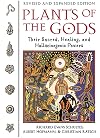
Three scientific titans join forces to completely revise the classic text on the ritual uses of psychoactive plants. They provide a fascinating testimony of these "plants of the gods," tracing their uses throughout the world and their significance in shaping culture and history. In the traditions of every culture, plants have been highly valued for their nourishing, healing, and transformative properties. The most powerful of those plants, which are known to transport the human mind into show more other dimensions of consciousness, have always been regarded as sacred. The authors detail the uses of hallucinogens in sacred shamanic rites while providing lucid explanations of the biochemistry of these plants and the cultural prayers, songs, and dances associated with them. The text is lavishly illustrated with 400 rare photographs of plants, people, ceremonies, and art related to the ritual use of the world's sacred psychoactive flora. show less
"Entheogens ... could be the appropriate medicine for hyper-materialistic humanity."
Beautifully illustrated with art, poetry, and hundreds of photos, this book is a respectful study of the biology, chemistry, anthropology, history, and culture of the use and cultivation of entheogens. Fascinating revelations about how plants & humans co-evolved.
Beautifully illustrated with art, poetry, and hundreds of photos, this book is a respectful study of the biology, chemistry, anthropology, history, and culture of the use and cultivation of entheogens. Fascinating revelations about how plants & humans co-evolved.
Lists
You May Also Like


Associated Authors
Statistics
- Works
- 76
- Members
- 1,532
- Popularity
- #16,794
- Rating
- 4.3
- Reviews
- 17
- ISBNs
- 108
- Languages
- 6
- Favorited
- 2