
Jonathan Buckley (1) (1956–)
Author of The Rough Guide to Tuscany & Umbria
For other authors named Jonathan Buckley, see the disambiguation page.
About the Author
Jonathan Buckley is the author of the short story Briar Road which won the BBC National Short Story Award 2015 with a monetary award of $31,890. (Bowker Author Biography)
Works by Jonathan Buckley
The Real Guide: Venice 1 copy
Briar Road 1 copy
Associated Works
Tagged
Common Knowledge
Members
Reviews
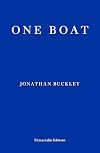
My 12th from the Booker Prize longlist is easily the most difficult to read. I tried hard to read it slowly and carefully. I was aways engaged but still finished with a lot of uncertainty.
Teresa comes from England to a small coastal town in Greece after the death of her father. This is her second visit. Nine years earlier she visited the same town after the death of her mother. But what sort of grief is this? She focuses on the locals, developing relations with them, inserting herself in show more their lives. She also reads Homer. She read the Odyssey during her previous trip. This time, out of order, she is reading the Iliad. And she visits the historical sites, as a proper and somewhat worshipful tourist. But what is the point of this all?
The reader must work. The two timelines switch in intentionally subtle ways, training the reader to read closely. I was left with a constant feeling that I was missing an earlier book on the first visit. A revelation would come, and I would find my first response to be frustration that I had not already known that. That's an interesting effect.
For plots, there is a love story, some reflection on her odd, broken parents, an entertaining waitress , but mainly the story of a British man who, nine years ago, came to the town to extract revenge. He explains his story to Teressa. And she develops a relationship with an odd automechanic and notoriously bad poet who was born in England and now permanently resides in this town. We have to find how these stories connect. But it's not clear how important any of this is to the main point of the book. A moment of enlightenment, nine years ago, about how the philosophically "now", this moment, is both everything and meaningless, overshadows everything else in the book for me. It's wonderfully written. And it echoes, because it happened then, as a "now", but is being recalled now, mixed with choice quotations from her own journal from then, even as she tried to recreate this experience now.
"Ataraxia" is also the classical Greek word for the ideal mental state of a Greek soldier in battle. This is captured in the Iliad, which she is reading now, but hadn't read then. 🙂
There are several interesting aspects in this philosophical novel. Our author is mourning through a kind of escape, and a self-aware intrusion. A built-in contradiction. She's mixing in a number of layers and tensions on top of each other. She is written by a man, but I don't think the reader really notices. One reader in my Facebook group noted she gives us all the various elements of a story. The layers and tensions and plot drives are all in there, as is a beginning and an end, if broken up. I jokingly think of it as an Ikea story, a pile of elements we readers must construct ourselves into a story. But the point is the novel is partially about storytelling itself, reaching back to one of the earliest named storytellers, Homer.
It's tough to see how this book can reach and reward a large audience. It feels niche. But I really enjoyed crawling through it and thinking about it. And I'm very glad it made the Booker longlist or I would never have heard of it, much less have read it, otherwise. My recommendation, with caveats, is hopefully worked into this review.
2025
https://www.librarything.com/topic/372264#8955082 show less
Teresa comes from England to a small coastal town in Greece after the death of her father. This is her second visit. Nine years earlier she visited the same town after the death of her mother. But what sort of grief is this? She focuses on the locals, developing relations with them, inserting herself in show more their lives. She also reads Homer. She read the Odyssey during her previous trip. This time, out of order, she is reading the Iliad. And she visits the historical sites, as a proper and somewhat worshipful tourist. But what is the point of this all?
The reader must work. The two timelines switch in intentionally subtle ways, training the reader to read closely. I was left with a constant feeling that I was missing an earlier book on the first visit. A revelation would come, and I would find my first response to be frustration that I had not already known that. That's an interesting effect.
For plots, there is a love story, some reflection on her odd, broken parents, an entertaining waitress , but mainly the story of a British man who, nine years ago, came to the town to extract revenge. He explains his story to Teressa. And she develops a relationship with an odd automechanic and notoriously bad poet who was born in England and now permanently resides in this town. We have to find how these stories connect. But it's not clear how important any of this is to the main point of the book. A moment of enlightenment, nine years ago, about how the philosophically "now", this moment, is both everything and meaningless, overshadows everything else in the book for me. It's wonderfully written. And it echoes, because it happened then, as a "now", but is being recalled now, mixed with choice quotations from her own journal from then, even as she tried to recreate this experience now.
The moment of the present becomes instantly the the past, I wrote. The present was almost-nothing; I was almost-nothing - a momentary arrangement of energy.
...
More: As I gazed at the uncertain horizon, across the glowing water and the glowing leaves, the elements of the scene lost their separation. All categories and names were lost in the totality of it, dissolvedd in the light. This was how the episode achieved its climax, in an overwhelming acceptance. An Amen of sorts. That was what I wrote. "Ataraxia" is a word I might have used, had it been at my disposal then.
"Ataraxia" is also the classical Greek word for the ideal mental state of a Greek soldier in battle. This is captured in the Iliad, which she is reading now, but hadn't read then. 🙂
There are several interesting aspects in this philosophical novel. Our author is mourning through a kind of escape, and a self-aware intrusion. A built-in contradiction. She's mixing in a number of layers and tensions on top of each other. She is written by a man, but I don't think the reader really notices. One reader in my Facebook group noted she gives us all the various elements of a story. The layers and tensions and plot drives are all in there, as is a beginning and an end, if broken up. I jokingly think of it as an Ikea story, a pile of elements we readers must construct ourselves into a story. But the point is the novel is partially about storytelling itself, reaching back to one of the earliest named storytellers, Homer.
It's tough to see how this book can reach and reward a large audience. It feels niche. But I really enjoyed crawling through it and thinking about it. And I'm very glad it made the Booker longlist or I would never have heard of it, much less have read it, otherwise. My recommendation, with caveats, is hopefully worked into this review.
2025
https://www.librarything.com/topic/372264#8955082 show less
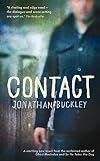
Dominic Pattison is a successful, business-owning, fifty-something whose comfortable life is disrupted when he is approached by Sam, a builder and former soldier, who claims to be his son - allegedly the product of a long-forgotten affair Dominic had with a woman called Sarah thirty years ago. Foul-mouthed, unrefined and very un-middle-class, Sam becomes an ominous presence in Dominic's life. But is Sam's air of menace merely a product of our narrator's middle class dislike of the uncouth? show more Is his behaviour really threatening, or is he acting in a perfectly reasonable manner? Is he what he says he is, or is it a scam? And what does what we think, and why, tell us about ourselves?
This is a fraught, compelling and unsettling novel. It challenges attitudes yet is as much of a page turner as a Robert Goddard thriller and as unsettling as Ian McEwan used to be. Indeed, the shades of Enduring Love are so strong that when at one point, while Sam is driving him to Sarah's grave, Dominic 'is distracted by the sight of an ascending hot air balloon', I couldn't help feeling I was being toyed with by the author in much the same way that Sam seems to toy with Dominic.
A weak man desperately trying to keep the barbarian at the gate, is Dominic right to be cautious, or is he just prejudiced? And what is the contact of the title? Physical violence? The military engagements experienced by Sam in Northern Ireland and Iraq? Meetings between an estranged father and son? Or an unwelcome collision between the contented middle class and the uncouth working class they disdain - and fear? There is plenty for readers to think about (and discussion groups to get their teeth into) here. This is contemporary fiction at its best. show less
This is a fraught, compelling and unsettling novel. It challenges attitudes yet is as much of a page turner as a Robert Goddard thriller and as unsettling as Ian McEwan used to be. Indeed, the shades of Enduring Love are so strong that when at one point, while Sam is driving him to Sarah's grave, Dominic 'is distracted by the sight of an ascending hot air balloon', I couldn't help feeling I was being toyed with by the author in much the same way that Sam seems to toy with Dominic.
A weak man desperately trying to keep the barbarian at the gate, is Dominic right to be cautious, or is he just prejudiced? And what is the contact of the title? Physical violence? The military engagements experienced by Sam in Northern Ireland and Iraq? Meetings between an estranged father and son? Or an unwelcome collision between the contented middle class and the uncouth working class they disdain - and fear? There is plenty for readers to think about (and discussion groups to get their teeth into) here. This is contemporary fiction at its best. show less
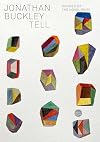
Tell is compulsive reading.
The text consists of a series of interviews over five sessions. We are reading a transcript of a recording, marked with [pauses], and occasional lacunae that are marked [indistinct]. These gaps in the narrative could be when the speaker has turned away from the microphone, and/or they could be prompts from the interviewer.
The narrator is a gardener who works for a mega-wealthy entrepreneur and art collector who has mysteriously disappeared. It's not clear how long show more ago this disappearance occurred, and at first the circumstances and purpose of the interview are not clear either. A police interview perhaps? or an interview with a journalist? It turns out to be an interview with a scriptwriter, so someone wants to make a film or a doco...
So, the unnamed gardener tells what she knows about Curtis. She's gossipy, and she obviously draws on gossip that she's heard from other members of the staff. The mansion is described as a 'palace' so the staff is large, but our informant is class-conscious too and though she is at pains to stress that Curtis isn't like other rich people, she might well be labelling it a 'palace' to make a point. She is an unreliable narrator. But maybe uber-rich people can buy privately owned palaces in Scotland?
Over the course of the book we learn that Curtis was an adoptee abandoned by his mother, but that after a couple of bad placements, he fell on his feet with lovely people who cared for him like their own. He made his money in the fashion industry thanks in part to his first wife, Lily, who died. There have been women since then, but which ones were lovers is open to our narrator's conjectures. There are children and grandchildren, and these all provide an opportunity for the narrator to reminisce, ponder, speculate and cast aspersions. Like the structures on the cover of the book, these people are seen from all different angles as she reports from her sources — Asil the chauffeur, Connie the cook, Harry with an axe to grind and so on.
To read the rest of my review please visit https://anzlitlovers.com/2024/02/27/tell-by-jonathan-buckley/ show less
The text consists of a series of interviews over five sessions. We are reading a transcript of a recording, marked with [pauses], and occasional lacunae that are marked [indistinct]. These gaps in the narrative could be when the speaker has turned away from the microphone, and/or they could be prompts from the interviewer.
The narrator is a gardener who works for a mega-wealthy entrepreneur and art collector who has mysteriously disappeared. It's not clear how long show more ago this disappearance occurred, and at first the circumstances and purpose of the interview are not clear either. A police interview perhaps? or an interview with a journalist? It turns out to be an interview with a scriptwriter, so someone wants to make a film or a doco...
So, the unnamed gardener tells what she knows about Curtis. She's gossipy, and she obviously draws on gossip that she's heard from other members of the staff. The mansion is described as a 'palace' so the staff is large, but our informant is class-conscious too and though she is at pains to stress that Curtis isn't like other rich people, she might well be labelling it a 'palace' to make a point. She is an unreliable narrator. But maybe uber-rich people can buy privately owned palaces in Scotland?
Over the course of the book we learn that Curtis was an adoptee abandoned by his mother, but that after a couple of bad placements, he fell on his feet with lovely people who cared for him like their own. He made his money in the fashion industry thanks in part to his first wife, Lily, who died. There have been women since then, but which ones were lovers is open to our narrator's conjectures. There are children and grandchildren, and these all provide an opportunity for the narrator to reminisce, ponder, speculate and cast aspersions. Like the structures on the cover of the book, these people are seen from all different angles as she reports from her sources — Asil the chauffeur, Connie the cook, Harry with an axe to grind and so on.
To read the rest of my review please visit https://anzlitlovers.com/2024/02/27/tell-by-jonathan-buckley/ show less
A Beautiful Tease
As I began reading this book, I formed certain assumptions about what it would be; crime fiction. At some point, the perpetrator of the central 'event' would be found, and questions would be answered. We follow the narrator and his partner through endless speculation, interpretation, determination, conversation - to be told that our assumptions are wrong, that crimes are stories regardless of whether they have an ending, stories about the people who touch the victim in even show more only the most subtle of ways, stories told differently by different people, with bias and without, with compassion and without, with conclusion and without.
I've read other books without concrete endings in the past with satisfaction, surprise and reflection - unfortunately, this one succeeded in frustrating me, which coloured the hindsight of my enjoyment. The evident revelry in words, the depth and breadth of character, the utterly absorbing atmosphere of seaside township carried me and my assumption along, and then dropped me off with an embarrassed shrug.
Litritchur, not crime fiction... dammit, Mr. Buckley, you are such a tease.. show less
As I began reading this book, I formed certain assumptions about what it would be; crime fiction. At some point, the perpetrator of the central 'event' would be found, and questions would be answered. We follow the narrator and his partner through endless speculation, interpretation, determination, conversation - to be told that our assumptions are wrong, that crimes are stories regardless of whether they have an ending, stories about the people who touch the victim in even show more only the most subtle of ways, stories told differently by different people, with bias and without, with compassion and without, with conclusion and without.
I've read other books without concrete endings in the past with satisfaction, surprise and reflection - unfortunately, this one succeeded in frustrating me, which coloured the hindsight of my enjoyment. The evident revelry in words, the depth and breadth of character, the utterly absorbing atmosphere of seaside township carried me and my assumption along, and then dropped me off with an embarrassed shrug.
Litritchur, not crime fiction... dammit, Mr. Buckley, you are such a tease.. show less
Lists
Awards


You May Also Like


Associated Authors
Statistics
- Works
- 22
- Also by
- 2
- Members
- 714
- Popularity
- #35,523
- Rating
- 3.8
- Reviews
- 10
- ISBNs
- 113
- Languages
- 3