
S. J. Simon (1904–1948)
Author of No Bed for Bacon
About the Author
Series
Works by S. J. Simon
Stroganoff in the Ballet: "Bullet in the Ballet", "Casino for Sale" and "Six Curtains for Stroganova" (1975) — Author — 10 copies
Design for Bidding 5 copies
De laatste flesch 1 copy
Design for bidding 1 copy
Why You Lose at Bridge 1 copy
Design for bidding 1 copy
Tagged
Common Knowledge
- Legal name
- Seca Jascha Skidelsky
- Other names
- Simon, S. J.
- Birthdate
- 1904
- Date of death
- 1948-06-26
- Gender
- male
- Education
- Tonbridge School, Kent, England
University of London - Short biography
- 'Skid' (to bridge players worldwide) was known as the inventor of 'Standard English' bidding at the Acol Club in London about 1949. At the time Terrence Reese (T.R.) was considered by most to be the UK's best bridge player, thinker and writer. Many would have said he was the world's best. Skid died shortly before his greatest book on Acol rolled off the press. TR said "Design for Bidding" was 'the best thing he has done on bridge. He writes with all his accustomed energy and wit, so that one almost overlooks that it is also a very thoughtful book.' See: [[https://en.wikipedia.org/wiki/S._J._Si...]].
- Nationality
- UK
- Places of residence
- Harbin, Manchuria
- Associated Place (for map)
- Harbin, Manchuria
Members
Reviews

"Overcome by sudden affection due to not having to meet for the next six months, the authors dedicate this book to each other." With a dedication like that, I knew I was in for a treat. The narration is wonderfully dry-witted and sharp, and the characters delightfully absurd. When a member of a ballet troupe is killed while performing the role of Petrushka in the ballet of the same name, Inspector Quill investigates and finds himself up against some very eccentric characters. The mystery show more itself is almost incidental; the real fun is following along with Stroganoff and Arenskaya and all the rest as they confound and help the authorities in equal measure.
Given that Caryl Brahms was a ballet critic for the Evening Standard, the ballet scenes are particularly well presented and may make you want to seek out a performance of Petrushka for yourself. I thoroughly enjoyed this very quick, light read and would read more by these authors if I came across any. show less
Given that Caryl Brahms was a ballet critic for the Evening Standard, the ballet scenes are particularly well presented and may make you want to seek out a performance of Petrushka for yourself. I thoroughly enjoyed this very quick, light read and would read more by these authors if I came across any. show less
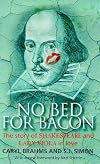
In this hilarious send-up of the Elizabethan era -- or rather, the Elizabethan era as perceived by popular culture -- Sir Francis Bacon is desperate to obtain a bed that Queen Elizabeth has slept in during one of her royal progresses. He wants it to be an heirloom for his family, as he knows the bed's value will only increase through the years. Sir Walter Raleigh's attention is divided between his new cloak, which he hopes will be the envy of everyone at Elizabeth's court (especially that show more dandy, the Earl of Essex), and his upcoming introduction of the potato to England. Meanwhile, Sir Francis Drake is grumbling about the fact that he hasn't been able to do any really good pirating in years; theater owner Philip Henslowe will do anything in his power to shut down his rival, Burbage; and Shakespeare is trying to work on a new play, Love's Labour's Wunne, but he keeps getting distracted by the problem of how to spell his own name. Add a little romance, an overly ambitious watchman, and some reminiscing about the glory days of the Armada, and the stage is set for high comedy with a few history lessons thrown in.
I didn't know it until I read the introduction, but this book is actually part of the basis for the Academy Award-winning movie "Shakespeare in Love." But while the movie focuses almost entirely on the romance between Shakespeare and the noble Lady Viola, in the book it's just one of many plots involving the most famous figures of the Elizabethan age. If you know anything about the era or are interested in learning more, I highly recommend this book! It's pure farce, so there isn't much "plot" to speak of, but the jokes are more than funny enough to make up for that! One of my favorites was an exchange between Shakespeare and Bacon about some plot element of Shakespeare's play that Bacon didn't like. Shakespeare responds with great indignation, "Master Bacon, do I write my plays or do you?" Then there's this internal monologue from a Puritan who seeks to shut down the theater: "People had no right to enjoy themselves. He was going to stop them. His cause was a just one and he knew it. He was enjoying himself." So if you like Shakespeare and don't mind a little (or a lot of) silliness, you should definitely check out this book! show less
I didn't know it until I read the introduction, but this book is actually part of the basis for the Academy Award-winning movie "Shakespeare in Love." But while the movie focuses almost entirely on the romance between Shakespeare and the noble Lady Viola, in the book it's just one of many plots involving the most famous figures of the Elizabethan age. If you know anything about the era or are interested in learning more, I highly recommend this book! It's pure farce, so there isn't much "plot" to speak of, but the jokes are more than funny enough to make up for that! One of my favorites was an exchange between Shakespeare and Bacon about some plot element of Shakespeare's play that Bacon didn't like. Shakespeare responds with great indignation, "Master Bacon, do I write my plays or do you?" Then there's this internal monologue from a Puritan who seeks to shut down the theater: "People had no right to enjoy themselves. He was going to stop them. His cause was a just one and he knew it. He was enjoying himself." So if you like Shakespeare and don't mind a little (or a lot of) silliness, you should definitely check out this book! show less

Before there was Monty Python, before Terry Pratchett, before there was anyone but Dickens and the Marx Brothers, A. J. Simon and Caryl Brahms, perhaps apprehensive that there'd be nothing to read during the Blitz, cooked up this wonderful comic romp. Faster than anything save Groucho's dialogue, we are pushed into Victoriana that never was, but as some happy folk hoped it might have been. Read it and laugh 'til you weep!

This is not just a mystery, it is a comedy of errors too. The characters are painted broad and quirky. The action is a little Keystone Kop, Laurel and Hardy and Marx Brothers. But there is a murder, a murderer, a ex Scotland Yard detective, a French policeman, a cynical, blackmailing critic, a baron, the members of the ballet troupe, and other colourful characters.
Vladimir Stroganoff, impresario of the Stroganoff Ballet, sees a casino located in La Bazouch for sale. He reasons that the show more income from the casino could help finance and promote his ballet to even a higher level. He dashes off, meets up with Baron Rabinovitch and buys the place sight unseen. Thinking it is the glamourous casino he sees as he enters the town, he is definitely unhappy to find that it is a run down place not in the best part of town. But he prefers to see the positive and sets up shop.
Citrolo is a known cynical ballet critic who also makes his living blackmailing. Stroganoff tries to get a good review out of Citrolo but finds he can't. At that point, Stroganoff slips sleeping drops into Citrolo's drink and then writes his own glowing review, signing Citrolo's name to it. When Stroganoff is finished, Citrolo is still asleep, so Stroganoff leaves Citrolo to sleep it off in the office. The next day Citrolo is found to be dead. There are multiple clues/red herrings found in the office, along with the fact that Stroganoff left the room locked when he left. Yup, locked room mystery.
Quill, the ex-Scotland Yard detective, is in town for a vacation but is pulled in to investigate for Stroganoff. Meanwhile, Stroganoff is arrested and thrown in jail along with his business rival Buttonhooke. Quill is left to investigate on his own, interviewing a cast of strange and unusual people.
Even though this has the trappings of a standard mystery (is there such thing) I think reading it and being open for the character personalities, madcap situations and actions is more in line with what the authors intended. Brahms and Simon were well known in the 1920s and 1930s. It may have been the "golden age" of mysteries, but there was also quite a bit of comedy and humour too. show less
Vladimir Stroganoff, impresario of the Stroganoff Ballet, sees a casino located in La Bazouch for sale. He reasons that the show more income from the casino could help finance and promote his ballet to even a higher level. He dashes off, meets up with Baron Rabinovitch and buys the place sight unseen. Thinking it is the glamourous casino he sees as he enters the town, he is definitely unhappy to find that it is a run down place not in the best part of town. But he prefers to see the positive and sets up shop.
Citrolo is a known cynical ballet critic who also makes his living blackmailing. Stroganoff tries to get a good review out of Citrolo but finds he can't. At that point, Stroganoff slips sleeping drops into Citrolo's drink and then writes his own glowing review, signing Citrolo's name to it. When Stroganoff is finished, Citrolo is still asleep, so Stroganoff leaves Citrolo to sleep it off in the office. The next day Citrolo is found to be dead. There are multiple clues/red herrings found in the office, along with the fact that Stroganoff left the room locked when he left. Yup, locked room mystery.
Quill, the ex-Scotland Yard detective, is in town for a vacation but is pulled in to investigate for Stroganoff. Meanwhile, Stroganoff is arrested and thrown in jail along with his business rival Buttonhooke. Quill is left to investigate on his own, interviewing a cast of strange and unusual people.
Even though this has the trappings of a standard mystery (is there such thing) I think reading it and being open for the character personalities, madcap situations and actions is more in line with what the authors intended. Brahms and Simon were well known in the 1920s and 1930s. It may have been the "golden age" of mysteries, but there was also quite a bit of comedy and humour too. show less
Lists
Awards


You May Also Like


Associated Authors
Statistics
- Works
- 30
- Members
- 912
- Popularity
- #28,116
- Rating
- 3.8
- Reviews
- 26
- ISBNs
- 44
- Languages
- 3