
Jamie Fitzpatrick
Author of You Could Believe in Nothing
Works by Jamie Fitzpatrick
Tagged
Common Knowledge
There is no Common Knowledge data for this author yet. You can help.
Members
Reviews
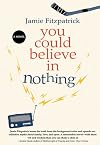
Jamie Fitzpatrick’s debut novel is, on the face of it, a book about an early-middle-aged man who plays recreational hockey and who is dealing with a number of personal crises. Since I am none of those things, the book didn’t instantly shout “read me,” despite the fact that, like me, Fitzpatrick hails from Newfoundland.
So the book sat with me for a while. Then recently, I was grading papers until midnight and I was tired, but because I have to read before I can sleep, I pulled out my show more Kobo to finish the Steve Jobs biography. The Kobo was dead. Then I spied You Could Believe in Nothing (Vagrant), sitting unhappily unread in a corner. The good old print book.
Once I’d picked it up, though, it was difficult to put down. Which I did at four a.m., and only then because the book fell on my face. You Could Believe in Nothing is simply a great piece of writing. The cadence of the dialogue, the stomach-clenching evocations of loss and shame, the simplicity of words in conversations loaded with meaning all undeniably and seamlessly collide in the main character, Derek’s, unraveling life.
There is a frankness, a sharpness in the banter between the recreational hockey players that extend into the relationships within Derek’s somewhat dysfunctional, but probably more normal than not, family.
Fitzpatrick’s keen ear for nuances in conversation and even keener eye for the backdrops of life, take the reader into places they probably would not have chosen to visit on their own, but are better off having experienced.
This is not just a book about men playing hockey in dark, dank arenas during the unpredictable March winds in St. John’s, even though, through Fitzpatrick’s descriptions, you want to pull your coat a little tighter. This is a book that will touch the part of you that gets up in the morning and carries on like any other day, but also the part that is just a little weary of family and relationship drama, the part that uncomfortably relates to Derek’s life.
The secret is that no one is normal. No family is typical and no relationship is simple. And the snippets of Derek’s life that the author shares with us, reassure us and tells us we all have family secrets, dysfunctions and craziness. It is what makes us human and it is how we keep on moving forward, seeking the ideal we will never — and secretly probably don’t want to — find that makes life the interesting journey it is. show less
So the book sat with me for a while. Then recently, I was grading papers until midnight and I was tired, but because I have to read before I can sleep, I pulled out my show more Kobo to finish the Steve Jobs biography. The Kobo was dead. Then I spied You Could Believe in Nothing (Vagrant), sitting unhappily unread in a corner. The good old print book.
Once I’d picked it up, though, it was difficult to put down. Which I did at four a.m., and only then because the book fell on my face. You Could Believe in Nothing is simply a great piece of writing. The cadence of the dialogue, the stomach-clenching evocations of loss and shame, the simplicity of words in conversations loaded with meaning all undeniably and seamlessly collide in the main character, Derek’s, unraveling life.
There is a frankness, a sharpness in the banter between the recreational hockey players that extend into the relationships within Derek’s somewhat dysfunctional, but probably more normal than not, family.
Fitzpatrick’s keen ear for nuances in conversation and even keener eye for the backdrops of life, take the reader into places they probably would not have chosen to visit on their own, but are better off having experienced.
This is not just a book about men playing hockey in dark, dank arenas during the unpredictable March winds in St. John’s, even though, through Fitzpatrick’s descriptions, you want to pull your coat a little tighter. This is a book that will touch the part of you that gets up in the morning and carries on like any other day, but also the part that is just a little weary of family and relationship drama, the part that uncomfortably relates to Derek’s life.
The secret is that no one is normal. No family is typical and no relationship is simple. And the snippets of Derek’s life that the author shares with us, reassure us and tells us we all have family secrets, dysfunctions and craziness. It is what makes us human and it is how we keep on moving forward, seeking the ideal we will never — and secretly probably don’t want to — find that makes life the interesting journey it is. show less
I received this book through Goodreads' giveaway program. I'm always excited to see Canadian authors that I can discover. Unfortunately I didn't enjoy this book as much as I was hoping to. In general it was well written, but I found some of the metaphors forced and difficult to associate with what he was talking about. Also, this probably isn't the style of book I normally find pleasure in. It had many things I wanted to read about - hockey, relationships - but in the context of a sad-sack show more forty-something man with the mentality of a teenager who by the end of the book is the basically the same as the beginning, it didn't resonate and made me feel less hopeful for mankind in general. I really wanted to like this book and was disappointed that I didn't. I would read this author again but with certain reservations, just in case the reason I'm giving this book only 2 stars is more a dislike of the story than his writing. show less
I received this book through Goodreads' giveaway program. I'm always excited to see Canadian authors that I can discover. Unfortunately I didn't enjoy this book as much as I was hoping to. In general it was well written, but I found some of the metaphors forced and difficult to associate with what he was talking about. Also, this probably isn't the style of book I normally find pleasure in. It had many things I wanted to read about - hockey, relationships - but in the context of a sad-sack show more forty-something man with the mentality of a teenager who by the end of the book is the basically the same as the beginning, it didn't resonate and made me feel less hopeful for mankind in general. I really wanted to like this book and was disappointed that I didn't. I would read this author again but with certain reservations, just in case the reason I'm giving this book only 2 stars is more a dislike of the story than his writing. show less

Alternating:
In 1952-1969 Joyce leaves the outport and comes to work at the airport in Gander. Starts singing with a band. Gives it up when she marries Arthur. Ten years later they have Herbert.
Present day: Herbert Carter visits Gander to put his mother Joyce into a home, sell the house, try to revive the music of his old band, go on an archaeological dig of the Gander airport for his degree. In the end, his bandmates double-cross him on the music – not sure why. Really, no idea why.
I was show more enchanted by this story, but I had just finished an article in Saltscapes magazine about the history of Gander airport so it seemed very relevant. show less
In 1952-1969 Joyce leaves the outport and comes to work at the airport in Gander. Starts singing with a band. Gives it up when she marries Arthur. Ten years later they have Herbert.
Present day: Herbert Carter visits Gander to put his mother Joyce into a home, sell the house, try to revive the music of his old band, go on an archaeological dig of the Gander airport for his degree. In the end, his bandmates double-cross him on the music – not sure why. Really, no idea why.
I was show more enchanted by this story, but I had just finished an article in Saltscapes magazine about the history of Gander airport so it seemed very relevant. show less
Awards
Statistics
- Works
- 2
- Members
- 15
- Popularity
- #708,119
- Rating
- 2.8
- Reviews
- 5
- ISBNs
- 5