
Sean Rubin
Author of This Very Tree: A Story of 9/11, Resilience, and Regrowth
About the Author
Image credit: via Macmillan Publishers
Series
Works by Sean Rubin
The Iguanodon's Horn: How Artists and Scientists Put a Dinosaur Back Together Again and Again and Again (2024) 45 copies, 2 reviews
Associated Works
Mouse Guard: Labyrinth and Other Stories (Free Comic Book Day 2014) (2014) — Contributor — 131 copies, 2 reviews
The Astronaut Who Painted the Moon: The True Story of Alan Bean (2019) — Illustrator — 116 copies, 2 reviews
Tagged
Common Knowledge
- Gender
- male
Members
Reviews
The Iguanodon's Horn: How Artists and Scientists Put a Dinosaur Back Together Again and Again and Again by Sean Rubin
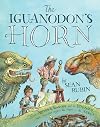
The Iguanodon's Horn is a narrative picture book about the world's first well-known dinosaur. But it's not a typical dinosaur book. It tells the story of how new discoveries over centuries led scientists to repeatedly re-imagine and re-draw the iguanodon. Emerging evidence leads to more and more accurate depictions of dinosaurs in art and museum re-creations. The book specifically shows the changing art (mistakes and all!) but in doing so it reflects the true process of science. New show more information leads to revisions. show less
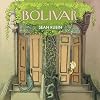
I usually don't like big, bulky graphic novels that are more art than words. Or books about New York. Or philosophical treatises about what people see or don't see around them.
This book has all of those things. I loved it anyways.
The story begins subtly, in the mosaics on the end pages. They show big, green and gray, clawed feet moving alongside a pair of small, human footprints. The title page and opening are lovingly created, showing a busy New York with tight-packed brownstones and show more patches of green and trees. A voice over announces a new dinosaur exhibit, talking about their extinction. Slowly, the reader realizes there's something... different in the picture. Until the story begins and we know the truth - there is a real, live dinosaur in New York. His name is Bolivar and this is his story.
Text is interspersed with full-page illustrations, alternating with comic panels. Readers will follow along Bolivar's somewhat lonely life, snickering at the sometimes humorous way he lives "The forms said you couldn't have any dogs or cats in the apartment. Bolivar didn't have any dogs or cats, so he was allowed to live there." But someone does notice Bolivar - Sybil. A small, blonde girl next door. Sybil's mother is too busy with work, errands, and life in general to listen to Sybil and her classmates just make fun of her. But she's determined to prove Bolivar really exists. Armed with a camera, she sets out to capture her proof, and in the process explore New York. But things don't end the way she expects; when Bolivar is mistaken for the mayor and outed as a dinosaur by the famous (white, male) paleontologist, Sybil starts feeling sorry for him. Eventually, Sybil realizes that what she really wants is a friend - and Bolivar decides that maybe having just a few people see him won't be so bad after all.
It's disappointing that in such a diverse city all the main characters of the story (besides the dinosaur) are white. However, at least the crowds, people, and various staff show a little more diversity although it's ironic that a story about not noticing what's around you picks such a small portion of the population to focus on...
Despite this drawback, the art is exquisite, full of detail and obvious love for the giant city and its busy inhabitants. Lots of cross-hatching, earth tones, and many clever details fill the story. It's not exactly a middle grade title, nor yet a beginning chapter, but I plan to introduce it to my 3rd and 4th graders. I can see it being used in classrooms as well, for observation and story pacing.
Verdict: I don't often buy Archaia's titles - they tend to be more expensive and leaning towards the artistic rather than the popular. But this charming title will definitely be attractive to my readers (when it was pulled out in our recent unboxing event several kids immediately slapped their name on it) and an excellent book club pick. Recommended.
ISBN: 9781684150694; Published November 28, 2017 by Archaia; Borrowed from another library in my consortium; Purchased for the library show less
This book has all of those things. I loved it anyways.
The story begins subtly, in the mosaics on the end pages. They show big, green and gray, clawed feet moving alongside a pair of small, human footprints. The title page and opening are lovingly created, showing a busy New York with tight-packed brownstones and show more patches of green and trees. A voice over announces a new dinosaur exhibit, talking about their extinction. Slowly, the reader realizes there's something... different in the picture. Until the story begins and we know the truth - there is a real, live dinosaur in New York. His name is Bolivar and this is his story.
Text is interspersed with full-page illustrations, alternating with comic panels. Readers will follow along Bolivar's somewhat lonely life, snickering at the sometimes humorous way he lives "The forms said you couldn't have any dogs or cats in the apartment. Bolivar didn't have any dogs or cats, so he was allowed to live there." But someone does notice Bolivar - Sybil. A small, blonde girl next door. Sybil's mother is too busy with work, errands, and life in general to listen to Sybil and her classmates just make fun of her. But she's determined to prove Bolivar really exists. Armed with a camera, she sets out to capture her proof, and in the process explore New York. But things don't end the way she expects; when Bolivar is mistaken for the mayor and outed as a dinosaur by the famous (white, male) paleontologist, Sybil starts feeling sorry for him. Eventually, Sybil realizes that what she really wants is a friend - and Bolivar decides that maybe having just a few people see him won't be so bad after all.
It's disappointing that in such a diverse city all the main characters of the story (besides the dinosaur) are white. However, at least the crowds, people, and various staff show a little more diversity although it's ironic that a story about not noticing what's around you picks such a small portion of the population to focus on...
Despite this drawback, the art is exquisite, full of detail and obvious love for the giant city and its busy inhabitants. Lots of cross-hatching, earth tones, and many clever details fill the story. It's not exactly a middle grade title, nor yet a beginning chapter, but I plan to introduce it to my 3rd and 4th graders. I can see it being used in classrooms as well, for observation and story pacing.
Verdict: I don't often buy Archaia's titles - they tend to be more expensive and leaning towards the artistic rather than the popular. But this charming title will definitely be attractive to my readers (when it was pulled out in our recent unboxing event several kids immediately slapped their name on it) and an excellent book club pick. Recommended.
ISBN: 9781684150694; Published November 28, 2017 by Archaia; Borrowed from another library in my consortium; Purchased for the library show less

Author/illustrator Sean Rubin, native New Yorker and creator of the graphic novel Bolivar, about the adventures of a dinosaur in that city, turns in this deeply moving picture-book to the subject of 9/11. This is the story of the terrorist attack that devastated the city that day, and the little Callery pear tree that once stood at the base of the World Trade Center, and that survived being buried by tons of steel wreckage, when the Twin Towers came down. Taken to a nursery in the Bronx, the show more tree was nursed back to health over the course of many years, and was eventually returned to its home in lower Manhattan, where it stands today, on the grounds of the National September 11 Memorial & Museum...
This past September 11th was the twentieth anniversary of the 9/11 attacks, and there has been a flurry of picture-book publications commemorating that terrible event, many of them focused on the story of the "Survivor Tree." Sean Rubin's This Very Tree: A Story of 9/11, Resilience, and Regrowth was published this past May, the same month as Ann Magee and Nicole Wong's Branches of Hope: The 9/11 Survivor Tree. In August, author Marcie Colleen and illustrator Aaron Becker brought out Survivor Tree, while in August of this past year (2020), Miracle of Little Tree: The 9/11 Survivor Tree's Incredible Story was released. The story appears to have first been retold in picture-book form in 2011, on the tenth anniversary of 9/11, in Cheryl Somers Aubin and Sheila Harrington's The Survivor Tree: Inspired by a True Story. It's interesting to note that there is another survivor tree in the annals of terrorist attacks on America. After the Oklahoma City Bombing of 1995, a small elm tree survived the wreckage of the Alfred P. Murrah Building, eventually going on to thrive, and to be christened "the survivor tree" as well. That story is told for children in Gaye Sanders and Pamela Behrend's The Survivor Tree.
Obviously, this aspect of the 9/11 story, and of other stories of terrible events - for another example, see Sandra Moore and Kazumi Wilds' The Peace Tree from Hiroshima: The Little Bonsai with a Big Story - speaks to us, and is considered a good entry to the subject, for younger children. Perhaps because this part of the story is about hope—about the resilience and regrowth mentioned in Sean Rubin's sub-title here. In any case, I found the narrative here deeply moving—I was crying throughout—and the artwork lovely. The book does not delve into the actual events of 9/11 over the course of the story, although they are covered in the author's note at the rear, rather the focus is on the experiences of the tree. I liked this, because it allows parents and educators the chance to discuss the larger subject with the children in their care in a way best suited to their individual needs and comprehension levels. Highly recommended to picture-book readers looking for a gentle, thoughtful way to introduce the subject of 9/11 to younger children. show less
This past September 11th was the twentieth anniversary of the 9/11 attacks, and there has been a flurry of picture-book publications commemorating that terrible event, many of them focused on the story of the "Survivor Tree." Sean Rubin's This Very Tree: A Story of 9/11, Resilience, and Regrowth was published this past May, the same month as Ann Magee and Nicole Wong's Branches of Hope: The 9/11 Survivor Tree. In August, author Marcie Colleen and illustrator Aaron Becker brought out Survivor Tree, while in August of this past year (2020), Miracle of Little Tree: The 9/11 Survivor Tree's Incredible Story was released. The story appears to have first been retold in picture-book form in 2011, on the tenth anniversary of 9/11, in Cheryl Somers Aubin and Sheila Harrington's The Survivor Tree: Inspired by a True Story. It's interesting to note that there is another survivor tree in the annals of terrorist attacks on America. After the Oklahoma City Bombing of 1995, a small elm tree survived the wreckage of the Alfred P. Murrah Building, eventually going on to thrive, and to be christened "the survivor tree" as well. That story is told for children in Gaye Sanders and Pamela Behrend's The Survivor Tree.
Obviously, this aspect of the 9/11 story, and of other stories of terrible events - for another example, see Sandra Moore and Kazumi Wilds' The Peace Tree from Hiroshima: The Little Bonsai with a Big Story - speaks to us, and is considered a good entry to the subject, for younger children. Perhaps because this part of the story is about hope—about the resilience and regrowth mentioned in Sean Rubin's sub-title here. In any case, I found the narrative here deeply moving—I was crying throughout—and the artwork lovely. The book does not delve into the actual events of 9/11 over the course of the story, although they are covered in the author's note at the rear, rather the focus is on the experiences of the tree. I liked this, because it allows parents and educators the chance to discuss the larger subject with the children in their care in a way best suited to their individual needs and comprehension levels. Highly recommended to picture-book readers looking for a gentle, thoughtful way to introduce the subject of 9/11 to younger children. show less
Sort of jumbo sized picture book about how little people notice, and the adventures of a reclusive urban dinosaur. Sweet, amusing, great images.
Lists
Awards


You May Also Like


Associated Authors
Statistics
- Works
- 4
- Also by
- 6
- Members
- 321
- Popularity
- #73,714
- Rating
- 4.0
- Reviews
- 16
- ISBNs
- 13
- Languages
- 1