
Lorena Alvarez
Author of Nightlights
About the Author
Image credit: via TeachingBooks
Series
Works by Lorena Alvarez
Associated Works
Royal Fairy Tales for Bedtime (Read-aloud Treasuries) (2012) — Illustrator, some editions — 19 copies
Tagged
Common Knowledge
- Other names
- Alvarez Gómez, Lorena
- Birthdate
- 1983
- Gender
- female
- Nationality
- Colombia
- Birthplace
- Bogotá, Colombia
- Associated Place (for map)
- Bogotá, Colombia
Members
Reviews
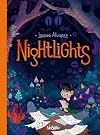
I bought this book an age ago for my oldest child, and something made me pull it out recently and put it on my stack of books to read for the readathon.
I will acknowledge that this is a very strange book. It blurs the line between illustrated children's book and graphic novel. It is presented as being for kids age 9-12, but has some scary/disturbing story moments that could easily read older. The story itself is... truncated? There are abrupt shifts and unexplained elements...
All that said, show more IT REALLY WORKED FOR ME. And not just because the art is REALLY TRULY AMAZEBALLS. I mean, just absolutely beautiful, riots of color and creativity. I was charmed also that you could interpret the story in different ways.
There's a second book out now! We need it! show less
I will acknowledge that this is a very strange book. It blurs the line between illustrated children's book and graphic novel. It is presented as being for kids age 9-12, but has some scary/disturbing story moments that could easily read older. The story itself is... truncated? There are abrupt shifts and unexplained elements...
All that said, show more IT REALLY WORKED FOR ME. And not just because the art is REALLY TRULY AMAZEBALLS. I mean, just absolutely beautiful, riots of color and creativity. I was charmed also that you could interpret the story in different ways.
There's a second book out now! We need it! show less

Intriguing in that the story seems to be about more than (better: not only) the "importance of imagination" but hints at the danger of imagination in certain circumstances. I pulled this from the shelves of my local, knowing nothing about the book or the author but entranced by the cover art. A flip through persuaded me it was worth taking home, and I anticipated a straightforward picturebook. After two readings, it's clearly not that yet I'm not confident I do know precisely what it's show more about. Perhaps the cultural viewpoint accounts for this, it's different enough from my commonplace tropes as to confound expectation.
Picking up a new U.S. picturebook, in the shadow of Theodore Geisel, storylines voicing unqualified support of imagination are de rigueur. Alvarez's story sets out along that path, but ends up somewhere else, hinting that imagination untethered to life is no better than a life without imagination --indeed, may be hazardous. In the opening pages, it's clear her imagination has served Sandy well and presumably for years; recently, change is afoot. The source of that change is not entirely in Sandy's outer world, though: school, family, new friends. There is also a change in her creative life, leading to an encounter with Morfie who swiftly becomes menacing. Is this evolution? -- an inevitable part of imagination? Is Morfie from outside Sandy's imagination, an intruder, or a dangerous side of it?
The resolution seems to hinge on Sandy's new appreciation for understanding the world, notably through science. This outlook also is imaginative, and the text links the two explicitly. I do not take Sandy's character development as a retreat or abandonment of imagination, but a deepening or partnering.
The art is every bit as good as the story, but as it met expectations after seeing it on the shelves, there is less to say. (Better to look at the images than write about them.) If the story had been humdrum or hackneyed, the book would have been worth reading once for the images. It's worth re-reading, and then again, for the combination of word and image. show less
Picking up a new U.S. picturebook, in the shadow of Theodore Geisel, storylines voicing unqualified support of imagination are de rigueur. Alvarez's story sets out along that path, but ends up somewhere else, hinting that imagination untethered to life is no better than a life without imagination --indeed, may be hazardous. In the opening pages, it's clear her imagination has served Sandy well and presumably for years; recently, change is afoot. The source of that change is not entirely in Sandy's outer world, though: school, family, new friends. There is also a change in her creative life, leading to an encounter with Morfie who swiftly becomes menacing. Is this evolution? -- an inevitable part of imagination? Is Morfie from outside Sandy's imagination, an intruder, or a dangerous side of it?
The resolution seems to hinge on Sandy's new appreciation for understanding the world, notably through science. This outlook also is imaginative, and the text links the two explicitly. I do not take Sandy's character development as a retreat or abandonment of imagination, but a deepening or partnering.
The art is every bit as good as the story, but as it met expectations after seeing it on the shelves, there is less to say. (Better to look at the images than write about them.) If the story had been humdrum or hackneyed, the book would have been worth reading once for the images. It's worth re-reading, and then again, for the combination of word and image. show less
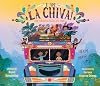
Climb aboard for a trip you won’t forget!
La Chiva, a bus that drives through the Andes, narrates this peppy tale. Painted with vibrant hues and patterns, this open-air bus rises early—“before Señor Sun”—and picks up farmers and their products, from Doña Ines and her arepas and huevos to Don Ernesto and his pig. La Chiva and the passengers sing as they roll past a verdant countryside. But soon La Chiva gets a flat tire and must pull over. Luckily, everyone works together to show more replace the tire with a spare—they are a community, after all. Once they reach the lively town square, the passengers disembark and sell their wares to grateful customers, while children play tag and hopscotch. Before the day is over, the group has a present for La Chiva (a replacement tire for the spare), but to La Chiva, the people themselves are the best gift. Alvarez Gómez makes superb use of color: the lush greens of the surrounding country, punctuated by pops of red, orange, and purple; rich earth tones for the buildings in the square; and, of course, La Chiva, a veritable rainbow. Interspersed with Spanish, the rhyming verse bounces along as energetically as the titular bus. In the backmatter, Hernández explains that La Chiva buses are common to rural Colombia and notes that the story is rooted in her own childhood memories.
A delightful journey; readers will be eager for repeat trips. (author’s note, glossary) (Picture book. 2-5)
-Kirkus Review show less
La Chiva, a bus that drives through the Andes, narrates this peppy tale. Painted with vibrant hues and patterns, this open-air bus rises early—“before Señor Sun”—and picks up farmers and their products, from Doña Ines and her arepas and huevos to Don Ernesto and his pig. La Chiva and the passengers sing as they roll past a verdant countryside. But soon La Chiva gets a flat tire and must pull over. Luckily, everyone works together to show more replace the tire with a spare—they are a community, after all. Once they reach the lively town square, the passengers disembark and sell their wares to grateful customers, while children play tag and hopscotch. Before the day is over, the group has a present for La Chiva (a replacement tire for the spare), but to La Chiva, the people themselves are the best gift. Alvarez Gómez makes superb use of color: the lush greens of the surrounding country, punctuated by pops of red, orange, and purple; rich earth tones for the buildings in the square; and, of course, La Chiva, a veritable rainbow. Interspersed with Spanish, the rhyming verse bounces along as energetically as the titular bus. In the backmatter, Hernández explains that La Chiva buses are common to rural Colombia and notes that the story is rooted in her own childhood memories.
A delightful journey; readers will be eager for repeat trips. (author’s note, glossary) (Picture book. 2-5)
-Kirkus Review show less

The art in this is so, so beautiful. And nuanced, with even background characters acting (and appearing) as individuals, as likely and as capable of existing in their own worlds as the protagonist. The story's a little rough around the edges, but I like that it's inconclusive, almost philosophical.
Awards


You May Also Like


Associated Authors
Statistics
- Works
- 4
- Also by
- 21
- Members
- 560
- Popularity
- #44,619
- Rating
- 3.9
- Reviews
- 29
- ISBNs
- 19
- Languages
- 3