
Ed Lin
Author of Ghost Month
About the Author
Image credit: By Larry D. Moore, CC BY-SA 4.0, https://commons.wikimedia.org/w/index.php?curid=36691446
Series
Works by Ed Lin
Associated Works
The Usual Santas: A Collection of Soho Crime Christmas Capers (2017) — Contributor — 160 copies, 10 reviews
Charlie Chan Is Dead 2: At Home in the World: An Anthology of Contemporary Asian-American Fiction (2004) — Contributor — 98 copies, 1 review
Tagged
Common Knowledge
- Gender
- male
- Nationality
- USA
- Birthplace
- New York, USA
- Associated Place (for map)
- New York, USA
Members
Reviews
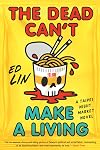
Jing-nan owns a popular stall at the Shilin Night Market, a vast food court in Taipei, Taiwan, where he and his small staff serve popular skewer sticks and other delicacies. He’s an energetic salesman, posting regularly to social media and enticing tourists to try his wares. He’s also (by the fifth volume in this series) notorious for getting involved in crimes that land him in the news. This time, he stumbles across a dead body as he takes out the trash. The victim is a Filipino migrant show more who works at a local food factory staffed largely by foreign workers brought to Taiwan to fill gaps in the labor market. When the man’s grieving family stops by, wanting his death investigated, Jing-nan feels for them, and his uncle Big Eye, a local gangster, encourages him to go undercover at the factory to discover what is going on there that might have led to the man’s death.
Posing as a Filipino, and with his head newly-shaved to avoid recognition, he goes to work at a factory that makes food that has no resemblance to his cuisine. The workers mix together chemicals in vast vats to be turned into candy and other junk food. He’s fortunate to room with just one other worker (most of the contract workers are crowded together in small rooms) who, he quickly learns, is shunned as a troublemaker. Benny is getting on in years, a former history teacher who was blacklisted by his government and now has to work abroad at taxing factory jobs. Though he’s pleasant company, patiently teaching Jing-nan about the system he’s infiltrating and discussing books with him, he is a Communist who tried to organize the workers, which leads the management to demand that Jing-nan spy on him. All Jing-nan wants to do is find out whether something going on at the factory led to a man’s death — and get out before he’s recognized as an infiltrator.
This series is lots of fun, with an ebullient protagonist and a cast of entertaining recurring characters. The night market is a fascinating setting, and the descriptions of food are guaranteed to make readers hungry. Though the series is quite cozy, Ed Lin addresses serious topics with a light touch. Like many societies, Taiwan relies on cheap foreign labor yet looks down on those who fill those jobs. American readers are likely to see parallels with our own country, though the author doesn’t hammer home a message. While the mystery is informative and thought-provoking, Jing-nan’s adventures while working among immigrants are far from expose-style of The Jungle and verge at times on farce. Yet there is respect, there, for the serious topic and its moral implications.
There’s also a less serious theme contrasting the food produced at the factory and the tasty, creative cuisine available at the night market which makes for another message, delivered with zest. show less
Posing as a Filipino, and with his head newly-shaved to avoid recognition, he goes to work at a factory that makes food that has no resemblance to his cuisine. The workers mix together chemicals in vast vats to be turned into candy and other junk food. He’s fortunate to room with just one other worker (most of the contract workers are crowded together in small rooms) who, he quickly learns, is shunned as a troublemaker. Benny is getting on in years, a former history teacher who was blacklisted by his government and now has to work abroad at taxing factory jobs. Though he’s pleasant company, patiently teaching Jing-nan about the system he’s infiltrating and discussing books with him, he is a Communist who tried to organize the workers, which leads the management to demand that Jing-nan spy on him. All Jing-nan wants to do is find out whether something going on at the factory led to a man’s death — and get out before he’s recognized as an infiltrator.
This series is lots of fun, with an ebullient protagonist and a cast of entertaining recurring characters. The night market is a fascinating setting, and the descriptions of food are guaranteed to make readers hungry. Though the series is quite cozy, Ed Lin addresses serious topics with a light touch. Like many societies, Taiwan relies on cheap foreign labor yet looks down on those who fill those jobs. American readers are likely to see parallels with our own country, though the author doesn’t hammer home a message. While the mystery is informative and thought-provoking, Jing-nan’s adventures while working among immigrants are far from expose-style of The Jungle and verge at times on farce. Yet there is respect, there, for the serious topic and its moral implications.
There’s also a less serious theme contrasting the food produced at the factory and the tasty, creative cuisine available at the night market which makes for another message, delivered with zest. show less
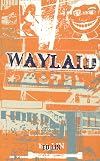
This excellent coming of age novel is narrated by the unnamed son of Taiwanese immigrants, who own a rundown hotel in a forgettable town on the Jersey Shore. His father earned an engineering degree in Taiwan, but was unable to keep his job in the US. He spends his summers, as do most of the residents of the town, catering to young vacationers from North Jersey and New York, who tear up the hotel and town and pollute the beaches with beer bottles, cigarette butts and condoms. During the rest show more of the year, the hotel is populated by lonely old men and hookers turning tricks. He starts obsessing about having sex, spurred by the porn magazines that he picks up while cleaning the hotel's rooms, and he engages in humorous and mostly futile attempts to get any of girls he meets to sleep with him. Although he is a good student, he despises almost everyone, especially his parents, who eat stinky Chinese food and make him work like a dog, his school mates, who isolate and make fun of him because of his race, and the hotel's guests, who punch holes in the walls and treat him with condescension. There is hope for him, as his scheme to get his cute classmate and girlfriend to sleep with him in one of the hotel's empty rooms may come to fruition before long.
[Waylaid] is probably the best coming of age novel I've read, as it authentically portrays the daily frustrations and small victories of a teenage boy trying to fit into a town that doesn't want or respect him, and whose parents don't understand him. The regular low-level discrimination he has to put up with as an Asian-American ring true, as do his parents' struggles to survive in an unfriendly town. I did not find this to be an overly depressing read, as the author does not dwell too long on the narrator's negative experiences and frustrations, and humor and honesty are present throughout this well written work. I'll definitely look for more works by this gifted author, and would highly recommend this book for anyone interested in coming of age literature. show less
[Waylaid] is probably the best coming of age novel I've read, as it authentically portrays the daily frustrations and small victories of a teenage boy trying to fit into a town that doesn't want or respect him, and whose parents don't understand him. The regular low-level discrimination he has to put up with as an Asian-American ring true, as do his parents' struggles to survive in an unfriendly town. I did not find this to be an overly depressing read, as the author does not dwell too long on the narrator's negative experiences and frustrations, and humor and honesty are present throughout this well written work. I'll definitely look for more works by this gifted author, and would highly recommend this book for anyone interested in coming of age literature. show less
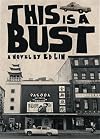
This is a Bust is a time portal that takes you back to New York’s Chinatown in 1976, just a few months after the historic newspaper headline “Ford to City: Drop Dead.” New York was facing complete bankruptcy, crime was soaring, the city was dirty, frightening, foul, beat up and run down.
There is murder mystery in the pages of This is a Bust, but the story really revolves around the struggles of Robert Chow, a Chinese American who grew up in Chinatown, fought in Vietnam, and returned show more to the U.S. to end up a token Chinese cop in the district where he was raised. Chow’s life is in shambles just like the city itself.
His role on the force is to attend community events and have his picture taken for the papers so the NYPD can show how progressive it is. (Look, we have a Chinese cop on the beat in Chinatown!) But he has no chance of getting on the track to become a detective and his inside knowledge of the neighborhood and its people is continually ignored. He’s taken to drinking to numb himself and his diet largely consists of hot-dog pastries, which, as Lin writes, are: “a unique Chinese American invention. They use the same dough as for the custard buns and taro buns, only they wrap it around an Oscar Meyer hot dog. The ends stick out like horns on a Viking helmet. They’re good.”
The book is full of little details about Chinatown like that description of “hot-dog pastries.” This is a Bust gives a fascinating, clear-eyed but sympathetic look at a community that is hard for outsiders to understand. The novel is a portrait of a city, a neighborhood, and a man at time of turmoil and change. And the mystery is pretty good too. I very much recommend to anyone who is curious about Chinatown or who would enjoy a well-written, well-paced story about an individual trying to come to terms with his past and future. show less
There is murder mystery in the pages of This is a Bust, but the story really revolves around the struggles of Robert Chow, a Chinese American who grew up in Chinatown, fought in Vietnam, and returned show more to the U.S. to end up a token Chinese cop in the district where he was raised. Chow’s life is in shambles just like the city itself.
His role on the force is to attend community events and have his picture taken for the papers so the NYPD can show how progressive it is. (Look, we have a Chinese cop on the beat in Chinatown!) But he has no chance of getting on the track to become a detective and his inside knowledge of the neighborhood and its people is continually ignored. He’s taken to drinking to numb himself and his diet largely consists of hot-dog pastries, which, as Lin writes, are: “a unique Chinese American invention. They use the same dough as for the custard buns and taro buns, only they wrap it around an Oscar Meyer hot dog. The ends stick out like horns on a Viking helmet. They’re good.”
The book is full of little details about Chinatown like that description of “hot-dog pastries.” This is a Bust gives a fascinating, clear-eyed but sympathetic look at a community that is hard for outsiders to understand. The novel is a portrait of a city, a neighborhood, and a man at time of turmoil and change. And the mystery is pretty good too. I very much recommend to anyone who is curious about Chinatown or who would enjoy a well-written, well-paced story about an individual trying to come to terms with his past and future. show less
I stumbled across This Is a Bust, by Ed Lin, in my local library by accident—because the cool, funky cover art (pictured above) grabbed my attention. The interior of the book also had a somewhat funky design. There are no first line paragraph indents; instead, everything is flush left with an extra return between each paragraph. This was all very appealing to me as a book designer (yes, I do judge a book by its cover). OK, enough on the design.
The novel also appealed to me as a writer. show more The back cover text states "This Is a Bust explores the unexotic and very real complexities of New York City's Chinatown, circa 1976, through the eyes of a Chinese American cop. This Is a Bust is at once a murder mystery, a noir homage and a devastating, uniquely nuanced portrait of a neighborhood in flux, stuck between old rivalries and youthful idealism."
This is a good description, but it was the character of Robert Chow, the cop, who intrigued me more than the solution to the murder mystery itself. In fact, the mystery really isn't the focus of this book. The characterization of Chinatown as a whole, its culture (which was unknown to me), and all the individual characters who populate Lin's novel are the real story. There is Chow's former partner Vandyne, an African-American, who is on the fast track to making detective; the Midget, who hangs out in Columbus park and beats all opponents in every board game imaginable; Paul, a young, brilliant tough; Lonnie, a college student and bakery worker who has eyes for Chow; Barbara, an old love interest of Chow's who made it out of Chinatown, only to return; and Yip, an elderly man who may or may not have killed his wife.
All of this is set against the background of a 1976 Chinatown, an era before the internet, before cell phones, and before the U.S. opened up relations with communist China (but is putting out feelers). Policeman Chow wonders at one point why he fought against communism in Vietnam. Though only 25, he feels old, having seen both the big world (Vietnam), and the small world (Chinatown), and how it can wear a man down. He's lost, and alcoholic, and knows he is just a token in the police department, and will never be given the investigations he desires to become a detective.
Chow is drawn to the murder mystery, though, because he understands the Chinatown culture, more so than his friend Vandyne, who is leading the investigation. He wants to prove to himself and his boss that he is more than just a patrolman walking a beat, more than just a token face for photo ops. He's warned off the case by his boss, but it nags at him, and clues occasionally fall into his lap whether he wants them to or not. As Chow puts the pieces of the mystery together, he also sorts out his own personal life.
This Is a Bust is anything but a bust. It's first-rate. Check it out. show less
The novel also appealed to me as a writer. show more The back cover text states "This Is a Bust explores the unexotic and very real complexities of New York City's Chinatown, circa 1976, through the eyes of a Chinese American cop. This Is a Bust is at once a murder mystery, a noir homage and a devastating, uniquely nuanced portrait of a neighborhood in flux, stuck between old rivalries and youthful idealism."
This is a good description, but it was the character of Robert Chow, the cop, who intrigued me more than the solution to the murder mystery itself. In fact, the mystery really isn't the focus of this book. The characterization of Chinatown as a whole, its culture (which was unknown to me), and all the individual characters who populate Lin's novel are the real story. There is Chow's former partner Vandyne, an African-American, who is on the fast track to making detective; the Midget, who hangs out in Columbus park and beats all opponents in every board game imaginable; Paul, a young, brilliant tough; Lonnie, a college student and bakery worker who has eyes for Chow; Barbara, an old love interest of Chow's who made it out of Chinatown, only to return; and Yip, an elderly man who may or may not have killed his wife.
All of this is set against the background of a 1976 Chinatown, an era before the internet, before cell phones, and before the U.S. opened up relations with communist China (but is putting out feelers). Policeman Chow wonders at one point why he fought against communism in Vietnam. Though only 25, he feels old, having seen both the big world (Vietnam), and the small world (Chinatown), and how it can wear a man down. He's lost, and alcoholic, and knows he is just a token in the police department, and will never be given the investigations he desires to become a detective.
Chow is drawn to the murder mystery, though, because he understands the Chinatown culture, more so than his friend Vandyne, who is leading the investigation. He wants to prove to himself and his boss that he is more than just a patrolman walking a beat, more than just a token face for photo ops. He's warned off the case by his boss, but it nags at him, and clues occasionally fall into his lap whether he wants them to or not. As Chow puts the pieces of the mystery together, he also sorts out his own personal life.
This Is a Bust is anything but a bust. It's first-rate. Check it out. show less
Lists
Awards


You May Also Like


Associated Authors
Statistics
- Works
- 11
- Also by
- 2
- Members
- 463
- Popularity
- #53,108
- Rating
- 3.3
- Reviews
- 20
- ISBNs
- 47