
Bronwen Dickey
Author of Pit Bull: The Battle over an American Icon
Works by Bronwen Dickey
Associated Works
Tagged
Common Knowledge
- Gender
- female
- Education
- Duke University
Columbia University - Occupations
- journalist
- Relationships
- Dickey, James (father)
Dickey, Christopher (half-brother) - Nationality
- USA
- Associated Place (for map)
- USA
Members
Reviews
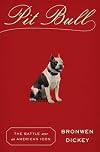
Hey, did you know that race has infected every issue in America? Dickey’s almost-aside on the history of discrimination and defamation against slaves’ dogs comes late in the book, but race appears throughout. (She says “race” was actually a term borrowed from animal breeding.) People make claims about pit bulls and other breeds based on supposed genetic predispositions to certain behaviors, including viciousness; Dickey points out that racism infects both defenders and detractors of show more the breeds, who both use stereotypes of (bad) pit bull owners who are urban, poor, “pimps” and “thugs”—all code for black and lower-class. Dickey suggests that the real problem is poverty; that most dogs’ owners love them even when they don’t have the resources and knowledge to treat them in the best way; that many more dogs of all breeds survive terrible conditions without turning vicious; and that individual variation among dogs is the key source of potential danger. Genetic identification of “pit bulls” is actually impossible, and that many dogs that are called “pit bulls” aren’t purebred and even sometimes aren’t even mixes of the technical categories dog breeders use to define them. Dog bite statistics also suggest that whatever breed of dog becomes popularly known as a guard dog type will get more than its share of media attention whenever one dog who kind of looks like it belongs to that breed bites someone; it’s self-reinforcing, in that people who want vicious dogs will gravitate to whatever dog is known as vicious. show less
The American pit bull is a dog with a confused and troubled history. It's become the definition of the vicious dog, the dangerous dog, the dog that will go from lying quietly beside you on the couch to tearing your kids to shreds, for no apparent reason and with no warning.
And anyone will tell you it has "always" been that way.
Except that when I was a kid, that dog was the Doberman Pinscher. Well, except when it was the German Shepherd.
Since then, it was the rottweiler for a decade or so.
In show more the 19th century, for some of the time it was the bloodhound, and some of the time it was the white spitz dog--a dog also known to be a major spreader of rabies. This terrifying breed is now better known as the American Eskimo dog, a fluffy, adorable American house pet, one of the most successful rebranding efforts in history.
Bronwen Dickey and her husband adopted a dog from their local shelter, and afterwards were told that she looked like a "pit bull." Dickey looked at the scary pit bull stories, and her sweet pet, and got very interested in the history of the pit bull. It's a story that encompasses bull dogs and terriers, fighting dogs, American military dogs, and working farm dogs. It includes some of the biggest early canine stars of the silver screen, and dogs who scramble for survival with their human companions on the mean streets of the inner cities. It includes the "game bred" dogs of those who love the heritage but would never fight their own dogs, and the softer, easier dogs of those who love the look and the strength but see the "game bred" spirit as something best left to history.
And it includes not only the American Pit Bull Terrier (registered with the United Kennel Club) and the American Staffordshire Terrier (the American Kennel Club's version of the same dog), the Staffordshire Terrier, the Staffordshire Bull Terrier, and several other breeds that may or may not be called "put bulls" by one authority or another, but a wide range of mixed breed dogs that look like one or more of these breeds and may or may not be crosses or mixes of them. That's part of the challenge and terror of loving these dogs. They are so often banned, and in some places seized and killed, and usually the only determiner of whether or not your dog is "a pit bull" is your landlord or your neighbors or your local animal control officer who has no more training in visual identification of breeds than your landlord or your neighbors have. Your dog who has never so much as growled at anyone can suddenly be on trial for her life for having a short coat and a broad head.
Dickey interviewed those who love the American Pit Bull Terrier as recognized by the UKC, and those who love all the "pit bull" mixed breed dogs in shelters or owned by inner city residents most often targeted by "dangerous dog" laws. She talked to those who've done extensive research on dog bites and dog behavior, and those who reject the research as being the product of "the pit bull lobby," a shadowy, sinister perceived presence allegedly bent on keeping dangerous dogs on the streets.
It's a fascinating journey through the history of an American breed type, and Randye Kaye does an excellent job of narration.
Recommended.
I bought this book. show less
And anyone will tell you it has "always" been that way.
Except that when I was a kid, that dog was the Doberman Pinscher. Well, except when it was the German Shepherd.
Since then, it was the rottweiler for a decade or so.
In show more the 19th century, for some of the time it was the bloodhound, and some of the time it was the white spitz dog--a dog also known to be a major spreader of rabies. This terrifying breed is now better known as the American Eskimo dog, a fluffy, adorable American house pet, one of the most successful rebranding efforts in history.
Bronwen Dickey and her husband adopted a dog from their local shelter, and afterwards were told that she looked like a "pit bull." Dickey looked at the scary pit bull stories, and her sweet pet, and got very interested in the history of the pit bull. It's a story that encompasses bull dogs and terriers, fighting dogs, American military dogs, and working farm dogs. It includes some of the biggest early canine stars of the silver screen, and dogs who scramble for survival with their human companions on the mean streets of the inner cities. It includes the "game bred" dogs of those who love the heritage but would never fight their own dogs, and the softer, easier dogs of those who love the look and the strength but see the "game bred" spirit as something best left to history.
And it includes not only the American Pit Bull Terrier (registered with the United Kennel Club) and the American Staffordshire Terrier (the American Kennel Club's version of the same dog), the Staffordshire Terrier, the Staffordshire Bull Terrier, and several other breeds that may or may not be called "put bulls" by one authority or another, but a wide range of mixed breed dogs that look like one or more of these breeds and may or may not be crosses or mixes of them. That's part of the challenge and terror of loving these dogs. They are so often banned, and in some places seized and killed, and usually the only determiner of whether or not your dog is "a pit bull" is your landlord or your neighbors or your local animal control officer who has no more training in visual identification of breeds than your landlord or your neighbors have. Your dog who has never so much as growled at anyone can suddenly be on trial for her life for having a short coat and a broad head.
Dickey interviewed those who love the American Pit Bull Terrier as recognized by the UKC, and those who love all the "pit bull" mixed breed dogs in shelters or owned by inner city residents most often targeted by "dangerous dog" laws. She talked to those who've done extensive research on dog bites and dog behavior, and those who reject the research as being the product of "the pit bull lobby," a shadowy, sinister perceived presence allegedly bent on keeping dangerous dogs on the streets.
It's a fascinating journey through the history of an American breed type, and Randye Kaye does an excellent job of narration.
Recommended.
I bought this book. show less
Fantastically well-researched, this book examines and explains the history of dogs in America - both under the "pit bull" umbrella and not. Through a historical and sociological lens from the beginning of America through today, this is a fascinating journey with deep insight and compassion for all parties. The author strikes a very delicate balance threading the line between the sides to illuminate a whole that is larger than breed: all dogs are dogs.
Really, I can't say enough good things show more about this book. I bought the book after reading two excerpts because of how thought-provoking they were, and then devoured the book in one sitting because I couldn't pull myself away.
Investigative journalism at its finest - a culmination of years of research plus a thorough list of sources. show less
Really, I can't say enough good things show more about this book. I bought the book after reading two excerpts because of how thought-provoking they were, and then devoured the book in one sitting because I couldn't pull myself away.
Investigative journalism at its finest - a culmination of years of research plus a thorough list of sources. show less
4.5 stars
The first half of the book starts with a history of dog breeds, dog fighting, “pit bulls” (however defined, as it constantly changes, but it’s mostly based on looks although there is one actual “American Pit Bull” breed, but many others tend to be lumped in, as well) as seen in history. In the second half of the book, the focus is more on dog bites, breed specific legislation, the media and politics.
The author has done an incredible amount of research here. She looks show more deeper into some of the media accounts (which are rarely, if ever, based on any kind of proper research), interviews people (on both sides of the “debate” over whether “pit bulls” should be banned or not). I learned of a few myths (like “bait dogs” – apparently they don’t really use bait dogs to train dogs to fight).
This was really interesting and I was impressed how, with very little information she was able to dig deeper, particularly into statistics, to find that most of the stats in the media accounts are just not based on valid (can’t think of a good word) stats. That is, one of the first “peer reviewed” (shoddily done, it seems) articles (which, of course, was then cited in later peer reviewed articles) that did find that pit bulls caused the most deaths was based on very flawed stats (“flawed” is the word I’m looking for).
I’m really impressed with this book and the amount of research that went into it. I feel like a lot more people should read it! show less
The first half of the book starts with a history of dog breeds, dog fighting, “pit bulls” (however defined, as it constantly changes, but it’s mostly based on looks although there is one actual “American Pit Bull” breed, but many others tend to be lumped in, as well) as seen in history. In the second half of the book, the focus is more on dog bites, breed specific legislation, the media and politics.
The author has done an incredible amount of research here. She looks show more deeper into some of the media accounts (which are rarely, if ever, based on any kind of proper research), interviews people (on both sides of the “debate” over whether “pit bulls” should be banned or not). I learned of a few myths (like “bait dogs” – apparently they don’t really use bait dogs to train dogs to fight).
This was really interesting and I was impressed how, with very little information she was able to dig deeper, particularly into statistics, to find that most of the stats in the media accounts are just not based on valid (can’t think of a good word) stats. That is, one of the first “peer reviewed” (shoddily done, it seems) articles (which, of course, was then cited in later peer reviewed articles) that did find that pit bulls caused the most deaths was based on very flawed stats (“flawed” is the word I’m looking for).
I’m really impressed with this book and the amount of research that went into it. I feel like a lot more people should read it! show less
Lists
Awards


You May Also Like
Associated Authors
Statistics
- Works
- 1
- Also by
- 2
- Members
- 176
- Popularity
- #121,981
- Rating
- 4.1
- Reviews
- 11
- ISBNs
- 7