

Connor Boyack
Author of The Tuttle Twins Learn About the Law
About the Author
Image credit: via Mises Institute
Series
Works by Connor Boyack
America's History: A Tuttle Twins Series of Stories (1215-1776) (The Tuttle Twins Stories) (2022) 140 copies
America’s History: A Tuttle Twins Series of Stories, volume 2 (1776-1791) (America's History (The Tuttle Twins)) (2023) 72 copies
Tuttle Twins Toddler Combo 3 Set: ABC's of Economics, Liberty, and the American Revolution (2016) 48 copies
Passion-Driven Education: How to Use Your Child's Interests to Ignite a Lifelong Love of Learning (2016) 39 copies
Feardom: How Politicians Exploit Your Emotions and What You Can Do to Stop Them (2014) 36 copies, 2 reviews
Tuttle Twins 12 Book Combo Pack – Includes The First Twelve Books By Conner Boyack And Illustrated by Elijah Stanfield – Libertas Institute (2021) 25 copies
The Tuttle Twins Set of 11 by Connor Boyack: The Law, The Golden Rule, Miraculous Pencil, Education Vacation (2018) 6 copies
Tuttle Twins Choose Your Consequence Combo Pack of 3: Hyperinflation Destination, Broken Window, & Pink House (2019) 2 copies
Tuttle Twins Guidebook Combo Set of 3: Logical Fallacies, Inspiring Entrepreneurs, Courageous Heroes (2014) 2 copies
Rising Tides & Dirty Deals : An Adventure About Protectionism (Tuttle Twins Graphic Novel) Book 5 1 copy
The Tuttle Twins Set of 8 1 copy
Tagged
Common Knowledge
- Organizations
- The Church of Jesus Christ of Latter-day Saints
Members
Reviews

Review on the 11 books of the Tuttle Twin series.
https://academynw.com/the-tuttle-twins-review/
Scrolling through my Facebook feed one day, I noticed an ad for a children’s book series that highlighted a negative review. I don’t recall the exact wording, but the reviewer complained that the books brainwashed kids to believe in a conservative view of society. That sold me. I never bought a product impulsively based on an online ad before, but I saw that these books would be a valuable show more resource for homeschooling and educationally involved families.
I have intentionally taught my kids a biblical and conservative worldview since they were little. If parents don’t make a conscious effort to pass on their worldview to their children, the cultural elites— academia, mainstream media, Hollywood, and Madison Avenue—will. Their plan for society has birthed an overbearing government, anti-patriotism, and the recent riots that have destroyed the centers of many American cities.
Recognizing that schools no longer teach classical liberty, Connor Boyack wrote these books to instruct his kids on how a free society functions.
His worldview may seem a bit extreme to some readers, especially his apparent antagonism towards the government. Libertarians believe that the governments that rule the best rule the least.
Even if you don’t hold such a strong view about government, you will still find these books useful in training your children on how civics and economics work in a free society. Family discussions on how people hold different views on these topics will benefit everyone.
Many of the one-star reviewers on Amazon object to the reference to God in the first book, The Tuttle Twins Learn About the Law. I agree with Boyack that our inalienable rights come from God, and a government will only safeguard these rights if its leaders submit to a transcendent power. Despite this, those who may dislike “religion” will still find this series helpful. The other ten books don’t reference faith or God.
Meet the Tuttle Twins
Book #1, introduces readers to the nine-year-old twins, Ethan and Emily Tuttle. The publisher says after book one, the other books can be read in any order. Even so, some books do reference back to previous books, but generally, each adventure stands on its own.
These books seem to be a cross between the Boxcar Children series and the Magic School Bus series. Like the children characters in The Boxcar Children, Ethan and Emily seem too perfect and precocious as they engage with the community at a higher maturity level than most nine-year-olds. But these characteristics make them good role models, which our society dearly needs.
Each book’s message takes priority over the storyline in the same way the Magic School Bus science lessons overshadow the adventures. Also similar to the Magic School Bus books, the numerous illustrations in this series move the story along. The length and reading level are comparable to the Magic School Bus series as well.
The author bases each book on a publication that expounds on a free society idea in a philosophical manner. For instance, presents the ideas of Frédéric Bastiat (1801-1850) in his book The Law.
The Tuttle Twins and the Messed Up Market, based on Human Action: A Treatise on Economics by Ludwig von Mises, demonstrates how subsidies, government interference, and individuals’ different motivations to be in business can mess up how a free market operates and can make it difficult for some to make a profit even though they have a good product. show less
https://academynw.com/the-tuttle-twins-review/
Scrolling through my Facebook feed one day, I noticed an ad for a children’s book series that highlighted a negative review. I don’t recall the exact wording, but the reviewer complained that the books brainwashed kids to believe in a conservative view of society. That sold me. I never bought a product impulsively based on an online ad before, but I saw that these books would be a valuable show more resource for homeschooling and educationally involved families.
I have intentionally taught my kids a biblical and conservative worldview since they were little. If parents don’t make a conscious effort to pass on their worldview to their children, the cultural elites— academia, mainstream media, Hollywood, and Madison Avenue—will. Their plan for society has birthed an overbearing government, anti-patriotism, and the recent riots that have destroyed the centers of many American cities.
Recognizing that schools no longer teach classical liberty, Connor Boyack wrote these books to instruct his kids on how a free society functions.
His worldview may seem a bit extreme to some readers, especially his apparent antagonism towards the government. Libertarians believe that the governments that rule the best rule the least.
Even if you don’t hold such a strong view about government, you will still find these books useful in training your children on how civics and economics work in a free society. Family discussions on how people hold different views on these topics will benefit everyone.
Many of the one-star reviewers on Amazon object to the reference to God in the first book, The Tuttle Twins Learn About the Law. I agree with Boyack that our inalienable rights come from God, and a government will only safeguard these rights if its leaders submit to a transcendent power. Despite this, those who may dislike “religion” will still find this series helpful. The other ten books don’t reference faith or God.
Meet the Tuttle Twins
Book #1, introduces readers to the nine-year-old twins, Ethan and Emily Tuttle. The publisher says after book one, the other books can be read in any order. Even so, some books do reference back to previous books, but generally, each adventure stands on its own.
These books seem to be a cross between the Boxcar Children series and the Magic School Bus series. Like the children characters in The Boxcar Children, Ethan and Emily seem too perfect and precocious as they engage with the community at a higher maturity level than most nine-year-olds. But these characteristics make them good role models, which our society dearly needs.
Each book’s message takes priority over the storyline in the same way the Magic School Bus science lessons overshadow the adventures. Also similar to the Magic School Bus books, the numerous illustrations in this series move the story along. The length and reading level are comparable to the Magic School Bus series as well.
The author bases each book on a publication that expounds on a free society idea in a philosophical manner. For instance, presents the ideas of Frédéric Bastiat (1801-1850) in his book The Law.
The Tuttle Twins and the Messed Up Market, based on Human Action: A Treatise on Economics by Ludwig von Mises, demonstrates how subsidies, government interference, and individuals’ different motivations to be in business can mess up how a free market operates and can make it difficult for some to make a profit even though they have a good product. show less

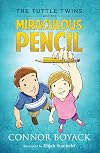
Ethan and Emily Tuttle have grown up taking for granted the many things they use: clothes, cars, homes, backpacks - even something as simple as a pencil. In their visit to a factory, the twins learn why even the common pencil is a miracle - one that nobody actually knows how to make - and how the process by which it is made is the key to prosperity in our modern age.
Based on the classic essay "I, Pencil" by Leonard Read, children will learn about the economic principles of spontaneous order, show more division of labor, competition, trade, and the free market - and why these things bring the people of the world together in peaceful cooperation. show less
Based on the classic essay "I, Pencil" by Leonard Read, children will learn about the economic principles of spontaneous order, show more division of labor, competition, trade, and the free market - and why these things bring the people of the world together in peaceful cooperation. show less
Review on the 11 books of the Tuttle Twin series.
https://academynw.com/the-tuttle-twins-review/
Scrolling through my Facebook feed one day, I noticed an ad for a children’s book series that highlighted a negative review. I don’t recall the exact wording, but the reviewer complained that the books brainwashed kids to believe in a conservative view of society. That sold me. I never bought a product impulsively based on an online ad before, but I saw that these books would be a valuable show more resource for homeschooling and educationally involved families.
I have intentionally taught my kids a biblical and conservative worldview since they were little. If parents don’t make a conscious effort to pass on their worldview to their children, the cultural elites— academia, mainstream media, Hollywood, and Madison Avenue—will. Their plan for society has birthed an overbearing government, anti-patriotism, and the recent riots that have destroyed the centers of many American cities.
Recognizing that schools no longer teach classical liberty, Connor Boyack wrote these books to instruct his kids on how a free society functions.
His worldview may seem a bit extreme to some readers, especially his apparent antagonism towards the government. Libertarians believe that the governments that rule the best rule the least.
Even if you don’t hold such a strong view about government, you will still find these books useful in training your children on how civics and economics work in a free society. Family discussions on how people hold different views on these topics will benefit everyone.
Many of the one-star reviewers on Amazon object to the reference to God in the first book, The Tuttle Twins Learn About the Law. I agree with Boyack that our inalienable rights come from God, and a government will only safeguard these rights if its leaders submit to a transcendent power. Despite this, those who may dislike “religion” will still find this series helpful. The other ten books don’t reference faith or God.
Meet the Tuttle Twins
Book #1, introduces readers to the nine-year-old twins, Ethan and Emily Tuttle. The publisher says after book one, the other books can be read in any order. Even so, some books do reference back to previous books, but generally, each adventure stands on its own.
These books seem to be a cross between the Boxcar Children series and the Magic School Bus series. Like the children characters in The Boxcar Children, Ethan and Emily seem too perfect and precocious as they engage with the community at a higher maturity level than most nine-year-olds. But these characteristics make them good role models, which our society dearly needs.
Each book’s message takes priority over the storyline in the same way the Magic School Bus science lessons overshadow the adventures. Also similar to the Magic School Bus books, the numerous illustrations in this series move the story along. The length and reading level are comparable to the Magic School Bus series as well.
The author bases each book on a publication that expounds on a free society idea in a philosophical manner. For instance, presents the ideas of Frédéric Bastiat (1801-1850) in his book The Law.
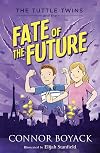
The Tuttle Twins and the Fate of the Future, based on Murray Rothbard’s essay, “Anatomy of the State,” teaches the libertarian concept of a predatory government and how to build a peaceful society through persuasion instead of coercion. This book recalls many of the concepts introduced in the previous volumes. I found this book encourages utopian thinking that fails to recognize the sinfulness of human nature. show less
https://academynw.com/the-tuttle-twins-review/
Scrolling through my Facebook feed one day, I noticed an ad for a children’s book series that highlighted a negative review. I don’t recall the exact wording, but the reviewer complained that the books brainwashed kids to believe in a conservative view of society. That sold me. I never bought a product impulsively based on an online ad before, but I saw that these books would be a valuable show more resource for homeschooling and educationally involved families.
I have intentionally taught my kids a biblical and conservative worldview since they were little. If parents don’t make a conscious effort to pass on their worldview to their children, the cultural elites— academia, mainstream media, Hollywood, and Madison Avenue—will. Their plan for society has birthed an overbearing government, anti-patriotism, and the recent riots that have destroyed the centers of many American cities.
Recognizing that schools no longer teach classical liberty, Connor Boyack wrote these books to instruct his kids on how a free society functions.
His worldview may seem a bit extreme to some readers, especially his apparent antagonism towards the government. Libertarians believe that the governments that rule the best rule the least.
Even if you don’t hold such a strong view about government, you will still find these books useful in training your children on how civics and economics work in a free society. Family discussions on how people hold different views on these topics will benefit everyone.
Many of the one-star reviewers on Amazon object to the reference to God in the first book, The Tuttle Twins Learn About the Law. I agree with Boyack that our inalienable rights come from God, and a government will only safeguard these rights if its leaders submit to a transcendent power. Despite this, those who may dislike “religion” will still find this series helpful. The other ten books don’t reference faith or God.
Meet the Tuttle Twins
Book #1, introduces readers to the nine-year-old twins, Ethan and Emily Tuttle. The publisher says after book one, the other books can be read in any order. Even so, some books do reference back to previous books, but generally, each adventure stands on its own.
These books seem to be a cross between the Boxcar Children series and the Magic School Bus series. Like the children characters in The Boxcar Children, Ethan and Emily seem too perfect and precocious as they engage with the community at a higher maturity level than most nine-year-olds. But these characteristics make them good role models, which our society dearly needs.
Each book’s message takes priority over the storyline in the same way the Magic School Bus science lessons overshadow the adventures. Also similar to the Magic School Bus books, the numerous illustrations in this series move the story along. The length and reading level are comparable to the Magic School Bus series as well.
The author bases each book on a publication that expounds on a free society idea in a philosophical manner. For instance, presents the ideas of Frédéric Bastiat (1801-1850) in his book The Law.
The Tuttle Twins and the Fate of the Future, based on Murray Rothbard’s essay, “Anatomy of the State,” teaches the libertarian concept of a predatory government and how to build a peaceful society through persuasion instead of coercion. This book recalls many of the concepts introduced in the previous volumes. I found this book encourages utopian thinking that fails to recognize the sinfulness of human nature. show less
Review on the 11 books of the Tuttle Twin series.
https://academynw.com/the-tuttle-twins-review/
This review is an overview of 11 Tuttle Twin books.
Scrolling through my Facebook feed one day, I noticed an ad for a children’s book series that highlighted a negative review. I don’t recall the exact wording, but the reviewer complained that the books brainwashed kids to believe in a conservative view of society. That sold me. I never bought a product impulsively based on an online ad before, show more but I saw that these books would be a valuable resource for homeschooling and educationally involved families.
I have intentionally taught my kids a biblical and conservative worldview since they were little. If parents don’t make a conscious effort to pass on their worldview to their children, the cultural elites— academia, mainstream media, Hollywood, and Madison Avenue—will. Their plan for society has birthed an overbearing government, anti-patriotism, and the recent riots that have destroyed the centers of many American cities.
Recognizing that schools no longer teach classical liberty, Connor Boyack wrote these books to instruct his kids on how a free society functions.
His worldview may seem a bit extreme to some readers, especially his apparent antagonism towards the government. Libertarians believe that the governments that rule the best rule the least.
Even if you don’t hold such a strong view about government, you will still find these books useful in training your children on how civics and economics work in a free society. Family discussions on how people hold different views on these topics will benefit everyone.
Many of the one-star reviewers on Amazon object to the reference to God in the first book, "The Tuttle Twins Learn About the Law." I agree with Boyack that our inalienable rights come from God, and a government will only safeguard these rights if its leaders submit to a transcendent power. Despite this, those who may dislike “religion” will still find this series helpful. The other ten books don’t reference faith or God.
Each book closes with a one-page summary of the book on which the lesson is based, has a short glossary (vocabulary for a school lesson), and five discussion questions. To extend the learning experience, Libertas Press has created an accompanying for each book and a weekly, free-market curriculum.
"The Tuttle Twins and the Miraculous Pencil," based on the classic essay “I, Pencil” by Leonard Read, teaches children how the free market allows people all over the world to work together to make pencils through trade and the division of labor.
Despite a few libertarian beliefs that some others might find a bit extreme, overall, these books will serve as excellent tools for parents to teach their children how the free market and a free society work. And parents, I bet you will learn a thing or two as well. show less
https://academynw.com/the-tuttle-twins-review/
This review is an overview of 11 Tuttle Twin books.
Scrolling through my Facebook feed one day, I noticed an ad for a children’s book series that highlighted a negative review. I don’t recall the exact wording, but the reviewer complained that the books brainwashed kids to believe in a conservative view of society. That sold me. I never bought a product impulsively based on an online ad before, show more but I saw that these books would be a valuable resource for homeschooling and educationally involved families.
I have intentionally taught my kids a biblical and conservative worldview since they were little. If parents don’t make a conscious effort to pass on their worldview to their children, the cultural elites— academia, mainstream media, Hollywood, and Madison Avenue—will. Their plan for society has birthed an overbearing government, anti-patriotism, and the recent riots that have destroyed the centers of many American cities.
Recognizing that schools no longer teach classical liberty, Connor Boyack wrote these books to instruct his kids on how a free society functions.
His worldview may seem a bit extreme to some readers, especially his apparent antagonism towards the government. Libertarians believe that the governments that rule the best rule the least.
Even if you don’t hold such a strong view about government, you will still find these books useful in training your children on how civics and economics work in a free society. Family discussions on how people hold different views on these topics will benefit everyone.
Many of the one-star reviewers on Amazon object to the reference to God in the first book, "The Tuttle Twins Learn About the Law." I agree with Boyack that our inalienable rights come from God, and a government will only safeguard these rights if its leaders submit to a transcendent power. Despite this, those who may dislike “religion” will still find this series helpful. The other ten books don’t reference faith or God.
Each book closes with a one-page summary of the book on which the lesson is based, has a short glossary (vocabulary for a school lesson), and five discussion questions. To extend the learning experience, Libertas Press has created an accompanying for each book and a weekly, free-market curriculum.
"The Tuttle Twins and the Miraculous Pencil," based on the classic essay “I, Pencil” by Leonard Read, teaches children how the free market allows people all over the world to work together to make pencils through trade and the division of labor.
Despite a few libertarian beliefs that some others might find a bit extreme, overall, these books will serve as excellent tools for parents to teach their children how the free market and a free society work. And parents, I bet you will learn a thing or two as well. show less
Lists
You May Also Like


Statistics
- Works
- 66
- Members
- 13,799
- Popularity
- #1,677
- Rating
- 4.3
- Reviews
- 37
- ISBNs
- 71
- Languages
- 5