

Michelle Paver
Author of Wolf Brother
About the Author
Image credit: Michelle Paver website
Series
Works by Michelle Paver
torak1 7 copies
Chronik der dunklen Wälder. Doppelband (1. Wolfbruder 2. Torak, Wanderer zwischen den Welten) (2007) 7 copies
A Place in the Hills 1 copy
Evig natt 1 copy
Ostrov bohyně 1 copy
Den udstødte 1 copy
Associated Works
Myths of the Norsemen: Retold from the Old Norse Poems and Tales (1960) — Introduction, some editions — 800 copies, 14 reviews
Of Love and Life: Cocktails for Three / Angel Falls / A Place in the Hills (2001) — Contributor — 9 copies
Select Editions: The Silent Girl / The Little Village School / Buried Secrets / Dark Matter (2011) — Author — 4 copies
Livros Condensados: Desaparecido | Felizes Para Sempre | Uma Nova Vida | A Caçadora De Sombras (2005) 3 copies
Tagged
Common Knowledge
- Birthdate
- 1960-09-07
- Gender
- female
- Education
- University of Oxford (Lady Margaret Hall)
- Occupations
- solicitor
- Nationality
- UK
Malawi - Birthplace
- Blantyre, Malawi
- Places of residence
- Nyasaland (Malawi)
Wimbledon, England, UK - Map Location
- England, UK
Malawi
Members
Reviews
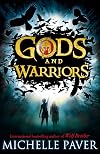
I've been intrigued by ancient societies and cultures for as long as I can remember breathing. Egypt holds most of my interest, but honestly I'll read anything set in BC time period as long as its interesting. GODS AND WARRIORS, the first in its series, is set during Bronze Age Greece--a first for me--and is fast paced, engrossing and utterly entertaining. I read this over the course of about two hours--that's right TWO HOURS--because I couldn't bear to put it down.
I was a little unsure at show more first, there was a lot of descriptive words that seemed out of place ("He was ragingly thirsty...") or unneeded being tossed around. It felt like every other word ended with "-ly" for a while. The protagonist is also much younger then I'm used to reading lately (he's 12, in fact everyone over the age of 14 is more or less not to be trusted), so I wasn't sure if I'd enjoy his viewpoint.
My fears were laid to rest about 60 pages in, when Paver began describing another character's journey across the sea. Paver seemed to hit her stride around this point and from there the story took off.
In a lot of ways this reminded me of one of my favorite books as a kid--Mara Daughter of the Nile (by Eloise Jarvis McGraw). That was also about an orphaned child, an outsider struggling to survive and having to rely on cleverness to do so. Hylas though, he's driven. He's a determined boy who lives and thrives mostly through instinct. His cleverness is mostly intuition (with a healthy smattering of paranoia) and his own ability to adapt to circumstances.
Pirra, by contrast, tries to work things out. Though she's been sheltered, she has a better idea of how things work with the 'Black Crows' then Hylas does. She knows what it is they want and how far they will go to reach that end goal. She's also more cautious, reverent of the Goddess and island they find themselves on. She understands the magic that Hylas has come in contact with.
The uneasy truce between them as they struggle to survive and maybe find a way off the island felt natural. They come from two different worlds, two different societies even, but they have a common enemy (the Black Crows) and a common goal (to stop them). Neither trusts the other, at least not on a conscious level, but they work very well together.
Hylas' friend, Telamon is lost between two worlds himself. Older then Hylas, but just as sheltered as Pirra in a way, he just can't seem to do the right thing for the right reasons. His father is disappointed in him, his uncle is disgusted by him, Hylas learns something about him that makes him scared and distrustful--nothing he does ends the way he wants it to. I felt bad for him honestly.
The ending speaks at a larger destiny awaiting all three (and Spirit, the dolphin) and the Goddess doesn't seem done with them yet. I'm interested to see where Paver takes our band of wary heroes--and what fresh adventures awaits them there. show less
I was a little unsure at show more first, there was a lot of descriptive words that seemed out of place ("He was ragingly thirsty...") or unneeded being tossed around. It felt like every other word ended with "-ly" for a while. The protagonist is also much younger then I'm used to reading lately (he's 12, in fact everyone over the age of 14 is more or less not to be trusted), so I wasn't sure if I'd enjoy his viewpoint.
My fears were laid to rest about 60 pages in, when Paver began describing another character's journey across the sea. Paver seemed to hit her stride around this point and from there the story took off.
In a lot of ways this reminded me of one of my favorite books as a kid--Mara Daughter of the Nile (by Eloise Jarvis McGraw). That was also about an orphaned child, an outsider struggling to survive and having to rely on cleverness to do so. Hylas though, he's driven. He's a determined boy who lives and thrives mostly through instinct. His cleverness is mostly intuition (with a healthy smattering of paranoia) and his own ability to adapt to circumstances.
Pirra, by contrast, tries to work things out. Though she's been sheltered, she has a better idea of how things work with the 'Black Crows' then Hylas does. She knows what it is they want and how far they will go to reach that end goal. She's also more cautious, reverent of the Goddess and island they find themselves on. She understands the magic that Hylas has come in contact with.
The uneasy truce between them as they struggle to survive and maybe find a way off the island felt natural. They come from two different worlds, two different societies even, but they have a common enemy (the Black Crows) and a common goal (to stop them). Neither trusts the other, at least not on a conscious level, but they work very well together.
Hylas' friend, Telamon is lost between two worlds himself. Older then Hylas, but just as sheltered as Pirra in a way, he just can't seem to do the right thing for the right reasons. His father is disappointed in him, his uncle is disgusted by him, Hylas learns something about him that makes him scared and distrustful--nothing he does ends the way he wants it to. I felt bad for him honestly.
The ending speaks at a larger destiny awaiting all three (and Spirit, the dolphin) and the Goddess doesn't seem done with them yet. I'm interested to see where Paver takes our band of wary heroes--and what fresh adventures awaits them there. show less
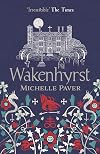
"Something has been let loose..." In Edwardian Suffolk, a manor house stands alone in a lost corner of the Fens: a glinting wilderness of water whose whispering reeds guard ancient secrets. Maud is a lonely child growing up without a mother, ruled by her repressive father. When he finds a painted medieval devil in a graveyard, unhallowed forces are awakened. Maud's battle has begun. She must survive a world haunted by witchcraft, the age-old legends of her beloved fen and the even more show more nightmarish demons of her father's past.
Maud is a memorable character... a smart, and courageous girl who lived in a time when females weren't valued much for anything except childbearing, and certainly not for any of their other abilities. Maud loved to read, and she had educated herself, but she is very naive when it comes to life in general.
The book rushes into how difficult life was for women at that time, being forced to endure so many things in order to just have a passable life. Social norms have trapped Maud in a life she never wanted and pushed her to be someone she wasn't. Then she falls for a gardener, bringing a little happiness in an otherwise claustrophobic, lonely existence. In spite of this, the "main man" in her life is and will always be her awful, tyrannical father, who rules her life as well as the entire household. Maud learning who her father really is gradually destroys her innocence and any idealism she may have had.
Her father, Edmund Stearn is a man who goes to church and talks about God, but neglects his wife, regularly visits brothels, and is hiding a secret so deep he has almost forgotten that it even exists. He doesn’t recognize his daughter’s intelligence but simply uses her as a tool for his work. When Maud discovers his hypocrisy, she promises to somehow make him pay.
The daughter vs the father storyline was a compelling one! The setting of the manor house in Wake’s End feels remote and cut off from the world. But Maud finds solace in the Fen. I felt like I was there through the vibrant and life-like descriptions of the place. Little details like the characters’ superstitions made for a vivid reading experience. Edmund’s diary entries take up a large part of the story. I thought the entries were interesting at first but after a while they became tiring as they were in reality, just the thoughts of a very unlikable, unredeemable, totally self-centered, man.
The book explores the class differences, the gender disparity, as well as religion, superstitions and madness. There are some hints of the supernatural, but it seems to become mostly an afterthought. The real horrors are the unwavering beliefs of this madman and the desperate life of his teenage daughter. A daughter desperately fighting to be free. When the truth of the murder finally comes out, it feels like the pieces finally fall into place.... but the effect is still devastating.
It's not a book that I would have rushed right out to buy or to read...but it was an interesting and thought producing novel...a gothic "slow burner" that is both chilling and heartbreaking. Something that is certainly capable of making the 20th Century reader thankful they didn't live in that period of history. show less
Maud is a memorable character... a smart, and courageous girl who lived in a time when females weren't valued much for anything except childbearing, and certainly not for any of their other abilities. Maud loved to read, and she had educated herself, but she is very naive when it comes to life in general.
The book rushes into how difficult life was for women at that time, being forced to endure so many things in order to just have a passable life. Social norms have trapped Maud in a life she never wanted and pushed her to be someone she wasn't. Then she falls for a gardener, bringing a little happiness in an otherwise claustrophobic, lonely existence. In spite of this, the "main man" in her life is and will always be her awful, tyrannical father, who rules her life as well as the entire household. Maud learning who her father really is gradually destroys her innocence and any idealism she may have had.
Her father, Edmund Stearn is a man who goes to church and talks about God, but neglects his wife, regularly visits brothels, and is hiding a secret so deep he has almost forgotten that it even exists. He doesn’t recognize his daughter’s intelligence but simply uses her as a tool for his work. When Maud discovers his hypocrisy, she promises to somehow make him pay.
The daughter vs the father storyline was a compelling one! The setting of the manor house in Wake’s End feels remote and cut off from the world. But Maud finds solace in the Fen. I felt like I was there through the vibrant and life-like descriptions of the place. Little details like the characters’ superstitions made for a vivid reading experience. Edmund’s diary entries take up a large part of the story. I thought the entries were interesting at first but after a while they became tiring as they were in reality, just the thoughts of a very unlikable, unredeemable, totally self-centered, man.
The book explores the class differences, the gender disparity, as well as religion, superstitions and madness. There are some hints of the supernatural, but it seems to become mostly an afterthought. The real horrors are the unwavering beliefs of this madman and the desperate life of his teenage daughter. A daughter desperately fighting to be free. When the truth of the murder finally comes out, it feels like the pieces finally fall into place.... but the effect is still devastating.
It's not a book that I would have rushed right out to buy or to read...but it was an interesting and thought producing novel...a gothic "slow burner" that is both chilling and heartbreaking. Something that is certainly capable of making the 20th Century reader thankful they didn't live in that period of history. show less
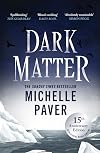
⭐ Review: Dark Matter by Michelle Paver — 4.0★
(With a comparison that highlights Paver’s evolution into Thin Air)
Dark Matter is a fast, atmospheric ghost story about isolation, trauma, and the way a mind can unravel in the dark. It’s the kind of book you can read in a day or two — the pacing is tight, the journal format keeps the tension personal, and Jack’s loneliness is convincing even before anything supernatural occurs. As a quick winter read, it absolutely works.
I rated it show more 4.0 stars, because it is good: eerie, emotionally clear, and engaging all the way through. But I’ll be honest — I suspect I might have liked it even more if I hadn’t already read Thin Air.
The comparison is almost unfair, yet impossible to avoid. Dark Matter shows Paver building her ghost-story toolkit, but in Thin Air she sharpens every tool to a finer, more brutal point. In Dark Matter, the Arctic setting is spooky and remote, but ultimately interchangeable. The cold is background, not destiny. The haunting feels more like a shape in the darkness than a personality, and the backstory behind it barely affects the story.
In Thin Air, Paver graduates.
The environment isn’t scenery — it’s the antagonist. The cold, the altitude, the thinning oxygen, the crushing sense of vertical space… they create a suffocating pressure that Dark Matter never reaches. And the ghost in Thin Air is a full character, one you sit with, one whose history and guilt shape the horror. It’s simply the more mature, more claustrophobic, more resonant novel.
That doesn’t diminish Dark Matter; it clarifies it.
This is the easier, quicker, more accessible ghost story — one centered on personal trauma rather than environmental menace. If you haven’t read Thin Air yet, Dark Matter may even strike you as more haunting than it did for me.
But for what it sets out to do, it succeeds.
A lonely man in the Arctic darkness, a creeping presence, and a mind collapsing under its own weight — all delivered with efficiency and cold dread.
4.0 stars. A very good book. Just not the masterwork Paver would write later. show less
(With a comparison that highlights Paver’s evolution into Thin Air)
Dark Matter is a fast, atmospheric ghost story about isolation, trauma, and the way a mind can unravel in the dark. It’s the kind of book you can read in a day or two — the pacing is tight, the journal format keeps the tension personal, and Jack’s loneliness is convincing even before anything supernatural occurs. As a quick winter read, it absolutely works.
I rated it show more 4.0 stars, because it is good: eerie, emotionally clear, and engaging all the way through. But I’ll be honest — I suspect I might have liked it even more if I hadn’t already read Thin Air.
The comparison is almost unfair, yet impossible to avoid. Dark Matter shows Paver building her ghost-story toolkit, but in Thin Air she sharpens every tool to a finer, more brutal point. In Dark Matter, the Arctic setting is spooky and remote, but ultimately interchangeable. The cold is background, not destiny. The haunting feels more like a shape in the darkness than a personality, and the backstory behind it barely affects the story.
In Thin Air, Paver graduates.
The environment isn’t scenery — it’s the antagonist. The cold, the altitude, the thinning oxygen, the crushing sense of vertical space… they create a suffocating pressure that Dark Matter never reaches. And the ghost in Thin Air is a full character, one you sit with, one whose history and guilt shape the horror. It’s simply the more mature, more claustrophobic, more resonant novel.
That doesn’t diminish Dark Matter; it clarifies it.
This is the easier, quicker, more accessible ghost story — one centered on personal trauma rather than environmental menace. If you haven’t read Thin Air yet, Dark Matter may even strike you as more haunting than it did for me.
But for what it sets out to do, it succeeds.
A lonely man in the Arctic darkness, a creeping presence, and a mind collapsing under its own weight — all delivered with efficiency and cold dread.
4.0 stars. A very good book. Just not the masterwork Paver would write later. show less
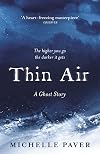
Atmosphere: perfect. Pacing: steady. Brain cells: dwindling.
Thin Air is a slow-burn psychological chokehold wrapped in Himalayan ice. It’s classic Paver: meticulous landscape, quiet dread, and characters who think they’re rational right up until the altitude strips their minds bare.
The ascent is where this book shines.
Stephen, our doctor-protagonist, unravels in that terrifyingly believable way hypoxia actually works — one decision at a time, each just wrong enough to make you want to show more yell at the page. His fear of Ward becomes obsession, and his obsession becomes hallucination. Whether you believe there’s a ghost or not, the creeping loss of judgment feels real, earned, and scarily human.
I loved the way the environment becomes the antagonist. The mountain doesn’t care about ghosts; it’s busy choking the oxygen out of everyone’s reasoning. Paver absolutely nails that “your body is the haunting” feeling.
Where the book falters is the ending. After such a long, careful descent into madness, the actual descent off the mountain is shockingly fast. Kit’s fate barely lands. Stephen comes home with the emotional depth of someone returning from a disappointing cruise, not a man who’s lost toes, a brother, and maybe his mind. The tone shifts so abruptly that it feels either intentionally liminal… or simply rushed.
I found myself reading the final chapter as a kind of limbo — a dreamlike “return” that might not even be real. The mist, the strangely flat behavior, the emotional detachment… it almost reads like Stephen never made it down at all. That interpretation actually enhances the novel, but I’m not convinced it was deliberate.
Still: the journey is so strong, so atmospheric, so psychologically convincing that the ending can wobble without sinking the whole book.
This is a quiet, icy ghost story where the real haunting is the human mind under pressure.
Highly recommended — especially if you enjoy the horror of altitude, guilt, and one man’s very alarming commitment to bad decisions. show less
Thin Air is a slow-burn psychological chokehold wrapped in Himalayan ice. It’s classic Paver: meticulous landscape, quiet dread, and characters who think they’re rational right up until the altitude strips their minds bare.
The ascent is where this book shines.
Stephen, our doctor-protagonist, unravels in that terrifyingly believable way hypoxia actually works — one decision at a time, each just wrong enough to make you want to show more yell at the page. His fear of Ward becomes obsession, and his obsession becomes hallucination. Whether you believe there’s a ghost or not, the creeping loss of judgment feels real, earned, and scarily human.
I loved the way the environment becomes the antagonist. The mountain doesn’t care about ghosts; it’s busy choking the oxygen out of everyone’s reasoning. Paver absolutely nails that “your body is the haunting” feeling.
Where the book falters is the ending. After such a long, careful descent into madness, the actual descent off the mountain is shockingly fast. Kit’s fate barely lands. Stephen comes home with the emotional depth of someone returning from a disappointing cruise, not a man who’s lost toes, a brother, and maybe his mind. The tone shifts so abruptly that it feels either intentionally liminal… or simply rushed.
I found myself reading the final chapter as a kind of limbo — a dreamlike “return” that might not even be real. The mist, the strangely flat behavior, the emotional detachment… it almost reads like Stephen never made it down at all. That interpretation actually enhances the novel, but I’m not convinced it was deliberate.
Still: the journey is so strong, so atmospheric, so psychologically convincing that the ending can wobble without sinking the whole book.
This is a quiet, icy ghost story where the real haunting is the human mind under pressure.
Highly recommended — especially if you enjoy the horror of altitude, guilt, and one man’s very alarming commitment to bad decisions. show less
Lists
Best Audiobooks (1)
Sense of place (1)
Arctic novels (1)
Winter Books (1)
LGBTQIA Horror (1)
100 Hemskaste (1)
Same Title (1)
Ghosts (2)
ScaredyKIT 2018 (1)
Female Author (1)
ScaredyKIT 2020 (1)
Five star books (1)
Awards


You May Also Like


Associated Authors
Statistics
- Works
- 63
- Also by
- 7
- Members
- 10,788
- Popularity
- #2,199
- Rating
- 4.0
- Reviews
- 281
- ISBNs
- 522
- Languages
- 19
- Favorited
- 14