
Den Patrick
Author of The Boy with the Porcelain Blade (The Erebus Sequence)
Series
Works by Den Patrick
People, Places and Things 1 copy
Associated Works
Looking Landwards: Stories Commemorating the 75th Anniversary of the Institution of Agricultural Engineers (2013) — Contributor — 6 copies
Tagged
Common Knowledge
- Birthdate
- 1975-11-08
- Gender
- male
- Occupations
- comics editor
bookseller - Agent
- Juliet Mushens (The Agency Group)
Julie Crisp - Nationality
- UK
- Birthplace
- Dorset, UK
- Places of residence
- London, UK
- Associated Place (for map)
- UK
Members
Reviews

Now what to call this one? Most of the action takes place in a castle, like 95% of the book (makes me think of Mervyn Peake). There is somewhat of a Gothic Darkness over the whole castles area. A king who no one sees and who seems to be immortal. People going missing and of course the Orfanos. The king has ordered that they should be treated well so they are all in "school". Some of these Orfanos are very deformed while some like Lucien got lucky, he has no ears, but it ends there. They, the show more nobles, and everyone really have their own intrigues and lots of backstabbing going on here.
The whole fantasy feel is also different. The world is Italian of a sort, but then some names and myths are mentioned. It made me think that a bunch if Italians got on a ship and got ship wrecked on a mythical island. And there they are stuck, for all time and we can't find them. And island of their own horror.
The book is told through flashbacks of his life growing up and the tests he had to take. And present time when he gets into trouble. The end is open in a way, it has a conclusion for him, but I do wonder about what happens next.
I liked it. At first I was not sure about the flashbacks cos I really wanted to know what would happen to Lucien, and not see what happened before. I do hate waiting. Which all meant I could not put it down. show less
The whole fantasy feel is also different. The world is Italian of a sort, but then some names and myths are mentioned. It made me think that a bunch if Italians got on a ship and got ship wrecked on a mythical island. And there they are stuck, for all time and we can't find them. And island of their own horror.
The book is told through flashbacks of his life growing up and the tests he had to take. And present time when he gets into trouble. The end is open in a way, it has a conclusion for him, but I do wonder about what happens next.
I liked it. At first I was not sure about the flashbacks cos I really wanted to know what would happen to Lucien, and not see what happened before. I do hate waiting. Which all meant I could not put it down. show less
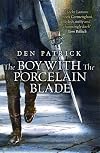
**I am grateful for Nudge for supplying me with a free copy in exchange for a review. I was reading an uncorrected manuscript proof, so some parts of the review might not be applicable to the published book.**
In the four Houses inhabiting the fortress of Demesne, Lucien de Fontein is the titular boy with the porcelain blade, and, as one of the Orfano, an outcast growing up under the king’s protection; forbidden to wear metal until his eighteenth birthday, he has to make do with a ceramic show more blade. Commonly branded as witchlings and feared by the people, all Orfano share a deformity of some kind; in Lucien’s case, he is missing his ears, and his blood is colourless, turning to a pale blue. The king’s protection ensures that Lucien is given privileges otherwise only afforded the nobility, but he has few friends, growing up lonely, regularly subjected to taunts. One night he witnesses the abduction of a young woman, and he realises that there is a dark power at play, one that revolves around the figure of the secluded king, rumoured to be insane, and his representative in Demesne, the Majordomo.
Den Patrick’s debut novel is situated in an unknown location, on an island called Landfall. The world he builds is convincing: the forbidding fortress of Demesne and the tower of the sanataria, the cemetery and the fields and estates nearby; it’s just a shame that we don’t see much else of Landfall, as nearly all the action takes place inside Demesne. Where he excels, however, is in creating the characters that inhabit the fortress and the ties that bind them to each other, as well as in depicting the ruthless ambition, plotting, intrigue and manipulation that all the characters, but especially the Orfano, are subject to; saying that, I have to clarify that the love story around Lucien did not convince me, and I regarded it as more of a distraction from the plot. There is a fairly large cast of characters, but the author has helpfully supplied a Who is Who at the beginning, and I did have to refer to it several times, especially in the early chapters. The narration alternates between the present and Lucien’s past, with the narrative thread set in the past slowly catching up to the present day, so that some of the actions and motivations in the present gradually become clearer as more of the past is revealed. This device makes for some tense cliffhangers, but it also makes the whole appear quite disjointed, and occasionally I had to leaf back to previous pages to remind myself of a particular development. Lucien’s confrontations with the Majordomo and the king have a certain nightmarish quality about them and are not for the faint-hearted, but the ending is too tidy in my opinion, with (nearly) everything neatly tied up; with this being the first in the Erebus Sequence, where will the sources of conflict and tension necessary for a good drama come from? Yet it also leaves a few pressing questions and intriguing possibilities open, and I guess we just have to wait and see what Den Patrick will pull out of his hat in the next sequel. I’ll certainly be there. show less
In the four Houses inhabiting the fortress of Demesne, Lucien de Fontein is the titular boy with the porcelain blade, and, as one of the Orfano, an outcast growing up under the king’s protection; forbidden to wear metal until his eighteenth birthday, he has to make do with a ceramic show more blade. Commonly branded as witchlings and feared by the people, all Orfano share a deformity of some kind; in Lucien’s case, he is missing his ears, and his blood is colourless, turning to a pale blue. The king’s protection ensures that Lucien is given privileges otherwise only afforded the nobility, but he has few friends, growing up lonely, regularly subjected to taunts. One night he witnesses the abduction of a young woman, and he realises that there is a dark power at play, one that revolves around the figure of the secluded king, rumoured to be insane, and his representative in Demesne, the Majordomo.
Den Patrick’s debut novel is situated in an unknown location, on an island called Landfall. The world he builds is convincing: the forbidding fortress of Demesne and the tower of the sanataria, the cemetery and the fields and estates nearby; it’s just a shame that we don’t see much else of Landfall, as nearly all the action takes place inside Demesne. Where he excels, however, is in creating the characters that inhabit the fortress and the ties that bind them to each other, as well as in depicting the ruthless ambition, plotting, intrigue and manipulation that all the characters, but especially the Orfano, are subject to; saying that, I have to clarify that the love story around Lucien did not convince me, and I regarded it as more of a distraction from the plot. There is a fairly large cast of characters, but the author has helpfully supplied a Who is Who at the beginning, and I did have to refer to it several times, especially in the early chapters. The narration alternates between the present and Lucien’s past, with the narrative thread set in the past slowly catching up to the present day, so that some of the actions and motivations in the present gradually become clearer as more of the past is revealed. This device makes for some tense cliffhangers, but it also makes the whole appear quite disjointed, and occasionally I had to leaf back to previous pages to remind myself of a particular development. Lucien’s confrontations with the Majordomo and the king have a certain nightmarish quality about them and are not for the faint-hearted, but the ending is too tidy in my opinion, with (nearly) everything neatly tied up; with this being the first in the Erebus Sequence, where will the sources of conflict and tension necessary for a good drama come from? Yet it also leaves a few pressing questions and intriguing possibilities open, and I guess we just have to wait and see what Den Patrick will pull out of his hat in the next sequel. I’ll certainly be there. show less
I was intrigued by this book's cover, title and cover blurb referencing Peake's Gormenghast series. I can see why that has been invoked given this book's setting of a rambling structure in which strange noble families live, presided over by a mad and reclusive king. It doesn't reach the literary heights of Peake's prose or conjure quite such unforgettable characters, but I nevertheless found it enjoyable.
The story follows the development of Lucien, one of the Orfano, mutants who appear at show more odd intervals seemingly from nowhere, are fostered by one of the noble families and have to survive 'testing' in order to apply for official adoption into one of the families at age 16. Although the rules are a bit unclear - Lucien's testing as a sword fighter goes on till age 18 and imperils his survival, and nothing was revealed of any equivalent for the female Orfano. Lucien's particular difference turns out to be minor compared to some of his compatriots, although it causes him embarrassment and loneliness - he has no external ears. Lucien has enemies among the nobility and one of the Orfano works for his chief adversary so it is difficult for him to trust anyone apart from his nanny and maidservant Rafaela.
Interestingly there is a definite Italian flavour to the names and some of the language and that, together with references to the island on which they all live being named Landfall and the apparent cryogenic sleep from which the passengers had to be awakened centuries earlier when their ships were wrecked there made me wonder if this was science fantasy - perhaps the inhabitants are descendants from colony spaceships. A main plot point certainly concerns the misuse of genetic engineering.
It is sometimes a little hard to keep the time line in mind because the book switches time between chapters, with every other chapter being set in the present and those inbetween showing what has happened throughout his childhood and adolescence to lead up to the current crisis.
The book features some graphic accounts of violence and conjurings of the increasingly revolting physical condition of the Majordomo, the King's mouthpiece, who sometimes appears to be on Lucien's side, though this is a misleading impression. At one point something happened which derailed my enjoyment of the story, but this was then mitigated later on: there are some rollercoaster moments. The only thing that held it back from a full 5 stars was the occasional confusion as to what had happened prior to the present and what Lucien should therefore have already known in the earlier present-time chapters so this is a book that might benefit from a re-reading. I have had to return it to the library; otherwise, it would have been a keeper, which is rare these days. show less
The story follows the development of Lucien, one of the Orfano, mutants who appear at show more odd intervals seemingly from nowhere, are fostered by one of the noble families and have to survive 'testing' in order to apply for official adoption into one of the families at age 16. Although the rules are a bit unclear - Lucien's testing as a sword fighter goes on till age 18 and imperils his survival, and nothing was revealed of any equivalent for the female Orfano. Lucien's particular difference turns out to be minor compared to some of his compatriots, although it causes him embarrassment and loneliness - he has no external ears. Lucien has enemies among the nobility and one of the Orfano works for his chief adversary so it is difficult for him to trust anyone apart from his nanny and maidservant Rafaela.
Interestingly there is a definite Italian flavour to the names and some of the language and that, together with references to the island on which they all live being named Landfall and the apparent cryogenic sleep from which the passengers had to be awakened centuries earlier when their ships were wrecked there made me wonder if this was science fantasy - perhaps the inhabitants are descendants from colony spaceships. A main plot point certainly concerns the misuse of genetic engineering.
It is sometimes a little hard to keep the time line in mind because the book switches time between chapters, with every other chapter being set in the present and those inbetween showing what has happened throughout his childhood and adolescence to lead up to the current crisis.
The book features some graphic accounts of violence and conjurings of the increasingly revolting physical condition of the Majordomo, the King's mouthpiece, who sometimes appears to be on Lucien's side, though this is a misleading impression. At one point something happened which derailed my enjoyment of the story, but this was then mitigated later on: there are some rollercoaster moments. The only thing that held it back from a full 5 stars was the occasional confusion as to what had happened prior to the present and what Lucien should therefore have already known in the earlier present-time chapters so this is a book that might benefit from a re-reading. I have had to return it to the library; otherwise, it would have been a keeper, which is rare these days. show less
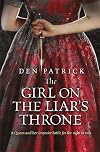
The concluding volume of the trilogy switches to the viewpoints of two women: Anea, half-sister of Lucien and Dino, the focal characters of the first two books, and Eris, a girl from a humble background who has taken on the role of Anea, the Silent Queen, as part of a secret coup d'état. As seen in book two, Anea had been so caught up in working on the late King's machines, with the help of her mentor, Vimyre, that she had been easy to replace.
As the story begins, Anea is imprisoned in the show more oubliette below one of the palaces of Demesne, a place where to drink the waters is to lose your memory, as in the Greek myth concerning the waters of Lethe, drunk by the dead. But help from a sympathetic guard, plus her own courage, leads her to find a way out and eventually to recruit allies to resist the controlling powers. Meanwhile, Eris is alternately bored, afraid and angry in her role of posing as Anea, which she has done in the mistaken belief that her brother would receive urgent medical attention. She hates and fears both the Domina, Anea's former friend Russo and now Eris' immediate superior, and their shadowy master, Erebus. He is the ultimate puppet master who seeks to manipulate events to bring about war in Landfall and thereby overthrow the rule of true humans in favour of the genetically modified underkin produced by the late King - a class which Anea and her two half-brothers had been elevated from to become privileged experiments.
I didn't enjoy this volume as much as the preceding two. Part of the reason was an extended gap between finishing the second book and starting this, so I had forgotten who quite a few of the more minor characters were, and found it difficult to keep straight the various noble Houses. There was enough dropped into the story to eventually enable me to recall some of the previous events, but I also missed my favourite character from the first two novels.I did wonder about a certain person in this book, and the revelation made about him was a slight anti-climax, plus given the changes in that character it was not really the same as having him back. I also found his survival rather cliched and unconvincing. However the concluding part was a bravura climax of sword play, pursuit through the dark and twisting corridors of Demesne, a mixing together of the parallel stories of Anea and Eris, and elements of horror. Plus there was more of the science fictional and technological backstory, which was intriguing, and I love the Renaissance Italian flavour of this series. Ultimately the conclusion was satisfying, although there were one or two plot elements that did not go anywhere such as the attempt by Anea's group to subvert the Myrmidons, the mutant guards who were instrumental in Erebus' plot . On balance therefore, I am rating this as a 3-star read. show less
As the story begins, Anea is imprisoned in the show more oubliette below one of the palaces of Demesne, a place where to drink the waters is to lose your memory, as in the Greek myth concerning the waters of Lethe, drunk by the dead. But help from a sympathetic guard, plus her own courage, leads her to find a way out and eventually to recruit allies to resist the controlling powers. Meanwhile, Eris is alternately bored, afraid and angry in her role of posing as Anea, which she has done in the mistaken belief that her brother would receive urgent medical attention. She hates and fears both the Domina, Anea's former friend Russo and now Eris' immediate superior, and their shadowy master, Erebus. He is the ultimate puppet master who seeks to manipulate events to bring about war in Landfall and thereby overthrow the rule of true humans in favour of the genetically modified underkin produced by the late King - a class which Anea and her two half-brothers had been elevated from to become privileged experiments.
I didn't enjoy this volume as much as the preceding two. Part of the reason was an extended gap between finishing the second book and starting this, so I had forgotten who quite a few of the more minor characters were, and found it difficult to keep straight the various noble Houses. There was enough dropped into the story to eventually enable me to recall some of the previous events, but I also missed my favourite character from the first two novels.
Lists
You May Also Like


Associated Authors
Statistics
- Works
- 12
- Also by
- 8
- Members
- 361
- Popularity
- #66,479
- Rating
- 3.5
- Reviews
- 9
- ISBNs
- 33
- Languages
- 2