
Jen Williams (1)
Author of The Ninth Rain
For other authors named Jen Williams, see the disambiguation page.
Series
Works by Jen Williams
Associated Works
Tagged
Common Knowledge
- Legal name
- Williams, Jennifer
- Gender
- female
- Occupations
- Buchhändlerin, freiberufliche Redakteurin
- Agent
- Juliet Mushens
- Short biography
- Jen Williams lebt mit ihrem Partner und einer unmöglichen Katze im Südwesten von London. Schon als Kind war sie fasziniert von Drachen, Hexen und gruseligen Märchen. Für ihre Bücher im Fantasy-Bereich wurde sie mehrfach ausgezeichnet. Wenn sie keine Bücher oder Beiträge für Magazine schreibt, arbeitet sie als Buchhändlerin und freiberufliche Redakteurin.
- Nationality
- England
- Places of residence
- London, England, UK
- Associated Place (for map)
- England, UK
Members
Reviews

I read the first book in this trilogy earlier this year, and only did so because some friends were extremely effusive with their praise of it… I mean, I’m not a fan of heroic fantasy, although I’ve read a lot of it in the past, and I’m pretty sure there’s very little overlap between my taste in genre fiction and that of the one friend who praised these books the most… But I’m happy to read outside my comfort zone because how else would I discover new authors to like and admire? show more While bits of the first book, The Ninth Rain, didn’t entirely work for me, I do like fantasy worlds that are couched as science-fictional – and vice versa, of course – so there were definitely things to appreciate there. Enough, at least, to read the second book. Which is, I think, better than the first. And middle books of trilogies generally are not that. It’s better because it introduces a mystery in one of its narratives, gives it a satisfying conclusion, and also uses it to reveal some deeper background about the world. On the other hand… there was something about the writing style which didn’t quite click with me. It wasn’t until a chat at a con with the aforementioned friend where she mentioned “cock-blocking” and quoted a particular line from The Bitter Twins that I figured out what it was about the prose that was giving me trouble: it was written like fan fiction. The author was having far too much fun with their characters, to the extent that “having fun with characters” was driving the story rather than the plot. I’m not saying this is a bad thing. That friend? She’s a big fan of fan fiction, so it’s an approach and style of narrative that appeals to her. I don’t have that background – she had to explain what “cock-blocking” was to me – and I prefer my narrative voice distanced (see pretty much every Reading diary post on this blog). Despite that, the world-building in this trilogy remains very good – in many respects, it reminds me of Jemisin’s award-winning Broken Earth trilogy – and while the good guys tend to be a bit too good to be true at times, the villains of the piece are interesting. Worth a go. show less
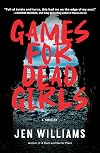
In the vein of Frankenstein and Dr. Jeckel and Mr. Hyde, comes Games For Dead Girls. The story of what horrors, humans, even children, can create but are unable to send back. Supernatural powers are hidden within the caves of southern England and within the psyches of these adolescent girls. Charlie was at the center of a horrific crime as a child. As an adult, she lives under a new identity. When a teenage girl, Cheryl, goes missing decades later in the same seaside town, Charlie returns to show more the scene of the long-ago violence. Feeling compelled to put her shocking memories to rest by helping to find Cheryl but anxious to avoid recognition, Charlie poses as a folklore researcher and begins collecting information about Cheryl and other missing girls. The novel’s grim setting is a caravan park on the coast where a warren of caves served as hiding spots for pirates and smugglers for centuries. As one person notes, "the caves are a liminal space, neither part of the sea or the land; anything can happen there". The secrets buried in the caves contributes to the feel of the caravan park as a vortex where people go missing. Alternating between time periods, the book revolves around the park. In chapters designated “1988,” Charlie is on holiday with her large extended family during the heyday of the park. At that time, Charlie is a typical kid except for her obsession with gruesome horror stories. By raising the stakes again and again in one of her imaginary games she unknowingly has built suspense across multiple timelines, until the stakes get higher than anyone, including Charlie, could ever have imagined. The story moves quickly across a fractured landscape, with surprising twists revealing one unexpected connection after another. As the smaller mysteries are resolved, this complex thriller pulls the alternating time frames together in a surprising and very satisfying resolution. If you love horror stories...you will eat this one up...if it doesn't get you first. show less
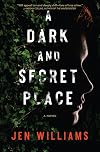
Hesitated writing this review. Firstly and what stuck in my mind the most about this book was, the animal abuse. Dont get me wrong I've read plenty of these types of novels, but this just totally caught me off guard by how casual it's slipped in. It took me out of the story awhile which isnt a good thing. BUT it does fit in with the character/situation. It's one of those novels that you find unsettling, and dont want to like due to the content. This also puts forth the author can write well, show more to illicit those emotions from the reader. I liked the characters, I enjoyed that they all had flaws and having the daughter see her mother was not the same person she viewed her to be. Very much one of those "not happy ending" type books but the journey you go on to find the ending out is worth it. show less
 This review was written for LibraryThing Early Reviewers.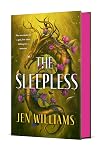
Elver lives in a forest of monsters, known as jih. She's acted as their guardian ever since she was saved by death from a god who turned her skin poison.
Artair is a monk whose mission brings him face to face with Elver, but he carries a dark secret. He's one of the sleepless cursed to share his body with an evil spirit when he sleeps, and the spirit, Lucian, is clamoring for more control.
When fellow monks of Artair's order are taken hostage by a mage, Artair and Elver are pulled into show more fulfilling a task for that mage and, along the way, act as pawns for the gods, but it's a risk they're willing to take to see the monks' safe return.
This book was a total surprise to me. It grabbed me from page one and I was invested. What got me most? This idea of monsters, which of course pairs well with the upcoming Frankenstein movie adaptation. Elver and jih are considered monsters and things to be feared. Artair considers Lucian to be a monster. But what we tended to find was that the monsters were those striving for power that they didn't have. In the course of trying to obtain that power, they in turn commit monstrous acts therefore really becoming that which they condemn.
I loved the Elver/Artair/Lucian dynamic. They each find themselves forced into a situation where they are kind of in opposition, but soon find a tentative trust. Elver especially is a particularly interesting heroine. Sacrificed to a god but saved by a different god with whom she now owes for her "un"life. At first she is afraid to leave the jih forest where she lives with all the monsters. When she does, she realizes the wider world might actually be accepting of her, and she needn't necessarily keep herself hidden away from all human contact. Seeing her as a kind-hearted person despite her circumstances was a nice change from the typical heroines who use their angst and cold-heartedness as a shield. Don't get me wrong, Elver has plenty of shields, but her vulnerability and empathy are closer to the surface.
The book goes along at a good clip, never slowing down too much in one spot or another and full of enough action to be exciting. I liken the story as though I'm literally watching Elver and Artair traverse a map. As they go we learn about the different towns and cities in this world and the various gods and the influence they bring. It's also very clear that there are major flaws in the belief system and I look forward to hopefully seeing some of those challenged in the next book.
Overall, I think any time a book surprises and exceeds expectations is a great thing. The downfall of reading so much is that true surprises are few and far between despite enjoying a book immensely. I did not see The Sleepless coming and did not anticipate how the book would grab be and not let me go until the final pages, and even then I'm clamoring for the conclusion to this duology. show less
Artair is a monk whose mission brings him face to face with Elver, but he carries a dark secret. He's one of the sleepless cursed to share his body with an evil spirit when he sleeps, and the spirit, Lucian, is clamoring for more control.
When fellow monks of Artair's order are taken hostage by a mage, Artair and Elver are pulled into show more fulfilling a task for that mage and, along the way, act as pawns for the gods, but it's a risk they're willing to take to see the monks' safe return.
This book was a total surprise to me. It grabbed me from page one and I was invested. What got me most? This idea of monsters, which of course pairs well with the upcoming Frankenstein movie adaptation. Elver and jih are considered monsters and things to be feared. Artair considers Lucian to be a monster. But what we tended to find was that the monsters were those striving for power that they didn't have. In the course of trying to obtain that power, they in turn commit monstrous acts therefore really becoming that which they condemn.
I loved the Elver/Artair/Lucian dynamic. They each find themselves forced into a situation where they are kind of in opposition, but soon find a tentative trust. Elver especially is a particularly interesting heroine. Sacrificed to a god but saved by a different god with whom she now owes for her "un"life. At first she is afraid to leave the jih forest where she lives with all the monsters. When she does, she realizes the wider world might actually be accepting of her, and she needn't necessarily keep herself hidden away from all human contact. Seeing her as a kind-hearted person despite her circumstances was a nice change from the typical heroines who use their angst and cold-heartedness as a shield. Don't get me wrong, Elver has plenty of shields, but her vulnerability and empathy are closer to the surface.
The book goes along at a good clip, never slowing down too much in one spot or another and full of enough action to be exciting. I liken the story as though I'm literally watching Elver and Artair traverse a map. As they go we learn about the different towns and cities in this world and the various gods and the influence they bring. It's also very clear that there are major flaws in the belief system and I look forward to hopefully seeing some of those challenged in the next book.
Overall, I think any time a book surprises and exceeds expectations is a great thing. The downfall of reading so much is that true surprises are few and far between despite enjoying a book immensely. I did not see The Sleepless coming and did not anticipate how the book would grab be and not let me go until the final pages, and even then I'm clamoring for the conclusion to this duology. show less
Lists
Awards


You May Also Like


Associated Authors
Statistics
- Works
- 20
- Also by
- 4
- Members
- 2,490
- Popularity
- #10,300
- Rating
- 3.7
- Reviews
- 101
- ISBNs
- 95
- Languages
- 3
