
Steven Rinella
Author of American Buffalo: In Search of a Lost Icon
About the Author
Steven Rinella is an outdoorsman, writer, wild-foods enthusiast, and television and podcast host who is a passionate advocate for conservation and the protection of public lands. The host of the MeatEater podcast and Netflix original series, he is also the author of The MeatEater Fish and Game show more Cookbook: Recipes and Techniques for Every Hunter and Angler; two volumes of The Complete Guide to Hunting, Butchering, and Cooking Wild Game; Meat Eater: Adventures from the Life of an American Hunter; American Buffalo: In Search of a Lost Icon; and The Scavenger's Guide to Haute Cuisine. show less
Image credit: Courtesy of the author
Works by Steven Rinella
The Complete Guide to Hunting, Butchering, and Cooking Wild Game: Volume 1: Big Game (2015) 166 copies, 2 reviews
The MeatEater Fish and Game Cookbook: Recipes and Techniques for Every Hunter and Angler (2018) 144 copies, 1 review
Outdoor Kids in an Inside World: Getting Your Family Out of the House and Radically Engaged with Nature (2022) 139 copies, 2 reviews
The Complete Guide to Hunting, Butchering, and Cooking Wild Game: Volume 2: Small Game and Fowl (2015) 113 copies
Catch a Crayfish, Count the Stars: Fun Projects, Skills, and Adventures for Outdoor Kids (2023) 52 copies
The MeatEater Outdoor Cookbook: Wild Game Recipes for the Grill, Smoker, Campstove, and Campfire (2024) 13 copies
Associated Works
Tagged
Common Knowledge
- Birthdate
- 1974-02-13
- Gender
- male
- Education
- Grand Valley State University (BA)
University of Montana (MFA) - Occupations
- journalist
writer
outdoorsman
hunter
chef - Agent
- Marc Gerald (The Agency Group)
- Short biography
- Steven Rinella is the author of The Scavenger's Guide to Haute Cuisine and the forthcoming American Buffalo: In Search of a Lost Icon. He's a correspondent for Outside magazine, where he's been a frequent contributor since 2000. His writing has appeared in many other publications as well, including the New York Times, the New Yorker, Salon.com, Mens Journal, Field and Stream, the Week, American Heritage, Bowhunter, Flyfisherman and Nerve.com, and the anthologies Best American Travel Writing and Best Food Writing. A native of Twin Lake, Michigan, he currently splits his time between New York City and Alaska.
- Nationality
- USA
- Birthplace
- Twin Lake, Michigan, USA
- Places of residence
- New York, New York, USA
Alaska, USA - Associated Place (for map)
- USA
Members
Reviews
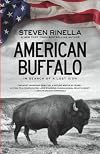
[American Buffalo] was a hard read, not because it was poorly written but because of some of the events detailed. Rinella does a wonderful job of highlighting the buffalo's history, much of it little known. But, in addition to chef, he's also a hunter, and the premise of the book centers on his attempt to bring one of these great beasts down so that he can slaughter and eat it. I'm not a hunter, don't truck with hunters - not on the level of needing to have a philosophical argument with the show more group. But it was hard to read how enamored he was of the buffalo when he kept bringing the story back to his hunt (which was 100% legal, by the way). Honestly, I skipped over the parts of the book when he succeeds and begins to field dress a buffalo, thinking at that point I didn't even want to finish the books. But he redeems the narrative, not because he has a change of heart - though he does - but because he honestly worked through what he'd done and how it affected him. So, I don't know that I'd 'recommend' the book for just anyone, but I ended up finishing and keeping the book. show less
A fascinating story, integrating the history of American bison with Rinella's Alaska buffalo hunting expedition. Of course, there's a challenge: "How can I claim to love the very thing that I worked so hard to kill?" and the same conflict arises in the broader history: "At once it is a symbol of the tenacity of wilderness and the destruction of wilderness; it's a symbol of Native American culture and the death of Native American culture; it's a symbol of the strength and vitality of America show more and the pettiness and greed of America; it represents a frontier both forgotten and remembered; it stands for freedom and captivity, extinction and salvation."
I learned a lot about the buffalo, and enjoyed Rinella's careful and detailed story of his own trip. Yes, there is a fair bit of pushing through brambles, so it can be a slow burn, but that adds to the atmosphere. Rinella also alternates ably between his story and historical anecdotes, and the balance works.
There's also a great first sentence:
> In the past week I've become something of a buffalo chip connoisseur.
> The Indians' rush to get horses and hunt buffalo on the Great Plains was like a slow-motion version of the westward exodus that accompanied the California gold rush of 1849. Many of the tribes that we now think of as dominant Great Plains buffalo hunters—the Crow, Blackfoot, Sioux, Pawnee, Kiowa, Comanche—were either weak, small tribes before the horse or part-time horticulturalists. The horse made them extremely powerful
> When the Lewis and Clark expedition was traveling up the Missouri River in 1805, they found a hundred rotting buffalo carcasses left over in a place where Indians had made a large kill. "We saw a great many wolves in the neighborhood of these mangled carcasses," wrote Lewis. The wolves were so overstuffed that Captain Clark walked up to one and killed it with his spontoon, a sort of walking staff tipped with a blade.
> One could make a cogent argument that the widespread advent of buffalo jumps marked the beginning of the end for buffalo.
> Once the railroad made it to Miles City, Montana, in 1881, word spread that the core of the last great herd had been tapped. Hide dealers calculated that 500,000 buffalo ranged within 150 miles of town. Soon there were five thousand hide hunters killing the animals. A herd that was estimated at seventy-five thousand head crossed the Yellowstone River three miles outside of Miles City, moving north as a great mass. Hunters stayed with the buffalo like sheepdogs, pushing them along. Accounts vary, but anywhere from zero to five thousand buffalo were all that was left by the time the herd reached Canada.
> The Santa Fe was greeted outside Granada, Colorado, with a mound of bones that was ten feet by twenty feet and a half mile long. Railroads would build spurs from the main line just for the sake of collecting stacks of buffalo bones.
> They also sell a lot of bone ash to movie production companies that want to replicate oil spills. Mixed with vegetable oil, bone ash makes a biodegradable dead ringer for Texas tea. If you've seen The Beverly Hillbillies, Die Hard 3, Men in Black, Fear and Loathing in Las Vegas, or Jarhead, you've seen the contemporary products of a company that once produced about 650 tons of buffalo bone ash every year.
> There are, in fact, two classifications of North American buffalo that are recognized (by some) today: there's the wood buffalo of the Canadian boreal forests, and the plains buffalo of the Great Plains. The animals are separated by some minor variations; most notably, the hump of the wood buffalo is squarer in profile, and the wood buffalo's hair is longer, darker, and straighter. Taxonomists once described the wood buffalo as a separate species altogether, with its own name. While the plains buffalo was Bison bison, the wood buffalo was Bison athabascae. However, modern genetic research has revealed essentially no difference between the two. show less
I learned a lot about the buffalo, and enjoyed Rinella's careful and detailed story of his own trip. Yes, there is a fair bit of pushing through brambles, so it can be a slow burn, but that adds to the atmosphere. Rinella also alternates ably between his story and historical anecdotes, and the balance works.
There's also a great first sentence:
> In the past week I've become something of a buffalo chip connoisseur.
> The Indians' rush to get horses and hunt buffalo on the Great Plains was like a slow-motion version of the westward exodus that accompanied the California gold rush of 1849. Many of the tribes that we now think of as dominant Great Plains buffalo hunters—the Crow, Blackfoot, Sioux, Pawnee, Kiowa, Comanche—were either weak, small tribes before the horse or part-time horticulturalists. The horse made them extremely powerful
> When the Lewis and Clark expedition was traveling up the Missouri River in 1805, they found a hundred rotting buffalo carcasses left over in a place where Indians had made a large kill. "We saw a great many wolves in the neighborhood of these mangled carcasses," wrote Lewis. The wolves were so overstuffed that Captain Clark walked up to one and killed it with his spontoon, a sort of walking staff tipped with a blade.
> One could make a cogent argument that the widespread advent of buffalo jumps marked the beginning of the end for buffalo.
> Once the railroad made it to Miles City, Montana, in 1881, word spread that the core of the last great herd had been tapped. Hide dealers calculated that 500,000 buffalo ranged within 150 miles of town. Soon there were five thousand hide hunters killing the animals. A herd that was estimated at seventy-five thousand head crossed the Yellowstone River three miles outside of Miles City, moving north as a great mass. Hunters stayed with the buffalo like sheepdogs, pushing them along. Accounts vary, but anywhere from zero to five thousand buffalo were all that was left by the time the herd reached Canada.
> The Santa Fe was greeted outside Granada, Colorado, with a mound of bones that was ten feet by twenty feet and a half mile long. Railroads would build spurs from the main line just for the sake of collecting stacks of buffalo bones.
> They also sell a lot of bone ash to movie production companies that want to replicate oil spills. Mixed with vegetable oil, bone ash makes a biodegradable dead ringer for Texas tea. If you've seen The Beverly Hillbillies, Die Hard 3, Men in Black, Fear and Loathing in Las Vegas, or Jarhead, you've seen the contemporary products of a company that once produced about 650 tons of buffalo bone ash every year.
> There are, in fact, two classifications of North American buffalo that are recognized (by some) today: there's the wood buffalo of the Canadian boreal forests, and the plains buffalo of the Great Plains. The animals are separated by some minor variations; most notably, the hump of the wood buffalo is squarer in profile, and the wood buffalo's hair is longer, darker, and straighter. Taxonomists once described the wood buffalo as a separate species altogether, with its own name. While the plains buffalo was Bison bison, the wood buffalo was Bison athabascae. However, modern genetic research has revealed essentially no difference between the two. show less
The MeatEater Fish and Game Cookbook: Recipes and Techniques for Every Hunter and Angler by Steven Rinella
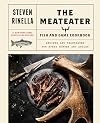
Disclosure: I received a free copy of this book from the publisher in exchange for an honest review. I have no idea who Steven Rinella is and I'm 100% unfamiliar with his Netflix series, podcast, books, etc. (I still wouldn't be had it not been literally the first sentence of the book jacket blurb.)
I was really, really impressed with this cookbook. Like, more than I thought I could ever be impressed by a cook book.
-The pictures, both of the food but other illustrations and graphics, are show more absolutely gorgeous.
-The recipes are well-formatted and the instructions are well-written.
-The food is delicious.
I know, the above points should be a given, but I've seen plenty of cook books fall short of this!
-It has the right balance of recipes to anecdotes. I don't mind some personal stories with recipes - provided they aren't Beowulfian sagas completely unrelated to the recipe. Food is personal and social and we shouldn't forget that. The stories here were always directly related, brief, and told well.
-The tone is professional, ethical, and informative. I have to admit: I am no hunter. I do shoot a recurve bow, but I don't hunt. From my experiences at the range, I was a bit apprehensive going into this, fearing it would be written with a certain "boys' club" tone, a macho attitude, an unabashed love for violence and death. Dare I say it? I feared it would be filled with toxic masculinity. Instead, I was pleasantly surprised. Rinella speaks with respect towards the animals and emphasizes how important it is to not be wasteful. Rinella speaks with respect towards the reader. Rinella speaks with respect towards the environment, towards other hunters and cooks.
-Its incredibly informative in butchering and other prep that you might not see in other cookbooks. I definitely learned some new things reading this. Ditto for meat - I had no idea sea cucumber could be good eating!
-It has a wide swath of recipes covering different kinds of meat and different kinds of preparation. Really, that is perhaps my only criticism: unlike most other cookbooks, I think one would be hard-pressed to cook their way through the whole thing. How fortunate I am to have the excellent butcher and fishmonger nearby.
That also made the book hard to review, since I couldn't make 5-7 dishes from it in a week or two. I'm going to work my way through it as best I can over the next few months, updating as I go:
1/14: Made the fried smelt. I had never had smelt of any kind before, but these came out delightfully crispy. Made a simple sriracha-mayo dip for them.
2/5: Made the salmon gravlax with jalapenos, cumin, cilantro, and tequila. Instructions were easy to follow, and it was fucking spectacular. I've made gravlax before, but this was the best gravlax I've ever had, with the most balanced flavor. My only change would be using a gallon Ziploc bag over plastic wrap if you can.
2/14: Made the grilled marinated duck hearts with grilled grapes. Had to substitute chicken hearts. Surprisingly quick and easy, marinade really came through. It was easy to overpower the meat with the suggested pesto, though, so go easy on it. Grapes were shockingly good!
2/17: Made the salt-crusted whole fish with a nearly 3-pound red snapper. Had to cook it a few more minutes due to the size. Added some ground sweet orange peel to the salt with the other spices. This recipe wasn't too different from other salt domes we've tried in the past, but the addition of smashed garlic to the interior and spices to the dome itself made a noticeable difference in flavor. Fish turned out exceptionally light, flavorful, and moist. We served it with roasted vegetables. Would do again.
2/18: Made the turtle soup (albeit with gator since the fishmonger was out of turtle). This was a hearty, gumbo-like soup with great flavor. My only real complaint is I wish the recipe was formatted a bit differently. Also: you can make a really dark roux by putting your whisked butter and flour in the oven (in a Dutch oven) rather than standing over the hot stovetop. I cooked mine for 45m in a 350 degree oven and it was great! show less
I was really, really impressed with this cookbook. Like, more than I thought I could ever be impressed by a cook book.
-The pictures, both of the food but other illustrations and graphics, are show more absolutely gorgeous.
-The recipes are well-formatted and the instructions are well-written.
-The food is delicious.
I know, the above points should be a given, but I've seen plenty of cook books fall short of this!
-It has the right balance of recipes to anecdotes. I don't mind some personal stories with recipes - provided they aren't Beowulfian sagas completely unrelated to the recipe. Food is personal and social and we shouldn't forget that. The stories here were always directly related, brief, and told well.
-The tone is professional, ethical, and informative. I have to admit: I am no hunter. I do shoot a recurve bow, but I don't hunt. From my experiences at the range, I was a bit apprehensive going into this, fearing it would be written with a certain "boys' club" tone, a macho attitude, an unabashed love for violence and death. Dare I say it? I feared it would be filled with toxic masculinity. Instead, I was pleasantly surprised. Rinella speaks with respect towards the animals and emphasizes how important it is to not be wasteful. Rinella speaks with respect towards the reader. Rinella speaks with respect towards the environment, towards other hunters and cooks.
-Its incredibly informative in butchering and other prep that you might not see in other cookbooks. I definitely learned some new things reading this. Ditto for meat - I had no idea sea cucumber could be good eating!
-It has a wide swath of recipes covering different kinds of meat and different kinds of preparation. Really, that is perhaps my only criticism: unlike most other cookbooks, I think one would be hard-pressed to cook their way through the whole thing. How fortunate I am to have the excellent butcher and fishmonger nearby.
That also made the book hard to review, since I couldn't make 5-7 dishes from it in a week or two. I'm going to work my way through it as best I can over the next few months, updating as I go:
1/14: Made the fried smelt. I had never had smelt of any kind before, but these came out delightfully crispy. Made a simple sriracha-mayo dip for them.
2/5: Made the salmon gravlax with jalapenos, cumin, cilantro, and tequila. Instructions were easy to follow, and it was fucking spectacular. I've made gravlax before, but this was the best gravlax I've ever had, with the most balanced flavor. My only change would be using a gallon Ziploc bag over plastic wrap if you can.
2/14: Made the grilled marinated duck hearts with grilled grapes. Had to substitute chicken hearts. Surprisingly quick and easy, marinade really came through. It was easy to overpower the meat with the suggested pesto, though, so go easy on it. Grapes were shockingly good!
2/17: Made the salt-crusted whole fish with a nearly 3-pound red snapper. Had to cook it a few more minutes due to the size. Added some ground sweet orange peel to the salt with the other spices. This recipe wasn't too different from other salt domes we've tried in the past, but the addition of smashed garlic to the interior and spices to the dome itself made a noticeable difference in flavor. Fish turned out exceptionally light, flavorful, and moist. We served it with roasted vegetables. Would do again.
2/18: Made the turtle soup (albeit with gator since the fishmonger was out of turtle). This was a hearty, gumbo-like soup with great flavor. My only real complaint is I wish the recipe was formatted a bit differently. Also: you can make a really dark roux by putting your whisked butter and flour in the oven (in a Dutch oven) rather than standing over the hot stovetop. I cooked mine for 45m in a 350 degree oven and it was great! show less
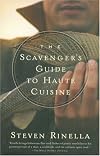
It's not often that I read books about cooking. It's even rarer that I read "manly" books about going out into the wilds and hunting elk and bear. Yet this somehow managed to be both of these things and quite wonderful.
The premise is simple: man who likes to hunt and forage (but disdains showily macho hunter culture and is just a tad hippy) discovers a vintage French cookbook that is Wagnerian in its ambition and Biblical in its influence, and decides to put on a 3-day feast with a total of show more 21 recipes from the book. Much of the story hinges on gathering the ingredients, which range from game he hunts himself and mushrooms he forages for through absurd misadventures in fowl-rearing to simply tracking down suppliers of things that have gone out of fashion as food. Many of the interesting characters are the food suppliers, and the book is filled with stories of where things came from and how delightfully obsessive the people involved are.
This book's a perfect companion to the Michael Pollan narratives that have become so very popular over the past few years, but it takes a much less lecturing tone. Simply by the example it sets out, it reminded me of all the reasons food is simply more appealing when it hasn't been mass-produced. show less
The premise is simple: man who likes to hunt and forage (but disdains showily macho hunter culture and is just a tad hippy) discovers a vintage French cookbook that is Wagnerian in its ambition and Biblical in its influence, and decides to put on a 3-day feast with a total of show more 21 recipes from the book. Much of the story hinges on gathering the ingredients, which range from game he hunts himself and mushrooms he forages for through absurd misadventures in fowl-rearing to simply tracking down suppliers of things that have gone out of fashion as food. Many of the interesting characters are the food suppliers, and the book is filled with stories of where things came from and how delightfully obsessive the people involved are.
This book's a perfect companion to the Michael Pollan narratives that have become so very popular over the past few years, but it takes a much less lecturing tone. Simply by the example it sets out, it reminded me of all the reasons food is simply more appealing when it hasn't been mass-produced. show less
Lists
Awards


You May Also Like


Associated Authors
Statistics
- Works
- 21
- Also by
- 4
- Members
- 1,593
- Popularity
- #16,194
- Rating
- 3.9
- Reviews
- 48
- ISBNs
- 49
- Languages
- 1
- Favorited
- 1
