
Scott D. Sagan
Author of The Spread of Nuclear Weapons: A Debate Renewed, Second Edition
About the Author
Works by Scott D. Sagan
Tagged
Common Knowledge
- Legal name
- Sagan, Scott Douglas
- Birthdate
- 1955
- Gender
- male
- Education
- Harvard University (Ph.D.|Political Science|1983)
Oberlin College (B.A.|Government|1977) - Occupations
- professor
- Organizations
- Federation of American Scientists (Board Member)
American Academy of Arts and Sciences (Committee on International Security Studies)
National Intelligence Council
Distinguished Advisory Panel for Non-Proliferation and Arms Control, Sandia National Laboratory
Council on Foreign Relations - Nationality
- USA
- Associated Place (for map)
- USA
Members
Reviews
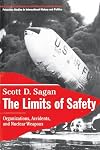
In The Limits of Safety, Scott D. Sagan uses organizational theory to explain why a nuclear arsenal can never be completely free of accidents. He also describes many instances in which accidents have already occurred with nuclear weapons or that have occurred during tense strategic stand-offs between nuclear-armed states. As Sagan points out, it has really been nothing more than luck that such accidents that have occurred have not resulted in a catastrophic disaster.
Sagan's basic premise is show more that as systems get more complex, they get more difficult for human beings to effectively manage. The United States' nuclear weapons arsenal is one of the most complex systems in the world. Because of its complexity there are many supposedly fail-safe measures that are built into the system to prevent an accident from occurring, which only makes the system even more complex. As complexity rises so does the possibility of unintended consequences occurring as parts of the system interact in ways that the designers simply could not foresee.
Furthermore, some research in organizational theory strongly indicates that even if it were possible to design a "fail-safe" system, the need to have humans interacting with that system means that you can never eradicate all accidents and errors from occurring. Sagan more than adequately points out what the consequences of these revelations are for the maintenance of such a large nuclear arsenal as the United States and Russia currently have. show less
Sagan's basic premise is show more that as systems get more complex, they get more difficult for human beings to effectively manage. The United States' nuclear weapons arsenal is one of the most complex systems in the world. Because of its complexity there are many supposedly fail-safe measures that are built into the system to prevent an accident from occurring, which only makes the system even more complex. As complexity rises so does the possibility of unintended consequences occurring as parts of the system interact in ways that the designers simply could not foresee.
Furthermore, some research in organizational theory strongly indicates that even if it were possible to design a "fail-safe" system, the need to have humans interacting with that system means that you can never eradicate all accidents and errors from occurring. Sagan more than adequately points out what the consequences of these revelations are for the maintenance of such a large nuclear arsenal as the United States and Russia currently have. show less
The Spread of Nuclear Weapons: A Debate Renewed; With New Sections on India and Pakistan, Terrorism, and Missile Defense by Scott Douglas Sagan
The Spread of Nuclear Weapons features two of the leading scholars on international security, Scott D. Sagan and Kenneth N. Waltz, debating the question of whether nuclear weapons proliferation would be bad for the world. Sagan takes the view that it would be bad while Waltz takes the position that it would not necessarily be bad and might even be a net positive for international security.
The book begins with Waltz and Sagan laying out their arguments and presenting the scholarly and show more historical evidence that supports them. They then go into a debate regarding how the proliferation of nuclear weapons to South Asia has affected the Indo-Pakistani conflict. The book then ends with Waltz and Sagan responding directly to the other's arguments.
The Spread of Nuclear Weapons is an excellent book for anyone looking to find a primer on the arguments for and against attempting to halt nuclear weapons proliferation. While there is a lot of theory in the book, it is of a type that is easy to follow even for people who are not trained in international and national security issues. The only thing really missing is a cost-benefit analysis. But that oversight does little to detract from the overall quality. show less
The book begins with Waltz and Sagan laying out their arguments and presenting the scholarly and show more historical evidence that supports them. They then go into a debate regarding how the proliferation of nuclear weapons to South Asia has affected the Indo-Pakistani conflict. The book then ends with Waltz and Sagan responding directly to the other's arguments.
The Spread of Nuclear Weapons is an excellent book for anyone looking to find a primer on the arguments for and against attempting to halt nuclear weapons proliferation. While there is a lot of theory in the book, it is of a type that is easy to follow even for people who are not trained in international and national security issues. The only thing really missing is a cost-benefit analysis. But that oversight does little to detract from the overall quality. show less
This important book clearly and succinctly lays out the opposing views on whether nuclear proliferation makes the world more or less peaceful.
Lists
Awards

You May Also Like


Associated Authors
Statistics
- Works
- 11
- Members
- 312
- Popularity
- #75,594
- Rating
- 4.0
- Reviews
- 3
- ISBNs
- 17
- Favorited
- 1