

Laurens van der Post (1906–1996)
Author of The Lost World of the Kalahari
About the Author
Colonel Laurens Van der Post, a British subject born in South Africa, has "spent most of his adult life with one foot in Africa and one in England." A soldier, explorer, traveler, and philosopher, he fought in World War II in Ethiopia, Syria, and the Far East. Since the war he has worked for the show more British government on a variety of missions throughout Africa. Van der Post's beautifully composed Venture to the Interior (1952) is much more than an account of the planned journey from London to Nyasaland in South Africa, the climbing of Mianje, and the exploration of Nyika. It catches the "unique and indefinable spirit of the ancient continent" and explores the interiors of people's minds. His The Heart of the Hunter (1961) points the way toward a rediscovery of the positive values of the wilderness in our own lives. (Bowker Author Biography) show less
Image credit: © Robert Hinshaw
Works by Laurens van der Post
The Hunter and the whale 1 copy
A Portrait of Japan 1 copy
In a Province: A Novel 1 copy
In a province 1 copy
Voorslag 1-3 1 copy
2006 1 copy
Man and the Shadow 1 copy
Associated Works
Tagged
Common Knowledge
- Canonical name
- van der Post, Laurens
- Legal name
- van der Post, Laurens Jan
- Other names
- van der Post, Sir Laurens
ロレンス・ヴァン・デル・ポスト - Birthdate
- 1906-12-13
- Date of death
- 1996-12-16
- Gender
- male
- Education
- Grey College
- Occupations
- reporter
soldier - Organizations
- British Army
- Awards and honors
- Knight Bachelor (1981)
Order of the British Empire (Commander, 1947) - Relationships
- Giffard, Ingaret (wife)
Campbell, Roy (friend)
Bowes-Lyon, Lilian Helen (lover) - Nationality
- UK
South Africa - Birthplace
- Philippolis, South Africa (Orange River Colony)
- Places of residence
- Durban, South Africa
Cape Town, South Africa
Tetbury, Gloucestershire, England, UK
London, England, UK
Aldeburgh, Suffolk, England, UK - Place of death
- London, England, UK
- Burial location
- Philippolis, South Africa (special memorial garden)
- Associated Place (for map)
- South Africa
Members
Reviews
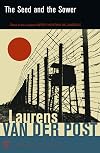
This is a bit of a frustrating book. Its virtues are obvious and many: van der Post clearly has a deep understanding and powerful affection for Japan and its people, and the recurring "moonfolk" image is the exact right kind of orientalism, the kind that uncovers something ancient and true. Less surprisingly, he has a wonderful hand with the landscapes of home (South Africa), and by extension with Palestine and especially Indonesia. And the book's ultimate measure is one of love and life show more with honour and alongside horror, and that is admirable.
But there is a problem. The initial section (formerly a standalone short story), which captures the concordant opposition between Lawrence and Hara like threading a needle or slashing cleanly through the spinal column of an Allied prisoner, is close to perfect. But Celliers (played by David Bowie in the film Merry Christmas, Mr. Lawrence), who should be so unknowable and thus compelling, gets six or eight times as much space as Lawrence to lay open to us his particular bromance, with Yonoi (I sure didn't realize what an awesome cast it was when I saw this film in the middle of my "Bowie phase" in 1999 - Ryuichi Sakamoto as Yonoi, Takeshi Kitano as Hara, Tom Conti as Lawrence). And he kills the mystery with such perfect Protestant awkwardness, leading at length with the (acknowledged, heartbreaking) story of him and his brother - basically giving it all away at the beginning so he can go on commenting on it flatly for a hundred pages, trying to verbalize the sincerity of the awfully decent, mild, reserved, cool, clenched, coiled-spring killer Englishman that grew out of the two wars and had to try to figure out how to go on in a bottomlessly awful, and worse, a post-Imperial world.
And the Lawrence and the nameless narrator get in on the act and suddenly they're all a bunch of emo kids, transported by the action of doing justice to their own feelings in precisely tortured syntax. And you get it: you get why wellbred colonial schoolboys would react to the insanity of war in this way (not by going insane per se, but by becoming - if I may - supersane, which is the next nearest thing). But that's not how decency is gonna survive horror, man; it's just going to leavce you with emptiness and Beckettism or setting stock in that weird mid-20th century Britishy sex philosophy that I wrote about in my Ebony Tower review to save everything.
Which results, by the final sex scene, when our unnamed virgin symbol of the salvational feminine says "I expect you will despise me for this," in this reply from Lawrence:
" . . . Please know that I understand you have turned to me not for yourself, not for me, but on behalf of life. When all reason and the world together seem to proclaim the end of life as we have known it, I know you are asking me to renew with you our pact of faith with life in the only way possible to us."
Don't say it! Just kiss her, ass!
You just need to live, I suspect, and laugh at boring jokes and not worry about achieving a consummation and transsubstantiation that overcomes the fact that war is hell. I don't think that latter is necessarily even possible, but maybe if I'd been through the war I'd need it too. show less
But there is a problem. The initial section (formerly a standalone short story), which captures the concordant opposition between Lawrence and Hara like threading a needle or slashing cleanly through the spinal column of an Allied prisoner, is close to perfect. But Celliers (played by David Bowie in the film Merry Christmas, Mr. Lawrence), who should be so unknowable and thus compelling, gets six or eight times as much space as Lawrence to lay open to us his particular bromance, with Yonoi (I sure didn't realize what an awesome cast it was when I saw this film in the middle of my "Bowie phase" in 1999 - Ryuichi Sakamoto as Yonoi, Takeshi Kitano as Hara, Tom Conti as Lawrence). And he kills the mystery with such perfect Protestant awkwardness, leading at length with the (acknowledged, heartbreaking) story of him and his brother - basically giving it all away at the beginning so he can go on commenting on it flatly for a hundred pages, trying to verbalize the sincerity of the awfully decent, mild, reserved, cool, clenched, coiled-spring killer Englishman that grew out of the two wars and had to try to figure out how to go on in a bottomlessly awful, and worse, a post-Imperial world.
And the Lawrence and the nameless narrator get in on the act and suddenly they're all a bunch of emo kids, transported by the action of doing justice to their own feelings in precisely tortured syntax. And you get it: you get why wellbred colonial schoolboys would react to the insanity of war in this way (not by going insane per se, but by becoming - if I may - supersane, which is the next nearest thing). But that's not how decency is gonna survive horror, man; it's just going to leavce you with emptiness and Beckettism or setting stock in that weird mid-20th century Britishy sex philosophy that I wrote about in my Ebony Tower review to save everything.
Which results, by the final sex scene, when our unnamed virgin symbol of the salvational feminine says "I expect you will despise me for this," in this reply from Lawrence:
" . . . Please know that I understand you have turned to me not for yourself, not for me, but on behalf of life. When all reason and the world together seem to proclaim the end of life as we have known it, I know you are asking me to renew with you our pact of faith with life in the only way possible to us."
Don't say it! Just kiss her, ass!
You just need to live, I suspect, and laugh at boring jokes and not worry about achieving a consummation and transsubstantiation that overcomes the fact that war is hell. I don't think that latter is necessarily even possible, but maybe if I'd been through the war I'd need it too. show less
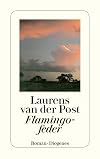
Im Südafrika des Jahres 1948 geht Merkwürdiges vor sich. Vor dem Haus des weißen Siedlers Pierre de Beauvilliers wird ein Fürst vom Stamme der Takwena ermordet. Da de Beauvilliers diesen Menschen sehr nahe steht, macht er sich auf die Suche nach dem Mörder. Dabei stößt er auf mysteriöse Frachtschiffe, die offensichtlich etwas zu verbergen haben und muss bald um sein Leben fürchten.
Van der Post weiß, wovon er schreibt, denn mit seiner Hauptfigur teilt er nicht nur die gleichen show more Überzeugungen, sondern wie diese ist er ebenso in Afrika aufgewachsen. Seine Liebe zu diesem Kontinent ist auf jeder Seite deutlich spürbar. Auch wenn seine Sprache altertümlich klingen mag - lässt man sich darauf ein, stehen einem anhand der eindringlichen Beschreibungen die Landschaften und Menschen Afrikas deutlich vor Augen. " So sonderbare Blumen habe ich sonst im Leben nie gesehen... Manche sahen aus wie in tiefen Gewässern eingeschlafene Kraken, andere wie die aufgerissenen, samtenen Mäuler von Puffottern, die ihr Gift in gespenstische Schalen tröpfeln. Wieder andere hatten die Gestalt goldener Sandalen - wie Diana sie in der Morgendämmerung mit rosigen Fingern vor ihrem Lager aufheben mochte."
Die Grundstruktur der Geschichte mag sehr schwarz-weiß gezeichnet erscheinen, doch van der Post zeigt auch deutlich, wie leicht die Verführung durch eine schiere Masse von Gleichgesinnten erfolgen kann, sofern es nur jemanden gibt, der die Richtung aufzeigt.
Mehr als 60 Jahre alt ist dieses Buch bereits, doch hat man sich an den Sprachstil erst gewöhnt, liest es sich ebenso spannend wie ein moderner Abenteuerroman. Und viele der Kritikpunkte, die der Autor in diesem Buch angesprochen hat, gelten heute noch genau so wie damals. Ein zeitloser Klassiker! show less
Van der Post weiß, wovon er schreibt, denn mit seiner Hauptfigur teilt er nicht nur die gleichen show more Überzeugungen, sondern wie diese ist er ebenso in Afrika aufgewachsen. Seine Liebe zu diesem Kontinent ist auf jeder Seite deutlich spürbar. Auch wenn seine Sprache altertümlich klingen mag - lässt man sich darauf ein, stehen einem anhand der eindringlichen Beschreibungen die Landschaften und Menschen Afrikas deutlich vor Augen. " So sonderbare Blumen habe ich sonst im Leben nie gesehen... Manche sahen aus wie in tiefen Gewässern eingeschlafene Kraken, andere wie die aufgerissenen, samtenen Mäuler von Puffottern, die ihr Gift in gespenstische Schalen tröpfeln. Wieder andere hatten die Gestalt goldener Sandalen - wie Diana sie in der Morgendämmerung mit rosigen Fingern vor ihrem Lager aufheben mochte."
Die Grundstruktur der Geschichte mag sehr schwarz-weiß gezeichnet erscheinen, doch van der Post zeigt auch deutlich, wie leicht die Verführung durch eine schiere Masse von Gleichgesinnten erfolgen kann, sofern es nur jemanden gibt, der die Richtung aufzeigt.
Mehr als 60 Jahre alt ist dieses Buch bereits, doch hat man sich an den Sprachstil erst gewöhnt, liest es sich ebenso spannend wie ein moderner Abenteuerroman. Und viele der Kritikpunkte, die der Autor in diesem Buch angesprochen hat, gelten heute noch genau so wie damals. Ein zeitloser Klassiker! show less

I was not far into the first part of this book when I started to feel suspicious. Laurens provides some context for his adventure in the form of family history, and what do you know? It's exciting on both sides. Maybe it's just the jealousy of someone whose pedigree can best be described as "peasants on both sides, all the way back" but this struck me as...possibly exaggerated. So I turned to trusty Google.
Perhaps it's ignorance, but I'd never heard of Laurens van der Post before picking up show more this book. And as it turns out, the controversy surrounding this man is almost more interesting than the book itself. It's possible that he lied about or exaggerated many of his experiences. His account of his family history on his father's side is one of the areas in which he may not have been entirely truthful.
Aside from his questionable honesty, it's not disputed that he treated women awfully. He had multiple affairs, abandoned his first wife and children, and took advantage of a 14 year old girl who was entrusted to his care, fathering a child with her and ruining her budding career as a dancer. Far from the wise and good man he portrays himself as in his writing.
After the questionable family history, almost 100 pages of the book are occupied by his travel by aeroplane from England to Nyasaland (modern day Malawi). More specifically, they are occupied by his crotchety-old-man-complaining about this newfangled means of travel. It's a common problem in books from this era, air travel being so new that the author must spend many pages in excited wonderment or grouchy longing for the good old days of slow travel, each of which tend to confound the modern reader to whom it's simply a normal part of travel.
If you can make your way through the tiresome air travel section, the narrative picks up from there and the book will become much more pleasant to read. Laurens, along with two white companions and an excessive amount of native bearers, explores mountain of Mlanje with its unique ecosystem and unpredictable weather. Here the tell-tale signs of untruth once again rear their head - Laurens in his great wisdom is able to pre-cognitively predict disaster and like Cassandra warns his companions against all mistakes, but alas! They don't listen. Disaster strikes but it is definitely super in no way saintly Laurens's fault!
After Mlanje, Laurens moves on to the Nyika plateau in the north of Nyasaland. Some of his descriptions of the scenery and wildlife are very beautiful and evocative.
The philosophical aspect which is supposed to be a big part of this book fell a bit flat with me. A lot of the philosophical asides seemed frankly nonsensical to me - they sounded deep on the surface but on examination it was impossible to figure out what Laurens was trying to say. One part that was clear, was that Laurens calls for peace and understanding between races, while in the same breath sexualising black people and romanticising their primitive, dark natures. Since the last book I read by a South African from this era was much more virulently racist, I guess Laurens gets a teensy tiny point for being a slightly less ridiculously racist?
To conclude, the latter 200 pages of this book are entertaining, if perhaps not strictly factual. The main value I got from this book was a little more understanding of the history and geography of Africa. show less
Perhaps it's ignorance, but I'd never heard of Laurens van der Post before picking up show more this book. And as it turns out, the controversy surrounding this man is almost more interesting than the book itself. It's possible that he lied about or exaggerated many of his experiences. His account of his family history on his father's side is one of the areas in which he may not have been entirely truthful.
Aside from his questionable honesty, it's not disputed that he treated women awfully. He had multiple affairs, abandoned his first wife and children, and took advantage of a 14 year old girl who was entrusted to his care, fathering a child with her and ruining her budding career as a dancer. Far from the wise and good man he portrays himself as in his writing.
After the questionable family history, almost 100 pages of the book are occupied by his travel by aeroplane from England to Nyasaland (modern day Malawi). More specifically, they are occupied by his crotchety-old-man-complaining about this newfangled means of travel. It's a common problem in books from this era, air travel being so new that the author must spend many pages in excited wonderment or grouchy longing for the good old days of slow travel, each of which tend to confound the modern reader to whom it's simply a normal part of travel.
If you can make your way through the tiresome air travel section, the narrative picks up from there and the book will become much more pleasant to read. Laurens, along with two white companions and an excessive amount of native bearers, explores mountain of Mlanje with its unique ecosystem and unpredictable weather. Here the tell-tale signs of untruth once again rear their head - Laurens in his great wisdom is able to pre-cognitively predict disaster and like Cassandra warns his companions against all mistakes, but alas! They don't listen. Disaster strikes but it is definitely super in no way saintly Laurens's fault!
After Mlanje, Laurens moves on to the Nyika plateau in the north of Nyasaland. Some of his descriptions of the scenery and wildlife are very beautiful and evocative.
The philosophical aspect which is supposed to be a big part of this book fell a bit flat with me. A lot of the philosophical asides seemed frankly nonsensical to me - they sounded deep on the surface but on examination it was impossible to figure out what Laurens was trying to say. One part that was clear, was that Laurens calls for peace and understanding between races, while in the same breath sexualising black people and romanticising their primitive, dark natures. Since the last book I read by a South African from this era was much more virulently racist, I guess Laurens gets a teensy tiny point for being a slightly less ridiculously racist?
To conclude, the latter 200 pages of this book are entertaining, if perhaps not strictly factual. The main value I got from this book was a little more understanding of the history and geography of Africa. show less

"A Far Off Place" is located in Africa, but also in the wild yet ordered regions of our own best selves. There is a hero, but he is not self-consciously so. There is a love story, but not a soft one. There is suffering, but it is not maudlin. A boy and his dog are thrust from their Edenic existence into a world of violence. They come through their harrowing journey to what is a happy ending--or at least as happy an ending as is possible in a world where the natural order has been upended. show more From a different point of view, it could be seen as just an horrendous story of loss and hardship; however, because of the heroic nature of the protagonist, we see beauty, strength, and possibilities of salvation. show less
Lists
Awards


You May Also Like


Associated Authors
Statistics
- Works
- 52
- Also by
- 10
- Members
- 3,918
- Popularity
- #6,458
- Rating
- 3.9
- Reviews
- 58
- ISBNs
- 189
- Languages
- 8
- Favorited
- 7