
David McLimans (1948–2014)
Author of Gone Wild: An Endangered Animal Alphabet
About the Author
Works by David McLimans
Tagged
Common Knowledge
- Birthdate
- 1948-08-06
- Date of death
- 2014-03-20
- Gender
- male
- Education
- University of Minnesota (BA)
Boston University (MFA) - Occupations
- artist
illustrator
instructor - Organizations
- University of Wisconsin, Whitewater
Milwaukee Institute of Art and Design
Madison College
U.S. Navy - Awards and honors
- Award of Excellence (Society of Newspaper Designers)
Certificate of Excellence (Print Magazine) - Short biography
- [from Wisconsin Academy of Sciences, Arts, and Letters website]
David McLimans has won numerous awards for his editorial illustration, including an Award of Excellence from the Society of Newspaper Designers and a Certificate of Excellence from Print magazine. His work has appeared the in Washington Post, AIGA, Time, New York Times, The Progressive, Atlantic Monthly, and Harper's. McLimans wrote three children's books and won the Caldecott Honor Medal for Gone Wild, an endangered animal alphabet. He taught design and illustration at UW-Whitewater, Milwaukee Institute of Art and Design, and Madison College over the years, and especially enjoyed making art with kids. A long time resident of Madison, Wisconsin, McLimans died in 2014. - Cause of death
- heart attack
- Birthplace
- Beaver Dam, Wisconsin, USA
- Places of residence
- Madison, Wisconsin, USA
- Place of death
- Madison, Wisconsin, USA
- Associated Place (for map)
- Wisconsin, USA
Members
Reviews
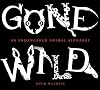
reviewed on www.vegbooks.org
http://vegbooks.org/index.php/2010/08/12/gone-wild-an-endangered-animal-alphabet...
In Gone Wild, An Endangered Animal Alphabet, David McLimans creates a beautifully artistic animal alphabet that reminds us of the variety of animal life sharing our earth. The unique black and white animal letters (in the style of a pictogram) paired with details about the 26 critically endangered, endangered, or vulnerable species of animals earns him the Caldecott Honor. Each page show more focuses on a large letter sprouting ears, teeth, scales, beaks, or horns that are playfully reminiscent of the animal. Each page also includes an informative box detailing the class, habitat, range, threat, status and a mini, red wood-block style image of the animal. The bold, fun graphics and simple colors leaves a strong visual impact. A section at the end of the book, provides additional zoological detail, information about what is threatening each species, and a listing of websites for organizations that help endangered species.
As Mr. McLimans states in his introduction:
“The earth is an amazing, beautiful, wondrous, diverse, and fragile planet. By protecting and saving animals and their habitats, we are also protecting ourselves.”
I absolutely loved the illustrations in this book and its urging for us to learn about the broader world around us and how we humans impact it. Mr. McLimans encourages us to get to know our animal neighbors and instills the need for activism to protect them in this visual delight.
Ages 4-8. show less
http://vegbooks.org/index.php/2010/08/12/gone-wild-an-endangered-animal-alphabet...
In Gone Wild, An Endangered Animal Alphabet, David McLimans creates a beautifully artistic animal alphabet that reminds us of the variety of animal life sharing our earth. The unique black and white animal letters (in the style of a pictogram) paired with details about the 26 critically endangered, endangered, or vulnerable species of animals earns him the Caldecott Honor. Each page show more focuses on a large letter sprouting ears, teeth, scales, beaks, or horns that are playfully reminiscent of the animal. Each page also includes an informative box detailing the class, habitat, range, threat, status and a mini, red wood-block style image of the animal. The bold, fun graphics and simple colors leaves a strong visual impact. A section at the end of the book, provides additional zoological detail, information about what is threatening each species, and a listing of websites for organizations that help endangered species.
As Mr. McLimans states in his introduction:
“The earth is an amazing, beautiful, wondrous, diverse, and fragile planet. By protecting and saving animals and their habitats, we are also protecting ourselves.”
I absolutely loved the illustrations in this book and its urging for us to learn about the broader world around us and how we humans impact it. Mr. McLimans encourages us to get to know our animal neighbors and instills the need for activism to protect them in this visual delight.
Ages 4-8. show less
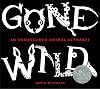
My three year old picked this up to read at the library, and I was quite pleased, because I thought it would help me teach him his letter sounds and be interesting, too. Plus, I'm interested in endangered species.
The book (obviously an A to Z alphabet book) is filled with black and white illustrations of the capital letters, which has features of an endangered animal that starts with that letter, one per page. There is also a panel with a stylised picture of the animal (so you can see it show more properly) and information about the animal : where it comes from, how badly it is endangered, why it is in danger.
As a parent reading the book, I was impressed. It is a Caldecott Honour book, it is beautifully illustrated, with simplistic pictures reminiscent of woodcut illustrations, and I was interested in the information.
However, I'm not sure it is aimed at the right age; all the data didn't maintain my three year old's interest (though he initially asked questions), and though my eight year old would probably find it more informative, I'm not sure he would deign to read an alphabet book. Of course, if we owned it and had it at home, instead of reading it at the library, that might not be a problem.
In spite of that, I think it's a great book, and a wonderful idea, so I'm giving it four and a half stars. show less
The book (obviously an A to Z alphabet book) is filled with black and white illustrations of the capital letters, which has features of an endangered animal that starts with that letter, one per page. There is also a panel with a stylised picture of the animal (so you can see it show more properly) and information about the animal : where it comes from, how badly it is endangered, why it is in danger.
As a parent reading the book, I was impressed. It is a Caldecott Honour book, it is beautifully illustrated, with simplistic pictures reminiscent of woodcut illustrations, and I was interested in the information.
However, I'm not sure it is aimed at the right age; all the data didn't maintain my three year old's interest (though he initially asked questions), and though my eight year old would probably find it more informative, I'm not sure he would deign to read an alphabet book. Of course, if we owned it and had it at home, instead of reading it at the library, that might not be a problem.
In spite of that, I think it's a great book, and a wonderful idea, so I'm giving it four and a half stars. show less
McLimans has taken the conventional alphabet book and spiced things up by replacing boring old "apple" with "Chinese Alligator." Each animal is then depicted as the letter they represent. This was the only issue I had with the book; a few of the animals, much like the alligator for the letter 'A', are so contorted as to be nearly unrecognizable. But there were only two or three of these where it felt like the author was really pushing it. He does, however, provide a small, stylized picture show more of the animal on the page alongside some relevant information.
Overall, though, a great, quick introduction to both endangered animals and the levels of endangerment. The author provides a brief introduction explaining the categories used to classify each animal, and then, at the end, goes more into detail as to why each animal is endangered along with a list of organizations that help endangered animals and further reading. Although this book is obviously intended for younger audiences, I feel like it could easily find its home on a biologist's bookshelf. show less
Overall, though, a great, quick introduction to both endangered animals and the levels of endangerment. The author provides a brief introduction explaining the categories used to classify each animal, and then, at the end, goes more into detail as to why each animal is endangered along with a list of organizations that help endangered animals and further reading. Although this book is obviously intended for younger audiences, I feel like it could easily find its home on a biologist's bookshelf. show less
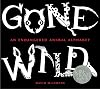
The stampede of wild animals transforms each letter of the alpahabet into a work of art. The book gives facts about endangered species, but I don't like the way they illustrated each letter of the alphabet. They are confusing for children to identify.
Lists
Awards


You May Also Like


Statistics
- Works
- 3
- Members
- 845
- Popularity
- #30,258
- Rating
- 3.9
- Reviews
- 101
- ISBNs
- 13
- Languages
- 1
