
Louise Marley (1) (1952–)
Author of A Secret History of Witches
For other authors named Louise Marley, see the disambiguation page.
Series
Works by Louise Marley
Ice Music 1 copy
The Spiral Road 1 copy
P Dolce 1 copy
Jamie Says 1 copy
Diamond Girls 1 copy
Small In The Saddle 1 copy
Starchild Wondersmith 1 copy
Technicolor 1 copy
Associated Works
Firebirds Soaring: An Anthology of Original Speculative Fiction (2009) — Contributor — 231 copies, 9 reviews
Field of Fantasies: Baseball Stories of the Strange and Supernatural (2014) — Contributor — 46 copies
Legacies — Contributor — 1 copy
Tagged
Common Knowledge
- Other names
- Bishop, Toby
Morgan, Louisa - Birthdate
- 1952-08-15
- Gender
- female
- Education
- Clarion West (1993)
- Occupations
- Opera Singer, Seattle Opera
- Agent
- Rubie, Peter
- Nationality
- USA
- Birthplace
- Ross, California, USA
- Places of residence
- Pacific Northwest, USA
- Associated Place (for map)
- USA
Members
Discussions
Fantasy learned female songstress in Name that Book (March 2012)
Reviews
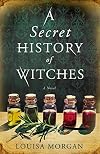
(Warning: This review is long.)
There is something magical about a great historical fantasy. It is easy enough to imagine how history might have changed if magic existed, but a historical fantasy writer needs to make it feel real. They need to balance the fantastic and the realistic. A great historical fantasy should stand up to scrutiny.
A Secret History of Witches by Louisa Morgan... well, it wobbles under scrutiny. This is not a knock against Morgan, as writing a five-generation family show more saga about magic, strife, and love is not easy. I respect the amount of work put into this novel. But that does not mean it is perfect.
Let's start with the positives. The novel is an enjoyable read. I enjoyed reading it! All five main characters have strong, distinct personalities that draw the reader in. Even when things start going wrong, you still want to see how it ends. The pacing of the novel is also excellent. I often get distracted during the slower parts of books, but A Secret History of Witches kept me engaged the entire time.
The book also does a great job highlighting the cyclical aspect of family sagas. The individual plotlines mirror each other, but they aren't exact copies. And the characters are so distinct that it makes sense for similar plotlines to go in completely different directions. Nanette has a cool confidence in herself, Ursule is sensible and grounded, Irene is selfish, Morwen is quietly bold, and Veronica is strong and competent. The book also clearly shows how each daughter's personality is a direct response to her mother's actions. Ursule clings to objectivity in the face of Nanette's spirituality. Irene rebels against Ursule's frugal nature. Morwen goes along with her domineering parents until they go too far. Veronica has to be the strong one, as no one else in her family can be. Even rash or poorly thought-out choices make sense for the characters.
The romances in the novel were less solid but still okay. Nothing enchanting or overly heart-wrenching. The characters meet a handsome man, fall for him, and he (usually) loves them back. Some online reviews critiqued how hetero-normative the relationships were. These reviewers have a point. But a family saga requires characters to have children, and historically, that required a man and a woman. Given that the novel already has some strong gender roles (only women who menstruate are witches, men are frightened of magic, etc.), I wasn't expecting anything revolutionary.
Another common complaint is that none of the male characters in this book are 'good'. That just confused me. There are 'good', positive, helpful male characters. They care for the main characters and don't consider women lesser. But these male characters aren't the norm. That makes perfect sense. There have always been men who weren't sexist or awful toward women. But the existence of these men does not mean that the patriarchy suddenly disappears. It's the same in the novel. Having a few men who can deal with witchcraft does not mean that magic is suddenly okay for everyone.
But. as stated earlier, the novel is not perfect. The magic system established in this book felt very... wishy-washy? It just does whatever the plot needs at that moment. Scrying? Sure. Medicine? Yep. Enchanting a horse to impress a rich man? I guess. Morgan was clearly trying to base the magic on actual pagan beliefs, but it still seems like a cop-out in the novel. Sometimes the characters need a spell for magic, sometimes they don't. Sometimes a whole ritual is needed, sometimes they do magic in pajamas. Sometimes a potion makes a man attack you, other times the same potion just makes him want to marry you. One character claims that magic is getting weaker in the modern world, but the main family gets stronger throughout the generations.
The novel also would have benefitted from having a few experts and sensitivity readers involved. For example, the prologue establishes that the main family, the Orchieres, is a Romani family from the Brittany area of France. But Romani culture never really shows up in the story. At most, the characters wear colorful clothing and have curly hair. They also never speak any Romani languages, despite multilingualism being a thing for multiple characters. They speak English and French and Old French and various Celtic languages, but never a Romani language. Their magic is all based around Celtic holidays, too. Now, I know that is because modern paganism is based heavily on Celtic culture. And yes, the Orchiere come from a Celtic part of France and live in Celtic areas of England, and it is possible they could have incorporated those beliefs and holidays into their traditions. But from a historical perspective, is it likely? I don't think so. Frankly, it reads more like Morgan wanted a reason for her characters to be 'exotic outsiders' but didn't actually do that much research in Roma culture. A better choice would have been to make her characters Irish/Scottish and have them move into a rural, central of England. This would have given a better basis for the Celtic stuff and still made them outsiders.
Morgan also should have consulted with some pagan skeptics. Early in the novel, the characters discuss 'The Burning Times'. This is a long period in the Early Modern era where thousands of witches were supposedly tortured and burnt at the stake all throughout Europe. Some modern pagans compare it to the Holocaust. But 'The Burning Times' probably didn't happen in the way some modern pagans believe. Yes, the Early Modern period did have some witchcraft panics. However, historians are not entirely sure of how many people actually accused and killed during these panics. Some claim impossibly high numbers, while others say it was a small percentage of the population. 'The Burning Times' hypothesis wasn't even really written about until the 20th century, so it's odd that 19th-century witches are using that exact phrase.
Also, Morgan made a member of the British Royal Family a witch. And no, it's probably not the one you're thinking of.
Was A Secret History of Witches a fun read? Yeah. If you like fantasy, romance, and family stories, you will probably enjoy it. Morgan is a good writer, and I enjoyed the book when I didn't think too hard about it. But if you are someone with a deep interest in history, especially the history of witchcraft? Or someone interested in a story about Roma culture and characters? You should probably pick something else. show less
There is something magical about a great historical fantasy. It is easy enough to imagine how history might have changed if magic existed, but a historical fantasy writer needs to make it feel real. They need to balance the fantastic and the realistic. A great historical fantasy should stand up to scrutiny.
A Secret History of Witches by Louisa Morgan... well, it wobbles under scrutiny. This is not a knock against Morgan, as writing a five-generation family show more saga about magic, strife, and love is not easy. I respect the amount of work put into this novel. But that does not mean it is perfect.
Let's start with the positives. The novel is an enjoyable read. I enjoyed reading it! All five main characters have strong, distinct personalities that draw the reader in. Even when things start going wrong, you still want to see how it ends. The pacing of the novel is also excellent. I often get distracted during the slower parts of books, but A Secret History of Witches kept me engaged the entire time.
The book also does a great job highlighting the cyclical aspect of family sagas. The individual plotlines mirror each other, but they aren't exact copies. And the characters are so distinct that it makes sense for similar plotlines to go in completely different directions. Nanette has a cool confidence in herself, Ursule is sensible and grounded, Irene is selfish, Morwen is quietly bold, and Veronica is strong and competent. The book also clearly shows how each daughter's personality is a direct response to her mother's actions. Ursule clings to objectivity in the face of Nanette's spirituality. Irene rebels against Ursule's frugal nature. Morwen goes along with her domineering parents until they go too far. Veronica has to be the strong one, as no one else in her family can be. Even rash or poorly thought-out choices make sense for the characters.
The romances in the novel were less solid but still okay. Nothing enchanting or overly heart-wrenching. The characters meet a handsome man, fall for him, and he (usually) loves them back. Some online reviews critiqued how hetero-normative the relationships were. These reviewers have a point. But a family saga requires characters to have children, and historically, that required a man and a woman. Given that the novel already has some strong gender roles (only women who menstruate are witches, men are frightened of magic, etc.), I wasn't expecting anything revolutionary.
Another common complaint is that none of the male characters in this book are 'good'. That just confused me. There are 'good', positive, helpful male characters. They care for the main characters and don't consider women lesser. But these male characters aren't the norm. That makes perfect sense. There have always been men who weren't sexist or awful toward women. But the existence of these men does not mean that the patriarchy suddenly disappears. It's the same in the novel. Having a few men who can deal with witchcraft does not mean that magic is suddenly okay for everyone.
But. as stated earlier, the novel is not perfect. The magic system established in this book felt very... wishy-washy? It just does whatever the plot needs at that moment. Scrying? Sure. Medicine? Yep. Enchanting a horse to impress a rich man? I guess. Morgan was clearly trying to base the magic on actual pagan beliefs, but it still seems like a cop-out in the novel. Sometimes the characters need a spell for magic, sometimes they don't. Sometimes a whole ritual is needed, sometimes they do magic in pajamas. Sometimes a potion makes a man attack you, other times the same potion just makes him want to marry you. One character claims that magic is getting weaker in the modern world, but the main family gets stronger throughout the generations.
The novel also would have benefitted from having a few experts and sensitivity readers involved. For example, the prologue establishes that the main family, the Orchieres, is a Romani family from the Brittany area of France. But Romani culture never really shows up in the story. At most, the characters wear colorful clothing and have curly hair. They also never speak any Romani languages, despite multilingualism being a thing for multiple characters. They speak English and French and Old French and various Celtic languages, but never a Romani language. Their magic is all based around Celtic holidays, too. Now, I know that is because modern paganism is based heavily on Celtic culture. And yes, the Orchiere come from a Celtic part of France and live in Celtic areas of England, and it is possible they could have incorporated those beliefs and holidays into their traditions. But from a historical perspective, is it likely? I don't think so. Frankly, it reads more like Morgan wanted a reason for her characters to be 'exotic outsiders' but didn't actually do that much research in Roma culture. A better choice would have been to make her characters Irish/Scottish and have them move into a rural, central of England. This would have given a better basis for the Celtic stuff and still made them outsiders.
Morgan also should have consulted with some pagan skeptics. Early in the novel, the characters discuss 'The Burning Times'. This is a long period in the Early Modern era where thousands of witches were supposedly tortured and burnt at the stake all throughout Europe. Some modern pagans compare it to the Holocaust. But 'The Burning Times' probably didn't happen in the way some modern pagans believe. Yes, the Early Modern period did have some witchcraft panics. However, historians are not entirely sure of how many people actually accused and killed during these panics. Some claim impossibly high numbers, while others say it was a small percentage of the population. 'The Burning Times' hypothesis wasn't even really written about until the 20th century, so it's odd that 19th-century witches are using that exact phrase.
Also, Morgan made a member of the British Royal Family a witch. And no, it's probably not the one you're thinking of.
Was A Secret History of Witches a fun read? Yeah. If you like fantasy, romance, and family stories, you will probably enjoy it. Morgan is a good writer, and I enjoyed the book when I didn't think too hard about it. But if you are someone with a deep interest in history, especially the history of witchcraft? Or someone interested in a story about Roma culture and characters? You should probably pick something else. show less
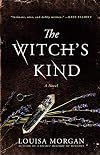
A magical realism/historical fantasy story, The Witch’s Kind completely captivated me. It’s the story of Barrie Anne Blyth, a young woman in the time of WW 2, and her aunt Charlotte, who raised her. Barrie has a past with a man who turned out to be not what he seemed: a college man who joined the service when the Japanese bombed Pearl Harbor. This past led her to a run-down farm that her husband bought without telling her; while she knows nothing of farming, she quickly learns from show more neighbors, books, and just doing. Soon she has a thriving food garden and flock of hens, right on the Hood Canal. When her husband disappears, she continues the farm on her own. When her dog, Willow, finds a new born baby on the beach, she takes it in, and Aunt Charlotte comes to stay with her a lot of the time.
The baby, Emma, isn’t quite “normal”, but Barrie loves her. She lost her own baby after only a few hours, so she’s ready for a baby, no matter what. Her long lost husband, Will, returns and has his own plans for the child. Government agents hang around the small town and the farm. Barrie and Charlotte invent stories to cover Emma’s origin, and try to keep her secret covered. There is never a time to feel secure and relax.
I LOVED this book. It’s a hard one to classify; my first thought was magical realism, but there is also sci-fi, women’s fiction, historical fantasy… so much, blended together to get a book that I sat up most of the night reading. The descriptions of the town, the farm, the canal, Port Townsend, the Olympic Peninsula, are all wonderful and bring things to life. It’s an area I love anyway, and to see it through the lens of the 40s was great. I loved Aunt Charlotte. I liked Barrie, too, although I was impatient with her in much of the flashbacks, as she was learning about life and growing up. Five stars. show less
The baby, Emma, isn’t quite “normal”, but Barrie loves her. She lost her own baby after only a few hours, so she’s ready for a baby, no matter what. Her long lost husband, Will, returns and has his own plans for the child. Government agents hang around the small town and the farm. Barrie and Charlotte invent stories to cover Emma’s origin, and try to keep her secret covered. There is never a time to feel secure and relax.
I LOVED this book. It’s a hard one to classify; my first thought was magical realism, but there is also sci-fi, women’s fiction, historical fantasy… so much, blended together to get a book that I sat up most of the night reading. The descriptions of the town, the farm, the canal, Port Townsend, the Olympic Peninsula, are all wonderful and bring things to life. It’s an area I love anyway, and to see it through the lens of the 40s was great. I loved Aunt Charlotte. I liked Barrie, too, although I was impatient with her in much of the flashbacks, as she was learning about life and growing up. Five stars. show less
This lackluster novel about several generations of witches grinds it way through 130 years before finally petering out in an open-ended conclusion that leaves several questions unanswered. One hopes there is no sequel in the offing.
First and foremost, the characters in Morgan’s tale are all denied, for one reason or another, the kind of lifelong study of the craft deemed de rigueur in most literature for a successful practitioner. In this world, however, it’s apparently enough to be born show more into the line and then, when the time is right, you simply light the candle, sprinkle a little salt around, mouth a few lines of tortured doggerel and presto!, you’re a successful spell casting, crystal gazing potion brewing witch.
Which brings up another issue and is something that has annoyed this reviewer for years in novels of the occult. Why do the charms and spells need to be in badly-written quatrain format? Why can’t one just say “Farmer Brown is a mean nasty man and he should come down with a bad case of boils until he learns to be nicer”? No, it has to be crunched and cajoled and massaged into something like “Mother Goddess, heed my call, / Farmer Brown is worst of all. / Bless the kettle as it roils, / Curse his ugly form with boils”. Or something equally banal. All the characters in ‘Secret History’ commit this particular sin in one way or another, until one wishes Mother Goddess would apparate at some point and say “Just spit it out, girl!”
Morgan also manages to ignore the entire Romani culture, despite repeatedly telling the reader that it gave birth to her characters. In fact, there’s a whole lot of telling going on here, and not much showing. The characters move around the chessboard Morgan has set up for them, going through the motions that will advance the plot, with nary a surprise or an emotional punch to be had. show less
First and foremost, the characters in Morgan’s tale are all denied, for one reason or another, the kind of lifelong study of the craft deemed de rigueur in most literature for a successful practitioner. In this world, however, it’s apparently enough to be born show more into the line and then, when the time is right, you simply light the candle, sprinkle a little salt around, mouth a few lines of tortured doggerel and presto!, you’re a successful spell casting, crystal gazing potion brewing witch.
Which brings up another issue and is something that has annoyed this reviewer for years in novels of the occult. Why do the charms and spells need to be in badly-written quatrain format? Why can’t one just say “Farmer Brown is a mean nasty man and he should come down with a bad case of boils until he learns to be nicer”? No, it has to be crunched and cajoled and massaged into something like “Mother Goddess, heed my call, / Farmer Brown is worst of all. / Bless the kettle as it roils, / Curse his ugly form with boils”. Or something equally banal. All the characters in ‘Secret History’ commit this particular sin in one way or another, until one wishes Mother Goddess would apparate at some point and say “Just spit it out, girl!”
Morgan also manages to ignore the entire Romani culture, despite repeatedly telling the reader that it gave birth to her characters. In fact, there’s a whole lot of telling going on here, and not much showing. The characters move around the chessboard Morgan has set up for them, going through the motions that will advance the plot, with nary a surprise or an emotional punch to be had. show less
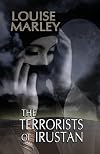
It’s been some time since I had to read the ending words of a book through my tears, but The Terrorists of Irustan had me reaching for a tissue to mop up the moisture. Although labelled as science fiction, this book speaks of the human condition and how slavery can cause a life to be joyless, empty and unfulfilled. On the planet of Irustan, the veiled women are mere chattels, they belong body and soul to whichever male is the head of their family, be it father, husband or brother. This is show more a society that is Arabic in nature, they live by their inflexible religion but life has stagnated to the point where woman have no rights, in fact they are not even considered as people. This is a satellite planet, a mining consortium whose minerals are very important to Earth so the resident’s lifestyle is allowed to flourish as long as the mines continue to supply the much needed materials.
Zahra IbSada, is a medicant, a healer, and this profession is one of the very few that allows women a slight degree of independence. She has been thoroughly sickened by having to treat abused women and children only to have to return them to the care of their abuser, but it is not until one of her friends is in crisis that Zahra crosses the line and ensures that at least this man will no longer be able to dictate who he cedes his daughter to. Of course, once this line has been crossed, it becomes much easier to do it again. Travelling down this road goes against her healing nature, but Zahra’s final hope is that her acts of terrorism can cause a slight change that will make things better for the younger women that follow.
This was a thoughtful, wonderfully composed story that deals with feminist issues . Through Zahra’s friendship with a earth woman who disguises herself as a man in order to move about the planet freely, we learn that even women on Earth have issues that are not being met in their futuristic society. Although the plot is fairly predictable, the author has created such realistic, vital and engaging characters that this story totally pulls the reader into this exotic world. The author does not flinch from evoking powerful emotions and when a book speaks this strongly to my heart, I can’t help but give it a full five stars. show less
Zahra IbSada, is a medicant, a healer, and this profession is one of the very few that allows women a slight degree of independence. She has been thoroughly sickened by having to treat abused women and children only to have to return them to the care of their abuser, but it is not until one of her friends is in crisis that Zahra crosses the line and ensures that at least this man will no longer be able to dictate who he cedes his daughter to. Of course, once this line has been crossed, it becomes much easier to do it again. Travelling down this road goes against her healing nature, but Zahra’s final hope is that her acts of terrorism can cause a slight change that will make things better for the younger women that follow.
This was a thoughtful, wonderfully composed story that deals with feminist issues . Through Zahra’s friendship with a earth woman who disguises herself as a man in order to move about the planet freely, we learn that even women on Earth have issues that are not being met in their futuristic society. Although the plot is fairly predictable, the author has created such realistic, vital and engaging characters that this story totally pulls the reader into this exotic world. The author does not flinch from evoking powerful emotions and when a book speaks this strongly to my heart, I can’t help but give it a full five stars. show less
Lists
Awards


You May Also Like
Associated Authors
Statistics
- Works
- 33
- Also by
- 17
- Members
- 4,244
- Popularity
- #5,927
- Rating
- 3.6
- Reviews
- 133
- ISBNs
- 105
- Languages
- 4

