
Yuri Buida
Author of The Zero Train
About the Author
Image credit: Yuri Buida
Works by Yuri Buida
Associated Works
Read Russia!: An Anthology of New Voices — Contributor — 15 copies
Tagged
Common Knowledge
- Canonical name
- Buida, Yuri
- Legal name
- Buida, Yury Vasilyevich
Буйда, Юрий Васильевич - Other names
- Buĭda, I︠U︡riĭ
Bouïda, Iouri
Bujda, Ûrij Vasil'evič - Birthdate
- 1954-08-29
- Gender
- male
- Occupations
- author
- Nationality
- Russia
- Birthplace
- Znamensk, Kaliningrad Region, Russia
- Places of residence
- Znamensk, Kaliningrad Region, Russia
- Associated Place (for map)
- Znamensk, Kaliningrad Region, Russia
Members
Reviews
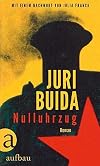
Die Siedlung Nummer 9 wird aufgebaut, irgendwo im weiten Sowjetgebiet, um den Nulluhrzug zu sichern. Täglich um Mitternacht kommt er vorbei, von den Siedlern beäugt fahren zwei Lokomotiven und hundert verrammelte Waggons durch ihre Station, die aus wenigen Häusern, einem Sägewerk, einer Bierstube und den notwendigen Instandhaltungen für die Gleise besteht. Wohin er fährt und was er transportiert, ist nicht bekannt. Das müssen die Menschen dort auch nicht wissen, sie haben eine show more spezifische Aufgabe zu erfüllen, für die mehr Information nicht erforderlich ist. Unter ihnen ist Iwan, genannt Wanja oder Don Domino, nach dem frühen Tod der Eltern aufgewachsen in den Institutionen des totalitären Staates und pflichtbewusster Diener, der keine Fragen stellt, die er nicht stellen soll und bis zum letzten Tag das tut, was man von ihm erwartet.
Juri Buidas kurzer Roman erschien in Russland schon vor fast 30 Jahren, kurz nach dem Zerfall der Sowjetunion. Auch wenn diese schon der Geschichtsschreibung übergeben wurde, prägt sie doch den Charakter der Figuren und des Systems, in dem sie leben. Die Handlung ist begrenzte und überschaubar, ihre Deutung jedoch recht offen und wie das Nachwort von Julia Franck zeigt, weit über das konkret Erzählte hinausreichend. Sie spannt den Bogen vom Beginn zum Ende des 20. Jahrhunderts und sieht sowohl die industrielle Revolution wie auch die Industrie 4.0 in der Erzählung kritisch hinterfragt.
Auf der Erzählebene verbleibend präsentiert Buida ein deprimierendes Szenario, das den Menschen ihre Vergangenheit raubt und keine Zukunft verspricht. Die Kinder sterben entweder direkt oder hauen irgendwann ab. Der Mensch wird funktional als kleines Rädchen im System betrachtet, das entweder wie vorgesehen rundläuft oder ausgetauscht wird und ansonsten nicht weiter relevant ist.
Folgt man Julia Franck in der Betrachtung des Textes als Parabel auf die totalitäre Gesellschaft und überträgt man die Aussage auf die globalisierte Gegenwart, in der das Individuum kaum einen Prozess mehr überblicken kann, nur sein begrenztes Tätigkeitsfeld erfassen und bearbeiten kann, die komplexen Prozesse jedoch nicht mehr zugänglich sind, ist Buida auch 2020 so aktuell wie 1993. Im Raum steht jedoch die Frage, ob man ebenso wie in einem sozialistischen Unterdrückungsstaat die Gegebenheiten als gegeben und unveränderbar hinnehmen muss.
Eine düstere und sperrige Erzählung, die weit von Unterhaltungsliteratur entfernt ist, aber aufgrund des kafkaesken und doch realen Szenarios seinen Platz in der Literatur verdient hat und finden wird. show less
Juri Buidas kurzer Roman erschien in Russland schon vor fast 30 Jahren, kurz nach dem Zerfall der Sowjetunion. Auch wenn diese schon der Geschichtsschreibung übergeben wurde, prägt sie doch den Charakter der Figuren und des Systems, in dem sie leben. Die Handlung ist begrenzte und überschaubar, ihre Deutung jedoch recht offen und wie das Nachwort von Julia Franck zeigt, weit über das konkret Erzählte hinausreichend. Sie spannt den Bogen vom Beginn zum Ende des 20. Jahrhunderts und sieht sowohl die industrielle Revolution wie auch die Industrie 4.0 in der Erzählung kritisch hinterfragt.
Auf der Erzählebene verbleibend präsentiert Buida ein deprimierendes Szenario, das den Menschen ihre Vergangenheit raubt und keine Zukunft verspricht. Die Kinder sterben entweder direkt oder hauen irgendwann ab. Der Mensch wird funktional als kleines Rädchen im System betrachtet, das entweder wie vorgesehen rundläuft oder ausgetauscht wird und ansonsten nicht weiter relevant ist.
Folgt man Julia Franck in der Betrachtung des Textes als Parabel auf die totalitäre Gesellschaft und überträgt man die Aussage auf die globalisierte Gegenwart, in der das Individuum kaum einen Prozess mehr überblicken kann, nur sein begrenztes Tätigkeitsfeld erfassen und bearbeiten kann, die komplexen Prozesse jedoch nicht mehr zugänglich sind, ist Buida auch 2020 so aktuell wie 1993. Im Raum steht jedoch die Frage, ob man ebenso wie in einem sozialistischen Unterdrückungsstaat die Gegebenheiten als gegeben und unveränderbar hinnehmen muss.
Eine düstere und sperrige Erzählung, die weit von Unterhaltungsliteratur entfernt ist, aber aufgrund des kafkaesken und doch realen Szenarios seinen Platz in der Literatur verdient hat und finden wird. show less

That girls are raped, that two boys knife a third,
Were axioms to them, who'd never heard
Of any world where promises were kept,
Or one could weep because another wept.
Looks like Auden managed to prophesy a fairly accurate review for this latest book by Yuri Buyda, best known I think for The Prussian Bride (which I enjoyed). This book consists of a series of interlinked stories, so that a minor character in one becomes the protagonist of another. The action takes place beyond the outskirts of show more Moscow, in a region where places have evocative names like Nerwbuild and the girls make some money by appearing in pornographic films shot in a place called The Factory. The most popular storyline involves the woman who is left alone with a daughter; then a new man appears and rapes the daughter. By way of variation, there is one case where the new man takes the guilt on himself after the adopted son has raped and killed the daughter. But again the nephew who has been taken into the family will do just as well. And the daughter can also kill the mother and lay the blame on the stepfather.
For some time, there was a tendency for supernatural elements to become increasingly apparent from story to story, so I rather hoped there was going to be some kind of transfiguration. But no. The nearest was the trans-sense poem from At the knacker's yard, kindly translated by Google at the end of this posting.
The problem with the book is that it all gets rather same-y and you don't have any contrast. In The Prussian Bride, you had the contrast between the German and Russian ways of life in the Kaliningrad Oblast', and that worked very well.
But it's better than I'm probably making it sound here, and you certainly want to read on even though you rather dread what might be coming. There are moments of grim, humour, as when the short, fat, bald seducer and utterer of forged banknotes Goribaba is apprehended thanks to his shiny Margaret Thatcher tie...
Те ан комали, лютер вертерог-
Those en coma, Luther verterog -
Гумер аморе, лав – те ан комали.
Gumer Amor, My Love - those en coma.
Но миролохи – те не паллонай ли,
But mirolohi - those not pallonay Do
Когда и бехер адорате рох.
When and Becher adorate Fox.
Лютеллия!
Lyutelliya!
А вулли аберрок?
A Woolley aberrok?
Не филио, не мув и не опали,
Not filio, not MSY and not fallen,
Не без отеро, нежная афалли,
Not without Otero, gentle afalli,
О куннилингус!
About cunnilingus!
Стелла аннобох,
Stella annoboh,
Но тристия, те глосса и улла,
But three hundred, and they gloss ulla,
Те ан амиле, са не тор у края,
Those en amyl, self is not a torus at the edge,
Коль отто фил, то эстер те фулла.
Col Phil Otto, the ester those Fulla.
Не питто фаллос, номо, эт кормляю,
Pitta is not the phallus, HOMO, at kormlyayu,
Фелляция, лютеллия, – сола!
Fellatio, lyutelliya - Sol! – -
Коттаю анно: я тебя любляю …
Kottayam annotation: I'll Ljubljana ...
- Любляю, – прошептал он, – на этом языке, вероятно, так произносится «люблю». - Ljubljana, - he whispered, - the language is probably true, pronounced "love". (see also http://wp.me/pBfTB-JK) show less
Were axioms to them, who'd never heard
Of any world where promises were kept,
Or one could weep because another wept.
Looks like Auden managed to prophesy a fairly accurate review for this latest book by Yuri Buyda, best known I think for The Prussian Bride (which I enjoyed). This book consists of a series of interlinked stories, so that a minor character in one becomes the protagonist of another. The action takes place beyond the outskirts of show more Moscow, in a region where places have evocative names like Nerwbuild and the girls make some money by appearing in pornographic films shot in a place called The Factory. The most popular storyline involves the woman who is left alone with a daughter; then a new man appears and rapes the daughter. By way of variation, there is one case where the new man takes the guilt on himself after the adopted son has raped and killed the daughter. But again the nephew who has been taken into the family will do just as well. And the daughter can also kill the mother and lay the blame on the stepfather.
For some time, there was a tendency for supernatural elements to become increasingly apparent from story to story, so I rather hoped there was going to be some kind of transfiguration. But no. The nearest was the trans-sense poem from At the knacker's yard, kindly translated by Google at the end of this posting.
The problem with the book is that it all gets rather same-y and you don't have any contrast. In The Prussian Bride, you had the contrast between the German and Russian ways of life in the Kaliningrad Oblast', and that worked very well.
But it's better than I'm probably making it sound here, and you certainly want to read on even though you rather dread what might be coming. There are moments of grim, humour, as when the short, fat, bald seducer and utterer of forged banknotes Goribaba is apprehended thanks to his shiny Margaret Thatcher tie...
Те ан комали, лютер вертерог-
Those en coma, Luther verterog -
Гумер аморе, лав – те ан комали.
Gumer Amor, My Love - those en coma.
Но миролохи – те не паллонай ли,
But mirolohi - those not pallonay Do
Когда и бехер адорате рох.
When and Becher adorate Fox.
Лютеллия!
Lyutelliya!
А вулли аберрок?
A Woolley aberrok?
Не филио, не мув и не опали,
Not filio, not MSY and not fallen,
Не без отеро, нежная афалли,
Not without Otero, gentle afalli,
О куннилингус!
About cunnilingus!
Стелла аннобох,
Stella annoboh,
Но тристия, те глосса и улла,
But three hundred, and they gloss ulla,
Те ан амиле, са не тор у края,
Those en amyl, self is not a torus at the edge,
Коль отто фил, то эстер те фулла.
Col Phil Otto, the ester those Fulla.
Не питто фаллос, номо, эт кормляю,
Pitta is not the phallus, HOMO, at kormlyayu,
Фелляция, лютеллия, – сола!
Fellatio, lyutelliya - Sol! – -
Коттаю анно: я тебя любляю …
Kottayam annotation: I'll Ljubljana ...
- Любляю, – прошептал он, – на этом языке, вероятно, так произносится «люблю». - Ljubljana, - he whispered, - the language is probably true, pronounced "love". (see also http://wp.me/pBfTB-JK) show less
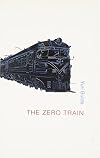
We'll begin by saying I love the title. The Zero train can be seen as an allegorical or fable like novel set sometime around the post World War II Stalin years. It's hero Vanya (Ivan) the only offspring of 'enemies of the people' is raised in an orphanage. Upon reaching manhood he is sent to a railway station set out in the wilderness--called the 9th Station. The KGB colonel in charge of him tells him he can be trusted more than the others--'Your parents are Enemies of the People', the show more colonel went on, drying his cheeks with a handkerchief. 'We know all about that. But you're not responsible for their actions. You're responsible for your own. And for the Motherland. You were brought up in a children's home. Food, clothing and so on. The Motherland trusts you. Understand? She trusts you no less, and perhaps even more, than she trusts others'. He paused. 'Maybe even more, and maybe precisely because your parents betrayed the Motherland. Do you understand?' Vanya (Ivan's) job is to make sure that nothing happens to the rails. Every day at precisely the same time the Zero train passes through--2 locomotives in front, 2 in the rear, 100 sealed boxcars in between. Every day of every year Ivan and the few compatriots at his station make sure that everything runs like clockwork--and Vanya is the most singleminded of them all. No one knows what the Zero train carries--Misha--married to Fira and Alonya a wandering tramp (who settles there briefly to have an affair with Vanya) believe it carries a human cargo. Misha disappears in his quest to find out. Alonya pregnant with Vanya's daughter commits suicide by lying on the rails--the daughter is saved though. Vanya understands nothing of their motivations. Vanya's singlemindedly pursues his job only taking time off to chase after the local prostitutes provided by the KGB colonel. After Alonya's death though Vanya turns to Fira which brings about a confrontation between him and the KGB officer. Vanya murders him and dumps his body in the river. Life goes on but when an investigation looking into the whereabouts of the missing Colonel--Ivan tries to calm Fira down.
'Just don't be scared. They'll sniff around and leave. Just don't be scared. Fear is the scent those cowardly dogs are after.'
'But we won't get out now, Vanya. They won't let us leave until they find the killer. Until they find us.'
'Get that out of your head. We don't know a thing. They're looking for someone. Let them look. Our job's to help and answer questions. Help so that they don't find us.'
Fira is taken away and when she comes back she is not the same. From here the story devolves more and more into a dream like trance. The station--the train--have now an end in sight. All of a sudden everyone is leaving. The small detachment of Russian troops take off leaving their two man-eating guard dogs behind to fend for themselves. Vanya's not putting up with them. He kills them with a rifle. Finally there are only two people left Vanya and Gusya--the chubby wife of Vasya who has gone insane. Gusya heads for Moscow to look for Vanya's daughter who she raised after Alyona's death. Vanya refuses to leave but on the Zero trains final trips the buildings and stations start collapsing around him. He goes down into a tunnel where long long ago--a charge had been set to blow everything up which is finally how the book reaches its end.
This is a really fine piece of work. It is short. It comes in at 125 pages. There is a dreamlike quality to the action which is to say that the scenes merge seamlessly into each other and there is an almost inevitability to the action as a whole. A satiric and very tragic comedy. Compelling stuff. Compared in the translators afterword to Kafka's The trial and Beckett's Waiting for Godot. I'm not going to argue with that. Highly recommended. show less
'Just don't be scared. They'll sniff around and leave. Just don't be scared. Fear is the scent those cowardly dogs are after.'
'But we won't get out now, Vanya. They won't let us leave until they find the killer. Until they find us.'
'Get that out of your head. We don't know a thing. They're looking for someone. Let them look. Our job's to help and answer questions. Help so that they don't find us.'
Fira is taken away and when she comes back she is not the same. From here the story devolves more and more into a dream like trance. The station--the train--have now an end in sight. All of a sudden everyone is leaving. The small detachment of Russian troops take off leaving their two man-eating guard dogs behind to fend for themselves. Vanya's not putting up with them. He kills them with a rifle. Finally there are only two people left Vanya and Gusya--the chubby wife of Vasya who has gone insane. Gusya heads for Moscow to look for Vanya's daughter who she raised after Alyona's death. Vanya refuses to leave but on the Zero trains final trips the buildings and stations start collapsing around him. He goes down into a tunnel where long long ago--a charge had been set to blow everything up which is finally how the book reaches its end.
This is a really fine piece of work. It is short. It comes in at 125 pages. There is a dreamlike quality to the action which is to say that the scenes merge seamlessly into each other and there is an almost inevitability to the action as a whole. A satiric and very tragic comedy. Compelling stuff. Compared in the translators afterword to Kafka's The trial and Beckett's Waiting for Godot. I'm not going to argue with that. Highly recommended. show less

A disappointment. The synopses of the book were promising: A train bound for an unknown destination and carrying myterious cargo passes each night through a remote settlement of political prisoners forced to labour on behalf of it; after a few decades, the government inexplicably abandons Project Mystery Train. Ooh yes please.
In the event though the people living at No. 9 Station are of little interest, the oppression feels descriptive rather than actual, and the setting might as well be an show more empty shopping mall on a bit of wasteland 20 minutes from the nearest suburb. I give only a small fraction of a damn about personalities and plots in fiction so I doubt Buida's failure to do much of anything with those is the reason for the mehness of the book, nor am I at all certain that the plodding nature of it--this happens, he feels that, she thinks this, that thing is there--accounts for it either. I am certain though that it would have been a much better book had Buida been willing/able to imbue the story with atmosphere, to evoke a mood, or alternatively had he a striking writing style.
If you're wanting to read a good novel about about gruelling labour imposed by a government you might try Mountain R by Jouet; if you'd be interested in a novel about another old person who's the last to leave an abandoned settlement, consider The Yellow Rain by Llamarzares. Instead. show less
In the event though the people living at No. 9 Station are of little interest, the oppression feels descriptive rather than actual, and the setting might as well be an show more empty shopping mall on a bit of wasteland 20 minutes from the nearest suburb. I give only a small fraction of a damn about personalities and plots in fiction so I doubt Buida's failure to do much of anything with those is the reason for the mehness of the book, nor am I at all certain that the plodding nature of it--this happens, he feels that, she thinks this, that thing is there--accounts for it either. I am certain though that it would have been a much better book had Buida been willing/able to imbue the story with atmosphere, to evoke a mood, or alternatively had he a striking writing style.
If you're wanting to read a good novel about about gruelling labour imposed by a government you might try Mountain R by Jouet; if you'd be interested in a novel about another old person who's the last to leave an abandoned settlement, consider The Yellow Rain by Llamarzares. Instead. show less
Lists
Awards


You May Also Like
Associated Authors
Statistics
- Works
- 20
- Also by
- 2
- Members
- 143
- Popularity
- #144,061
- Rating
- 4.0
- Reviews
- 7
- ISBNs
- 34
- Languages
- 6
- Favorited
- 2