
Terryl Whitlatch
Author of The Wildlife of Star Wars: A Field Guide
About the Author
Terryl Whitlach was the principal creature designer for "Star Wars: Episode One". She has also designed characters and creatures for many other feature films, and is currently Senior Art Director at Vis-a-vis, Inc., a content creation company. She lives in Oregon. (Bowker Author Biography)
Works by Terryl Whitlatch
Tagged
Common Knowledge
- Birthdate
- 1961
- Gender
- female
- Occupations
- freelance artist
teacher (The Academy Of Art University) - Nationality
- USA
- Birthplace
- Oakland, California, USA
- Places of residence
- San Francisco, California, USA
- Associated Place (for map)
- California, USA
Members
Reviews
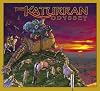
I was shaking with excitement when I first put my hands upon this wonderful book. Not only am I all but obsessed with lemurs, but I also have a fascination with animals and fairy tales. If you sat down and tried to write a book perfect for me, you could not do any better then Terryl Whitlatch and David Michael Wieger. After all, how many books do you see with aye-ayes?
The gorgeous illustrations, of course, have the most instant appeal. This is no thin picture book, but over 180 pages long show more and nearly every double page spread contains at least one delightful picture, filled with breath-taking detail. The turning of every page is a delight, and every time I study a picture there are new, exquisite details to be seen and more exotic creatures to be discovered. I just wish there was a list at the back or somewhere on the internet so that I could confirm my identifications of some of the more obscure species.
The story itself is equally delightful. It has a simple, fable-like quality that I enjoy immensely and matches well with the pictures. It tells the tale of Katook, a young lemur that is exiled from his troop for discovering what he shouldn't. He then sets out on an epic journey that takes him through a wide range of habitats and meets all sorts of quirky and intriguing characters, including Quigga, a somewhat arrogant Quagga. The two become good friends, and the ending hints at more to come.
This is a book I would dearly love to read aloud (had I anyone to read it to). Children today need more tales like this - a beautiful book, a charming story and some powerful and important messages about friendship and family. It also brings awareness to some of the animals we have lost, and some that we will lose if we're not careful.
Everyone, young or old, that loves animals, NEEDS to own this book. show less
The gorgeous illustrations, of course, have the most instant appeal. This is no thin picture book, but over 180 pages long show more and nearly every double page spread contains at least one delightful picture, filled with breath-taking detail. The turning of every page is a delight, and every time I study a picture there are new, exquisite details to be seen and more exotic creatures to be discovered. I just wish there was a list at the back or somewhere on the internet so that I could confirm my identifications of some of the more obscure species.
The story itself is equally delightful. It has a simple, fable-like quality that I enjoy immensely and matches well with the pictures. It tells the tale of Katook, a young lemur that is exiled from his troop for discovering what he shouldn't. He then sets out on an epic journey that takes him through a wide range of habitats and meets all sorts of quirky and intriguing characters, including Quigga, a somewhat arrogant Quagga. The two become good friends, and the ending hints at more to come.
This is a book I would dearly love to read aloud (had I anyone to read it to). Children today need more tales like this - a beautiful book, a charming story and some powerful and important messages about friendship and family. It also brings awareness to some of the animals we have lost, and some that we will lose if we're not careful.
Everyone, young or old, that loves animals, NEEDS to own this book. show less
Summer 2019:
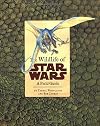
A random Half Price Book find, this book is an absolute gem. The first thing you can't help but notice is that the whole front and back of the book are a textured hard cover, made to feel like the scales of some great creature. On the inside of the front cover and stretching all the way to the inside of the back cover is a size guide ranking all the animals together, as well, which is amazing.
I absolutely picked it up for the Naboo Sections (breaking down individually show more ecosystems and animals in Theedside, The Abyss, and The Gungan Swamp), but I was blown away by every part of this book.
The art is staggering gorgeous, with black and white sketches and color sketches side by sides. There are usually adorable baby and adolescent versions of all the creatures. There are even several side-by-sides where you can see the anatomical structure of the creatures as well. I will enjoy having this as a reference on my shelf going forward. show less
A random Half Price Book find, this book is an absolute gem. The first thing you can't help but notice is that the whole front and back of the book are a textured hard cover, made to feel like the scales of some great creature. On the inside of the front cover and stretching all the way to the inside of the back cover is a size guide ranking all the animals together, as well, which is amazing.
I absolutely picked it up for the Naboo Sections (breaking down individually show more ecosystems and animals in Theedside, The Abyss, and The Gungan Swamp), but I was blown away by every part of this book.
The art is staggering gorgeous, with black and white sketches and color sketches side by sides. There are usually adorable baby and adolescent versions of all the creatures. There are even several side-by-sides where you can see the anatomical structure of the creatures as well. I will enjoy having this as a reference on my shelf going forward. show less

As other reviewers have mentioned, the title is a bit misleading. While Whitlatch does include detailed illustrations of skeletal and muscular anatomy of several types of real-life beings, including labeling that allows readers to note features that different animals have in common, there isn't as much here about science and Whitlatch's creature creation process as I would have liked. Some of her creature illustrations include info on which real-life creatures inspired them (for example, the show more "Welankus" that combines aspects of hellbender and Pinacosaurus anatomy), and Whitlatch occasionally highlights particular things about individual creature anatomy that she thinks readers should pay attention to, but it's generally up to readers to figure out exactly how Whitlatch use real-life influences to create believable fantasy creatures.
There's a huge (on two folded pages) cladistic chart of biological life that might help some readers find inspiration for creature combinations and influences. Whitlatch also mentions some of her sources for reference photos and video, including a site I hadn't previously heard of before, Rhino House, which sounds like it'd be a treasure trove for artists and animators. There's also a full chapter just on horse anatomy - it's clear that horses had a huge influence on Whitlatch's art, to the point that she writes "There is no animal more important for an animal artist and creature designer to draw well and understand than horses" (91). I'd imagine, however, that any animal that an artist has easy enough access to in order to sketch frequently, in numerous poses, would probably make understanding other animals easier.
The book ends with an interview with Whitlatch. Overall, as an art book I really enjoyed this. Whitlatch's creature art is wonderfully detailed, and the book's large pages display it all beautifully. I don't draw or paint much myself, beyond occasional sketches and scribbles here and there, but I could see this book being helpful with future animal needle-felting projects that require the creation of wire armature.
(Original review posted on A Library Girl's Familiar Diversions.) show less
There's a huge (on two folded pages) cladistic chart of biological life that might help some readers find inspiration for creature combinations and influences. Whitlatch also mentions some of her sources for reference photos and video, including a site I hadn't previously heard of before, Rhino House, which sounds like it'd be a treasure trove for artists and animators. There's also a full chapter just on horse anatomy - it's clear that horses had a huge influence on Whitlatch's art, to the point that she writes "There is no animal more important for an animal artist and creature designer to draw well and understand than horses" (91). I'd imagine, however, that any animal that an artist has easy enough access to in order to sketch frequently, in numerous poses, would probably make understanding other animals easier.
The book ends with an interview with Whitlatch. Overall, as an art book I really enjoyed this. Whitlatch's creature art is wonderfully detailed, and the book's large pages display it all beautifully. I don't draw or paint much myself, beyond occasional sketches and scribbles here and there, but I could see this book being helpful with future animal needle-felting projects that require the creation of wire armature.
(Original review posted on A Library Girl's Familiar Diversions.) show less
I love this book! It's a treat for both the mind and the spirit. It follows the journey of Katook, a young lemur. Katook's journey is both internal and external. Yes, it is a picture book, but it's not just a children's book. I plan to come back to it again and again.
Awards

You May Also Like


Statistics
- Works
- 5
- Members
- 436
- Popularity
- #56,113
- Rating
- 4.3
- Reviews
- 6
- ISBNs
- 13