
Daniel Wallace (2) (1970–)
Author of Star Wars: The Jedi Path: A Manual for Students of the Force
For other authors named Daniel Wallace, see the disambiguation page.
About the Author
Daniel Wallace is the author of numerous Star Wars books including several in the Essential Guide series and sourcebooks for the Star Wars Roleplaying Game. Daniel was educated at Michigan State University receiving an advertising degree. He is currently pursuing an MBA degree at Wayne State show more University. (Bowker Author Biography) show less
Works by Daniel Wallace
The DC Comics Encyclopedia: The Definitive Guide to the Characters of the DC Universe (2004) 428 copies, 4 reviews
Associated Works
The Marvel Encyclopedia: The Definitive Guide to the Characters of the Marvel Universe (2006) — Contributor, some editions — 823 copies, 9 reviews
The Year's Best Fantasy & Horror 2006: 19th Annual Collection (2006) — Contributor — 245 copies, 4 reviews
Tagged
Common Knowledge
- Legal name
- Wallace, Daniel C.
- Other names
- Wallace, Dan
- Birthdate
- 1970-03-07
- Gender
- male
- Nationality
- USA
- Places of residence
- Detroit, Michigan, USA
- Associated Place (for map)
- Michigan, USA
Members
Reviews

Cleverly written almost like an Antifa training manual, with technical illustrations of the main Empire vehicles (and some of their weaknesses). There are scribbled "margin notes" on many pages, and a brilliant USSR-style propaganda poster using Stormtroopers on pg. 126:
"Your Emperor Commands You:
Expose
Pursue
Destroy
Those Who Would Resist Us!"
"Your Emperor Commands You:
Expose
Pursue
Destroy
Those Who Would Resist Us!"
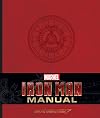
I admit it. I had no clue what this book was going to be. I ordered it because I've loved the "Art of" books from Marvel and thought this would at least be fun. I wasn't wrong. So what is it? Something of an art book crossed with a technical manual with a dash of scrapbook thrown in for good measure.
The book is split into seven sections: 1) Understanding Tony Stark, 2) Stark Industries: A History of Innovation, 3) The Forging of Iron Man, 4) The Mansion and the Workshop, 5) Weaponization: show more the Iron Man Armors, 6) Global Threats and 7) Mr. Stark's Allies. Like the "Art of" books, this manual has a lot of color photographs of locations, people and the armor. Where this book differs is that it's all presented as real. The photos are of Tony Stark, his home and workshop, etc. The book reads like a corporate dossier, as prepared by JARVIS. "Stark Industries" is printed on the cover (not Marvel!).
Like a technical manual, there is a lot of detail on the armors - ALL OF THEM. There is at least a small pic and a blurb for each of the Iron Legion and larger exposes of Tony's main armors. It even goes into details regarding weaponization, gauntlet design, inside the helmet, etc. All referenced as real artifacts - not as concept for a film. There are fold-out pages, schematics, etc. But what really makes this book special is the scrapbook aspect. There are Post-It notes, memos, pamphlets, etc. "glued" in throughout the book. There is even a blue folder inserted (it is bound in) at the beginning which includes Christine Everhart's article on Tony, his notecards from the press conference, his business card, and pics! One Post-It is a reminder that he needs to come up with a "real name" for the element he discovered for the Nobel Committee to use. There are memos from SHIELD, including Black Widow's assessment, as well as a visitor badge to Stark Industries, and so much more. These are like little Easter eggs scattered throughout that make the book a lot of fun to go through. As a Loki fan, I was delighted to find the God of Mischief has a couple of pages under "Global Threats," right alongside Whiplash and Mandarin.
The production values are excellent. Not only does the book have a red leather cover, with cloth spine, but it is smyth-sewn (not glued). This means the book lies open flat without damaging the spine. Very helpful for a "manual". There's no dust jacket, as befitting a technical manual, and the paper is thick and high quality. Full color glossy pages throughout - a truly beautiful book.
Overall, I cannot recommend this enough to Marvel fans in general, but especially to fans of Iron Man. A truly unique book that is actually worth the retail price. Highly recommended! show less
The book is split into seven sections: 1) Understanding Tony Stark, 2) Stark Industries: A History of Innovation, 3) The Forging of Iron Man, 4) The Mansion and the Workshop, 5) Weaponization: show more the Iron Man Armors, 6) Global Threats and 7) Mr. Stark's Allies. Like the "Art of" books, this manual has a lot of color photographs of locations, people and the armor. Where this book differs is that it's all presented as real. The photos are of Tony Stark, his home and workshop, etc. The book reads like a corporate dossier, as prepared by JARVIS. "Stark Industries" is printed on the cover (not Marvel!).
Like a technical manual, there is a lot of detail on the armors - ALL OF THEM. There is at least a small pic and a blurb for each of the Iron Legion and larger exposes of Tony's main armors. It even goes into details regarding weaponization, gauntlet design, inside the helmet, etc. All referenced as real artifacts - not as concept for a film. There are fold-out pages, schematics, etc. But what really makes this book special is the scrapbook aspect. There are Post-It notes, memos, pamphlets, etc. "glued" in throughout the book. There is even a blue folder inserted (it is bound in) at the beginning which includes Christine Everhart's article on Tony, his notecards from the press conference, his business card, and pics! One Post-It is a reminder that he needs to come up with a "real name" for the element he discovered for the Nobel Committee to use. There are memos from SHIELD, including Black Widow's assessment, as well as a visitor badge to Stark Industries, and so much more. These are like little Easter eggs scattered throughout that make the book a lot of fun to go through. As a Loki fan, I was delighted to find the God of Mischief has a couple of pages under "Global Threats," right alongside Whiplash and Mandarin.
The production values are excellent. Not only does the book have a red leather cover, with cloth spine, but it is smyth-sewn (not glued). This means the book lies open flat without damaging the spine. Very helpful for a "manual". There's no dust jacket, as befitting a technical manual, and the paper is thick and high quality. Full color glossy pages throughout - a truly beautiful book.
Overall, I cannot recommend this enough to Marvel fans in general, but especially to fans of Iron Man. A truly unique book that is actually worth the retail price. Highly recommended! show less

I don't know when I drew my first map of a fictional location, but this started at a young age. I know I made maps of the Land of Oz, but this was easy, given the omnipresent maps to imitate in the fronts of my Del Rey editions. I also made maps of Narnia and its surrounding environs, carefully mining the text of C. S. Lewis's novels for clues-- for some reason, good maps of this imaginary realm seem few and far between. (The Dictionary of Imaginary Places has one, but it doesn't go any show more further east than Terebinthia, or further west than Narnia itself, unfortunately.) I of course own a copy of Star Trek: Star Charts, and half the reason I bought Vector Prime was the glorious map of the Star Wars galaxy included in its endpapers. I say all this to explain that it was with no small anticipation that I picked up my copy of The Essential Atlas, a glossy, oversized book of some 243 pages.
What I've learned is that I actually don't care much about Star Wars geography! Not like I do Star Trek stuff. I still pore over my copy of Star Charts occasionally, but I can't see myself referring to this a whole heckuva lot. I just don't know Star Wars minutia well enough (and I know it very well)-- who cares where Ogem is? But this isn't to besmirch the book, which is in fact quite excellent. It's well-researched as far as I know, and the maps themselves are fantastic. My favorite part is the historical and political information the maps (and their accompanying text) communicate; the material on the Old Republic or the disintegration of the Galactic Empire are fantastic, showing coalitions, fleet movements, and battles across wide spans of time and short ones. The book opens up a lot of new historical information about the Star Wars galaxy, from Xim the Despot forward, advancing cartographic ideas the meanwhile. There's some nice, imaginative features, too, though I find the way that some of the features are dropped into the "Atlas of Galactic History" section somewhat random and confusing.
The planetary profiles are also quite solid, and here was a point where I didn't feel lost in obscurity, as the authors deliberately picks more well-known planets to focus on; the ones I didn't already know about were obviously important enough that I should have. My only fault with the book's text were the "Closer Look" sections, which often seemed to be random strings of planets (strangely not ordered) with dull descriptions. In "A Closer Look: Kashyyyk and Its Neighbors", for example, I learned that "Yitabo is a minor argicultural world settled by the Saurins, Wookiees, and Borneck." Try reading over two dozen of these "facts" strung together; I often found myself skipping these sections. But they're a small component of the book, which I was almost always absorbed in, even though I was well aware that it had to have been designed with someone even more obsessed with Star Wars than me in mind. show less
What I've learned is that I actually don't care much about Star Wars geography! Not like I do Star Trek stuff. I still pore over my copy of Star Charts occasionally, but I can't see myself referring to this a whole heckuva lot. I just don't know Star Wars minutia well enough (and I know it very well)-- who cares where Ogem is? But this isn't to besmirch the book, which is in fact quite excellent. It's well-researched as far as I know, and the maps themselves are fantastic. My favorite part is the historical and political information the maps (and their accompanying text) communicate; the material on the Old Republic or the disintegration of the Galactic Empire are fantastic, showing coalitions, fleet movements, and battles across wide spans of time and short ones. The book opens up a lot of new historical information about the Star Wars galaxy, from Xim the Despot forward, advancing cartographic ideas the meanwhile. There's some nice, imaginative features, too, though I find the way that some of the features are dropped into the "Atlas of Galactic History" section somewhat random and confusing.
The planetary profiles are also quite solid, and here was a point where I didn't feel lost in obscurity, as the authors deliberately picks more well-known planets to focus on; the ones I didn't already know about were obviously important enough that I should have. My only fault with the book's text were the "Closer Look" sections, which often seemed to be random strings of planets (strangely not ordered) with dull descriptions. In "A Closer Look: Kashyyyk and Its Neighbors", for example, I learned that "Yitabo is a minor argicultural world settled by the Saurins, Wookiees, and Borneck." Try reading over two dozen of these "facts" strung together; I often found myself skipping these sections. But they're a small component of the book, which I was almost always absorbed in, even though I was well aware that it had to have been designed with someone even more obsessed with Star Wars than me in mind. show less

As a Star Wars lover and wannabe Jedi, I found this little book to be a fun (and actually quite informative) read. It's set up like an actual manual/textbook, complete with marginal notes from Yoda, Obi-Wan, Anakin, and Luke Skywalker himself, among others. There are also pictures, illustrations, and diagrams throughout.
What I really enjoyed was the little disagreements with the Jedi teachings that some of the note-takers expressed (especially Luke regarding attachment and love). It shows show more that maybe the Jedi did not always know what was best. Luke also offers little hints about how things are going with his own Jedi order, which makes me eager to read the Star Wars books that take place after Return of the Jedi.
In all, a delightfully nerdy read for Star Wars fans and aspiring Jedi Knights. show less
What I really enjoyed was the little disagreements with the Jedi teachings that some of the note-takers expressed (especially Luke regarding attachment and love). It shows show more that maybe the Jedi did not always know what was best. Luke also offers little hints about how things are going with his own Jedi order, which makes me eager to read the Star Wars books that take place after Return of the Jedi.
In all, a delightfully nerdy read for Star Wars fans and aspiring Jedi Knights. show less
Awards


You May Also Like


Associated Authors
Statistics
- Works
- 68
- Also by
- 5
- Members
- 5,842
- Popularity
- #4,223
- Rating
- 4.0
- Reviews
- 67
- ISBNs
- 356
- Languages
- 16
- Favorited
- 2
