
J. J. Abrams
Author of S.
About the Author
Image credit: Neil Motteram (2006).
Series
Works by J. J. Abrams
Star Wars: The Force Awakens [2015 film] (2015) — Director; Screenwriter; Director — 1,337 copies, 6 reviews
Mission Impossible: Ultimate Missions Collection (Mission Impossible / Mission Impossible II / Mission Impossible III) (2006) — Director — 54 copies
Fringe: The Complete First And Second Seasons — Creator — 4 copies
The Dragon Isles 3 copies
Pilot 3 copies
J.J. Abrams, Alex Kurtzman & Roberto Orci Present Fringe #1 — Author — 2 copies
Alias 1 copy
Lost Season 1: Pilot Part 1 — Director — 1 copy
Born from the future 1 copy
The Awakening 1 copy
Fringe, The Same Old Story 1 copy
Fringe: The Complete First, Second And Third Seasons — Creator — 1 copy
Lost: The Complete First & Second Seasons — Creator — 1 copy
Associated Works
Mission Impossible: Ghost Protocol [2011 film] (2011) — Producer, some editions — 426 copies, 3 reviews
Tagged
Common Knowledge
- Canonical name
- Abrams, J. J.
- Legal name
- Abrams, Jeffrey Jacob
- Birthdate
- 1966-06-27
- Gender
- male
- Education
- Sarah Lawrence College
Palisades High School - Occupations
- film producer
screenwriter
film director
actor
composer - Relationships
- Abrams, Gerald W. (father)
Abrams, Carol Ann (mother) - Nationality
- USA
- Birthplace
- New York, New York, USA
- Places of residence
- Los Angeles, California, USA
- Map Location
- USA
Members
Discussions
Geek alert! JJ Abrams & Doug Dorst book in The Green Dragon (April 2014)
Reviews
S by Doug Dorst
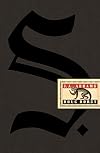
All style and no substance. I've read S twice, following two different systems, and listened to the audiobook of Ship of Theseus. I really wanted to enjoy it. As a book designer and bibliophile, I was overwhelmed with the level of production. Every detail of the book is perfect, from the choice of paper stock for the various inserts to the naturalistic foxing of the book's pages. It looks like the Famous Five adventure of my childhood dreams. Unfortunately the stories (in both book and show more margins) are thin gruel and the themes float on the surface like a puddle of oil. I had expected a cross between Exit: The Game and Abrams' Lost, but S fails to deliver on either count. A beautiful failure. show less

It's a fascinating concept: S can be read on a multitude of levels. First up is the book inside the slipcover, Ship of Theseus. That's an existential story about a man (S.) with limited memories trying to figure out if his life is moving due to free will or determinism. Layered in the margins is another story, that of two college-age students trying to solve the mystery of Theseus' reclusive author (and there's a little romance thrown in there too).
I was sure I'd be more interested in the show more mystery component -- there's a code wheel in the back of the book! -- but somewhere along the way, I started liking the Theseus story more. (It may be because the ongoing conversation in the margins seemed so "immediate" even though days and even weeks were passing between the inscriptions.) When I finished, I had to decide if I should go back to put some of the mystery pieces together. But, like S, once the opportunity came, I wasn't sure I had any interest anymore. (And a part of me was worried that putting in so much time wouldn't be worth it, leaving more questions than answers.)
Is the book worth reading? If you're looking for a quick payoff, stay away. If you're a lit major or you like the idea of a story truly written in the margins of a book -- and you have some significant time to spend -- this might be worth a look.
-------------------------------
LT Haiku:
They say you never
read the same book twice, but this
might require it. show less
I was sure I'd be more interested in the show more mystery component -- there's a code wheel in the back of the book! -- but somewhere along the way, I started liking the Theseus story more. (It may be because the ongoing conversation in the margins seemed so "immediate" even though days and even weeks were passing between the inscriptions.) When I finished, I had to decide if I should go back to put some of the mystery pieces together. But, like S, once the opportunity came, I wasn't sure I had any interest anymore. (And a part of me was worried that putting in so much time wouldn't be worth it, leaving more questions than answers.)
Is the book worth reading? If you're looking for a quick payoff, stay away. If you're a lit major or you like the idea of a story truly written in the margins of a book -- and you have some significant time to spend -- this might be worth a look.
-------------------------------
LT Haiku:
They say you never
read the same book twice, but this
might require it. show less
S. by Doug Dorst
"That's why people like Vévoda always have the advantage, you know," Corbeau says, rubbing her nose. "Over people like us. Because we're cursed with the belief that people matter. It's much, much easier to bend the world to your will if bending the world is what matters most to you."
S. is several different books at once. At the base, there's the physical book; a very satisfyingly weighty object with library binding and a library sticker on the spine called, rather obviously, Ship of show more Theseus. That volume holds the last work of famed author V.M. Straka, a mysterious person whose identity is the subject of debate. In this novel, a man washes ashore at a small industrial port city currently in the midst of a labor strike. He is quickly swept up in the chaos and ends up taking shelter with the ringleaders of the strike as things rapidly fall apart and they are forced to flee across the mountains. Eventually, the man ends up back on board the ship that had left him at the city, and no matter what he does, he ends up back on this ship, one that becomes more and more battered as damaged parts are replaces with ever flimsier substitutions.
The next part of this book are the footnotes written by his translator, a person who never met Straka, but who has spent their life working for him. Straka himself was seemingly disappeared, or chose to disappear, the pages of this novel left scattered in the alleyway behind the hotel where he was taken. There are clues and codes embedded in the footnotes and relate to Straka's history of being part of a band of artists fighting an evil corporate entity.
Then there's the story of an English major working part-time in the university library who finds a copy of Ship of Theseus "owned" (see library markings) by a graduate student expelled from the university who is desperately trying to find out who Straka really was, even as the professor he had studied under has taken his work and is trying to discredit him. As the two correspond through notes written in the margins, they begin to work together to find out who Straka was and what exactly happened to him, leaving information between the pages of the book. There's an added layer in this correspondence, as they go back and forth through the book with their messages, so that a single page can hold messages from different times in their storyline.
The result of all of this is a very tactile and interactive book, where there are maps scrawled on napkins and all sorts of comments on the text as the story progresses. Doug Dorst has created an intricate work where the various elements enhance each other. It's a slow reading process, and one that requires more from the reader than just turning pages, and I very much enjoyed my time with this book. There is an audio version of this book, which boggles my mind. show less
S. is several different books at once. At the base, there's the physical book; a very satisfyingly weighty object with library binding and a library sticker on the spine called, rather obviously, Ship of show more Theseus. That volume holds the last work of famed author V.M. Straka, a mysterious person whose identity is the subject of debate. In this novel, a man washes ashore at a small industrial port city currently in the midst of a labor strike. He is quickly swept up in the chaos and ends up taking shelter with the ringleaders of the strike as things rapidly fall apart and they are forced to flee across the mountains. Eventually, the man ends up back on board the ship that had left him at the city, and no matter what he does, he ends up back on this ship, one that becomes more and more battered as damaged parts are replaces with ever flimsier substitutions.
The next part of this book are the footnotes written by his translator, a person who never met Straka, but who has spent their life working for him. Straka himself was seemingly disappeared, or chose to disappear, the pages of this novel left scattered in the alleyway behind the hotel where he was taken. There are clues and codes embedded in the footnotes and relate to Straka's history of being part of a band of artists fighting an evil corporate entity.
Then there's the story of an English major working part-time in the university library who finds a copy of Ship of Theseus "owned" (see library markings) by a graduate student expelled from the university who is desperately trying to find out who Straka really was, even as the professor he had studied under has taken his work and is trying to discredit him. As the two correspond through notes written in the margins, they begin to work together to find out who Straka was and what exactly happened to him, leaving information between the pages of the book. There's an added layer in this correspondence, as they go back and forth through the book with their messages, so that a single page can hold messages from different times in their storyline.
The result of all of this is a very tactile and interactive book, where there are maps scrawled on napkins and all sorts of comments on the text as the story progresses. Doug Dorst has created an intricate work where the various elements enhance each other. It's a slow reading process, and one that requires more from the reader than just turning pages, and I very much enjoyed my time with this book. There is an audio version of this book, which boggles my mind. show less

What S. looks like is a book called Ship of Theseus by V. M. Straka, published in 1949. Translated into English, the book has footnotes by its translator, F. X. Caldeira. It's a specific copy, taken out of a high school library and never returned by a guy named Eric; the book is filled with his annotations as he (much later) prepares to write his doctoral thesis on it. His copy is found by an undergraduate library worker named Jen, who responds to his annotations, and then he replies to show more hers, and so on. (Different colors of ink allow you to partially decode the sequence of annotations.) There are also physical objects in the book, like longer letters between the two, postcards, newspaper clippings, photocopies of journal articles, and so on. (The book was originally published with a slipcase that I believe credits the real author—Doug Dorst, from an idea by film director J. J. Abrams—but my library copy doesn't have that, so someone who picked the book up off the shelf without context would, I suspect, be somewhat baffled!)
S. is the kind of book that scholar Katherine Hayles would call a "technotext": one that draws attention to the fact that it is a text, a physical assemblage, like Steven Hall's The Raw Shark Texts. (This is distinct from metafictions, works that call attention to the fact that they are fictions, though some books are both metafiction and technotext.) Back in grad school I was briefly obsessed with these kinds of books, though I had the much more awkward descriptor "non-novel novels," novels told in the forms of things that were not novels; many years later I discovered the much better descriptor of "hermit crab fictions" for this kind of thing.
S. was certainly inspired by Nabokov's Pale Fire, where you have a book that's been translated and annotated, and the narrative emerges from the tension between the embedded story and the act of annotation. But it goes further. We have a few different stories here: 1) There's the actual story of Ship of Theseus, a sort of Kafkaesque one about a guy who ends up on a mysterious ship and in the employ of a mysterious group. 2) There's the story of how Ship of Theseus was written and its mysterious author, Straka, and his relationship with his translator, Caldeira. 3) There's the story of Eric and Jen and their growing relationship with each other as they work to uncover the story of Straka, Caldeira, and the mysterious S., while competing with Eric's former Ph.D. advisor. (I'm much less certain if Dorst read this, but there's definitely resonances with the best novel about literary criticism ever written, A. S. Byatt's Possession. The other book this reminded me a lot of, actually, is Daniel Handler's Lemony Snicket: The Unauthorized Autobiography. Is S. just A Series of Unfortunate Events for grownups?)
o it's a complicated book, and a bit difficult to read. According to the Internet, some people actually read Ship of Theseus first, and then the footnotes, and then the first time track of Jen/Eric interactions, and then the second, and so on! I ended up reading one chapter with its footnotes, and then doubling back and reading all the Eric/Jen annotations for that chapter, just doing my best to keep in mind what had happened when in each of the three parallel tracks. (I wasn't capable of reading more than one chapter in a single sitting; it took up a lot of cognitive load to read this book!) I don't think I could have read all of Ship of Theseus on its own without the other layers; the embedded novel is intermittently interesting, but it never grabbed me, possibly because one never shakes the feeling its been constructed as a clue in a mystery and not a genuine novel.
It is beautiful to look at; the team that designed it did an excellent job, as it really looks like a 1930s library book, and the annotations and the interpolated objects all look authentic. (Nice of Eric and Jen to be very consistent about their ink colors, though!) I loved the very dumb articles in the student newspaper; they are all quite accurate to my experience reading many many student newspapers. It's just a pleasure to thumb through the book and consider it. Back when I was in grad school, people were arguing about books-as-conveyors-of-information and books-as-physical-objects, and what we lose through digitization (they might still be arguing about these things, I don't know, I've moved on), and this is definitely a book that trades on the power of the latter. There is an ebook and even an audiobook... but why? what would be the point of reading the book in such forms? The pleasure of the book is remembering the pleasure of reading any well-loved book, thumbing through it, trying to find its depths and mysteries, something any lover of literature can identify with, I am sure.
As I said, I didn't find the Ship of Theseus story terribly interesting; I also wasn't very much into the mystery of Straka and Caldeira. Thinking of books as a series of mysteries to decode, with right or wrong answers, just doesn't resonate with how I read literature. (It doesn't seem too much of a surprise, however, to discover that J. J. Abrams thinks of literature this way.) There's some good stuff here but I just wasn't interested in the puzzle-solving aspect of the book, and I was very happy for Eric and Jen to do all that work for me. Some people who've read the book have done deep dives on exactly who Straka and Caldeira and S. were and what happened between them. I can't imagine myself doing that!
What I can imagine doing, however, is doing a deep dive on Eric and Jen. They, for me, were the real success of the book. What the annotations also capture is that feeling of being in love with a book and the joy of exploring it with someone else. Reading is a solitary activity in some ways but it's also a communal one. We bond over books, we love it when we can share a book we love with someone else who ends up loving it as much as we do. And loving stories in this way can be an aspect of actual love, of coming to know and love someone else. I recommended the book to an acquaintance (after a discussion of Nabokov with her lead me to Pale Fire and then to S.), and she told me it was one of the best romance novels she'd ever read. I hadn't thought of it as a romance novel, but I immediately knew that she was right.
Here is a bit of a spoiler, buta bit I found particularly interesting was when you find out Jen and Eric have had sex. Obviously you discover that fictional characters have had sex all the time! But when I found out they had had sex, I had a little bit of a shudder, like I had found out something I wasn't supposed to find out, like the time I was helping a student do something on her laptop and a sext from her boyfriend popped up. (Macs are weird.) The form of the book creates an intimacy with Eric and Jen, but a voyeuristic one. They're falling in love, but you're overhearing it, and you're not supposed to. This is their copy of the book, not yours . The ending of their story is particularly cute.
It's been over a decade since the book came out, and I think it's probably set when it came out, so Eric and Jen would be in their mid-to-late thirties now. It's easy to imagine them still existing, though I don't know exactly what they would be doing. I hope they're happy together still, and I hope they've figured out their lives. It's hard work to figure yourself out, but figuring out literature gives you a blueprint to do it, so they ought to be able to if they put in the effort. show less
S. is the kind of book that scholar Katherine Hayles would call a "technotext": one that draws attention to the fact that it is a text, a physical assemblage, like Steven Hall's The Raw Shark Texts. (This is distinct from metafictions, works that call attention to the fact that they are fictions, though some books are both metafiction and technotext.) Back in grad school I was briefly obsessed with these kinds of books, though I had the much more awkward descriptor "non-novel novels," novels told in the forms of things that were not novels; many years later I discovered the much better descriptor of "hermit crab fictions" for this kind of thing.
S. was certainly inspired by Nabokov's Pale Fire, where you have a book that's been translated and annotated, and the narrative emerges from the tension between the embedded story and the act of annotation. But it goes further. We have a few different stories here: 1) There's the actual story of Ship of Theseus, a sort of Kafkaesque one about a guy who ends up on a mysterious ship and in the employ of a mysterious group. 2) There's the story of how Ship of Theseus was written and its mysterious author, Straka, and his relationship with his translator, Caldeira. 3) There's the story of Eric and Jen and their growing relationship with each other as they work to uncover the story of Straka, Caldeira, and the mysterious S., while competing with Eric's former Ph.D. advisor. (I'm much less certain if Dorst read this, but there's definitely resonances with the best novel about literary criticism ever written, A. S. Byatt's Possession. The other book this reminded me a lot of, actually, is Daniel Handler's Lemony Snicket: The Unauthorized Autobiography. Is S. just A Series of Unfortunate Events for grownups?)
o it's a complicated book, and a bit difficult to read. According to the Internet, some people actually read Ship of Theseus first, and then the footnotes, and then the first time track of Jen/Eric interactions, and then the second, and so on! I ended up reading one chapter with its footnotes, and then doubling back and reading all the Eric/Jen annotations for that chapter, just doing my best to keep in mind what had happened when in each of the three parallel tracks. (I wasn't capable of reading more than one chapter in a single sitting; it took up a lot of cognitive load to read this book!) I don't think I could have read all of Ship of Theseus on its own without the other layers; the embedded novel is intermittently interesting, but it never grabbed me, possibly because one never shakes the feeling its been constructed as a clue in a mystery and not a genuine novel.
It is beautiful to look at; the team that designed it did an excellent job, as it really looks like a 1930s library book, and the annotations and the interpolated objects all look authentic. (Nice of Eric and Jen to be very consistent about their ink colors, though!) I loved the very dumb articles in the student newspaper; they are all quite accurate to my experience reading many many student newspapers. It's just a pleasure to thumb through the book and consider it. Back when I was in grad school, people were arguing about books-as-conveyors-of-information and books-as-physical-objects, and what we lose through digitization (they might still be arguing about these things, I don't know, I've moved on), and this is definitely a book that trades on the power of the latter. There is an ebook and even an audiobook... but why? what would be the point of reading the book in such forms? The pleasure of the book is remembering the pleasure of reading any well-loved book, thumbing through it, trying to find its depths and mysteries, something any lover of literature can identify with, I am sure.
As I said, I didn't find the Ship of Theseus story terribly interesting; I also wasn't very much into the mystery of Straka and Caldeira. Thinking of books as a series of mysteries to decode, with right or wrong answers, just doesn't resonate with how I read literature. (It doesn't seem too much of a surprise, however, to discover that J. J. Abrams thinks of literature this way.) There's some good stuff here but I just wasn't interested in the puzzle-solving aspect of the book, and I was very happy for Eric and Jen to do all that work for me. Some people who've read the book have done deep dives on exactly who Straka and Caldeira and S. were and what happened between them. I can't imagine myself doing that!
What I can imagine doing, however, is doing a deep dive on Eric and Jen. They, for me, were the real success of the book. What the annotations also capture is that feeling of being in love with a book and the joy of exploring it with someone else. Reading is a solitary activity in some ways but it's also a communal one. We bond over books, we love it when we can share a book we love with someone else who ends up loving it as much as we do. And loving stories in this way can be an aspect of actual love, of coming to know and love someone else. I recommended the book to an acquaintance (after a discussion of Nabokov with her lead me to Pale Fire and then to S.), and she told me it was one of the best romance novels she'd ever read. I hadn't thought of it as a romance novel, but I immediately knew that she was right.
Here is a bit of a spoiler, but
It's been over a decade since the book came out, and I think it's probably set when it came out, so Eric and Jen would be in their mid-to-late thirties now. It's easy to imagine them still existing, though I don't know exactly what they would be doing. I hope they're happy together still, and I hope they've figured out their lives. It's hard work to figure yourself out, but figuring out literature gives you a blueprint to do it, so they ought to be able to if they put in the effort. show less
Lists
Awards


You May Also Like


Associated Authors
Statistics
- Works
- 77
- Also by
- 16
- Members
- 12,435
- Popularity
- #1,888
- Rating
- 3.8
- Reviews
- 144
- ISBNs
- 145
- Languages
- 8
- Favorited
- 3
