

Ian Gibson (2) (1946–2013)
Author of The Ballad of Halo Jones : Full Colour Omnibus Edition
For other authors named Ian Gibson, see the disambiguation page.
Series
Works by Ian Gibson
The Ballad of Halo Jones : Full Colour Omnibus Edition (2023) — Illustrator — 487 copies, 10 reviews
2000 AD 209 1 copy
Halo Jones No. 5 — Illustrator — 1 copy
2000 AD 198 1 copy
Halo Jones No. 4 — Illustrator — 1 copy
Judge Dredd Vol. 1, No. 34 — Illustrator — 1 copy
Halo Jones No. 12 — Illustrator — 1 copy
Halo Jones No. 10 — Illustrator — 1 copy
Halo Jones No. 8 — Illustrator — 1 copy
Halo Jones No. 7 — Illustrator — 1 copy
Associated Works
The Complete Judge Dredd # 1 — Artist, some editions — 2 copies
Judge Dredd - The Early Cases, Vol. 1, No. 1 — Illustrator — 1 copy
Judge Dredd - The Early Cases, Vol. 1, No. 2 — Illustrator — 1 copy
Halo Jones No. 9 — Illustrator — 1 copy
Strontium Dog Special No. 1 — Illustrator — 1 copy
Judge Dredd - The Early Cases, Vol. 1, No. 6 — Illustrator — 1 copy
Judge Dredd - The Early Cases, Vol. 1, No. 5 — Illustrator — 1 copy
Judge Dredd - The Early Cases, Vol. 1, No. 4 — Illustrator — 1 copy
Judge Dredd - The Early Cases, Vol. 1, No. 3 — Illustrator — 1 copy
Halo Jones No. 11 — Illustrator — 1 copy
Tagged
Common Knowledge
- Other names
- Twerk, Q.
- Birthdate
- 1946-02-20
- Date of death
- 2013-12-11
- Gender
- male
- Occupations
- illustrator
comic book artist - Nationality
- UK
- Associated Place (for map)
- UK
Members
Reviews
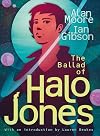
This was my first encounter with Alan Moore and I really liked it. I liked being plunged directly into a new world and learning about it as the story unfolded. I enjoyed the social commentary on materialism, media inanity, wars off stage conducted for bad reasons, and the demonisation of the unemployed. The comic first appeared in the ultra materialist Thatcher years, but it feels very relevant still. The characters were all believable, and there was a good mix of action, tension and show more pathos.
Halo is an intriguing character. I liked her because she was normal, average, unremarkable in so far as she was aimless in her boredom, innocent of the worst aspects of other people, liked shopping and clothes but wasn't that bothered about shopping and clothes, and was gauche around men, unfazed or oblivious to celebrity. I liked her because she realised that her life on The Hoop wasn't enough and she took control of her life in order to change it. I liked her because she was true to herself, even when she didn't know she had anything to be true to and was stumbling through life. I liked her because she startdd to wake up to what was going on around her and because, even when it seemed that she'd lost everything, she didn't give up. She still saw that she had a future. She never had a game plan. Her only ambition was to live, and to live to the best of her ability. I like her most of all for that. It's what we all should do, whatever circumstance we find ourselves in.
It was really obvious that Moore and Gibson had put a lot of work into creating the world that Halo inhabits. The story builds gradually, and drops in hints of what has gone before without laying it all out on a plate. With each new plot development, too, just enough is said to allow links to be formed and anticipation for the next chapter to build. It's such a shame that legal wrangling with the publishers meant that Moore and Gibson stopped after three books, rather than completing the nine they originally intended. show less
Halo is an intriguing character. I liked her because she was normal, average, unremarkable in so far as she was aimless in her boredom, innocent of the worst aspects of other people, liked shopping and clothes but wasn't that bothered about shopping and clothes, and was gauche around men, unfazed or oblivious to celebrity. I liked her because she realised that her life on The Hoop wasn't enough and she took control of her life in order to change it. I liked her because she was true to herself, even when she didn't know she had anything to be true to and was stumbling through life. I liked her because she startdd to wake up to what was going on around her and because, even when it seemed that she'd lost everything, she didn't give up. She still saw that she had a future. She never had a game plan. Her only ambition was to live, and to live to the best of her ability. I like her most of all for that. It's what we all should do, whatever circumstance we find ourselves in.
It was really obvious that Moore and Gibson had put a lot of work into creating the world that Halo inhabits. The story builds gradually, and drops in hints of what has gone before without laying it all out on a plate. With each new plot development, too, just enough is said to allow links to be formed and anticipation for the next chapter to build. It's such a shame that legal wrangling with the publishers meant that Moore and Gibson stopped after three books, rather than completing the nine they originally intended. show less

Halo Jones has no superpowers, she's just a girl. Lives in the 50th century, inwhich the rich are getting richer, while the poor are getting poorer (same old), and Halo's mired in the latter category. The centuries have not been kind; Earth is a backwater planet, humankind aren't such superior beings after all, life everywhere is dangerous. For Halo and her friends the last best option may yet come down to joining the mindless glombies (who 'nod, nod, nod, all the time, in unison').
As the show more story begins Halo's friend Rodice is the take-change character, her friend Ludy has the talent, and her friend Brinna has the brains; Halo's only burning ambition is to be somewhere other than there. Jobs are a thing of the past, especially on the Hoop, but she does speak some Cetacean, so it's Halo who almost accidentally makes good on her own promise. Alan Moore is plainly having some fun here: they go on a really perilous shopping expedition armed with zenades, and vanquish a gang of stylista checkout hags with a Jackson Pollock Spatter-effect. Brinna's tastes lean to 46th century philo-gothic sitdrams (Halo calls them philosophy-nasty) like "John Cage: Atonal Avenger" and "Wittgenstein Has Risen From his Grave". There's a fabulous character called Glyph that nobody notices, and his (very) little life in the book margins is poignant. Halo contemplates death and even religion, drinks Catsblood, accidently starts a ratwar, resolves a doomed love affair, and even gets to dance to her own different drummers... and stays alive, which as we all know tends to be the tough part.
'Where did she go?' says one title page. 'Out. What did she do? Everything.' The story is terribly small, but it's chockful of everything. Which makes the students in 6427A.D. studying Van Eyck's seminal work on the subject, 'The Halo Jones Myth in Modern Concordian Folklore', question the subject matter: After all, 'she wasn't anyone special'. What the story is all about, the lecturer maintains, is what Halo Jones herself is quoted as having said about herself: "Anybody could have done it." So true, but luckily, it's Alan Moore who did. Me, i'm totally looking forward to the publication of Book #2. It's like a mindmeld of Alan Moore and Joss Whedon, and how sweet is that, in the small? So till the day, stay slappy, watch out for Fleurs du Mall, try to dodge those drangsturms - and keep flying. show less
As the show more story begins Halo's friend Rodice is the take-change character, her friend Ludy has the talent, and her friend Brinna has the brains; Halo's only burning ambition is to be somewhere other than there. Jobs are a thing of the past, especially on the Hoop, but she does speak some Cetacean, so it's Halo who almost accidentally makes good on her own promise. Alan Moore is plainly having some fun here: they go on a really perilous shopping expedition armed with zenades, and vanquish a gang of stylista checkout hags with a Jackson Pollock Spatter-effect. Brinna's tastes lean to 46th century philo-gothic sitdrams (Halo calls them philosophy-nasty) like "John Cage: Atonal Avenger" and "Wittgenstein Has Risen From his Grave". There's a fabulous character called Glyph that nobody notices, and his (very) little life in the book margins is poignant. Halo contemplates death and even religion, drinks Catsblood, accidently starts a ratwar, resolves a doomed love affair, and even gets to dance to her own different drummers... and stays alive, which as we all know tends to be the tough part.
'Where did she go?' says one title page. 'Out. What did she do? Everything.' The story is terribly small, but it's chockful of everything. Which makes the students in 6427A.D. studying Van Eyck's seminal work on the subject, 'The Halo Jones Myth in Modern Concordian Folklore', question the subject matter: After all, 'she wasn't anyone special'. What the story is all about, the lecturer maintains, is what Halo Jones herself is quoted as having said about herself: "Anybody could have done it." So true, but luckily, it's Alan Moore who did. Me, i'm totally looking forward to the publication of Book #2. It's like a mindmeld of Alan Moore and Joss Whedon, and how sweet is that, in the small? So till the day, stay slappy, watch out for Fleurs du Mall, try to dodge those drangsturms - and keep flying. show less
Most of this collection is The Apocalypse War saga, which is, dare i say it, pretty boring. Whilst both sides are cartoonish the satire isn't really laid on, which means that its kind of white propoganda when it could have been an absolute cracker of a takedown of both Bolshevism and western imperialist values. Instead it's an overlong war epic where megadeaths and deliberate targeting of civilians are tossed out by both sides without any commentary at all.
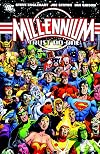
Millennium is the last DC crossover I'll read prior to Zero Hour: Crisis in Time!-- like Legends, it has some light connections to Crisis on Infinite Earths. In this case, that's the presence of Harbinger, having finished writing History of the DC Universe, and that the plot spins out of when the Guardians of the Universe departed the universe, which happened in the Crisis.
The plot of Millennium is that a Guardian and a Zamaron have decided to jump-start evolution on Earth so that humans can show more take the place of the Guardians, which they will do by picking ten (or eight, or seven, or some other number) of special humans. But the robotic Manhunter cult is opposed to this, and so they activate their hidden agents to destroy the special humans as well as superheroes in general. This means that anyone could be a Manhunter-- only in practice, the only significant Manhunter is Lana Lang (I don't know how this was resolved, because she's still around in later comics, and I assume not an evil android by that point). Most of the Manhunters are "revealed" as characters I've never heard of, and whose significance to the superheroes isn't really explained. There's also a hilarious scene where Booster Gold discovers a Manhunter by overhearing telling another Manhunter that he hopes he isn't discovered-- with security like that, no wonder they end up soundly whomped on.
The frustrating part of Millennium is that though it has a much more complicated plot than, say, Legends, we never get to see many of the important moments of this plot. One issue ends with heroes going off to attack the Manhunter home planet; the next begins with the planet having been destroyed, in an issue of some other comic book from 1988 that I'll never read. This means mostly you read about the heroes talking about what they have just done, or what they are going to be doing... but you never get to see them do it.
Meanwhile, the Guardian and the Zamaron tutor the chosen "New Guardians" in a lot of cod-mysticism that makes The Empire Strikes Back and Death Comes to Time look deep and complex. Then they "evolve"; as you might have guessed, "evolution" in this context means "assume the identity of a superhero that could have only been thought of in 1988." One of them becomes the superhero RAM-- Random Access Memory. His power is, of course, "computers".
Poor Harbinger doesn't fare well here-- her history is used by the Manhunters to discover the secret identities of the superheroes, and she gets tortured by the Manhunters. She's not quite the powerful, mystical being she was during the Crisis; she comes across as a pretty "ordinary" superhero, alas.
Famously, this is the book where it was established that in the DC universe, Britain is a fog-shrouded fascist dictatorship, which I find hilarious. I wonder if Paul Cornell dealt with this in Knight and Squire? Also Ronald Reagan makes a return appearance after Legends. Is it noteworthy that this is the third big DC story in a row (after Crisis on Infinite Earths and Legends) where Firestorm gets a decent amount of focus? Were they trying to push his solo book or what?
The art of Joe Staton and Ian Gibson is more stylized than is normal for a mainstream DC book, but I really liked it for that reason-- it gave this book a little more oomph than it might otherwise have had. But overall, Millennium is an exercise in eight issues of frustration.
DC Comics Crises: « Previous in sequence | Next in sequence » show less
The plot of Millennium is that a Guardian and a Zamaron have decided to jump-start evolution on Earth so that humans can show more take the place of the Guardians, which they will do by picking ten (or eight, or seven, or some other number) of special humans. But the robotic Manhunter cult is opposed to this, and so they activate their hidden agents to destroy the special humans as well as superheroes in general. This means that anyone could be a Manhunter-- only in practice, the only significant Manhunter is Lana Lang (I don't know how this was resolved, because she's still around in later comics, and I assume not an evil android by that point). Most of the Manhunters are "revealed" as characters I've never heard of, and whose significance to the superheroes isn't really explained. There's also a hilarious scene where Booster Gold discovers a Manhunter by overhearing telling another Manhunter that he hopes he isn't discovered-- with security like that, no wonder they end up soundly whomped on.
The frustrating part of Millennium is that though it has a much more complicated plot than, say, Legends, we never get to see many of the important moments of this plot. One issue ends with heroes going off to attack the Manhunter home planet; the next begins with the planet having been destroyed, in an issue of some other comic book from 1988 that I'll never read. This means mostly you read about the heroes talking about what they have just done, or what they are going to be doing... but you never get to see them do it.
Meanwhile, the Guardian and the Zamaron tutor the chosen "New Guardians" in a lot of cod-mysticism that makes The Empire Strikes Back and Death Comes to Time look deep and complex. Then they "evolve"; as you might have guessed, "evolution" in this context means "assume the identity of a superhero that could have only been thought of in 1988." One of them becomes the superhero RAM-- Random Access Memory. His power is, of course, "computers".
Poor Harbinger doesn't fare well here-- her history is used by the Manhunters to discover the secret identities of the superheroes, and she gets tortured by the Manhunters. She's not quite the powerful, mystical being she was during the Crisis; she comes across as a pretty "ordinary" superhero, alas.
Famously, this is the book where it was established that in the DC universe, Britain is a fog-shrouded fascist dictatorship, which I find hilarious. I wonder if Paul Cornell dealt with this in Knight and Squire? Also Ronald Reagan makes a return appearance after Legends. Is it noteworthy that this is the third big DC story in a row (after Crisis on Infinite Earths and Legends) where Firestorm gets a decent amount of focus? Were they trying to push his solo book or what?
The art of Joe Staton and Ian Gibson is more stylized than is normal for a mainstream DC book, but I really liked it for that reason-- it gave this book a little more oomph than it might otherwise have had. But overall, Millennium is an exercise in eight issues of frustration.
DC Comics Crises: « Previous in sequence | Next in sequence » show less
Lists
Awards

You May Also Like
Associated Authors
Statistics
- Works
- 34
- Also by
- 53
- Members
- 1,900
- Popularity
- #13,550
- Rating
- 3.9
- Reviews
- 25
- ISBNs
- 264
- Languages
- 11