
George Hitchcock (1914–2010)
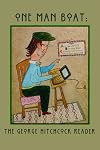
Author of One-Man Boat: The George Hitchcock Reader
About the Author
Image credit: www.robertmcdowell.net
www.threeintentions.com
www.threeintentions.com
Works by George Hitchcock
The racquet, or, Viajes por America lejana by César-Agosto Villaseňor M. (as translated from the Spanish) (1993) 2 copies
Kayak 10 1 copy
Kayak 46 1 copy
Kayak 9 1 copy
Kayak 8 1 copy
Kayak 5 1 copy
Kayak 2 1 copy
Kayak 1 1 copy
Kayak 4 1 copy
Kayak 30 1 copy
Kayak 11 1 copy
Kayak 12 1 copy
Kayak 13 1 copy
Kayak 14 1 copy
Kayak 16 1 copy
KAYAK 28 1 copy
Kayak 31 1 copy
Kayak 32 1 copy
KAYAK 34 1 copy
Kayak 43 1 copy
Kayak 45 1 copy
Kayak 44 1 copy
KAYAK 27 1 copy
Kayak 35 (literary magazine) — Editor — 1 copy
Kayak 12 — Editor — 1 copy
Notes of the Siege War 1 copy
Kayak 1 copy
Counterfeit Rose 1 copy
Kayak 56 1 copy
Associated Works
Alfred Hitchcock Presents : Stories My Mother Never Told Me (1963) — Contributor — 94 copies, 2 reviews
Tagged
Common Knowledge
- Canonical name
- Hitchcock, George
- Legal name
- Hitchcock, George Parks
- Birthdate
- 1914-06-02
- Date of death
- 2010-08-17
- Gender
- male
- Education
- University of Oregon
- Occupations
- poet
actor
playwright
teacher
publisher
painter (show all 9)
reporter
cook
waiter - Organizations
- Kayak (founder ∙ publisher ∙ editor)
U.S. Merchant Marine - Awards and honors
- C.E.S. Wood Retrospective Award (2003)
- Relationships
- Simon, Marjorie (girlfriend)
Jarman, Mark (student) - Nationality
- USA
- Birthplace
- Hood River, Oregon, USA
- Places of residence
- Eugene, Oregon, USA
Santa Cruz, California, USA - Place of death
- Eugene, Oregon, USA
- Associated Place (for map)
- Oregon, USA
Members
Reviews
Delight is a gift that deserves appreciation. Hitchcock provides delight, and almost nothing else. Not instruction, not insight, not interpretation -- just incandescence. This volume contains selections of his poetry, short fiction, plays and essays. It also contains specimens of literary forms that Hitchcock virtually invented. Congressional testimony, for example. He certainly was not the first person to appear before a congressional committee, but I submit that the transcript of his show more interview by the Un-American Activities Committee in 1957 might have been the first to qualify has an absurdist document of the top rank. It starts with his response to an early question as to where and when he was born: "I was born early on the bright June 2, 1914, in Hood River, Oregon, where the delicious apples come from." Soon, we begin a seemingly endless series of questions as to when he might have been a member of the Communist Party, which only comes to a finish with this exchange: "Q: Were you a member of the Communist Party yesterday? You said you are not today. A: "That is a delightful question. Am I directed to answer it?" Q: "You are directed to answer it." A: "I must decline; I wish to decline; I do decline." Later, he refuses to answer another question by citing the 1st, 2nd, 3rd, 4th and 5th amendments to the Consitution. Q: "What is the third amendment?" A: "I am not a lawyer. I leave that to you. I just throw it in." Beckett couldn't have written it any better. Hitchcock also invented the rejection letter as a literary form. Many people submitted pieces to Kayak, Hitchcock's literary journal of the '60's, in hopes of receiving a rejection in the form of a Victorian-period engraving (of a small lad swinging an ax at a wolf who is mauling his playmate, for example) with a very polite personal note, something like: "Sorry, but the editors of kayak feel that your submission is not quite what we need this season. Thanks anyway." show less

I grudgingly give this three stars because, well, it's not this story's fault that this has been done numerous times in movies, although less in the full British hunt style, odd anyways as this story supposedly takes place in Callifornia. In today's twisting America, I would avoid any invitations to any purported stately affairs

Bummer.
This short story just never gave up any shining gems for us. Since I joined The Short Story Club group* this year, the anthology we are reading from, Black Water: The Book of Fantastic Literature Alberto Manguel as Editor, has normally invoked lively conversations. This one fell flat. Not horrid, just predictable and not at the usual caliber of the other short stories in the anthology.
Well, there was one tidbit that member Petergiaquinta shared from the author's New York Times show more obituary.
In addition, from another person in our group, one of the moderators, Cecily, I learned a snazzy new word, shibboleth. I can't wait until I have the right opportunity to use it.
So, no, not a sparkling story this time.
The members of the group, though, can make almost anything at least a bit sparkly.
*You can join us here: https://www.goodreads.com/group/show/1187035. One of the moderators, Leonard Gaya, usually hunts us up a PDF to read online in case you don't have the book. show less
This short story just never gave up any shining gems for us. Since I joined The Short Story Club group* this year, the anthology we are reading from, Black Water: The Book of Fantastic Literature Alberto Manguel as Editor, has normally invoked lively conversations. This one fell flat. Not horrid, just predictable and not at the usual caliber of the other short stories in the anthology.
Well, there was one tidbit that member Petergiaquinta shared from the author's New York Times show more obituary.
During the Oregon Shakespeare Festival in 1957, the House Un-American Activities Committee summoned him to testify in San Francisco, where he delivered what may well have been his finest performance.I dug that inspiring historic moment of Truth to Power.
When asked to state his profession, he answered: “I am a gardener. I do underground work on plants.” He then refused to answer questions about membership in the Communist Party, “on the grounds that this hearing is a big bore and waste of the public’s money.”
In addition, from another person in our group, one of the moderators, Cecily, I learned a snazzy new word, shibboleth. I can't wait until I have the right opportunity to use it.
So, no, not a sparkling story this time.
The members of the group, though, can make almost anything at least a bit sparkly.
*You can join us here: https://www.goodreads.com/group/show/1187035. One of the moderators, Leonard Gaya, usually hunts us up a PDF to read online in case you don't have the book. show less
An American satire on social class. Fred Perkins and his family have recently moved out of the city where he is an office worker. He eyes up the nearby estates “behind the high iron grillwork”, and watches “women in pastel tea-gowns” and “men suave and bronzed in dinner jackets or sailing togs”. He has taken diction lessons, to little effect, as he bemoans his lack of social contacts.
However, when he unaccountably receives an invitation to a hunt, he calls it “presumptuous” show more and does not want to go. He frets as to how he could have caught their notice, but nevertheless relishes that colleagues and neighbours treat him with more deference when they learn that he is on the guest list. His wife plans to ensure he goes.
I did not enjoy this short story, mainly because:
1. I guessed the ending before I finished the second sentence. .
2. I have enough guilt-by-association knowledge of English hunting to find the suburban Californian setting weird, which could have been unsettling in a good way, but wasn't.
Bonus fact: In England, and maybe 1960s California, “hunting pink” is not actually pink; it's a shibboleth to describe the traditional scarlet jackets.
Image: A traditional English foxhunting painting, “Full Cry” by Charles Bentley, 1828 (Source)
Inspiration
If a writer is heavily inspired by another work (mythology, the Bible, and Shakespeare are common sources), they need to have something fresh and new to add, and to tell it in such a way that it works on its own AND it works for those who know other versions. An excellent example I recently read was Home Fire by Kamia Shamsie. It transports the story of Antigone to England's current Pakistani-heritage community. See my review HERE.
See instead
• Shirley Jackson's The Lottery, which I reviewed HERE.
• Jonathan Swift's A Modest Proposal, which I reviewed HERE.
• Conduct unbecoming; - taught in many schools (including mine) and featuring the game "pig", which is very similar to a humiliation Logan Roy inflicted on Tom and Greg in Succession.
Trivia
George Hitchcock was not related to Alfred Hitchcock, although Alfred did publish this story in Alfred Hitchcock Presents: Stories My Mother Never Told Me. Perhaps sharing a surname brought George to Alfred's attention.
Short story club
I read this in Black Water: The Anthology of Fantastic Literature, by Alberto Manguel, from which I’m reading one story a week with The Short Story Club, starting 4 September 2023.
You can read this story HERE. Scroll down to page 115 and then zoom in.
You can join the group here. show less
However, when he unaccountably receives an invitation to a hunt, he calls it “presumptuous” show more and does not want to go. He frets as to how he could have caught their notice, but nevertheless relishes that colleagues and neighbours treat him with more deference when they learn that he is on the guest list. His wife plans to ensure he goes.
I did not enjoy this short story, mainly because:
1.
2. I have enough guilt-by-association knowledge of English hunting to find the suburban Californian setting weird, which could have been unsettling in a good way, but wasn't.
Bonus fact: In England, and maybe 1960s California, “hunting pink” is not actually pink; it's a shibboleth to describe the traditional scarlet jackets.
Image: A traditional English foxhunting painting, “Full Cry” by Charles Bentley, 1828 (Source)
Inspiration
If a writer is heavily inspired by another work (mythology, the Bible, and Shakespeare are common sources), they need to have something fresh and new to add, and to tell it in such a way that it works on its own AND it works for those who know other versions. An excellent example I recently read was Home Fire by Kamia Shamsie. It transports the story of Antigone to England's current Pakistani-heritage community. See my review HERE.
See instead
• Shirley Jackson's The Lottery, which I reviewed HERE.
• Jonathan Swift's A Modest Proposal, which I reviewed HERE.
• Conduct unbecoming; - taught in many schools (including mine) and featuring the game "pig", which is very similar to a humiliation Logan Roy inflicted on Tom and Greg in Succession.
Trivia
George Hitchcock was not related to Alfred Hitchcock, although Alfred did publish this story in Alfred Hitchcock Presents: Stories My Mother Never Told Me. Perhaps sharing a surname brought George to Alfred's attention.
Short story club
I read this in Black Water: The Anthology of Fantastic Literature, by Alberto Manguel, from which I’m reading one story a week with The Short Story Club, starting 4 September 2023.
You can read this story HERE. Scroll down to page 115 and then zoom in.
You can join the group here. show less
You May Also Like
Associated Authors
Statistics
- Works
- 66
- Also by
- 8
- Members
- 123
- Popularity
- #162,200
- Rating
- 4.1
- Reviews
- 5
- ISBNs
- 13
- Favorited
- 1