

Gwen Strauss
Author of Ruth and the Green Book
About the Author
Works by Gwen Strauss
The Nine: The True Story of a Band of Women Who Survived the Worst of Nazi Germany (2021) 397 copies, 22 reviews
Associated Works
The Armless Maiden and Other Tales for Childhood's Survivors (1995) — Contributor — 256 copies, 4 reviews
The Poets' Grimm: 20th Century Poems from Grimm Fairy Tales (2003) — Contributor — 70 copies, 1 review
Tagged
Common Knowledge
- Gender
- female
- Education
- Hampshire College
Members
Reviews

The year was 1952, and Ruth and her family were excited to take a road trip in their new Buick, heading south from Chicago to visit her grandmother in Alabama. As African-Americans however, traveling across country wasn't so simple, especially as they headed into the South, where Jim Crow laws prevented them from availing of such amenities as restrooms at service stops, or eating at local restaurants. Then a man at an Esso gas station gave them The Green Book, a national guide which detailed show more all of the businesses in each state and city which welcomed African-American custom, and their trip improved. Thanks to the help of other African-Americans, and the all-important Green Book, they made it safely to Alabama...
With the release last year (2018) of the film Green Book, many movie-goers became aware for the first time of Victor Hugo Green's The Negro Motorist Green Book, first published in 1936. Before the film however, Atlanta-based playwright Calvin Alexander Green wrote a play about the subject in 2007, and it was performed at the Carter Center. He joined forced with co-author Gwen Strauss and illustrator Floyd Cooper to produce this 2010 picture-book based upon his play. I found Ruth and the Green Book to be an immensely engrossing and poignant work of picture-book historical fiction. The authors adeptly depict Ruth's emotional journey in their narrative, as she experiences both the hurt of rejection and racism and the comfort of community solidarity and mutual aid. Her emotional experiences make the depiction of the family's physical journey much more powerful and immediate for the reader. The artwork, as is always the case with the marvelous Floyd Cooper, is expressive and full of feeling, whether of pathos or joy. Recommended to anyone looking for picture-books exploring the history of discrimination against African-Americans in the twentieth-century, and their use of The Green Book as an aid in traveling, during that period. show less
With the release last year (2018) of the film Green Book, many movie-goers became aware for the first time of Victor Hugo Green's The Negro Motorist Green Book, first published in 1936. Before the film however, Atlanta-based playwright Calvin Alexander Green wrote a play about the subject in 2007, and it was performed at the Carter Center. He joined forced with co-author Gwen Strauss and illustrator Floyd Cooper to produce this 2010 picture-book based upon his play. I found Ruth and the Green Book to be an immensely engrossing and poignant work of picture-book historical fiction. The authors adeptly depict Ruth's emotional journey in their narrative, as she experiences both the hurt of rejection and racism and the comfort of community solidarity and mutual aid. Her emotional experiences make the depiction of the family's physical journey much more powerful and immediate for the reader. The artwork, as is always the case with the marvelous Floyd Cooper, is expressive and full of feeling, whether of pathos or joy. Recommended to anyone looking for picture-books exploring the history of discrimination against African-Americans in the twentieth-century, and their use of The Green Book as an aid in traveling, during that period. show less
Rating: 4* of five
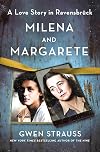
The Publisher Says: A profoundly moving celebration of love under the darkest of circumstances
From the moment they met in 1940 in Ravensbrück concentration camp, Milena Jesenska and Margarete Buber-Neumann were inseparable. Czech Milena was Kafka’s first translator and epistolary lover, and a journalist opposed to fascism. A non-conformist, bi-sexual feminist, she was way ahead of her time. With the German occupation of Czechoslovakia, her home became a central meeting show more place for Jewish refugees. German Margarete, born to a middle-class family, married the son of the Jewish philosopher Martin Buber. But soon swept up in the fervor of the Bolshevik Revolution, she met her second partner, the Communist Heinz Neumann. Called to Moscow for his “political deviations,” he fell victim to Stalin’s purges while Margarete was exiled to the hell of the Soviet gulag. Two years later, traded by Stalin to Hitler, she ended up outside Berlin in Ravensbrück, the only concentration camp built for women.
Milena and Margarete loved each other at the risk of their lives. But in the post-war survivors’ accounts, lesbians were stigmatized, and survivors kept silent. This book explores those silences, and finally celebrates two strong women who never gave up and continue to inspire. As Margarete wrote: “I was thankful for having been sent to Ravensbrück, because it was there I met Milena.”
I RECEIVED A DRC FROM THE PUBLISHER VIA NETGALLEY. THANK YOU.
My Review: Any time anyone, anyone at all, asks, "why can't you just keep quiet about all that queer stuff?" show them this story.
Because people died for being themselves. And the survivors were too afraid to talk about it.
That's down to people, "nice" people, privileged people, simply not wanting to know that some girls like girls and some boys like boys. That culture of silence to avoid making the most privileged, spoiled brats among the world's most privileged, spoiled people...the most privileged the planet has ever produced!...just don't think they should ever have to think uncomfortable thoughts or consider other people's existence and freedom to be themselves as important.
"Alligator Alcatraz" is a concentration camp. If you think it isn't go look at the definition of one.
So think about this: your silence, your uninterest in speaking up for whatever selfish, personal reason, puts someone you know...me...at the very real risk of being treated like these two "passionate friends" (if you imagine there was a way to consummate their love in Ravensbrück, you're wrong). I'm not made of the tough, gritty stuff these women are, so....
We need to stand up to this ever-developing system. Talk about it on social media, post memes, do anything except nothing. Milena and Grete (as she is most often referred to) can't speak to us with their mouths. Author Strauss, in confronting the silence about queer people in Holocaust literature, is pointing the way to a fuller understanding of the Holocaust's horrors and evils, and the vileness of Stalin's mirror of it in the gulag system, as we see the steady slide back into a system that accepts this horror as normal.
It's not a particularly smooth pointing...it's narratively idea-driven, putting the small person's need for linear narratives behind following a thought to its conclusion. One person whose name we learn only to discover she dies, before we hear the rest of her anecdotal appearance, particularly stands out as an infelicity of organization. Another factor that led me to rate the book four stars was the sheer, numbing weight of the horrors inflicted by the Nazis on the inmates. It happened; reasonable people know it happened; but because we are often far afield from Milena and Grete, the weight of horror often outweighs the burden of these two women's joyous discovery of love.
It does a fine job of personalizing the horrors of the Holocaust, but a less stellar job of making Milena and Grete come alive. I don't know that this is avoidable, given time and the destruction of records, but it was something I felt disappointment about.
Good writing and a truly underrepresented subject within Holocaust literature compensated me well: "I am using their beautiful love story to shine a light on sexuality in the camps and how it was seen, hidden, and the important role it played in survival, because to have found love in a concentration camp is extraordinary."
It absolutely is. show less
The Publisher Says: A profoundly moving celebration of love under the darkest of circumstances
From the moment they met in 1940 in Ravensbrück concentration camp, Milena Jesenska and Margarete Buber-Neumann were inseparable. Czech Milena was Kafka’s first translator and epistolary lover, and a journalist opposed to fascism. A non-conformist, bi-sexual feminist, she was way ahead of her time. With the German occupation of Czechoslovakia, her home became a central meeting show more place for Jewish refugees. German Margarete, born to a middle-class family, married the son of the Jewish philosopher Martin Buber. But soon swept up in the fervor of the Bolshevik Revolution, she met her second partner, the Communist Heinz Neumann. Called to Moscow for his “political deviations,” he fell victim to Stalin’s purges while Margarete was exiled to the hell of the Soviet gulag. Two years later, traded by Stalin to Hitler, she ended up outside Berlin in Ravensbrück, the only concentration camp built for women.
Milena and Margarete loved each other at the risk of their lives. But in the post-war survivors’ accounts, lesbians were stigmatized, and survivors kept silent. This book explores those silences, and finally celebrates two strong women who never gave up and continue to inspire. As Margarete wrote: “I was thankful for having been sent to Ravensbrück, because it was there I met Milena.”
I RECEIVED A DRC FROM THE PUBLISHER VIA NETGALLEY. THANK YOU.
My Review: Any time anyone, anyone at all, asks, "why can't you just keep quiet about all that queer stuff?" show them this story.
Because people died for being themselves. And the survivors were too afraid to talk about it.
That's down to people, "nice" people, privileged people, simply not wanting to know that some girls like girls and some boys like boys. That culture of silence to avoid making the most privileged, spoiled brats among the world's most privileged, spoiled people...the most privileged the planet has ever produced!...just don't think they should ever have to think uncomfortable thoughts or consider other people's existence and freedom to be themselves as important.
"Alligator Alcatraz" is a concentration camp. If you think it isn't go look at the definition of one.
So think about this: your silence, your uninterest in speaking up for whatever selfish, personal reason, puts someone you know...me...at the very real risk of being treated like these two "passionate friends" (if you imagine there was a way to consummate their love in Ravensbrück, you're wrong). I'm not made of the tough, gritty stuff these women are, so....
We need to stand up to this ever-developing system. Talk about it on social media, post memes, do anything except nothing. Milena and Grete (as she is most often referred to) can't speak to us with their mouths. Author Strauss, in confronting the silence about queer people in Holocaust literature, is pointing the way to a fuller understanding of the Holocaust's horrors and evils, and the vileness of Stalin's mirror of it in the gulag system, as we see the steady slide back into a system that accepts this horror as normal.
It's not a particularly smooth pointing...it's narratively idea-driven, putting the small person's need for linear narratives behind following a thought to its conclusion. One person whose name we learn only to discover she dies, before we hear the rest of her anecdotal appearance, particularly stands out as an infelicity of organization. Another factor that led me to rate the book four stars was the sheer, numbing weight of the horrors inflicted by the Nazis on the inmates. It happened; reasonable people know it happened; but because we are often far afield from Milena and Grete, the weight of horror often outweighs the burden of these two women's joyous discovery of love.
It does a fine job of personalizing the horrors of the Holocaust, but a less stellar job of making Milena and Grete come alive. I don't know that this is avoidable, given time and the destruction of records, but it was something I felt disappointment about.
Good writing and a truly underrepresented subject within Holocaust literature compensated me well: "I am using their beautiful love story to shine a light on sexuality in the camps and how it was seen, hidden, and the important role it played in survival, because to have found love in a concentration camp is extraordinary."
It absolutely is. show less
Thank you to the publisher for this ARC in exchange for an honest review!
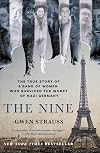
The Nine: The True Story of a Band of Women Who Survived the Worst of Nazi Germany is a highly=detailed, excellently-researched historical account about nine women who were resistant fighters and who escaped a labor camp near the end of World War II. The author Gwen Strauss is a descendant of Helene, one of the nine women. The care and attention that the author uses in crafting the narratives for all nine women is show more evident throughout the book. The book also includes historical photos that illuminate the conditions that the women went through in order to survive and escape Nazi Germany. Here is an excerpt from an opening chapter that illustrates the terror that the band of women went through: (This is not a spoiler, because it is from an opening chapter.)
"In any case, the marchers had passed so many corpses along the way that this heap of women at the bottom of a ditch probably looked just like another pile of dead bodies.
...
They climbed out of the ditch and collapsed in the field. They lay there looking up at the sky, clasping hands and laughing hysterically.
They had done it! They had escaped!
But now they were in the middle of Saxony, facing frightened and hostile German villagers, angry feeling officers of Germany's Schutz-staffel (SS) the Russian army, and Allied bombers overhead. The Americans were somewhere nearby, they hoped. They had to find the Americans or die trying."
After I read that scene, I had to keep reading to find out how the nine women had ended up there, as well as what happened next in their story. Would they reach the Americans safely? Would they get caught by the SS or by other Germans? Would they survive the journey to safety? These are all questions I was furiously thinking about as I continued reading about the women's exciting stories.
Overall, The Nine is a well-researched, exciting work of historical nonfiction set in World War II. It will appeal to readers who want to learn more about resistance fighters during World War II. Although this is a clearly a wonderful book, I took off one star just because I don't typically enjoy nonfiction. This is not the book's fault, of course. I'm just explaining why it wasn't a five-star book for me personally. If you are a fan of historical nonfiction about heroic women, I highly recommend that you check out The Nine when it comes out in May! show less
The Nine: The True Story of a Band of Women Who Survived the Worst of Nazi Germany is a highly=detailed, excellently-researched historical account about nine women who were resistant fighters and who escaped a labor camp near the end of World War II. The author Gwen Strauss is a descendant of Helene, one of the nine women. The care and attention that the author uses in crafting the narratives for all nine women is show more evident throughout the book. The book also includes historical photos that illuminate the conditions that the women went through in order to survive and escape Nazi Germany. Here is an excerpt from an opening chapter that illustrates the terror that the band of women went through: (This is not a spoiler, because it is from an opening chapter.)
"In any case, the marchers had passed so many corpses along the way that this heap of women at the bottom of a ditch probably looked just like another pile of dead bodies.
...
They climbed out of the ditch and collapsed in the field. They lay there looking up at the sky, clasping hands and laughing hysterically.
They had done it! They had escaped!
But now they were in the middle of Saxony, facing frightened and hostile German villagers, angry feeling officers of Germany's Schutz-staffel (SS) the Russian army, and Allied bombers overhead. The Americans were somewhere nearby, they hoped. They had to find the Americans or die trying."
After I read that scene, I had to keep reading to find out how the nine women had ended up there, as well as what happened next in their story. Would they reach the Americans safely? Would they get caught by the SS or by other Germans? Would they survive the journey to safety? These are all questions I was furiously thinking about as I continued reading about the women's exciting stories.
Overall, The Nine is a well-researched, exciting work of historical nonfiction set in World War II. It will appeal to readers who want to learn more about resistance fighters during World War II. Although this is a clearly a wonderful book, I took off one star just because I don't typically enjoy nonfiction. This is not the book's fault, of course. I'm just explaining why it wasn't a five-star book for me personally. If you are a fan of historical nonfiction about heroic women, I highly recommend that you check out The Nine when it comes out in May! show less
Harrowing stories from World War II are saturating the historical fiction market at the moment, and with each novel there is a clearer understanding of the horrors that abounded during this tumultuous time. How can one human have that amount of hatred for another to inflict such pain and torture is a question that will forever bombard my mind, and loomed again while I was reading The Nine.
Captivated from the first sentence, I am so thankful that Gwen Strauss brought this astounding story of show more her great aunt, and her fellow resistance fighters, to light. This was a story that needed to be told, and should be heard by future generations! It is incredible that they survived these horrific conditions and unimaginable situations, and lived to tell the tale! Even more than 75 years later stories like these hit you right in the gut, transporting you to a time and place that no one would ever want to go, giving flesh and life to these heroines, exposing more of the truth of this dark stain on our world history.
Reading The Nine has made a lasting imprint on my mind and heart, and I am gratified to Ms. Strauss and all of her compassion and dedication to this novel. It is clear that this was a passion project, with meticulous detail, and masterfully written, I cannot recommend this book enough! Yes, there are moments that are difficult to read, as is true with most stories from this dark time, but trust me when I say it is well worth it to fight through the tough, as you will be encouraged beyond measure. The Nine is a reading experience I will never forget, and my heart goes out to those who had to endure such torture. Truly unimaginable...
*I have voluntarily reviewed a complimentary copy of this book which I received from St. Martin's Press through NetGalley. All views and opinions expressed are completely honest, and my own. show less
Captivated from the first sentence, I am so thankful that Gwen Strauss brought this astounding story of show more her great aunt, and her fellow resistance fighters, to light. This was a story that needed to be told, and should be heard by future generations! It is incredible that they survived these horrific conditions and unimaginable situations, and lived to tell the tale! Even more than 75 years later stories like these hit you right in the gut, transporting you to a time and place that no one would ever want to go, giving flesh and life to these heroines, exposing more of the truth of this dark stain on our world history.
Reading The Nine has made a lasting imprint on my mind and heart, and I am gratified to Ms. Strauss and all of her compassion and dedication to this novel. It is clear that this was a passion project, with meticulous detail, and masterfully written, I cannot recommend this book enough! Yes, there are moments that are difficult to read, as is true with most stories from this dark time, but trust me when I say it is well worth it to fight through the tough, as you will be encouraged beyond measure. The Nine is a reading experience I will never forget, and my heart goes out to those who had to endure such torture. Truly unimaginable...
*I have voluntarily reviewed a complimentary copy of this book which I received from St. Martin's Press through NetGalley. All views and opinions expressed are completely honest, and my own. show less
Lists
Awards


You May Also Like


Associated Authors
Statistics
- Works
- 10
- Also by
- 3
- Members
- 1,340
- Popularity
- #19,206
- Rating
- 4.2
- Reviews
- 79
- ISBNs
- 56
- Languages
- 6
- Favorited
- 1