

Sam Bourne
Author of The Righteous Men
About the Author
Image credit:
www.vjbooks.com
Series
Works by Sam Bourne
The Escape Artist: The Man Who Broke Out of Auschwitz to Warn the World (2022) 852 copies, 31 reviews
The Traitors Circle: The True Story of a Secret Resistance Network in Nazi Germany―and the Spy Who Betrayed Them (2025) 123 copies, 4 reviews
Arte da Fuga 7 copies
De meesterontsnapper van Auschwitz: Rudolf Vrba, de man die uit Auschwitz ontsnapte om de wereld te informeren (2024) 3 copies
Sam Bourne Collection: The Last Testament, the Final Reckoning, the Righteous Men, the Chosen One (2011) 2 copies
Het laatste testamen 1 copy
Omorati-i pe cei drepti 1 copy
Associated Works
Cold Crematorium: Reporting from the Land of Auschwitz (1950) — Foreword, some editions — 287 copies, 11 reviews
Reader's Digest Select Editions: The Final Reckoning • Silks • Lost & Found • The Odin Mission (2008) 10 copies
Reader's Digest Select Editions: The Chosen One | Mr Rosenblum's List | Nowhere to Run | Safe Haven (2010) 8 copies
Reader's Digest Select Editions: The Overlook • The Last Testament • Left For Dead • No Time For Goodbye (2007) 5 copies
Het Beste Boek 258: Het laatste testament / Niets te verliezen / Ken je me nog? / De Cock en de dood in gebed — Author — 3 copies, 1 review
Reader's Digest: Rechercheur Brons en het lijk op de wallen; De Keuze; De eindafrekening; De olifanten fluisteraar — Contributor — 1 copy, 1 review
Tagged
Common Knowledge
- Legal name
- Freedland, Jonathan Saul
- Other names
- Bourne, Sam
- Birthdate
- 1967-02-25
- Gender
- male
- Education
- University College School, Hampstead, London
University of Oxford (Wardham college) - Occupations
- journalist
novelist - Organizations
- The Guardian
- Relationships
- Freedland, Michael (father)
- Nationality
- UK
- Places of residence
- London, England, UK
Washington, D.C., USA - Map Location
- UK
Members
Reviews
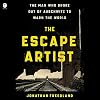
i kind of read my share of ww2 holocaust books when i was younger and have been off them for like 2 decades, probably. i've mostly avoided them since but still have a pretty good working knowledge of this time in history. yet i hadn't really heard about these men (but they should be heroes and household names). i had heard of their report (the vrba-wetzler report) but only because i've visited nuremberg and auschwitz-birkenau, not because i was taught about them or their sacrifice, or what show more they tried to do. certainly we have all heard of what the report contained, as much of what we know of the details started from that report. but i couldn't have told you that before reading this.
this book is incredibly interesting for more than just the obvious reasons. of course it's fascinating in the aspect of detailing the escape and how they did it, when no one had done it before. but there's so much more to this story. he shows us who walter vrba was, and how he was the perfect person to be able to escape and retain the information about the camps, the details about where the transports were from and how many people where on them. how he - again and again, even as he was obviously also so unlucky - was so lucky to escape notice or death or to be given a random chance that saved his life. over and over. but of course he was also in auschwitz and before that in europe for the rise of hitler, so not so totally lucky all the same. but the number of times that he almost was discovered or died (and others, too - it's like anyone who lived through this time and place can point to many instances of near death and randomly being saved) seemed incredible. maybe it was a bit of author's embellishment, but this is a story that is dramatic enough on its own.
so there's the amazing escape. but then the book is also really interesting because it's not just about their escape. it's about how the world responded to the information they worked so hard to bring to the public. they really wanted to bring it to the jews of hungary, who hadn't been deported yet, so that if those jews knew that if they got on the cattle cars, that they were heading for certain death. they wanted to save lives. and the people they shared this knowledge with were hesitant to distribute it, or refused to believe it, so more and more people died. shockingly, even the priest they told of the nearly 2 million dead was unmoved until they also mentioned that other priests were being killed along with the jews (except they arrived to auschwitz dead already).
but it wasn't as shocking to everyone; vrba and wetzler weren't actually bringing new information to everyone, since the allies knew 2 years before their escape what the nazis were doing. that the deportations weren't resettlement, but death sentences. this report, that vrba and wetzler thought would change the world, because knowledge like this should galvanize action, really did nothing because they all already knew. learning this is the sort of information that nearly broke me forever when i first read and the band played on. but it's no longer totally surprising to me. i mean, we see it today. i'm part of it today, how we stand by and do nothing. or go about our regular day, even when we see atrocities happening around us.
vrba was convinced that what kept the nazis able to kill so quickly in such high numbers was the efficiency with which they worked, and how complacent the people were. he and wetzler thought that if the jews knew that they were being led to their deaths, that they would make it harder for the nazis, which would slow the process down and ultimately save lives. and if the governments knew, they could do things like bomb the railway lines, making it impossible for the nazis to get more prisoners to the camps. but the governments - most noticeably america and britain - wouldn't even consider doing this. ("The War Department did not undertake a study of whether bombing the railway lines was militarily feasible. No one looked for alternative means of halting or even slowing the transports. Instead the operations division of the department's general staff came back with ... 'The best hope for the victims of Nazism was that Nazism be defeated.' The US military would not so much as look at any proposed operation that might require a 'diversion' from that effort.") i'm not sure i really understood before how much the world knew this was happening, and how they continued to refuse to do anything to stop or slow it. even when it wasn't much to ask. (to continue what they were saying about bombing the railway lines - they ended up bombing something else 5 miles away, which was useless, but didn't bomb the rails or the crematoria, for which they had maps and detailed drawings, so could have.)
later in life vrba wasn't given a lot of chance, like other survivors, to speak or engage with people about his story. he didn't fit the model type of person in that he wasn't going to forgive the nazis or the leaders of the jewish communities (who put together lists of jews for deportation, or who didn't fight back, or who knew about the report but didn't disseminate it). he wasn't going to speak in platitudes but talk about the truth, and this wasn't as well received as other survivors, who talk softly of what they witnessed or say that ultimately people are good. he didn't give people what they expected in that vein. he was angry, loud, unforgiving. and so made people uncomfortable, which isn't what they wanted. so he is lesser known. it reminds me of people of color today, who are not given the same platform to talk about racism, because what they say is hard to hear, compared to white people who talk about it, and who sometimes make it sound not as bad, more digestible.
this feels comprehensive, and is extremely readable in spite of the tough topic. it's an incredible escape story, but also the story of how the world didn't act.
"Between 1942 and 1944 an estimated 6 tons of dental gold were deposited in the vaults of the Reichsbank."
"...maybe their determination to act was more apparent than sincere. The determination to be documented demanding action stronger than the urge for action itself."
"'Familiar stuff,' read one colonial office memo written in London on 7 December 1942 [SO EARLY ON!! How many lives could have been saved!!!] responding to reports on mass killing. 'The Jews have spoiled their case by laying it on too thick for years past.'"
"Only when information is combined with belief does it become knowledge. And only knowledge leads to action. The French Jewish philosopher Raymond Aaron would say, when asked about the Holocaust, 'I knew, but I didn't believe it. And because I didn't believe it, I didn't know.'" show less
this book is incredibly interesting for more than just the obvious reasons. of course it's fascinating in the aspect of detailing the escape and how they did it, when no one had done it before. but there's so much more to this story. he shows us who walter vrba was, and how he was the perfect person to be able to escape and retain the information about the camps, the details about where the transports were from and how many people where on them. how he - again and again, even as he was obviously also so unlucky - was so lucky to escape notice or death or to be given a random chance that saved his life. over and over. but of course he was also in auschwitz and before that in europe for the rise of hitler, so not so totally lucky all the same. but the number of times that he almost was discovered or died (and others, too - it's like anyone who lived through this time and place can point to many instances of near death and randomly being saved) seemed incredible. maybe it was a bit of author's embellishment, but this is a story that is dramatic enough on its own.
so there's the amazing escape. but then the book is also really interesting because it's not just about their escape. it's about how the world responded to the information they worked so hard to bring to the public. they really wanted to bring it to the jews of hungary, who hadn't been deported yet, so that if those jews knew that if they got on the cattle cars, that they were heading for certain death. they wanted to save lives. and the people they shared this knowledge with were hesitant to distribute it, or refused to believe it, so more and more people died. shockingly, even the priest they told of the nearly 2 million dead was unmoved until they also mentioned that other priests were being killed along with the jews (except they arrived to auschwitz dead already).
but it wasn't as shocking to everyone; vrba and wetzler weren't actually bringing new information to everyone, since the allies knew 2 years before their escape what the nazis were doing. that the deportations weren't resettlement, but death sentences. this report, that vrba and wetzler thought would change the world, because knowledge like this should galvanize action, really did nothing because they all already knew. learning this is the sort of information that nearly broke me forever when i first read and the band played on. but it's no longer totally surprising to me. i mean, we see it today. i'm part of it today, how we stand by and do nothing. or go about our regular day, even when we see atrocities happening around us.
vrba was convinced that what kept the nazis able to kill so quickly in such high numbers was the efficiency with which they worked, and how complacent the people were. he and wetzler thought that if the jews knew that they were being led to their deaths, that they would make it harder for the nazis, which would slow the process down and ultimately save lives. and if the governments knew, they could do things like bomb the railway lines, making it impossible for the nazis to get more prisoners to the camps. but the governments - most noticeably america and britain - wouldn't even consider doing this. ("The War Department did not undertake a study of whether bombing the railway lines was militarily feasible. No one looked for alternative means of halting or even slowing the transports. Instead the operations division of the department's general staff came back with ... 'The best hope for the victims of Nazism was that Nazism be defeated.' The US military would not so much as look at any proposed operation that might require a 'diversion' from that effort.") i'm not sure i really understood before how much the world knew this was happening, and how they continued to refuse to do anything to stop or slow it. even when it wasn't much to ask. (to continue what they were saying about bombing the railway lines - they ended up bombing something else 5 miles away, which was useless, but didn't bomb the rails or the crematoria, for which they had maps and detailed drawings, so could have.)
later in life vrba wasn't given a lot of chance, like other survivors, to speak or engage with people about his story. he didn't fit the model type of person in that he wasn't going to forgive the nazis or the leaders of the jewish communities (who put together lists of jews for deportation, or who didn't fight back, or who knew about the report but didn't disseminate it). he wasn't going to speak in platitudes but talk about the truth, and this wasn't as well received as other survivors, who talk softly of what they witnessed or say that ultimately people are good. he didn't give people what they expected in that vein. he was angry, loud, unforgiving. and so made people uncomfortable, which isn't what they wanted. so he is lesser known. it reminds me of people of color today, who are not given the same platform to talk about racism, because what they say is hard to hear, compared to white people who talk about it, and who sometimes make it sound not as bad, more digestible.
this feels comprehensive, and is extremely readable in spite of the tough topic. it's an incredible escape story, but also the story of how the world didn't act.
"Between 1942 and 1944 an estimated 6 tons of dental gold were deposited in the vaults of the Reichsbank."
"...maybe their determination to act was more apparent than sincere. The determination to be documented demanding action stronger than the urge for action itself."
"'Familiar stuff,' read one colonial office memo written in London on 7 December 1942 [SO EARLY ON!! How many lives could have been saved!!!] responding to reports on mass killing. 'The Jews have spoiled their case by laying it on too thick for years past.'"
"Only when information is combined with belief does it become knowledge. And only knowledge leads to action. The French Jewish philosopher Raymond Aaron would say, when asked about the Holocaust, 'I knew, but I didn't believe it. And because I didn't believe it, I didn't know.'" show less
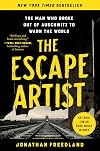
This is a well-written biography, but I am not totally convinced the subject's life is that interesting or worthy of such a large book. For one thing, the subject was one of two people whose testimony was the basis of a famous contemporary report about Auschwitz; of course the reason why I am reading a book in my language about Vrba and not Wexler is because the former settled in an English-speaking country and became an academic; the latter did neither or those things, but that is not very show more satisfying. For another thing, I am not sure Freedland could really do justice to a book just about the Vrba-Wexler report itself, as his treatment basically boils down to: the Allies ignored it because of anti-Semitism, and my sense is the issue about Allied efforts to stop Nazi genocide is more complicated than Freedland makes it out to be. I do think there's an interesting issue about Jewish community leaders denying the killings, but that thread is not very prominent in the book. I think Freedland may have fallen prey to the fallacy that people who have suffered enormously (as Vrba and Wexler did) have some special wisdom or insights (although to the author's credit it is pretty clear that Vrba was a pretty bad husband to his first wife). Finally the book's concluding chapter descends into Schindler's List mawkishness.
One funny coincidence is I read a twitter thread by someone expressing frustration that he learned German only for Germans to switch to English if their interlocutor is not speaking perfect German; Vrba apparently faced off against a German judge in a trial of the Auschwitz personnel who criticized his less-than-perfect German! show less
One funny coincidence is I read a twitter thread by someone expressing frustration that he learned German only for Germans to switch to English if their interlocutor is not speaking perfect German; Vrba apparently faced off against a German judge in a trial of the Auschwitz personnel who criticized his less-than-perfect German! show less
In April 1944, Rudolf Vrba became the first Jew to break out of Auschwitz—one of only four who ever pulled off that near-impossible feat. He did it to reveal the truth of the death camp to the world—and to warn the last Jews of Europe what fate awaited them at the end of the railway line. Against all odds, he and his fellow escapee, Fred Wetzler, climbed mountains, crossed rivers and narrowly missed German bullets until they had smuggled out the first full account of Auschwitz the world show more had ever seen—a forensically detailed report that would eventually reach Franklin Roosevelt, Winston Churchill and the Pope.
And yet too few heeded the warning that Vrba—then just nineteen years old—had risked everything to deliver. Some could not believe it. Others thought it easier to keep quiet. Vrba helped save 200,000 Jewish lives—but he never stopped believing it could have been so many more.
This is the story of a brilliant yet troubled man—a gifted “escape artist” who even as a teenager understand that the difference between truth and lies can be the difference between life and death, a man who deserves to take his place alongside Anne Frank, Oskar Schindler and Primo Levi as one of the handful of individuals whose stories define our understanding of the Holocaust. show less
And yet too few heeded the warning that Vrba—then just nineteen years old—had risked everything to deliver. Some could not believe it. Others thought it easier to keep quiet. Vrba helped save 200,000 Jewish lives—but he never stopped believing it could have been so many more.
This is the story of a brilliant yet troubled man—a gifted “escape artist” who even as a teenager understand that the difference between truth and lies can be the difference between life and death, a man who deserves to take his place alongside Anne Frank, Oskar Schindler and Primo Levi as one of the handful of individuals whose stories define our understanding of the Holocaust. show less
The Traitors Circle: The True Story of a Secret Resistance Network in Nazi Germany―and the Spy Who Betrayed Them by Jonathan Freedland
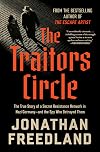
Jonathan Freedland, in "The Traitor's Circle," recounts the true story of elite Germans who could have lived in relative comfort as World War II raged. Instead, these men and women loathed Hitler, and were hoping to overthrow his regime. One of the book's most pivotal scenes takes place in 1943 at a tea party. The attendees were individuals of high social standing who regularly met to discuss strategies for ridding their country of its monstrous dictator and his acolytes.
The author brings show more this historical account alive with his compelling and absorbing prose style. The chapters are relatively brief and frequently end with a sentence that foreshadows future events. Freedland's colorful cast of characters include diplomat and lawyer Otto Kieip; the intrepid Countess Maria von Maltzan; Johanna "Hanna" Solf, the widow of a former ambassador; Hanna's daughter Lagi; and Elisabeth von Thadden a devout Protestant and progressive educator. We learn about their backgrounds, personalities, ability to withstand physical and emotional pressure, and willingness to risk their lives for a noble cause.
Some of the dissidents endangered themselves by hiding Jews and, when possible, arranging their escape to Switzerland. Although Freedland's portrayal of these brave souls is inspiring, it is also tragic that so many Germans admired Hitler and were eager to rid their nation of Jews, the mentally ill, members of the resistance, and others whom the government considered undesirable. Nazi spies were everywhere, and they enthusiastically denounced anyone who opposed the Führer. "The Traitor's Circle" has a message that remains relevant today. When autocrats abuse their power, oppress their perceived enemies, and kill with impunity, it is heartening to know that compassionate people—such as the heroes and heroines depicted in this well-researched and engrossing work of non-fiction—have the courage to stand up for equality, liberty, and justice. show less
The author brings show more this historical account alive with his compelling and absorbing prose style. The chapters are relatively brief and frequently end with a sentence that foreshadows future events. Freedland's colorful cast of characters include diplomat and lawyer Otto Kieip; the intrepid Countess Maria von Maltzan; Johanna "Hanna" Solf, the widow of a former ambassador; Hanna's daughter Lagi; and Elisabeth von Thadden a devout Protestant and progressive educator. We learn about their backgrounds, personalities, ability to withstand physical and emotional pressure, and willingness to risk their lives for a noble cause.
Some of the dissidents endangered themselves by hiding Jews and, when possible, arranging their escape to Switzerland. Although Freedland's portrayal of these brave souls is inspiring, it is also tragic that so many Germans admired Hitler and were eager to rid their nation of Jews, the mentally ill, members of the resistance, and others whom the government considered undesirable. Nazi spies were everywhere, and they enthusiastically denounced anyone who opposed the Führer. "The Traitor's Circle" has a message that remains relevant today. When autocrats abuse their power, oppress their perceived enemies, and kill with impunity, it is heartening to know that compassionate people—such as the heroes and heroines depicted in this well-researched and engrossing work of non-fiction—have the courage to stand up for equality, liberty, and justice. show less
Lists
Awards


You May Also Like


Associated Authors
Statistics
- Works
- 33
- Also by
- 14
- Members
- 4,040
- Popularity
- #6,228
- Rating
- 3.6
- Reviews
- 116
- ISBNs
- 282
- Languages
- 20
- Favorited
- 4