
David Gibbins
Author of Atlantis
About the Author
Series
Works by David Gibbins
Associated Works
Tagged
Common Knowledge
- Birthdate
- 1962
- Gender
- male
- Education
- University of Bristol
University of Cambridge (Corpus Christi, PhD|archaeology, 1990) - Occupations
- novelist
author
archaeologist - Awards and honors
- Winston Churchill Memorial Trust Fellowship
- Nationality
- Canada
- Birthplace
- Saskatoon, Saskatchewan, Canada
- Places of residence
- Canada
England, UK
New Zealand - Associated Place (for map)
- Canada
Members
Reviews
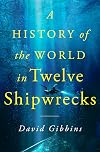
In his book, A History of the World in Twelve Shipwrecks, David Gibbons, underwater archeologist, gives a fascination look at history from the 2nd millennium BCE to WWII through the exploration of shipwrecks. He looks at what is known of each ship’s provenance, where it originated, where it had been before it sank, what it is known about its cargo including what has survived, and a bit of the history of the area where the ship was found and little bit about important historical events of show more the time.
I enjoyed this book quite a lot but, as other reviewers have pointed out it reads in parts much like a text book and could be rather dry in some places. And, like any book, that covers large periods of history, some is bound to resonate more than others based on the reader’s specific interests. Still, for anyone interested in snapshot portraits of various periods of history, underwater archeology, or the evolution of commerce and/or shipbuilding through the ages, it is well worth a read.
I received a copy of this book from Netgalley and St Martin’s Press in exchange for an honest review show less
I enjoyed this book quite a lot but, as other reviewers have pointed out it reads in parts much like a text book and could be rather dry in some places. And, like any book, that covers large periods of history, some is bound to resonate more than others based on the reader’s specific interests. Still, for anyone interested in snapshot portraits of various periods of history, underwater archeology, or the evolution of commerce and/or shipbuilding through the ages, it is well worth a read.
I received a copy of this book from Netgalley and St Martin’s Press in exchange for an honest review show less
The premise of this book was absolutely fascinating! And Gibbins excels in those chapters about dives/shipwrecks he got to participate in; there's something about experience that lends an added gravitas and level of excitement to a topic that just isn't there otherwise. (As could be said about the other chapters, heh; they were interesting enough, but paled in comparison--and read _very_ academically/textbook-like--to these.)
I appreciated that Gibbins included a couple links to pictures; show more they truly are worth a thousand words, and I think the book would have been even better to include them inline, or include _any_ pictures inline and still link out to these ones. :D What can I say? I like pictures, haha!
I received an eARC of the book from the publisher via NetGalley. All opinions are my own. show less
I appreciated that Gibbins included a couple links to pictures; show more they truly are worth a thousand words, and I think the book would have been even better to include them inline, or include _any_ pictures inline and still link out to these ones. :D What can I say? I like pictures, haha!
I received an eARC of the book from the publisher via NetGalley. All opinions are my own. show less
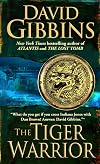
David Gibbins' novel, The Tiger Warrior, reveals the author is an intelligent, educated and worldly man. The novel brims with historical and archaeological facts and theories spanning in time and place from the birth of the unified Chinese empire in 221 BCE to Caesarean Rome to British colonial rule on the Indian subcontinent to present day Afghanistan. Most of these facts and hypotheses are intriguing, and all are patently the result of Gibbins' commendably deep research, study and show more thought.
Unfortunately, none of the above renders Gibbins a master of character, dialogue, or narrative pacing in the art of storytelling. With rare exceptions, his characters are uniformly dull. These characters do not converse with each other so much as they lecture at one another. They often speak for hundreds of words at a time in single stultifying paragraphs that frequently fill more than an entire page before being subjected to an equally bloviated and professorial response. Real people do not talk this way, and wading through lecture after lecture churned out by one flat character after another makes for tedious reading and slows the story to a crawl.
Had Gibbins paid as much attention to character and dialogue as he did to his excellent research, this book would be enjoyable, rather than merely informative. He did not, and accordingly the novel reads far more like a textbook than a good story told well. show less
Unfortunately, none of the above renders Gibbins a master of character, dialogue, or narrative pacing in the art of storytelling. With rare exceptions, his characters are uniformly dull. These characters do not converse with each other so much as they lecture at one another. They often speak for hundreds of words at a time in single stultifying paragraphs that frequently fill more than an entire page before being subjected to an equally bloviated and professorial response. Real people do not talk this way, and wading through lecture after lecture churned out by one flat character after another makes for tedious reading and slows the story to a crawl.
Had Gibbins paid as much attention to character and dialogue as he did to his excellent research, this book would be enjoyable, rather than merely informative. He did not, and accordingly the novel reads far more like a textbook than a good story told well. show less
David Gibbins deep dive into maritime archaeology is masterful and entrancing-This is big history at it best. Absolutely fascinating, beautifully written, and impeccably researched.
Lists
Awards

You May Also Like


Associated Authors
Statistics
- Works
- 20
- Also by
- 1
- Members
- 4,650
- Popularity
- #5,427
- Rating
- 3.0
- Reviews
- 107
- ISBNs
- 253
- Languages
- 16
- Favorited
- 4
