
Christian Raffensperger
Author of The Kingdom of Rus' (Past Imperfect)
Works by Christian Raffensperger
Radical Traditionalism: The Influence of Walter Kaegi in Late Antique, Byzantine, and Medieval Studies (Byzantium: A European Empire and Its Legacy) (2018) — Editor — 5 copies
Ties of Kinship: Genealogy and Dynastic Marriage in Kyivan Rus´ (Harvard Series in Ukrainian Studies) (2016) 4 copies
Tagged
Common Knowledge
Members
Reviews

The Kingdom of Rus' is one of the first installments of the ARC Humanities Press new Past Imperfect series, which seeks to provide concise critical overviews of topics in medieval studies that reach both a popular and an academic audience. Christian Raffensperger tackles the prevalent historiographical idea of the kingdom of Rus' as somehow separate from medieval Europe, and does so primarily by analysing how the titles of rulers in medieval eastern Europe have been translated and should be show more understood, both in medieval and modern sources. Rather than translating kniaz' as prince or duke, as is often the case—and which both implicitly diminishes the status of Rusian rulers and makes flattening assumptions about how power worked in western Europe—Raffensperger argues that it should be glossed as king or ruler. I found his argument convincing—the last chapter in particular had me nodding as he neatly demolished some long-standing assumptions about the operation of authority and hierarchy in the medieval world.
I do worry, though, that this is the kind of book that falls between two stools somewhat. Is there an audience for non-academics who're going to pick up a book about the historiography of the titulature of the rulers of Kievan Rus'? I even struggle to think of a context in which I could work this into an undergrad course. It's too inside baseball for a survey course, and while it could be a somewhat more informally written substitute for a journal article in an upper-level course, the chances of me ever teaching something that focuses on eastern Europe are slim. show less
I do worry, though, that this is the kind of book that falls between two stools somewhat. Is there an audience for non-academics who're going to pick up a book about the historiography of the titulature of the rulers of Kievan Rus'? I even struggle to think of a context in which I could work this into an undergrad course. It's too inside baseball for a survey course, and while it could be a somewhat more informally written substitute for a journal article in an upper-level course, the chances of me ever teaching something that focuses on eastern Europe are slim. show less
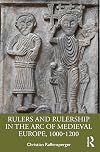
This book presents a thematic argument to support integrating various European regions for a fuller understanding of the period. The book shows how “peripheral” regions are both similar and different to the “core”. Current models of thinking are based on projecting ideas developed from studying core regions onto peripheral regions. This book demonstrates that our understanding is broadened by allowing sources from the "periphery" to included in the greater narrative of Medieval history.
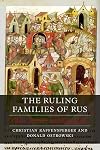
The object of this book is to explore family rule and how it "morphed through the centuries" into the concept of dynasty - with the main focus on the ruling families of Kievan Rus.
The author begins each chapter with a summary of intent before expounding upon a more detailed study. We begin with some background to the Kingdom of Rus, its establishment and their key characters. I would suggest a rudimentary knowledge of this particular segment of history though the author does provide a show more genealogy of those being discussed.
Chapter Two identifies the key principle being used in the book and why these are orientated around family ties, issues of succession and inheritance. Also under discussion are the "descent myths" and legitimacy of the family line. Here too, Raffensperger challenges historical records.
Then the focus is narrowed down to primary characters such as Volodimer the Christianiser, Fedor/Mstiskav, Vladimir Suzdal, Vsevolod and his Ukrainian rival Roman Mstilavich. Chapter Seven looks at 13th century Novogorod, which leads into the 14th century and the reign of Alexander Nevsky, and Kyiv and its rulers.
Chapter Ten focuses on the women. Raffensperger says: ". relationships among ruling families were defined by the wives, mothers and daughters of the rulers, both through alliance formed by marriage and, more directly, through the influence of particularly well-placed, politically astute women .." This becomes an equally important chapter when discussing families and dynasties.
The final two chapters cover off the rule of Dimitri Donskoi in Moscow, and the aftermath of inter-clan conflict between Vasilii II and Iurii in the 15th century; whilst the Epilogue discusses the end of clan rule in Moscow in the late 16th century.
All in all, I found this to be a fascinating read - the subject matter was right up my alley as I have a number of books on this period myself. I myself did not struggle with the content however, as mentioned beforehand, a rudimentary knowledge would be advantageous for a new reader. show less
The author begins each chapter with a summary of intent before expounding upon a more detailed study. We begin with some background to the Kingdom of Rus, its establishment and their key characters. I would suggest a rudimentary knowledge of this particular segment of history though the author does provide a show more genealogy of those being discussed.
Chapter Two identifies the key principle being used in the book and why these are orientated around family ties, issues of succession and inheritance. Also under discussion are the "descent myths" and legitimacy of the family line. Here too, Raffensperger challenges historical records.
Then the focus is narrowed down to primary characters such as Volodimer the Christianiser, Fedor/Mstiskav, Vladimir Suzdal, Vsevolod and his Ukrainian rival Roman Mstilavich. Chapter Seven looks at 13th century Novogorod, which leads into the 14th century and the reign of Alexander Nevsky, and Kyiv and its rulers.
Chapter Ten focuses on the women. Raffensperger says: ". relationships among ruling families were defined by the wives, mothers and daughters of the rulers, both through alliance formed by marriage and, more directly, through the influence of particularly well-placed, politically astute women .." This becomes an equally important chapter when discussing families and dynasties.
The final two chapters cover off the rule of Dimitri Donskoi in Moscow, and the aftermath of inter-clan conflict between Vasilii II and Iurii in the 15th century; whilst the Epilogue discusses the end of clan rule in Moscow in the late 16th century.
All in all, I found this to be a fascinating read - the subject matter was right up my alley as I have a number of books on this period myself. I myself did not struggle with the content however, as mentioned beforehand, a rudimentary knowledge would be advantageous for a new reader. show less
Lists
Awards

You May Also Like
Associated Authors
Statistics
- Works
- 13
- Members
- 100
- Popularity
- #190,119
- Rating
- 4.5
- Reviews
- 3
- ISBNs
- 29
- Favorited
- 1