
Gerry Spence
Author of How to Argue and Win Every Time
About the Author
Gerry Spence was born in Wyoming on January 8, 1929. He graduated from the University of Wyoming Law School in 1952. He never lost a criminal case and has not lost a civil case since 1969. After he evaluated what was important to him, he founded Trial Lawyer's College, which trains young lawyers to show more beat corporate bigshots in the courtroom. He also founded Lawyers and Advocates for Wyoming, which specializes in public interest cases. He has written more than 15 books including Gunning for Justice, With Justice for None, From Freedom to Slavery, How to Argue and Win Every Time, The Making of a Country Lawyer, O.J.: The Last Word, A Boy's Summer, Bloodthirsty Bitches and Pious Pimps of Power, and Police State: How America's Cops Get Away with Murder. He also wrote Gerry Spence's Wyoming: The Landscape and the novel Half-Moon and Empty Stars. (Bowker Author Biography) show less
Works by Gerry Spence
Tagged
Common Knowledge
- Legal name
- Spence, Gerald L.
- Birthdate
- 1929-01-08
- Gender
- male
- Education
- University of Wyoming (BA|English)
University of Wyoming (JD) - Occupations
- lawyer
television host
legal commentator - Nationality
- USA
- Places of residence
- Laramie, Wyoming, USA
Jackson, Wyoming, USA - Associated Place (for map)
- Wyoming, USA
Members
Reviews

O.J.: The Last Word will be of use to two types of readers – fans of attorney Gerry Spence, and readers who seek every last work on the 1995 OJ Simpson trial. While informed readers will find a little that is new here, Spence has a handful of useful insights into the case and strong opinions of the kind that his devotees may enjoy. Neophytes, however, should start elsewhere (e.g., Jeffrey Toobin’s The Run of His Life).
Mr. Spence served as a television commentator on the 1995 murder show more trial, and apparently had not intended to write a book on the subject. By his account, he and a friend took a road trip through the western US, reading the other books aloud to one another, and vehemently arguing aspects of the case. He offered this work as a corrective to the many previous books by other participants and observers of the trial. Whether the book is a "corrective" is a matter of opinion; it rambles quite a bit (as if it had been dictated), with much second - guessing and hindsight- based criticism.
Spence agrees with most observers that the evidence presented of Simpson’s guilt was overwhelming. However, Spence levels strong charges against the police, whom he considers guilty of deception and of mishandling and possibly fabricating evidence. He argues that in light of police misconduct as well as prosecutorial incompetence, a verdict of “not guilty” was entirely justified. “Although we may feel that justice was aborted in this case, we celebrate the jury’s verdict because even though it may have released a guilty man, it preserved a system that can also protect the innocent” (p. 230).
In Spence’s view, the judge (Lance Ito) was competent but ought never have been permitted to try the case, due to conflict of interest; the defense team was capable but nowhere as good as the press made them out to be; and the jury (contrary to common opinion) was conscientious and attentive and came to a reasonable conclusion in light of the evidence.
On the other hand, Spence is unsparing in his criticism of the prosecution’s tactics. He considers that they “tried the wrong case”, attempting to force it into the context of domestic abuse and into a specific timeline, neither of which would have been necessary for an effective case. Likewise, he considers that the prosecution failed to present important evidence. For example, a major witness who saw Simpson fleeing the murder scene was never called to testify, partly because her evidence didn’t precisely match the prosecution’s timeline of events. (In defense of the prosecution's decision, as Spence acknowledges, this witness had already sold her story to a tabloid). As to the murder weapon, he notes that Simpson had recently been given 10 knives of various kinds prior to the murder by the company the makes them. (This point would hold more weight had the actual weapon been recovered). Further, Spence points out shortly before the murder, Simpson acted in the role of a knife wielding killer in the movie “Frogman.” Thus, the prosecution missed a valuable opportunity to highlight the fact that Simpson had practice in use of knives and slashing actions just like those he used the night of the murder. As to the famous trial episode when Simpson seemed unable to fit into the glove used the night of the murder, Spence considers it a major prosecutorial blunder not to have someone put the glove on Simpson (since he clearly was protruding his thumb so as to make the glove not fit)
At times, Spence plays armchair detective, as in his strong speculation that Simpson hid his bloody clothing and murder weapon outside a neighbor’s house. One wonders if he is aware that Simpson took a suspicious bag with him to the airport that fateful night, which was never seen again. Elsewhere, he comments on the ways “race” permeated the case from the outset (affecting the choice of a black prosecutor, arguments over where the trial would be held, outlook of the jury, and the nature of the prosecution’s case), as well as on the ways the death penalty is imposed, and on the tabloid nature of the trial’s press coverage. Likewise, we are told that OJ directed his attorney Robert Shapiro to recruit Mr. Spence to the legal defense team. (Shapiro's account in his own book states, instead, that OJ left the decision to him). Shapiro went through the motions of asking, but apparently saw from the outset that the case could not benefit from their dual participation.
The Simpson case was once called “the trial of the century”, and while it continues to fade from public memory, it is used in law schools for instructional purposes. While this book is a minor footnote to the trial, readers interested in how the case might have been tried more effectively could well find it interesting. show less
Mr. Spence served as a television commentator on the 1995 murder show more trial, and apparently had not intended to write a book on the subject. By his account, he and a friend took a road trip through the western US, reading the other books aloud to one another, and vehemently arguing aspects of the case. He offered this work as a corrective to the many previous books by other participants and observers of the trial. Whether the book is a "corrective" is a matter of opinion; it rambles quite a bit (as if it had been dictated), with much second - guessing and hindsight- based criticism.
Spence agrees with most observers that the evidence presented of Simpson’s guilt was overwhelming. However, Spence levels strong charges against the police, whom he considers guilty of deception and of mishandling and possibly fabricating evidence. He argues that in light of police misconduct as well as prosecutorial incompetence, a verdict of “not guilty” was entirely justified. “Although we may feel that justice was aborted in this case, we celebrate the jury’s verdict because even though it may have released a guilty man, it preserved a system that can also protect the innocent” (p. 230).
In Spence’s view, the judge (Lance Ito) was competent but ought never have been permitted to try the case, due to conflict of interest; the defense team was capable but nowhere as good as the press made them out to be; and the jury (contrary to common opinion) was conscientious and attentive and came to a reasonable conclusion in light of the evidence.
On the other hand, Spence is unsparing in his criticism of the prosecution’s tactics. He considers that they “tried the wrong case”, attempting to force it into the context of domestic abuse and into a specific timeline, neither of which would have been necessary for an effective case. Likewise, he considers that the prosecution failed to present important evidence. For example, a major witness who saw Simpson fleeing the murder scene was never called to testify, partly because her evidence didn’t precisely match the prosecution’s timeline of events. (In defense of the prosecution's decision, as Spence acknowledges, this witness had already sold her story to a tabloid). As to the murder weapon, he notes that Simpson had recently been given 10 knives of various kinds prior to the murder by the company the makes them. (This point would hold more weight had the actual weapon been recovered). Further, Spence points out shortly before the murder, Simpson acted in the role of a knife wielding killer in the movie “Frogman.” Thus, the prosecution missed a valuable opportunity to highlight the fact that Simpson had practice in use of knives and slashing actions just like those he used the night of the murder. As to the famous trial episode when Simpson seemed unable to fit into the glove used the night of the murder, Spence considers it a major prosecutorial blunder not to have someone put the glove on Simpson (since he clearly was protruding his thumb so as to make the glove not fit)
At times, Spence plays armchair detective, as in his strong speculation that Simpson hid his bloody clothing and murder weapon outside a neighbor’s house. One wonders if he is aware that Simpson took a suspicious bag with him to the airport that fateful night, which was never seen again. Elsewhere, he comments on the ways “race” permeated the case from the outset (affecting the choice of a black prosecutor, arguments over where the trial would be held, outlook of the jury, and the nature of the prosecution’s case), as well as on the ways the death penalty is imposed, and on the tabloid nature of the trial’s press coverage. Likewise, we are told that OJ directed his attorney Robert Shapiro to recruit Mr. Spence to the legal defense team. (Shapiro's account in his own book states, instead, that OJ left the decision to him). Shapiro went through the motions of asking, but apparently saw from the outset that the case could not benefit from their dual participation.
The Simpson case was once called “the trial of the century”, and while it continues to fade from public memory, it is used in law schools for instructional purposes. While this book is a minor footnote to the trial, readers interested in how the case might have been tried more effectively could well find it interesting. show less
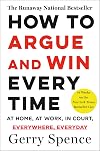
This book is an enjoyable read written by a lawyer who, according to Wikipedia, has never lost a criminal case as either a prosecutor or defender, and hasn't lost a civil case in 46 years. This was written in 1996, a couple years after I first heard of Spence when he skillfully defended Randy Weaver and exposed major problems in the federal government's actions in the Ruby Ridge case. Spence has defended Imelda Marcos and a host of others.
The negative reviews of this book seem to be by show more people who wanted a quick silver bullet, which is not what Spence provides. "Winning" has to be defined, as does "argument." Spence states that not every argument can be one, there is no need for a suicide charge. A "tactical retreat" is often a smart maneuver in winning a larger war.
The first part of the book reminded me of Plato, it reads like Socrates' dialectic. Spence (an ardent environmentalist) has an imaginary dialogue with a lumberjack, showing that if you can empower someone ("would you serve on a committee looking at this issue?") in their compromise, you win the argument. Argument is necessary. It's an important part of identity and personal growth. "Every boss should have a sign on his desk saying 'Argue with me,'" he writes. Spence proposes a new paradigm of argument: Argument is a means by which we bring about change, either in ourselves or others. It is a way to achieve an outcome you desire. What do you want to change?
"You are your own authority," and submitting to an external authority will stunt your growth. Both parties to an argument retain their authority, which makes "winning" somewhat problematic to define. You are simply changing someone without changing their authority, or accepting someone else's argument without relinquishing your own authority.
"All power, yours and theirs, is yours." Our power is creativity, joy, pain, experiences, belonging only to us. "Their power is my perception of their power." Others possess only what we give them. These philosophical/psychological points underpin his argument in the book. (These thoughts on not submitting to outside authorities will be problematic to those who look at an outside source-- like the Bible-- as their authority. Spence does not address absolutes in the book).
We should not live life skeptical of every little thing, but we should be skeptical. We want to trust the salesman, reporter, etc., but we need to listen and think. We also need to be aware of our own prejudices and cognitive biases, as well as the person you're arguing with. "I've learned more from my dogs" than any of the so-called "experts from on high."
Spence writes that you should always tell the truth. An admission on your part scores points with a jury while an exposure of yourself by your opponent undermines your case. Better to confess than be exposed and accused of hiding something.
Tell a complete story. Use pictures in your words. Do not appeal to the jury's intellect, but rather their emotions. Use simple language that paints vivid pictures. (He gives a wonderful example of how he did this in front of an audience hostile to his environmentalism, converting some to his side.) Practice putting emotion into your words. Think of certain situations where you have felt emotion X. Now pick a word you associate with that emotional situation. Say that word with the emotion you associate with that experience. Practice it in your car, the shower, etc. Practice growling, practice showing joy. Spence comes across like an old-time stump speaker or carnival barker; it's obviously effective. Make the "magical argument." "I know this man is innocent and I want badly to show you how I know..."
It is better to convince one person in your audience who will make a lasting change than your entire audience and they forget what you said by morning. "Winning" is the conversion of that one rather than the majority.
Spence concludes the book with great thoughts in regards to communication in marriage. If you want love or respect, you need to communicate love and respect. If you want a major life change, explain to your wife the entire story, what happens first, next, and what the end picture is ("... and we live happily ever after"). Spence regrets misspent years as a parent who saw his children as pupils rather than as independent individuals. He learned from his wife that it's better to show your children respect. If you want your children to respect you, show respect to them by giving them freedom to learn and fail, give them responsibilities, show them trust and watch them earn more. If you want to win the argument with your 16 year old, you have to star when he's 6. If you love unconditionally, people are more willing to listen to your argument-- the argument can be won without words.
The same principles apply at work. If you want respect from your boss, you must always demonstrate that you respect her. If asking for a raise, frame it in terms of the benefit to the company. "With a raise (tuition reimbursement, etc.), I will be able to devote less time to my outside activities, boost company productivity, increase profit, etc." Spence writes that corporations are amoral entities "No one has ever seen a corporation." The corporation exists to make certain people profit, so you win arguments with a corporation only by framing it in the interest of the shareholders.
I found this to be a highly entertaining and personally helpful read. I recommend it. 4 stars out of 5. show less
The negative reviews of this book seem to be by show more people who wanted a quick silver bullet, which is not what Spence provides. "Winning" has to be defined, as does "argument." Spence states that not every argument can be one, there is no need for a suicide charge. A "tactical retreat" is often a smart maneuver in winning a larger war.
The first part of the book reminded me of Plato, it reads like Socrates' dialectic. Spence (an ardent environmentalist) has an imaginary dialogue with a lumberjack, showing that if you can empower someone ("would you serve on a committee looking at this issue?") in their compromise, you win the argument. Argument is necessary. It's an important part of identity and personal growth. "Every boss should have a sign on his desk saying 'Argue with me,'" he writes. Spence proposes a new paradigm of argument: Argument is a means by which we bring about change, either in ourselves or others. It is a way to achieve an outcome you desire. What do you want to change?
"You are your own authority," and submitting to an external authority will stunt your growth. Both parties to an argument retain their authority, which makes "winning" somewhat problematic to define. You are simply changing someone without changing their authority, or accepting someone else's argument without relinquishing your own authority.
"All power, yours and theirs, is yours." Our power is creativity, joy, pain, experiences, belonging only to us. "Their power is my perception of their power." Others possess only what we give them. These philosophical/psychological points underpin his argument in the book. (These thoughts on not submitting to outside authorities will be problematic to those who look at an outside source-- like the Bible-- as their authority. Spence does not address absolutes in the book).
We should not live life skeptical of every little thing, but we should be skeptical. We want to trust the salesman, reporter, etc., but we need to listen and think. We also need to be aware of our own prejudices and cognitive biases, as well as the person you're arguing with. "I've learned more from my dogs" than any of the so-called "experts from on high."
Spence writes that you should always tell the truth. An admission on your part scores points with a jury while an exposure of yourself by your opponent undermines your case. Better to confess than be exposed and accused of hiding something.
Tell a complete story. Use pictures in your words. Do not appeal to the jury's intellect, but rather their emotions. Use simple language that paints vivid pictures. (He gives a wonderful example of how he did this in front of an audience hostile to his environmentalism, converting some to his side.) Practice putting emotion into your words. Think of certain situations where you have felt emotion X. Now pick a word you associate with that emotional situation. Say that word with the emotion you associate with that experience. Practice it in your car, the shower, etc. Practice growling, practice showing joy. Spence comes across like an old-time stump speaker or carnival barker; it's obviously effective. Make the "magical argument." "I know this man is innocent and I want badly to show you how I know..."
It is better to convince one person in your audience who will make a lasting change than your entire audience and they forget what you said by morning. "Winning" is the conversion of that one rather than the majority.
Spence concludes the book with great thoughts in regards to communication in marriage. If you want love or respect, you need to communicate love and respect. If you want a major life change, explain to your wife the entire story, what happens first, next, and what the end picture is ("... and we live happily ever after"). Spence regrets misspent years as a parent who saw his children as pupils rather than as independent individuals. He learned from his wife that it's better to show your children respect. If you want your children to respect you, show respect to them by giving them freedom to learn and fail, give them responsibilities, show them trust and watch them earn more. If you want to win the argument with your 16 year old, you have to star when he's 6. If you love unconditionally, people are more willing to listen to your argument-- the argument can be won without words.
The same principles apply at work. If you want respect from your boss, you must always demonstrate that you respect her. If asking for a raise, frame it in terms of the benefit to the company. "With a raise (tuition reimbursement, etc.), I will be able to devote less time to my outside activities, boost company productivity, increase profit, etc." Spence writes that corporations are amoral entities "No one has ever seen a corporation." The corporation exists to make certain people profit, so you win arguments with a corporation only by framing it in the interest of the shareholders.
I found this to be a highly entertaining and personally helpful read. I recommend it. 4 stars out of 5. show less
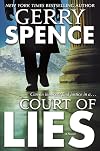
Court of Lies by Gerry Spence
In 1954 Jackson Hole, Wyoming we meet Judge Murray talking about his life and as the story progresses we meet the man who will become his law partner, the woman who will become his wife, a man that will be a thorn in his flesh for decades and a woman that is as close to him as a daughter. aa story is narrated by a true storyteller but one that is not in a hurry to share the tale. I had moments when I questioned if it would be worth the time to read this book but show more have to say that it definitely was.
My emotions were definitely involved as I read about abuse, misuses of power, lies, hate, bigotry and more. I was warmed by the love and friendship and caring of some for others. I felt anger more than once and wanted to reach in and smack some of the characters. I guess the main thing I felt at the end of the book is that the law is not always all that it could and should be but that people can be good even when they sometimes choose not to stay within the law’s boundaries.
This is a book that will stay with me for awhile and one that I will ponder. I can relate to the older characters in the book and how they are looking at the world in a way that I perhaps might not have been able to a couple of decades ago.
Did I enjoy this book? Yes
Would I read another book by this author? Yes
Thank you to NetGalley and MacMillan Tor-Forge for the ARC – This is my honest review.
4-5 Stars show less
In 1954 Jackson Hole, Wyoming we meet Judge Murray talking about his life and as the story progresses we meet the man who will become his law partner, the woman who will become his wife, a man that will be a thorn in his flesh for decades and a woman that is as close to him as a daughter. aa story is narrated by a true storyteller but one that is not in a hurry to share the tale. I had moments when I questioned if it would be worth the time to read this book but show more have to say that it definitely was.
My emotions were definitely involved as I read about abuse, misuses of power, lies, hate, bigotry and more. I was warmed by the love and friendship and caring of some for others. I felt anger more than once and wanted to reach in and smack some of the characters. I guess the main thing I felt at the end of the book is that the law is not always all that it could and should be but that people can be good even when they sometimes choose not to stay within the law’s boundaries.
This is a book that will stay with me for awhile and one that I will ponder. I can relate to the older characters in the book and how they are looking at the world in a way that I perhaps might not have been able to a couple of decades ago.
Did I enjoy this book? Yes
Would I read another book by this author? Yes
Thank you to NetGalley and MacMillan Tor-Forge for the ARC – This is my honest review.
4-5 Stars show less
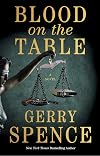
Blood on the Table by Gerry Spence
Compelling critical look at situations that were often difficult to unsee. The law is supposed to be blind and see innocence rather than prejudge or indict without facts. It is supposed to be honest and just but that is not always true. This story made me think and care and wonder and wish…and in the end it left me with a bit of hope.
What I liked:
* Ringo: honest, loving, kind, artistic, giving, good son, admirable, stalwart, a good man, someone I would show more like as a friend/on my side.
* Ben: father, husband, shepherd, father, honest, a good man, taciturn, quiet, bottled up emotionally, falsely accused, intriguing in the way still waters sometimes run deep.
* Sarah: mother, wife, secret keeper, lonely, would do anything for her family, hard worker, conflicted, dreamer, enjoys beauty, dreamer, made me think about what I would have done in her situation
* Hampton: lawyer, husband, truth seeker, honest, intelligent, interesting in the courtroom
* Meg/Isabelle: college student, artist, pragmatic, traveled, deeper than expected
* Ham & Jamey: two boys that deserved so much better
* The way all the pieces came together eventually…though I wondered at times if they would.
* Kind of liked the ultimate outcome and decision of the jury…though had hoped for something else
* That the story made me think and care
* The 1940’s era
* The location in Wyoming
* Mrs. Foley – the foster mother
* That though I thought about giving up in the beginning as it seemed slow…I was once again drawn in and could not put the book down.
What I didn’t like:
* Those I was meant not to like…and they were many. It was easy to hate them and hard to see the shenanigans they got up to.
* The way some were willing to use their power negatively and too often got away with it
* The damage done to so many
Did I enjoy this book? Yes
Would I read more by this author? Yes
Thank you to NetGalley and Macmillan-Tor/Forge for the ARC – This is my honest review.
5 Stars show less
Compelling critical look at situations that were often difficult to unsee. The law is supposed to be blind and see innocence rather than prejudge or indict without facts. It is supposed to be honest and just but that is not always true. This story made me think and care and wonder and wish…and in the end it left me with a bit of hope.
What I liked:
* Ringo: honest, loving, kind, artistic, giving, good son, admirable, stalwart, a good man, someone I would show more like as a friend/on my side.
* Ben: father, husband, shepherd, father, honest, a good man, taciturn, quiet, bottled up emotionally, falsely accused, intriguing in the way still waters sometimes run deep.
* Sarah: mother, wife, secret keeper, lonely, would do anything for her family, hard worker, conflicted, dreamer, enjoys beauty, dreamer, made me think about what I would have done in her situation
* Hampton: lawyer, husband, truth seeker, honest, intelligent, interesting in the courtroom
* Meg/Isabelle: college student, artist, pragmatic, traveled, deeper than expected
* Ham & Jamey: two boys that deserved so much better
* The way all the pieces came together eventually…though I wondered at times if they would.
* Kind of liked the ultimate outcome and decision of the jury…though had hoped for something else
* That the story made me think and care
* The 1940’s era
* The location in Wyoming
* Mrs. Foley – the foster mother
* That though I thought about giving up in the beginning as it seemed slow…I was once again drawn in and could not put the book down.
What I didn’t like:
* Those I was meant not to like…and they were many. It was easy to hate them and hard to see the shenanigans they got up to.
* The way some were willing to use their power negatively and too often got away with it
* The damage done to so many
Did I enjoy this book? Yes
Would I read more by this author? Yes
Thank you to NetGalley and Macmillan-Tor/Forge for the ARC – This is my honest review.
5 Stars show less
Awards


You May Also Like


Statistics
- Works
- 30
- Members
- 1,830
- Popularity
- #14,059
- Rating
- 3.4
- Reviews
- 16
- ISBNs
- 91
- Languages
- 6
- Favorited
- 1